
US and Russia Veto Each Other’s Western Sahara Plans as UN Mission MINURSO Loses Its Mandate

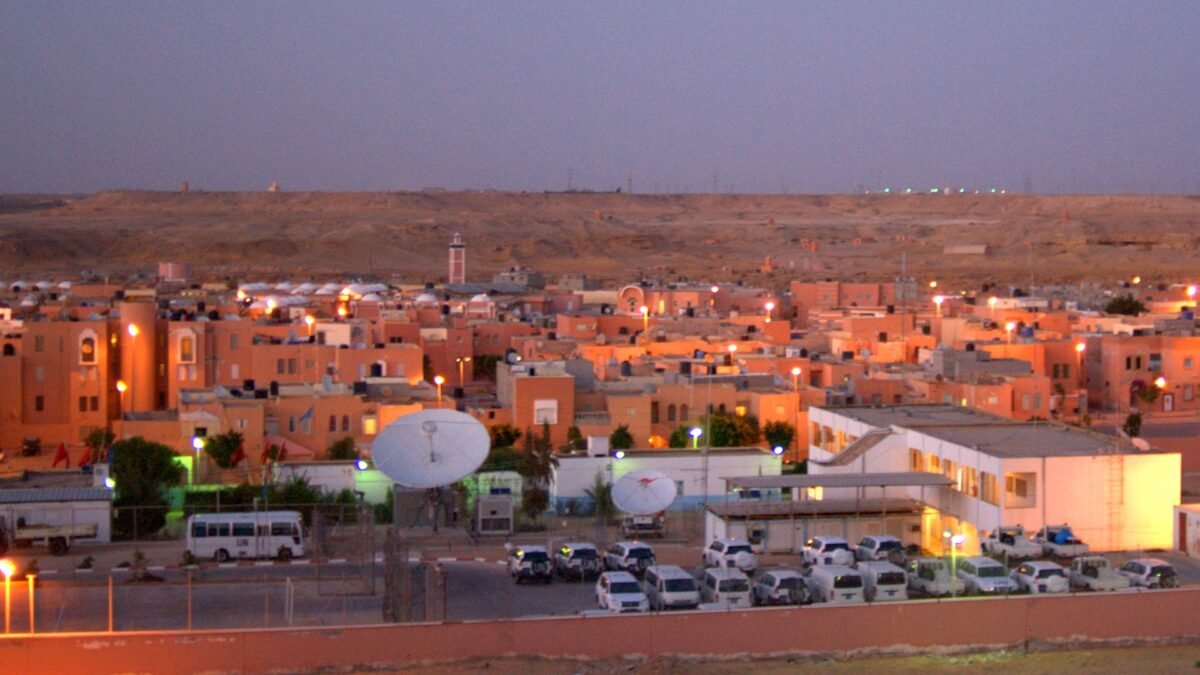
The United Nations peacekeeping mission in Western Sahara will enter Saturday without a legal mandate, after the United States and Russia vetoed each other’s rival resolutions at the Security Council on Friday, ending 35 years of uninterrupted renewals and leaving one of the world’s oldest territorial disputes without its international referee.
According to Reuters, Russia vetoed a United States-drafted resolution that would have extended the mission, known as MINURSO, for another year while cementing Morocco’s autonomy plan as the only basis for talks to settle the half-century-old conflict and scaling back the mission’s military component. The Council then defeated a rival Russian resolution to extend the mission for a year in its existing form. That draft won only three votes in favour, with one against and 11 abstentions, failing to secure the nine affirmative votes needed for adoption.
Unless the Security Council agrees to a last-minute extension, the mandate of the United Nations Mission for the Referendum in Western Sahara will expire on 31 October, Reuters reported. No such extension had been agreed by Saturday, and multiple outlets reporting on the vote described the mandate as expiring on 31 October with no replacement text in place.
The showdown threatens the future of a mission the Council has routinely renewed for decades, and it deepens a dispute over a territory most of which is controlled by Morocco but claimed by the Algeria-backed Polisario Front, which seeks an independent state for the Sahrawi people.
Two drafts, two vetoes
The United States, as the penholder on the Western Sahara file, put forward the first text, document S/2026/868. It won 11 votes in favour, but Russia cast the sole negative vote, using its veto as a permanent member of the Council to prevent adoption. China, Pakistan and Somalia abstained, according to the United Nations meeting record cited in press accounts of the vote.
The American draft went well beyond a simple renewal. It would have extended MINURSO for a year, through 31 October 2027, while making Morocco’s autonomy plan the sole basis for negotiations, reducing the mission’s military component and removing the reference to a referendum from the mission’s name. From 1 November, the mission would have been renamed the United Nations Mission in Western Sahara, or MINUSO. The draft also called for a census of the refugees living in the Polisario-run camps in Algeria, and it asked the Secretary-General to submit proposals on the mission’s future structure, staffing and resources.
France and the United Kingdom, the two other permanent members of the Council, backed the American text, along with eight non-permanent members. Russia said the draft went too far in endorsing Morocco’s position on the disputed territory.
“We stress the fact that the Security Council cannot automatically predetermine matters relating to sovereignty,” Russia’s ambassador to the United Nations, Vassily Nebenzia, said after the vote, according to Reuters. “The Security Council must not give a blessing to such a one-sided approach. Therefore we were compelled to block the adoption of the draft,” he said.
Russia then circulated a competing draft, document S/2026/870, which proposed a straightforward one-year continuation of the existing mandate, until 31 October 2027, without changing the mission’s name, functions or structure. It received three votes in favour, from Russia, China and Somalia, one negative vote from the United States, which vetoed the text, and 11 abstentions. It failed to reach the nine votes required.
The United States ambassador, Michael Waltz, defended the American draft after the vote, arguing that a referendum had never taken place because of longstanding disagreements over voter eligibility. “UN officials have been telling us this reality for 30 years,” he said, according to Reuters. “Unfortunately, some members of this Council have used their veto to preserve the letter ‘R’ for referendum in the mission’s name, even though the United Nations has not been preparing to hold such a vote for decades,” he added.
Morocco celebrates, Polisario thanks Moscow
Morocco’s royal palace welcomed the failure to renew the mission, describing the non-renewal as a “significant development” and saying it meant the Western Sahara issue should be withdrawn from consideration by the Security Council. In a statement issued on Friday, the palace said the non-renewal “clearly means that the presence of the mission in the Kingdom’s southern provinces, including its personnel, vehicles, equipment and symbols, should come to an end in the coming days,” according to Reuters.
Morocco said it remained committed to the ceasefire in the territory. In Laayoune, the largest city in Western Sahara, streets were decorated with Moroccan flags and lights to prepare to celebrate “Unity Day”, a holiday the palace declared to commemorate last year’s Security Council vote on 31 October, Reuters reported.
The Polisario Front took the opposite view. Its representative, Sidi Omar, thanked Russia for vetoing the United States-backed resolution, which he said would “torpedo the foundations of the UN peace process” and “threaten regional and international peace”, according to Reuters. On Wednesday, the Polisario staged a rally at the Smara camp near the town of Tindouf, in southern Algeria, where a couple of hundred men and women, waving flags of the Polisario’s self-proclaimed Sahrawi Arab Democratic Republic, gathered near Polisario fighters in military fatigues, waving signs with slogans such as “No to Morocco’s autonomy plan. Yes to the right to self-determination”.
Humanitarian organisations warned that the loss of the mission could put civilians at risk. Oxfam said the loss of MINURSO’s monitoring and de-escalation functions “risks undermining security and stability, with serious consequences to civilians and prospects of a peaceful resolution”, according to Reuters. The organisation warned that losing the mission could put refugees at risk. While most Sahrawis live in Morocco-ruled Western Sahara, tens of thousands are estimated to be living in Polisario-run refugee camps in Algeria, Reuters reported.
A mission built for a vote that never happened
MINURSO was established in April 1991 under Security Council Resolution 690, following a settlement plan accepted by Morocco and the Polisario Front in 1988. Its original mandate had two principal objectives: monitoring a ceasefire between Morocco and the Polisario Front, which took effect in September 1991, and organising a referendum in which the people of Western Sahara would decide the territory’s future. The mission operates on both sides of the berm, a fortified barrier built by Morocco to contain insurgent incursions, and it has 155 military personnel. It is set to cost $62 million in the fiscal year that began in June 2026, according to a report by the United Nations Secretary-General cited by Reuters.
The referendum never took place. Morocco and the Polisario Front could not agree on who would be eligible to vote, and the voter-identification process stalled for years. A series of United Nations envoys tried to break the deadlock. James Baker, the former United States secretary of state who served as the Secretary-General’s personal envoy, proposed comprehensive peace plans in 2001 and 2003. His 2001 proposal envisioned autonomy under Moroccan sovereignty and was accepted by Morocco but rejected by the Polisario. His 2003 plan instead proposed a period of autonomy followed by a referendum offering independence, autonomy or integration. Neither plan broke the deadlock, according to the Middle East Institute.
The dispute itself dates to Spain’s withdrawal from the territory in 1975, after which Morocco and Mauritania asserted control over different parts of the former colony. Fighting broke out between Moroccan forces and the Polisario Front, beginning an insurgency that lasted until the United Nations-brokered ceasefire in 1991. Mauritania later withdrew its claim, but the underlying question of the territory’s final status was never resolved. The United Nations has recognised Western Sahara as a Non-Self-Governing Territory since 1963.
After nearly three decades, the ceasefire broke down in 2020, although subsequent fighting has remained contained. Hostilities have persisted at low levels since the Polisario said in November 2020 that it was resuming “armed struggle”, according to Reuters.
The diplomatic balance has shifted
The balance of international opinion has moved steadily in Morocco’s direction over the past six years. In December 2020, President Donald Trump recognised Moroccan sovereignty over Western Sahara as part of the diplomatic breakthrough that also restored official relations between Morocco and Israel. France subsequently adopted a similar position, with President Emmanuel Macron declaring in 2024 that the territory’s present and future fell within the framework of Moroccan sovereignty. Spain publicly endorsed Morocco’s autonomy plan in 2022, and several other European countries followed. As of the end of 2025, 29 countries had established diplomatic missions in the Moroccan-controlled cities of Laayoune and Dakhla, according to the Middle East Institute.
The most significant development came on 31 October 2025, when the Security Council adopted Resolution 2797. That resolution extended MINURSO’s mandate for another year, through 31 October 2026, and called for negotiations based on Morocco’s autonomy proposal, describing genuine autonomy as potentially the “most feasible” outcome, while maintaining that a final solution must provide for the self-determination of the people of Western Sahara. Russia and China abstained on Resolution 2797 rather than blocking it. Algeria, which is not a member of the Council, objected to the resolution’s approach and did not participate in the vote, while the Polisario said it would not join negotiations designed to legitimise Moroccan control. The resolution also asked the Secretary-General to carry out a strategic review of the mission’s future.
Negotiations resumed in early 2026 under the Secretary-General’s personal envoy, Staffan de Mistura. Press accounts of the talks suggest they now cover transitional arrangements, security, elections and disarmament, although there is no public evidence that the Polisario or Algeria has accepted autonomy as the basis for a settlement, according to the Middle East Institute.
Washington’s push to reshape the mission accelerated in October. An initial American draft circulated on 20 October proposed establishing autonomy under Moroccan sovereignty as the only feasible political outcome, removing the reference to a referendum from MINURSO’s name and scheduling the end of its peacekeeping arrangements in the spring of 2027. A revised version circulated on 26 October retained the overall political direction of the initiative while relaxing several operational provisions, including the deadline for ending the peacekeeping mandate, according to press accounts of the drafts.
The final text put to the vote on Friday kept the political core of the American initiative: autonomy as the sole basis for negotiations and the removal of the referendum from the mission’s name and purpose. It won the support of 11 of the 15 Council members. It was not enough. One veto was.
Analysis: Why It Matters
1. A 35-year mission ends not with a decision, but with a deadlock
MINURSO was created to organise a vote that never happened, and it survived for 35 years because the Security Council could always agree on one thing: to renew it for another year while the politics stayed frozen. Friday’s double veto broke that habit. For the first time, the Council could not even agree to keep the mission alive in its existing form. That is a different kind of failure from a vetoed peace plan. It means the institution that was supposed to hold the ring has lost its own mandate, not because anyone voted to abolish it, but because two rival visions of its future cancelled each other out. The referendum promise, which has been the mission’s legal reason for existing since 1991, is now effectively dead in all but name: Washington wanted to delete it from the mission’s title, Moscow vetoed the deletion, and the mission itself has expired anyway. The symbolism is hard to overstate. A peacekeeping operation that outlived the Cold War, the Baker plans and three decades of stalemate has been ended by a procedural collision in a single afternoon.
2. Washington gambled the mission to win the argument — and lost both
The American strategy was a calculated gamble. By tying renewal to a rewrite of the mission’s purpose, Washington bet that the weight of 11 votes, the backing of France and Britain, and the momentum built since Resolution 2797 would force Moscow to accept autonomy as the only basis for talks, or at least to abstain as it did in 2025. The bet failed. Russia chose to use its veto rather than accept a text that, in its envoy’s words, would have given the Council’s “blessing to such a one-sided approach”. The result is the worst outcome for Washington’s own objectives: the autonomy framework it wanted to entrench has no resolution behind it, the mission it wanted to reshape has no mandate at all, and the United States itself had to veto the only text that would have kept MINURSO alive. That last detail matters. The American veto of the Russian draft means Washington cannot now blame Moscow alone for the lapse; both permanent members blocked the other’s path. The United States will return to the Council having demonstrated that it can assemble a large majority but cannot convert it into a resolution when a rival great power objects. That is a lesson other Council members, and other governments watching the dispute, will remember.
3. Moscow’s veto, and the Algeria factor, redraw the Council’s fault lines
Russia’s veto was not really about the size of MINURSO’s military component or the wording of its name. It was about who gets to define the endgame of a 50-year dispute, and about Algeria, which is not on the Council but whose interests Moscow effectively defended. Algeria hosts the Polisario leadership and the refugee camps at Tindouf, and it has treated the referendum and self-determination as non-negotiable principles. The vote count tells the story of Algeria’s isolation and its lifeline at the same time: the Russian draft won only three votes, with China and Somalia alongside Moscow, while 11 members abstained. Yet that same isolation makes the veto more, not less, important to Algiers, because it is the only instrument that can stop a Council majority from rewriting the political framework over its objections. The deeper significance is that the Western Sahara file has now been absorbed into the great-power contest. A dispute that was once managed as a regional decolonisation question is now a stage on which Washington and Moscow test each other’s resolve, with Morocco and Algeria as the interested parties and the Sahrawi people as the ones who live with the consequences. That is a much harder file to manage than the one the Council handled for 35 years.
4. What the lapse means on the ground: the berm, the camps and the ceasefire
The immediate practical question is what happens to the 155 military observers, the civilian staff and the white United Nations vehicles that have patrolled the berm and monitored the ceasefire for three and a half decades. Morocco says they should leave in the coming days, and it has framed the non-renewal as the beginning of the end of international management of the territory. But the ceasefire that MINURSO monitored has already been broken since 2020, and low-level hostilities have continued without the mission’s presence preventing them or, for that matter, without the mission’s presence causing them. The real risk is subtler. MINURSO’s value in recent years has not been in organising a referendum nobody expects, but in providing a neutral channel between two armed parties, a source of impartial reporting on incidents along the berm, and a brake on escalation. Oxfam’s warning, that losing those monitoring and de-escalation functions risks undermining security and stability, points to exactly this. If an incident along the berm is misread, or if a patrol clash escalates, there will be no United Nations observer on the spot to establish what happened. For the tens of thousands of refugees in the camps near Tindouf, the mission’s disappearance also removes one of the few international presences that paid attention to their situation. The danger is not a sudden war; it is the slow removal of the guardrails that kept a frozen conflict frozen.
5. Peacekeeping itself is in retreat — and Western Sahara is the latest evidence
The MINURSO lapse should be read alongside a wider pattern. United Nations peacekeeping is shrinking, under financial pressure and political challenge, and the Security Council is finding it harder to agree even on routine renewals when a mission touches a great-power interest. Western Sahara is the starkest example yet, because the mission was small, cheap and uncontroversial in operational terms: 155 soldiers and $62 million a year to monitor a ceasefire in a desert. If the Council cannot renew that, it raises a question about every other mission whose mandate comes up for renewal in a divided Council. The episode also illustrates how the politics of peacekeeping have changed. Missions were once renewed on the understanding that the status quo was better than a vacuum. Now, renewal itself has become a bargaining chip, and a government that wants the political framework changed can hold the mission hostage to that change, while a government that wants the framework preserved can veto the change and accept the vacuum. Both sides in the Western Sahara vote did exactly that. The people who pay for that logic are the ones who live in the territory and in the camps, and who have now lost the one international institution that was formally charged with watching over them.
What to Watch Next
- A return to the Council: whether the United States and Russia come back with a shorter technical extension, a revised draft both can accept, or allow the mandate to lapse while the political process continues. No new voting timetable had been announced after Friday’s session.
- Morocco’s next steps: whether Rabat presses for MINURSO’s personnel, vehicles and equipment to leave in the coming days, as the royal palace statement suggested, and how the United Nations Secretariat manages a withdrawal without a mandate.
- The Polisario and Algeria: whether the Polisario treats the lapse as a vindication of its position or as a reason to escalate its low-level armed campaign, and how Algeria responds to a Council outcome that leaves its ally without the referendum framework it defended.
- The Secretary-General’s review: what the strategic review of the mission requested under Resolution 2797 concludes about a future United Nations presence, and whether the Secretary-General’s personal envoy, Staffan de Mistura, can keep the parties talking without a mission on the ground.
- The wider Council: whether the double veto becomes a precedent for other missions whose mandates touch great-power interests, and whether Washington tries again to make Morocco’s autonomy plan the sole basis for negotiations in a new text.
Sources
- Reuters, “Competing US, Russia resolutions on Western Sahara defeated in UN Security Council” (via SRN News)
- Middle East Institute, “Western Sahara” backgrounder
- Middle East Institute, “MINURSO’s Future: What the Security Council’s Choice May Reveal”
- London Daily News, “Russia vetoes US MINURSO draft as Russian extension proposal also fails”
- Maghreb Insider, “Rival UN vetoes leave Western Sahara mission without mandate”

About the Author — Abdul Mannan
Related Articles
Polish President Turns Plane Around and Enters Constitutional Tribunal as Rival Judges Claim Control of Top Court
Karol Nawrocki cut short a trip to Senegal, flew home and pushed his way into Poland's Constitutional Tribunal…
US Approves $2.1 Billion Sale of 500 Patriot Missiles to Ukraine — but Kyiv May Wait Years for Delivery
The US State Department has approved a possible $2.1 billion sale of 500 Patriot PAC-3 MSE interceptors to…
Tens of Thousands March Across Italy in Nationwide Strike Against Cost of Living and Military Spending
Tens of thousands of Italians marched in more than 40 cities on Friday in a nationwide general strike…