
US Congress Panel Warns China Is Working to Suppress India’s Rise — With Pakistan at the Centre of a Two-Front Threat

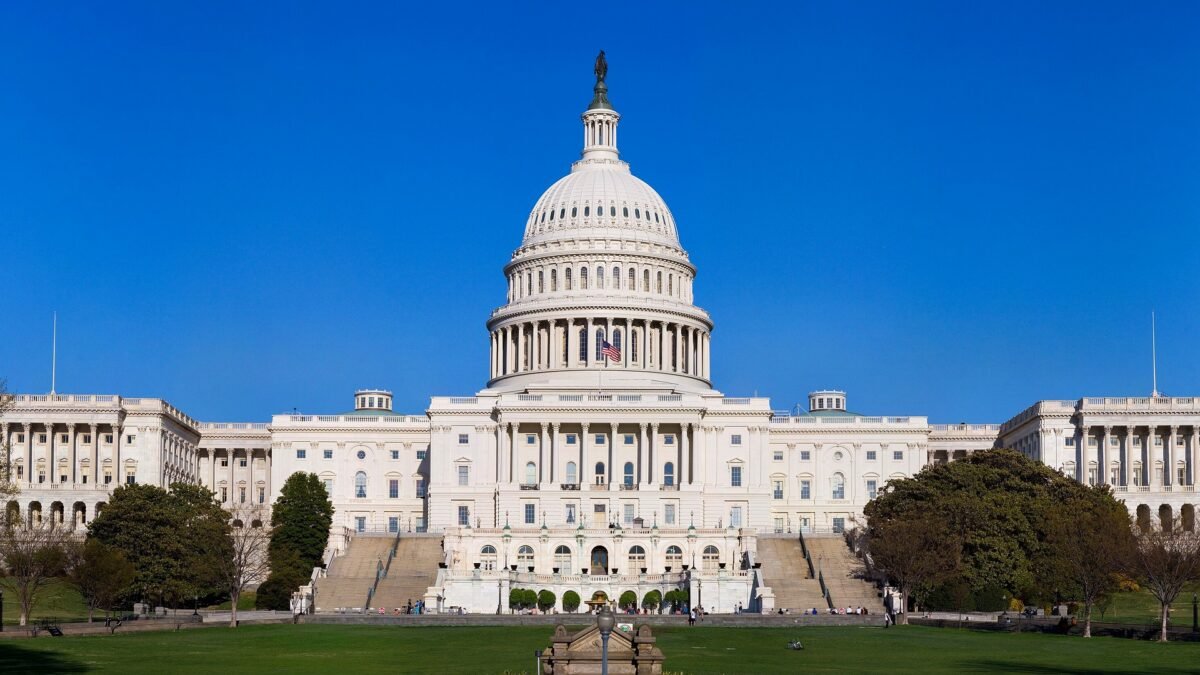
A United States congressional commission has warned that China is waging a deliberate, multi-domain campaign to suppress India’s rise as a great power — and that Beijing’s deepening military partnership with Pakistan has turned the prospect of a two-front war into one of New Delhi’s most pressing security concerns.
The warning comes in a chapter of the US-China Economic and Security Review Commission’s 2026 annual report to Congress, published on 18 November. Titled “China’s Other Front: India and the Future of US Strategy in the Indo-Pacific”, the chapter argues that while the Western Pacific remains the main arena of rivalry between Washington and Beijing, India presents China with a second strategic challenge — on land and at sea — and that Beijing is responding with military pressure, economic coercion, maritime surveillance and cyber operations.
“China understands this, and it is actively working to suppress India’s rise across multiple domains,” the commission states in its executive summary, according to the report. “Beijing is continuing its military buildup, asserting sovereignty claims along the disputed border, deepening military support for Pakistan, and expanding its naval and surveillance presence in the Indian Ocean.”
The report’s central message is blunt: India’s rise is not a side issue in the contest between the United States and China. India is the world’s most populous country and its largest democracy, a nuclear-armed state with one of the largest militaries on earth, sharing a 2,100-mile contested border with China and sitting astride the Indian Ocean sea lanes that carry much of China’s energy and trade. For Washington, the commission argues, a stronger India could tilt the balance of power in Asia and offer a genuine alternative to Chinese manufacturing and supply chains. For Beijing, that same prospect is a threat to be contained.
The Pakistan connection: a two-front problem
The sharpest section of the chapter concerns Pakistan. The commission finds that “China’s evolving military partnership with Pakistan has made a two-front contingency an increasingly critical concern for India” — language that, in the careful vocabulary of official Washington, amounts to a formal recognition of a scenario Indian planners have long feared: a future conflict in which New Delhi must fight on two borders at once, with Beijing backing Islamabad from behind.
The report uses the four-day India-Pakistan conflict of May 2025 as its central evidence. The fighting followed the killing of 26 tourists in a terrorist attack at Pahalgam in Jammu and Kashmir on 21 April 2025, after which India launched Operation Sindoor, striking militant infrastructure in Pakistan and Pakistan-administered Kashmir. During the hostilities, Pakistan fought with advanced military hardware bought from China — and, the report argues, with Chinese help that went well beyond the sale of weapons.
According to the commission, data from the Stockholm International Peace Research Institute cited in the report shows that China supplied 81 per cent of Pakistan’s total arms imports between 2020 and 2024, making Beijing by far Islamabad’s principal defence supplier. Indian military officials claimed during the conflict that Pakistan also received real-time satellite imagery and intelligence support from Chinese assets. Beijing neither confirmed nor denied those specific allegations at the time — but, the report notes, concrete evidence of on-the-ground collaboration emerged a year later. In May 2026, Chinese state broadcaster China Central Television aired an interview with Zhang Heng, an engineer from the Aviation Industry Corporation of China, who confirmed that he and other corporate personnel provided technical support to the Pakistan Air Force during the fighting.
Lieutenant General Rahul Singh, a senior Indian Army officer, is quoted in the report’s supporting material as noting that these Chinese contributions helped maximise the combat potential of Pakistan’s Chinese-built equipment during the confrontation. The lesson the commission draws is plain: China demonstrated that it can strengthen Pakistan during a crisis without entering the fighting itself — and that changes how India must plan for any future clash.
That assessment lands in New Delhi at a sensitive moment. Pakistan and India fought their briefest and most intense war in decades in May 2025, and the ceasefire that ended it has held, but neither side has resolved the underlying dispute. The report’s framing — that any future India-Pakistan conflict now carries the near-certainty of Chinese logistical and technical backing — will reinforce the argument inside India’s military establishment that its planning must assume two fronts, not one.
Economics is the sharpest weapon
If the military analysis is the most dramatic part of the chapter, the commission is clear that economics is where Beijing’s pressure bites hardest. “China’s sharpest tool, however, is economic,” the executive summary states. Beijing, it says, is using its control over critical industrial inputs, technology and expertise to preserve its own manufacturing advantages and to make it harder for India to build competing capacity.
The report lists a series of measures. China has restricted exports of key inputs and products to India, including rare earth magnets, specialised fertilisers and tunnel-boring machines. It recalled engineers and withheld equipment to slow India’s electronics manufacturing — in one widely reported case, Apple supplier Foxconn had to recall hundreds of Chinese engineers from its Indian facilities by July 2025, replacing them with technical workers from Taiwan to keep assembly lines running. Beijing slashed pharmaceutical input prices to undercut new Indian plants: according to the report, Chinese manufacturers cut prices by 40 to 50 per cent across 41 active pharmaceutical ingredients and key starting materials in 2025, threatening Indian factories built with government production incentives. And it imposed export controls on battery technology to impede the development of India’s clean energy industry.
Most consequential for Washington, the commission warns, is a measure Beijing introduced in 2025: requiring Indian firms to certify that certain Chinese-supplied inputs would not be re-exported to the United States. China suspended the requirement as part of the broader Trump-Xi trade détente, but the panel warns it remains a lever that could turn India’s dependence on China into a weapon aimed at American supply chains.
The paradox the report identifies is that India’s dependence on Chinese manufacturing has deepened even as its efforts to reduce it have multiplied. New Delhi has restricted Chinese investment, limited Chinese participation in strategic industries and subsidised domestic manufacturing — yet India’s industrial expansion still runs on Chinese machinery, components and technical know-how. The commission notes that India recently eased some restrictions on Chinese investment and equipment as the costs of limiting access to Chinese inputs, technology and expertise have grown. Building domestic supplier networks, it concludes, will require substantial capital, technology and time.
Pressure at sea: the Indian Ocean
The third front the report examines is maritime. About 80 per cent of China’s oil imports must cross the Indian Ocean and travel through the Strait of Malacca to reach Chinese ports — a vulnerability Beijing has spent decades trying to mitigate. To secure those sea lanes, China has built commercial and military infrastructure in friendly coastal states across South Asia and East Africa, including facilities in Pakistan, Sri Lanka and Djibouti.
The commission finds that China’s expanding naval and surveillance presence “is beginning to erode India’s longstanding strategic advantages in the Indian Ocean and place additional demands on Indian forces”. Beijing, it says, is building the infrastructure and logistical networks needed to sustain more persistent naval operations, while Chinese naval, surveillance and research vessels operate closer to India and to critical sea lanes. During the May 2025 conflict, Indian authorities noted the presence of an advanced Chinese survey vessel equipped with specialised sensors operating within India’s exclusive economic zone, alongside a separate research ship entering the Bay of Bengal.
The report also warns that China is beginning to bring its South China Sea playbook to the Indian Ocean — invoking historic rights and renaming undersea features in ways that could lay the groundwork for more assertive activities and potential claims of jurisdiction. For India, which has long regarded the Indian Ocean as its strategic backyard, the arrival of a permanent and growing Chinese naval and surveillance footprint is a direct challenge to a dominance it has taken for granted for decades.
The border that will not settle
Running through all of this is the unresolved border — the 2,100-mile frontier that the commission calls “the central fault line in China-India relations”. The deadly Galwan Valley clashes of 2020 marked a major turning point, the report notes, making India less willing to separate the territorial dispute from its wider relationship with China. Although New Delhi and Beijing have gradually rebuilt ties since late 2024, strategic distrust remains high, and India continues to view peace along the border as necessary for broader normalisation.
The report describes a continuing Chinese military buildup along the frontier, with dual-use infrastructure — airfields, railways and logistics hubs — expanding across the Tibetan Plateau. These transport networks allow the People’s Liberation Army to mobilise troops and equipment rapidly during a crisis, forcing India to divert financial and military resources away from domestic development simply to maintain border readiness.
China also continues to assert sweeping territorial claims over the Indian state of Arunachal Pradesh, which it calls South Tibet or Zangnan, and refuses to recognise the McMahon Line as a legitimate international boundary. According to the report’s supporting material, Beijing has built dual-use villages, military outposts and all-weather roads near sensitive locations such as Tawang, routinely publishes standardised Mandarin names for places inside Arunachal Pradesh, and denies the validity of Indian citizenship documents issued to residents of the state. Diplomatic agreements signed in late 2024 aimed at easing tensions in eastern Ladakh have not removed friction along other sectors of the frontier, and low-level confrontations between Chinese troops and India’s Indo-Tibetan Border Police have continued at remote mountain positions.
Cyber operations and disinformation
The commission also documents a campaign of cyber operations and digital disinformation aimed at India. The period after the May 2025 conflict saw a surge in coordinated cyberattacks against Indian critical infrastructure, including government digital services, telecommunications networks and utility controls. Security expert Sameer Lalwani told the commission that many of the most sophisticated distributed denial-of-service attacks aimed at Indian infrastructure traced back to Chinese digital infrastructure — although the commission itself states that it could not independently verify official state attribution for every individual incident.
The information war, the report says, went further. French intelligence sources found that China orchestrated a social media disinformation campaign after Operation Sindoor, using automated accounts and artificial intelligence to circulate fabricated images of debris from French-built Rafale fighter jets supposedly shot down by Chinese weaponry. According to the findings, the deceptive campaign was effective enough to convince Indonesian officials to pause an active procurement process for Rafale aircraft — a reminder that in modern warfare, the battle for the narrative can carry real commercial and strategic costs.
India’s balancing act
The report is careful not to present India as a passive victim. New Delhi, it says, is responding to Chinese pressure while balancing security concerns against its economic development needs. India is modernising its military, building domestic manufacturing capacity, restricting Chinese involvement in sensitive sectors, and expanding cooperation with the United States and other partners — all while guarding what it calls “strategic autonomy”.
That autonomy matters. The commission stresses that India’s rivalry with China is driven by its own strategic interests, not by alignment with Washington, and that closer US-India cooperation “will not necessarily translate into alignment with broader US objectives”. India will continue to guard its independence rather than align automatically with American goals — a fact Washington must accept if the partnership is to work.
At the same time, the foundations of the partnership have grown more ambitious. The two governments have established a ten-year defence framework, a bilateral trade agreement is under negotiation, technology initiatives range from semiconductors to biomanufacturing, and the Quadrilateral Security Dialogue — the Quad, grouping the United States, India, Japan and Australia — has been revitalised. But the report warns of a growing gap between ambition and delivery: export control regimes, procurement rules and financing tools designed for a different era and a different strategic environment are limiting what these initiatives can achieve.
Diplomacy, meanwhile, has not stopped. Prime Minister Narendra Modi and Chinese President Xi Jinping held talks in October 2024 and August 2025 to normalise border patrolling along the Line of Actual Control, and met again on the sidelines of the BRICS summit in New Delhi in September 2026, where, according to India’s Ministry of External Affairs, the two leaders reaffirmed that differences should not become disputes and that peace and tranquillity in the border areas remain essential to the relationship. The commission’s assessment is that this diplomatic thaw is real but thin: strategic distrust remains high, and the structural pressures it documents are pushing in the opposite direction.
What the commission wants Congress to do
The report does not stop at diagnosis. It urges Congress to act on several fronts. On defence, it recommends directing the US Secretary of Defense and the Chairman of the Joint Chiefs of Staff to work with their Indian counterparts to strengthen undersea and maritime domain awareness across the Indian Ocean — moving beyond periodic military exercises towards sustained operational cooperation, including systematic intelligence and surveillance sharing, coordinated monitoring of Chinese naval and submarine activity, and improved procedures for responding to maritime threats. It also proposes an Indo-American Strategic Leadership Exchange Program to build lasting ties among rising leaders in defence, government, business and academia.
On supply chains, the commission recommends a Comprehensive Critical Drug Diversification programme built around US-India cooperation, designed to break China’s leverage over the supply of essential medicines through an early-warning mechanism for supply disruptions, a federal trusted-demand programme with multiyear purchase commitments, and investment in active pharmaceutical ingredient production in India.
And on a subject that reaches beyond geopolitics into questions of faith and legitimacy, the report urges Congress to make it American policy that the Gaden Phodrang Trust is the sole legitimate authority to identify and recognise the successor to the 14th Dalai Lama, and that the United States will not recognise any successor selected or installed by the government of China. As the Dalai Lama advances in age, the commission warns, Beijing is preparing to turn his succession into an international contest over legitimacy and will likely use coercive tools to shape its outcome — with India, which hosts the Dalai Lama and the Tibetan government-in-exile, at the centre of the dispute.
Analysis: why this report matters
Annual reports from congressional commissions are easy to overlook. They arrive without ceremony, run to hundreds of pages, and are written in the dry language of official Washington. This one deserves closer attention, for three reasons.
First, it reframes the map. For a generation, American strategy in Asia has been organised around a single theatre: the Western Pacific, Taiwan, the South China Sea, the first island chain. The title of this chapter — “China’s Other Front” — is itself the argument. It tells Congress that the contest with Beijing has a second front, running from the Himalayas to the Indian Ocean, and that the country holding it is not an American ally but an independent power pursuing its own interests. That is a significant shift in how Washington is being asked to think, and it comes at a moment when the United States is simultaneously managing a war in the Gulf, a war in Europe and a trade confrontation with China. The report is, in effect, a warning against strategic tunnel vision: the front you are not watching is the one where the next crisis may start.
Second, the two-front finding changes the arithmetic of deterrence in South Asia. A two-front contingency has always been India’s nightmare scenario, but it has generally been discussed as a hypothetical — a worst case to be planned against, not a present reality. The commission’s judgement that it is now “an increasingly critical concern”, grounded in the concrete evidence of May 2025, moves it from the realm of contingency planning into active policy. The implications cut in several directions at once. For India, it strengthens the hand of those arguing for faster military modernisation, deeper defence industrial capacity and a larger defence budget — all expensive choices for a country still lifting hundreds of millions of people out of poverty. For Pakistan, it confirms the strategic value of the Chinese partnership, which may encourage Islamabad to lean further into it. And for China, it demonstrates that the strategy of supporting an ally without fighting directly — the approach the report documents in May 2025 — works, and can be repeated. That is a model with obvious applications elsewhere.
Third, the report exposes the central contradiction of the US-India partnership: the country Washington most needs as a manufacturing alternative to China is itself deeply dependent on Chinese inputs. The commission is unusually candid about this. India’s industrial expansion, it says, runs on Chinese machinery, components and technical know-how, and that dependence has deepened even as de-risking measures multiplied. This is not a failure of Indian policy; it is the structural reality of a world in which China spent three decades becoming the workshop for almost everything. Breaking that dependence will take capital, technology and time on a scale that no single government programme can deliver quickly. The report’s pharmaceutical proposals are a sensible place to start — medicines are a sector where security arguments are strongest and the economics most tractable — but they are a beginning, not a solution.
There is also a warning here for Washington itself. The commission’s complaint that the legal and institutional architecture of the US-India partnership has not kept pace with its ambitions is a polite way of saying that the United States is asking India to do more while giving it the tools of a bygone era. Export controls designed for the Cold War, procurement rules written for treaty allies, financing instruments built for a different economy — these are the unglamorous obstacles that determine whether grand strategy succeeds or stalls. If Congress takes the report’s recommendations seriously, the most consequential changes may not be the headline proposals but the quiet bureaucratic reforms: faster export licences, joint maritime patrols, shared intelligence feeds, and the steady work of building institutions that treat India as the partner the report says it is.
What to watch next is straightforward. The first test is whether Congress acts on the recommendations, particularly the maritime coordination directive and the pharmaceutical diversification programme, or whether the report joins the long shelf of assessments that are noted and filed. The second is Beijing’s reaction: China has historically responded to such reports with dismissal, but the specificity of the May 2025 evidence — including the televised confirmation of technical support to Pakistan’s air force — may make this one harder to wave away. The third is New Delhi’s response, which will reveal how India balances the report’s implicit invitation — deeper operational military cooperation with Washington — against its cherished strategic autonomy. And the fourth, quieter but potentially the most consequential over time, is the Dalai Lama’s succession, where the report urges the United States to take a formal position now, before a crisis forces one.
The report’s own bottom line is that China is not merely reacting to India’s rise; it is actively working to prevent it, across every domain it can reach — the battlefield, the factory floor, the sea lanes, the border, and the information space. Whether that campaign succeeds will depend less on Beijing’s efforts than on the responses it provokes: in New Delhi, where the choices are India’s to make, and in Washington, where the commission has now put its recommendations on the record. The “other front” has been named. What happens on it next is an open question.
Sources

About the Author — Abdul Mannan
Related Articles
Search Resumes at Indonesian Candy Factory as Dozens Remain Missing After Deadly Fire
Rescue teams returned to the burned-out PT Fonusa Agung Mulia candy factory in Cikande on Monday morning, with…

Trump Pushes Ukraine Peace Deal by Early January as Zelensky Pleads for Patriot Missiles After a Week of 2,700 Russian Drones
Washington wants a Ukraine peace deal by early January, before Democrats take Congress — but as Zelensky pleads…
Russian Corvette Merkury ‘Almost Certainly Destroyed’ in Suspected Drone Strike at Libya’s Benghazi Port
Libya's eastern government says a suspected drone attack caused an explosion aboard a Russian ship at Benghazi naval…