
Would You Want to Know? The Blood Test That Can See Alzheimer’s Years Before It Arrives

The Question No One Can Answer For You
Would you want to know?
I do not ask you about a test result. I ask you about your life. Imagine a single vial of your blood, drawn in an ordinary clinic on an ordinary morning, quietly carrying a warning about the person you will become ten years from now — that the names you love, the rooms you lived in, the face of your own child, may one day slip from your hands like water. The test exists now. The question is whether you should take it.
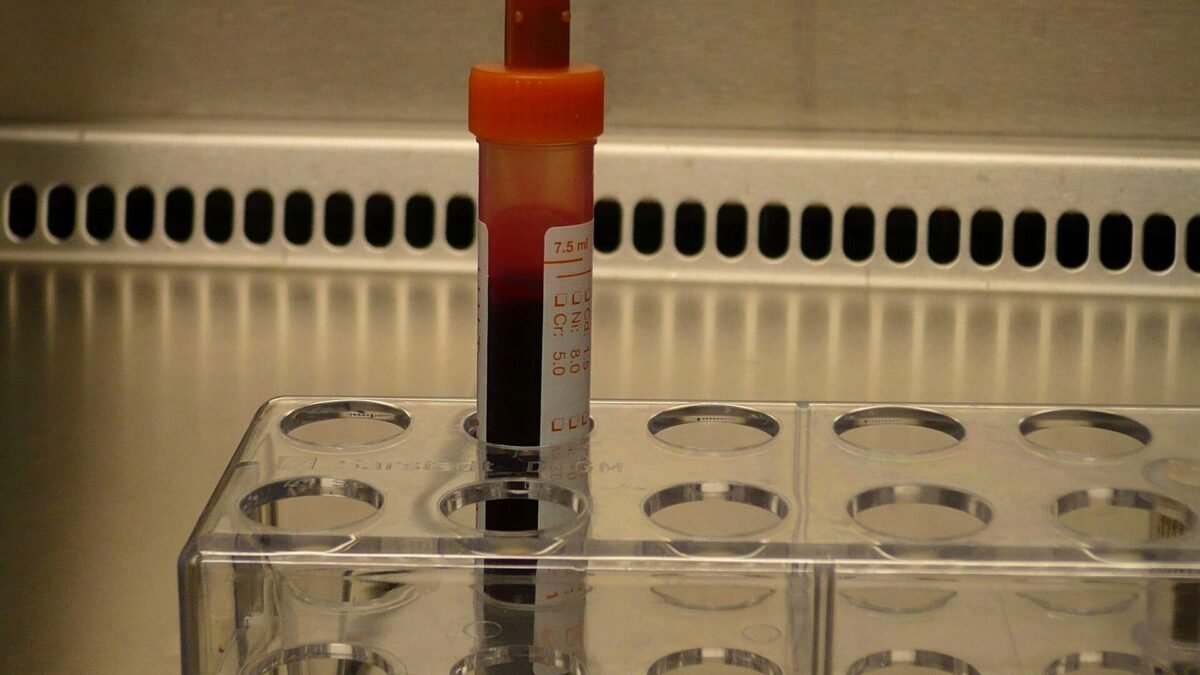
This is not science fiction. This week, as National Geographic reported on 21 October 2026, a simple blood test can now hint at whether the proteins characteristic of Alzheimer’s disease are accumulating in the brain, often years before any sign of cognitive decline. The United States Food and Drug Administration has cleared four such blood tests. Two of them — Roche’s Elecsys pTau217 and C2N Diagnostics’ PrecivityAD2 — were cleared in August 2026. And here is the part that stopped me cold: these tests are meant for people who already have memory or thinking problems, yet doctors say people without a single symptom are increasingly seeking them out anyway. They have watched a parent fade. They carry a fear they cannot name. And they would rather know than wonder.
I understand them. And I fear for them. Both at once. That contradiction is the whole story.
A Century Ago, A Doctor Looked Into One Woman’s Eyes
History is a mirror, and I have always believed that the present only makes sense when you hold it up to the past. So let me take you back to Frankfurt, in 1901, to a woman named Auguste Deter. She was 51 years old when she was admitted to a mental hospital, confused, suspicious, unable to remember the simplest things. Her doctor was a young psychiatrist named Alois Alzheimer. He listened to her, and when she died five years later, he examined her brain under a microscope and found something no one had ever described: plaques between the nerve cells, and tangled fibres within them — the fingerprints of a thief.
For more than a century after that day, medicine could only watch the thief at work. Families watched a mother forget a recipe she had cooked for forty years, watched a father ask the same question twelve times in an hour, watched a husband look at his wife of fifty years and ask, politely, who she was. Diagnosis came late, when the damage was already done, and it came cruelly — through expensive brain scans or a needle into the spine.
That is what makes this new blood test feel like a revolution. It measures a form of the tau protein, called p-tau217, which rises in the blood as amyloid accumulates in the brain. Roche’s Elecsys pTau217, developed with Eli Lilly, is the first single-biomarker blood test cleared by the FDA that can both rule in and rule out amyloid pathology — the brain changes linked to Alzheimer’s — in people aged 55 and older who already show signs of cognitive decline. It runs on more than 4,500 Roche laboratory analysers already installed across the United States, and Labcorp and Quest Diagnostics have said they plan to offer it. A test that once required a specialist hospital may soon require only a routine blood draw. For a patient sitting in a doctor’s office, frightened because she keeps losing her keys and her words, this is not a small thing. It is the difference between years of dreadful uncertainty and an answer.
But an answer to what, exactly? That is where the revolution turns into a riddle.
The Oracle That Cannot Tell You Your Future
You must understand what this test actually says, because the headlines will not tell you. A positive result does not mean you have Alzheimer’s disease in the way you have a broken bone or an infection. It means the biology associated with the disease is present in your brain. And biology, it turns out, is not destiny — not yet, and perhaps not ever.
The neurologist Suzanne Schindler, of Washington University School of Medicine, who helped validate one of these tests, put it plainly: “Two years ago we very rarely saw asymptomatic individuals getting tested. But that has really changed.” Why? Because, as she says, “This is their biggest fear.” People who watched a parent disappear are walking into clinics and asking for the test before they have forgotten anything at all. And what can the doctor honestly tell them? That a positive result cannot reliably tell them whether they will develop symptoms — or when. That the brain changes these tests detect are thought to begin a decade or more before symptoms, and that some people die with the signs of Alzheimer’s in their brains without ever having shown a symptom in life. As the Columbia neurologist Richard Mayeux told National Geographic, a positive result “is not a death sentence, but it is a sign there’s something going on.”
Not a diagnosis. Not a date. Not a fate. A shadow on a wall.
The numbers make the shadow sharper — and stranger. A study published in July 2026 in JAMA followed more than 2,600 cognitively healthy adults around the age of 70. Among those with high levels of p-tau217, about 24 per cent developed cognitive impairment within five years. Among those with very high levels, about 38 per cent did. Turn those numbers around and look at them from the other side, as any honest person must: even in the highest group, most people had not developed impairment within five years. And the test itself can be fooled — kidney disease, for example, can falsely raise the result. A recent analysis in JAMA found that in asymptomatic adults, the predictive value of a positive test fell to just 38 per cent in people younger than 60, because the underlying brain changes are rarer in younger people. A test that is powerful in a memory clinic, where everyone walking in already has symptoms, becomes a whisper in a crowd of healthy people — a whisper that sounds like a shout.
And here is the cruellest part of the bargain. For a person with no symptoms, there is no approved treatment waiting on the other side of a positive result. The medicines we have work, when they work, in the early symptomatic stages of the disease — they do not prevent a healthy person’s future. So what does the healthy person receive in exchange for their blood? Anxiety. More tests. Questions from insurers about future eligibility for life insurance or long-term care. A label that follows them into rooms where decisions about their future are made. This is why current guidelines advise against testing people without cognitive symptoms, and why both the Alzheimer’s Association and the International Working Group counsel against biomarker testing in asymptomatic adults outside of research. The science is racing ahead of the wisdom to use it.
Who Gets To Know, And Who Pays For Knowing?
There is another question hiding beneath the first one, and it is the question I always return to, because it is the question of justice. Who will this test serve?
In the wealthy world, a blood test on an existing laboratory machine is a triumph of access — cheaper than a brain scan, gentler than a spinal tap, available in a primary care clinic rather than a distant specialist centre. But access is never distributed equally. Will the farmer in a village, the labourer without insurance, the mother in a country where even a basic clinic is a day’s journey, ever see this vial? Or will we build, as we have built so many times before, a world where the rich buy foresight and the poor buy only fate? A medical breakthrough that reaches only the comfortable is not a breakthrough for humanity. It is a luxury good with a laboratory coat on.
And what of the person who learns too much too soon? I think of the old oracles — Delphi, where kings travelled for days to hear a prophecy they could not unhear, and spent the rest of their lives trying to outrun it. Humanity has always wanted to read the future, and the future has always punished those who read it badly. The blood test is our Delphi, written in protein instead of smoke. It can tell you that the thief may be in the house. It cannot tell you when he will strike, or whether he will strike at all. Do you still want to open the door and look?
For the woman already losing her words, the test is mercy: it ends the wandering in the dark, it names the enemy, it lets her family plan while planning is still possible. For her, I say: take the test, and take it with a doctor who will sit with you afterwards and explain what it means and what it does not. But for the healthy person driven only by fear — the daughter who watched her mother fade and now lies awake at night — I say something harder, and I say it as a friend: knowing is not the same as being ready. A result is not a rescue. And a shadow is not a sentence.
The Verdict I Leave With You
So I return to the question I opened with, because it is the only question that matters. Would you want to know?
Medicine has given us, for the first time in the century since Alois Alzheimer bent over his microscope, a way to see the disease before it announces itself. That is a genuine miracle. But miracles demand maturity. A society that can read the first chapter of a person’s decline must also learn when not to read it — must protect the healthy from the tyranny of a maybe, must bring the test to the poor as swiftly as to the rich, and must never mistake a biomarker for a biography.
Your memory is not a file in a laboratory. It is the sum of every person you have loved and every road you have walked. No vial of blood can contain it, and no result can pronounce upon it. The test can tell you what may be gathering in the dark. Only you can decide whether the light it offers is worth the shadow it casts.
Would you want to know? Answer it slowly. Your whole life is listening.
Sources & References
Reuters — Roche, Eli Lilly’s Alzheimer’s blood test gets FDA clearance (24 August 2026)
MedTech Dive — Roche, Eli Lilly get FDA nod for new Alzheimer’s blood test (25 August 2026)
JAMA — Testing for Alzheimer Disease in Asymptomatic Adults
Clinical Laboratory — Current State of Blood-Based Testing for Alzheimer’s Diagnosis
Photo credit: Blood sample photograph by Dotodot / Wikimedia Commons (cropped to 16:9 and colour-polished for this post).

About the Author — Abdul Mannan
Related Articles
The Epidemic We Chose: How America Lost Its Grip on Measles in 2026
Six Americans dead, 4,080 cases, and the worst measles year since 1991 — a disease America conquered in…
They Learned to Switch the Human Brain On and Off — With Light
On 5 October 2026, three scientists won the Nobel Prize in Medicine for learning to control the living…

The Plague Ship Returns to Harbour — and the World Met to Argue About It
THE PLAGUE SHIP RETURNS TO HARBOUR — AND THE WORLD MET TO ARGUE ABOUT IT When was the…