
Iliana Yotova Wins Bulgaria’s Presidential Runoff to Become the Country’s First Elected Woman President

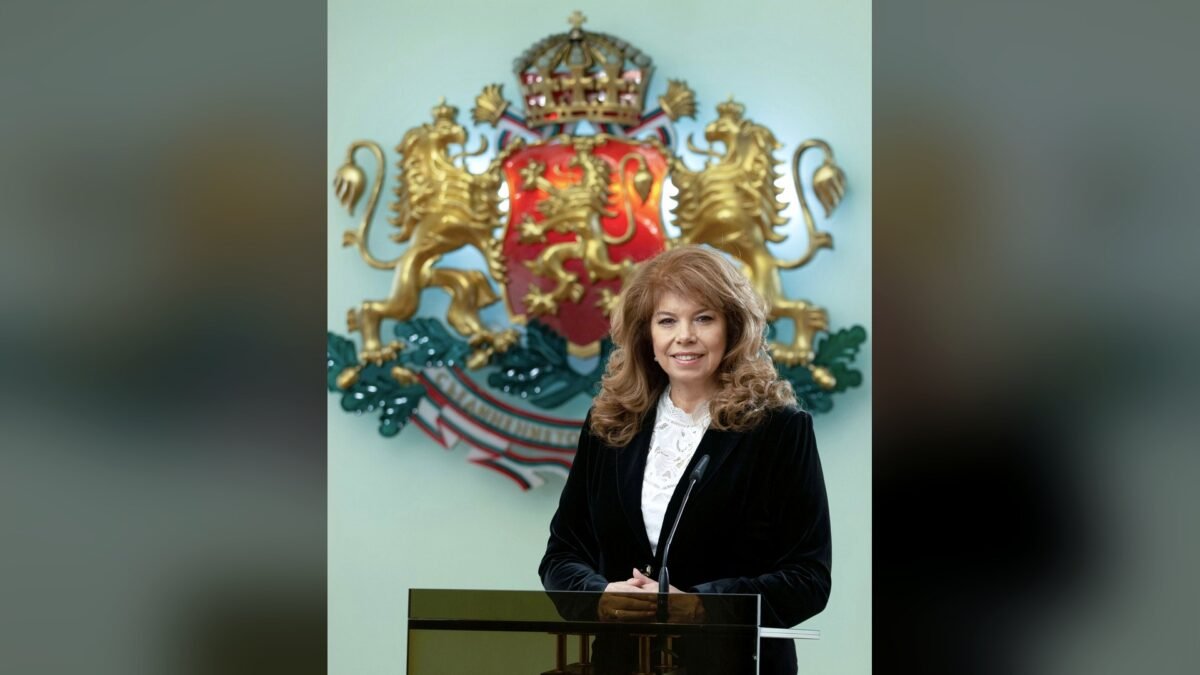
Iliana Yotova has won Bulgaria’s presidential runoff election, becoming the first woman ever elected as the country’s head of state, according to near-final results released by the Central Election Commission on Monday. The victory hands the presidency to the political camp of Prime Minister Rumen Radev, consolidating a grip on power that now spans both the parliament and the presidency — and it arrives at a moment when Bulgaria’s position on Russia’s war in Ukraine has become the defining question of its politics.
With 99.95 per cent of precinct protocols processed, the Yotova–Kiril Valchev ticket had won 57.58 per cent of the vote, or about 1.1 million ballots, while the opposition ticket of Andrey Gyurov and Georgi Kandev received 39.47 per cent, or about 749,500 votes, according to Reuters, citing the election commission. About 2.95 per cent of voters chose the “I support no one” option on the ballot. The margin was far wider than the exit polls published on election night had suggested: four polling agencies had put Yotova at between 50.7 and 52.5 per cent, and one had her at about 51 per cent against roughly 44 per cent for Gyurov.
Gyurov conceded defeat at a press conference in Sofia, telling supporters that “this is how the Bulgarian citizens have voted” and that the result had to be accepted as it stood, according to reports of his remarks. Yotova, speaking after her victory, said she would work for national consensus by bridging the country’s political rifts. European Commission President Ursula von der Leyen congratulated her and said she looked forward to continuing cooperation with Bulgaria on security and defence, competitiveness and energy independence.
The result is historic in the most literal sense. No woman has previously been elected president of Bulgaria. Yotova, 62, has in fact already been running the country from the presidential palace for most of this year: she became acting president in January, when Radev resigned the presidency to enter party politics. What Sunday’s vote gives her is something she did not have until now — a mandate of her own, won directly from voters, for a full five-year term. She is expected to be inaugurated on 22 January.
A runoff that was closer than it looked
The runoff was required because no candidate won an outright majority in the first round on 25 October. Yotova and Valchev finished first with 34.76 per cent of the vote, narrowly ahead of Gyurov and Kandev on 31.95 per cent, and the gap between the two tickets was small enough that the second round was widely expected to be tight. The parallel counts published by polling agencies on Sunday night pointed the same way, putting Yotova’s share at between 56.6 and 58.2 per cent — a clear lead, but one that still left room for doubt until the official count confirmed it.
In the event, the official result was decisive. The near-final count gave Yotova 57.58 per cent, a margin of more than 18 points over Gyurov, and the Trend agency’s parallel count, based on 100 per cent of polling stations, put the split at 58.1 per cent to 38.9 per cent. The result was a striking widening of the gap from the first round, when fewer than three points had separated the two tickets.
Turnout, however, was strikingly low. About 27 per cent of voters took part in the runoff, according to figures reported on Monday, and the first round had drawn only 22.98 per cent — the lowest turnout in a Bulgarian national election since the end of communism. Yotova’s 1.1 million votes, in other words, were cast by a small fraction of Bulgaria’s roughly 6.6 million registered voters. It is a victory that is at once emphatic and narrowly based, and that tension between the size of the margin and the size of the electorate that produced it will shadow the first months of her presidency.
Who is Iliana Yotova?
Yotova’s route to the presidency has run through almost every institution of Bulgarian public life. She began her career as a journalist, then served as a member of the European Parliament before entering national politics. In 2016 she was elected vice president on Radev’s ticket, and the pair were re-elected in 2021 with 63.9 per cent of the vote in the second round. She spent nine years as vice president, a role that kept her close to the centre of Bulgarian politics without ever putting her name at the top of a ballot — until Radev’s resignation in January made her acting president and, months later, a candidate in her own right.
Her running mate, Kiril Valchev, was her pick for vice president, and the two campaigned as a pair. Gyurov, her opponent, is a former caretaker prime minister and the candidate of the liberal, pro-Western opposition. He ran as the candidate of the traditional political establishment’s reformist wing, and his campaign drew its strongest support from younger voters and from the capital, Sofia, which he won by a comfortable margin, according to analysis of the results. Younger voters, including the generation that led street protests in Sofia and other cities, backed Gyurov overwhelmingly. Smaller towns and municipalities, by contrast, largely sided with Yotova, and the gender divide made little difference: she secured the support of both men and women.
Yotova officially ran as an independent, but her political career is closely intertwined with Radev’s. She served as his vice president during his two consecutive terms as head of state, and when he resigned last winter to launch his Progressive Bulgaria party, she became interim president. The party went on to sweep the parliamentary elections in April, winning 131 of the 240 seats in the National Assembly and an outright majority. It formally endorsed Yotova’s candidacy, and Sunday’s result was the first major electoral test for the new governing party since it took power — a test it has now passed.
The Ukraine question at the heart of the campaign
The campaign, which took on a bitter tone, particularly on social media, revolved around two main issues. The first was Bulgaria’s position amid Russia’s invasion of Ukraine. The second was the simmering confrontation between Progressive Bulgaria and the traditional players in the country’s political establishment.
On Ukraine, the two candidates offered voters a genuine choice. Yotova has opposed further military aid to Ukraine and has called for diplomacy to end the war, a position shared by Radev, who has repeatedly called for a diplomatic end to the conflict. Gyurov, by contrast, stood as the pro-Western candidate, aligned with the view that Bulgaria should keep supporting Kyiv and remain firmly anchored in the Western consensus on the war. The result is therefore read, inside Bulgaria and beyond it, as a verdict on the country’s direction on the most consequential foreign-policy question in Europe.
That reading is reinforced by the security backdrop against which the vote took place. Bulgaria is a Black Sea state, and the war has been moving closer to its shores: there have been drone attacks on commercial vessels near Bulgarian and Romanian waters, the latest of them on 28 October, on the eve of the runoff, with casualties reported among seafarers. The Black Sea, once a secondary theatre of the war, has become a zone of direct risk for Bulgaria’s shipping, its energy supplies and its coastline — and the question of how the country should respond to that risk was, in effect, on the ballot.
For Brussels, the outcome is unwelcome but not a rupture. Von der Leyen’s swift congratulations, and her emphasis on security and defence, competitiveness and energy independence, signalled a determination to keep working with Sofia rather than to quarrel with it in public. Bulgaria is a member of both the European Union and NATO, and its president’s room for manoeuvre on foreign policy is constrained by those memberships and by the government in parliament. But the presidency carries real powers of its own, and a president who is sceptical of further military aid to Ukraine will be heard in European councils — and in Moscow, where the result will be read as evidence that the Western consensus on the war is fraying at its edges.
What the presidency can — and cannot — do
Bulgaria’s presidency is primarily ceremonial, but the office is far from powerless. The president commands the armed forces, can veto legislation, and — crucially in a country with a long history of political instability — appoints interim governments during political crises. That last power has made the presidency a central institution in Bulgarian politics: in the years of revolving-door governments that preceded Radev’s party winning its majority, it was the president who repeatedly stepped in to appoint caretaker administrations and keep the state functioning.
The presidency is also a platform. The head of state speaks for Bulgaria abroad, addresses the nation at moments of crisis, and can set the terms of public debate in ways that a prime minister, bound by the daily business of government, often cannot. Radev used the office to build a political movement that eventually carried him into parliament as prime minister; Yotova inherits an office that her predecessor turned into the most powerful launchpad in Bulgarian politics.
She will serve a five-year term and may be re-elected once. The inauguration is expected on 22 January, when her acting presidency formally becomes an elected one. Between now and then, the formal confirmation of the results by the Central Election Commission remains to be completed, and the low turnout is likely to be the first subject of debate: in a country where fewer than three in ten voters bothered to take part, the question of what the result actually authorises will not go away quickly.
Analysis: Why It Matters
A historic first that arrives with an asterisk
Yotova’s election is a genuine milestone: Bulgaria has never before elected a woman as its head of state, and the symbolism of that first will be felt well beyond Sofia. But it arrives with an asterisk that no amount of celebration can remove. She won with 57.58 per cent of the vote — and with about 27 per cent of voters turning out. Her mandate is democratically legitimate and numerically overwhelming at the same time as it rests on the participation of barely a quarter of the electorate. That paradox is the defining fact of her presidency’s opening chapter. A president who governs with the knowledge that most citizens stayed at home must work harder to be heard, and her promise to bridge political rifts is, in that sense, not a platitude but a necessity. If she cannot broaden the base of her support beyond the voters who turned out on Sunday, the historic first will be remembered as a footnote to a story about disengagement rather than as a turning point in its own right.
Radev now holds both ends of the state
The most consequential reading of the result is institutional, not personal. With Yotova’s victory, Radev’s Progressive Bulgaria now controls the presidency as well as an outright parliamentary majority — the first time since the party’s creation that a single political camp has held both. That concentration of power is the direct product of Radev’s gamble in January, when he resigned the presidency to build a party from scratch, and it has paid off in full: his party swept the April elections, and his chosen successor has now won the presidency at the first attempt. The test ahead is whether that concentration produces stable government or overreach. Bulgaria’s recent history is littered with leaders who mistook a sweeping victory for a blank cheque, and the presidency’s powers — vetoes, interim governments, command of the armed forces — are precisely the instruments that become dangerous when the same camp controls both ends of the state. Yotova’s independence from Radev, real or performative, will be the first thing observers watch.
Ukraine: a crack in the Western consensus, or a local argument?
Yotova’s opposition to further military aid for Ukraine and her call for a negotiated end to the war will be read in Moscow as a vindication and in Brussels as a warning. But it is worth asking how much it actually changes. Bulgaria’s foreign and defence policy is set by the government, not the president, and the country remains bound by its EU and NATO memberships. What the presidency offers is a voice — and Yotova’s voice will now carry the authority of an elected mandate when she argues, in European councils, that the war should be ended by diplomacy rather than prolonged by arms supplies. That matters because the argument is no longer confined to the fringes: it is now the stated position of the elected head of state of an EU and NATO member on the Black Sea. Whether that shifts policy in Brussels depends on whether other leaders begin to echo it. For now, the result is best read as a crack in the consensus rather than a break with it — but cracks, in politics as in anything else, are where breaks begin.
The generation gap that decided nothing — yet
The demographics of the vote tell a story that the headline result obscures. Younger voters backed Gyurov overwhelmingly; the generation that led the street protests in Sofia and other cities voted for the pro-Western candidate and lost. Smaller towns and older voters delivered the election to Yotova. That is a familiar pattern in European politics, but it carries a particular sting in Bulgaria, where the young have been the most visible force for change in recent years. The question now is what the losing generation does next. A cohort that turns out for protests but not, in sufficient numbers, for elections is a political force that has not yet found its form. If the young voters who backed Gyurov conclude that the system cannot deliver what they want, the disengagement that already defines Bulgarian elections — turnout below 30 per cent — will deepen. If instead they organise, the next election will look very different. Either way, the generation gap is the most important unresolved fact of this result.
Turnout is the real loser
Strip away the history and the geopolitics, and the most striking number in this election is not 57.58 per cent but 27 per cent. Barely more than a quarter of Bulgarians voted for their president, and the first round drew fewer than 23 per cent — the lowest turnout in a national election since the end of communism. That is not a quirk of one contest; it is the culmination of years of voter fatigue after repeated elections, revolving-door governments and a political class that much of the country has stopped believing in. The danger is that low turnout becomes self-reinforcing: citizens who do not vote feel unrepresented, and politicians elected by a minority govern for a minority. Yotova’s victory speech promised national consensus and the bridging of rifts. The real test of that promise is not whether she can reconcile the parties in parliament — it is whether she can persuade the seven in ten Bulgarians who stayed at home that voting is worth doing again. Nothing she does in her first year will matter more.
What to Watch Next
- Formal confirmation of the results: The Central Election Commission still has to announce the final results formally. Watch for any challenges to the count and for the precise final turnout figure, which will set the terms of the debate about the mandate.
- The inauguration on 22 January: Yotova’s inaugural address will be the first full statement of how she intends to use the presidency. Expect close attention to her language on Ukraine, on relations with Brussels and on her independence from Radev.
- The first veto — and the first test of independence: A president who shares a political camp with the government rarely vetoes its legislation. The first time Yotova disagrees publicly with Radev’s government will reveal whether the presidency is an independent institution or an extension of the ruling party.
- Black Sea security: With drone attacks on commercial shipping near Bulgarian waters continuing, watch whether Yotova uses her role as commander-in-chief to push for a stronger naval posture — or for the diplomacy she campaigned on.
- The young voters’ next move: The generation that backed Gyurov lost this election. Watch whether the protest energy seen in Sofia’s streets turns into organised political participation ahead of the next contest — or curdles into deeper disengagement.
Sources
- Reuters — “Bulgaria’s Iotova wins presidential runoff, near-final results show”
- Bytes Europe — “Iliana Yotova wins runoff to become Bulgaria’s first elected female president”
- Bytes Europe — “PROFILE – Who is Iliana Yotova, Bulgaria’s first woman elected president?”
- Argumentum — “Bulgaria Elects Iliana Yotova as First Female President”
- Osservatorio Balcani e Caucaso Transeuropa — “Bulgarian presidential election: Yotova wins, Radev celebrates”

About the Author — Abdul Mannan
Related Articles

Fake Nuclear Alerts Hit Russian and Ukrainian Emergency Apps as Kherson Truce Ends
Fake nuclear and chemical alerts flashed across Russian and Ukrainian emergency apps on Sunday night, hours after a…
UN Mission in Western Sahara Ends After 35 Years as Security Council Deadlock Leaves a Vacuum
MINURSO's mandate expired at midnight on 31 October after the Security Council failed to renew it, ending 35…
Caribbean Leader Says UK Tried to Block Reparations Debate at Commonwealth Summit as Foreign Office Denies Claim
Ralph Gonsalves says British officials warned Andy Burnham would skip the Antigua summit if reparations were formally listed…