
Zelenskyy Meets Burnham in London as Britain Pledges Faster Missiles and Fresh Pressure on Russia

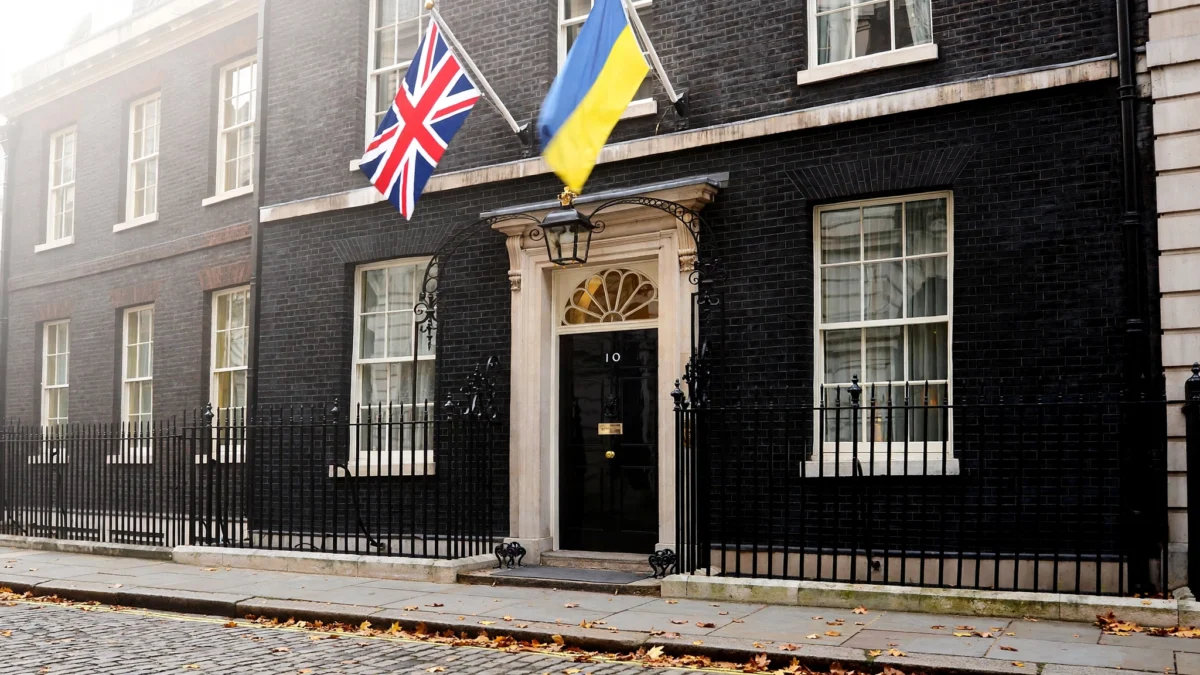
Ukrainian President Volodymyr Zelenskyy is in London on Wednesday to meet British Prime Minister Andy Burnham at Downing Street, as Britain promises to speed up deliveries of air defence missiles to Ukraine and to draw up further sanctions against Russia.
The visit comes at a difficult moment for Kyiv. Days earlier, United States President Donald Trump said Zelenskyy “should be replaced” as Ukraine’s leader, and Washington struck a deal with Moscow to lift sanctions on Russian diesel exports. Britain has said it does not support that diesel deal, and has called on allies to keep up economic pressure on Moscow.
Ahead of the meeting, Burnham said Britain’s support for Ukraine was “rock solid” and that the United Kingdom was “with you for as long as it takes.” In a statement before the talks, he said: “My message to the Ukrainian people could not be clearer, we are with you for as long as it takes, and we will go further and faster in our support to back your courageous fight for peace in Europe.”
“It is not just the right thing to do, but it’s the necessary thing to do,” Burnham added. “Russia’s aggression cannot be allowed to succeed on our continent.”
According to Reuters, Burnham announced the planned delivery of £45 million ($59.60 million) of surface-to-air missiles used to target jet-powered Russian drones, with £10 million of that package fast-tracked to meet an urgent need in Ukraine.
The accelerated support will see faster deliveries of British lightweight multirole missiles, known as LMMs, to Ukraine, according to PA Media. The missiles have proved effective against Russian jet-powered drones, a newer generation of uncrewed aircraft that fly faster and higher than the propeller-driven drones used earlier in the war.
The United Kingdom had already committed to send more than 5,000 lightweight multirole missiles worth £1.6 billion to Ukraine over the next four years. The announcement on Wednesday is about speed: getting more of those missiles to the front lines sooner, rather than simply adding to a long-term total.
Burnham has also asked officials to draw up further sanctions, military aid and fiscal support packages, according to Reuters. His foreign and finance ministers have been lobbying allies to follow Britain in banning maritime services that support Russian liquefied natural gas exports.
Chancellor John Healey is using meetings at the International Monetary Fund summit in Bangkok this week to press the case for a ban on Russian liquefied natural gas, according to PA Media. The UK will also reaffirm its plans to fully implement a maritime services ban on Russian LNG exports.
The meeting at Downing Street follows what Foreign Secretary Ed Miliband described as a “very difficult few days” in relations with Washington following Trump’s decision to ease sanctions on Russian diesel.
Burnham telephoned Zelenskyy on Saturday to express his “complete solidarity” with Kyiv, according to PA Media, after news of the diesel deal emerged. The UK responded to the deal by pledging to “maintain pressure on Russia.”
A visit shaped by the Washington rift
This is Zelenskyy’s second visit to Britain since Burnham became prime minister. His first was in late July, days after Burnham entered No 10, when the pair met troops and led a news conference at a naval base in Portsmouth. Burnham later travelled to Kyiv in August, making Wednesday’s Downing Street meeting the third between the two leaders since Burnham took office.
The timing gives the visit a significance beyond routine diplomacy. The Trump administration’s diesel deal with Russia, announced on Friday, October 9, after a phone call between Trump and Russian President Vladimir Putin, allows Russia to supply up to 4.8 million tonnes of diesel to global markets under a temporary US Treasury general licence. Trump has framed the deal as a way to bring fuel prices down for Americans.
Zelenskyy condemned the deal as a “gift” that would fund Russia’s war effort, and warned that allowing Russia to sell petroleum products was “an investment in a war that must be ended, not prolonged.” Britain, along with several European allies, has taken Kyiv’s side in the argument, saying sanctions pressure on Moscow must be maintained rather than eased.
The diesel deal is not the only source of friction. Trump said at the weekend that Zelenskyy should be replaced as Ukraine’s leader, a remark that landed badly in Kyiv and in European capitals. Against that backdrop, the London meeting is as much a signal to Washington as it is to Moscow: Britain intends to keep backing Ukraine even when American policy shifts.
The drone threat driving the missile pledge
The specific military package announced ahead of the meeting is shaped by how the air war over Ukraine has changed. Russia has increasingly deployed jet-powered drones, which are faster and fly higher than the propeller-driven Shahed-type drones that defined earlier phases of the conflict. They are harder to intercept with older air defence systems, and they have put new pressure on Ukraine’s layered defences.
The lightweight multirole missiles Britain is accelerating are designed to be flexible: they can be fired from a range of launchers, including vehicle-mounted systems, and can engage drones, helicopters and light aircraft. Their value in this phase of the war lies less in raw firepower than in availability — a missile that arrives this month is worth more than one promised for next year.
Ukraine’s air defence challenge is also seasonal. As winter approaches, Russia has in previous years targeted Ukraine’s energy infrastructure, seeking to leave civilians without heat and power during the coldest months. Zelenskyy has said in recent days that Russia is ignoring a proposed energy ceasefire, pointing to continued strikes on Ukrainian cities and energy targets. Kyiv has reported that Russian strikes killed two people in the capital in recent days, according to Indian media reports of Zelenskyy’s statements.
Britain’s announcement does not, on its own, change the balance of the air war. But it is part of a wider European effort to keep Ukraine’s defences supplied at a moment when the political weather in Washington has turned colder.
Sanctions, LNG and the economic front
The second half of Britain’s message is economic. Burnham has asked ministers to draw up further sanctions, military aid and fiscal support packages, and Britain is pushing allies to cut off the maritime services — insurance, shipping and related support — that keep Russian liquefied natural gas flowing to world markets.
The LNG campaign matters because energy revenue remains one of Russia’s most important sources of wartime income. While pipeline gas sales to Europe have collapsed since 2022, Russian LNG has continued to reach global markets, and European buyers have continued to import significant volumes. Britain’s argument, echoed by Sweden’s foreign minister at a European Union meeting this week, is that Europe has spent more on Russian energy since 2022 than it has given in support to Ukraine — a gap London wants to close.
A maritime services ban would not stop every cargo, but it would raise costs and narrow the market for Russian LNG, in the same way that the oil price cap and related measures complicated Russia’s crude sales. The challenge is the same one that has dogged every round of energy sanctions: the countries that must enforce the ban are also the ones whose shipping, insurance and financial industries profit from the trade.
Healey’s lobbying in Bangkok, on the sidelines of the IMF meetings, is aimed at widening the coalition beyond Europe. Without buyers in Asia as well as Europe, restrictions on Russian energy tend to reroute supply rather than reduce it.
Analysis: Why It Matters
The Zelenskyy–Burnham meeting matters less for what was announced than for what it signals about the shape of Western support for Ukraine in the months ahead.
First, it is a deliberate act of gap-filling. When the United States steps back from sanctions pressure — or, as with the diesel deal, actively eases it — the burden of holding the line falls on Europe. Britain is positioning itself as the country willing to move first and fastest, using a high-profile visit to set a pace others can follow. The £45 million missile package is modest in the scale of the war, but its message is not: London is accelerating, not pausing.
Second, the announcement treats delivery speed as the real currency of support. The war in Ukraine has repeatedly shown that pledges made in one season arrive too late for the next. By framing the LMM announcement as acceleration rather than a new commitment, Britain is acknowledging a hard lesson: what Ukraine needs is not more promises, but faster logistics. If the missiles arrive before winter’s energy campaign peaks, the announcement will have been worth more than its price tag suggests.
Third, the LNG campaign shows where Britain thinks the long war will be decided. Missiles defend cities; sanctions starve the war machine. The maritime services ban is a structural lever, not a headline measure. Its success depends on quiet, technical diplomacy — insurers, shippers, regulators — rather than summit declarations. Healey’s work in Bangkok is arguably the more consequential half of this week’s British effort, even though it will draw fewer cameras than the Downing Street handshake.
Fourth, the visit tests the durability of the phrase “for as long as it takes.” That promise has been repeated by Western leaders since 2022, and each time it is tested by a new political season — an election, a budget, a fuel-price spike. Britain faces its own fiscal pressures, with a Budget due on October 28 and an IMF warning that deficit reduction must stay on track. Burnham’s willingness to pair the Ukraine pledge with a call for more sanctions, rather than hedging, suggests he believes the domestic politics of support still hold. The coming weeks will show whether that confidence is justified.
Finally, the meeting is a reminder that the transatlantic relationship on Ukraine is now a negotiation, not a consensus. Miliband’s phrase — “a very difficult few days” — is unusually blunt for a foreign secretary describing relations with Washington. Britain is not breaking with the United States; it is publicly disagreeing with it, on diesel, on sanctions and on Zelenskyy’s leadership. That is a significant shift in tone, and it sets up a period in which European capitals will increasingly act as a counterweight to American policy rather than as its echo.
None of this means Britain can replace American support. The United States remains, by a wide margin, Ukraine’s largest single military backer, and no European package can fully substitute for American air defence interceptors, intelligence or funding. What London can do is buy time, hold the coalition together, and make the case — to Washington as much as to Moscow — that easing pressure on Russia now would cost more later.
What to Watch Next
- The Downing Street readout. The joint statements and any news conference after Wednesday’s meeting will show whether the two leaders agreed on anything beyond the pre-announced package — particularly on long-term security guarantees or further air defence commitments.
- Delivery dates for the missiles. The key detail is not the £45 million figure but the timetable: when the fast-tracked £10 million portion actually reaches Ukraine, and whether the accelerated LMM deliveries arrive before the winter energy campaign intensifies.
- The LNG campaign in Bangkok. Watch for any sign that Healey’s lobbying has moved other governments — particularly in Asia — toward restricting maritime services for Russian LNG. A single new signatory would matter more than another restatement of intent.
- The next sanctions package. Burnham has asked officials to draw up further measures. Their scope — and whether they target Russian energy revenues, military supply chains or financial intermediaries — will show how far London is willing to go in closing the gaps left by Washington’s diesel deal.
- Washington’s response. The most important audience for Wednesday’s meeting is not in London or Kyiv but in Washington. Watch for any American reaction to Britain’s public break with the diesel deal, and for whether the Trump administration adjusts its posture on Ukraine in the coming days.
Sources

About the Author — Abdul Mannan
Related Articles

MI5 Chief Warns of ‘New Era’ of Threats as Iran and Russia Ramp Up Hybrid Attacks on Britain
In his annual threat speech at Thames House, MI5's Director General Sir Ken McCallum said state threats have…
IMF Raises UK Growth Forecast for 2026 but Warns Energy Prices and High Borrowing Costs Will Drag on 2027
The IMF lifted its 2026 UK growth forecast to 1.3% but cut 2027 to 1.2%, warning that higher…
Burnham Tells MPs Rejecting Closer EU Ties Would Be “Dereliction of Duty” as No 10 Insists Brexit Result Stands
Andy Burnham told the Commons it would be a "dereliction of duty" not to pursue a closer relationship…