
Guatemala’s Former Anti-Corruption Prosecutor Juan Francisco Solórzano Foppa Shot Dead in Guatemala City

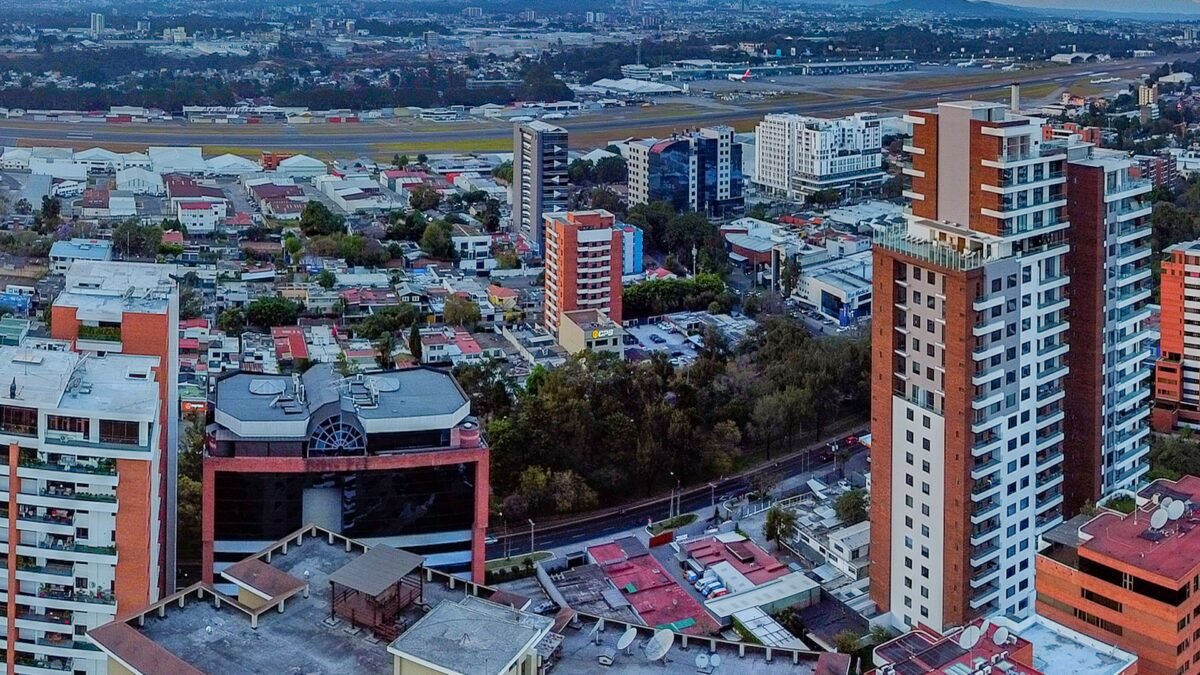
A Saturday Killing in the Capital
Juan Francisco Solórzano Foppa, one of Guatemala’s best-known anti-corruption prosecutors, was shot dead on Saturday at a sports complex in Guatemala City, in a daylight killing that President Bernardo Arévalo condemned as a cowardly murder and that has sent a chill through the country’s already embattled justice community.
Solórzano Foppa, 43, was attacked by two gunmen while visiting the Campo Marte sports complex in the capital, according to Reuters, which cited police accounts of the shooting. Officers detained two suspects shortly after the attack and seized a carbine-style rifle and a motorcycle believed to be connected to the crime, according to police statements reported by Reuters. Bloomberg reported that another man was also shot in the attack.
Arévalo moved quickly to frame the killing as an assault on the state itself. “I strongly condemn the cowardly murder of former prosecutor Juan Francisco Solórzano Foppa. Both the direct perpetrators and those who ordered the crime must face the full weight of the law,” the president wrote on his official X account, according to Reuters. He added that he had instructed his government to coordinate with the relevant authorities to solve the crime, declaring: “Those who believe that terror can intimidate the people of Guatemala and the government I lead are mistaken. In honor of Foppa, in honor of our homeland, in honor of justice.”
Who Solórzano Foppa Was
Solórzano Foppa spent more than a decade inside Guatemala’s Public Ministry, where he became known for taking on some of the country’s most powerful political and business figures. According to Reuters, he headed the Criminal Investigations Directorate within the prosecutor’s office and later led the country’s tax authority, the SAT, from 2016 to 2018, a period in which he helped prosecute dozens of influential business figures and recover unpaid taxes.
Bloomberg reported that he led the customs fraud investigation that contributed to the resignation of former President Otto Pérez Molina in 2015, one of the landmark achievements of Guatemala’s anti-corruption era. In 2023, he briefly joined the defense team of journalist José Rubén Zamora, the founder of the newspaper elPeriódico, who had become an international symbol of the criminalization of journalism in Central America.
More recently, Solórzano Foppa had been publicly alleging dangerous connections. According to Reuters, in 2025 he claimed a link between the Barrio 18 street gang and the National Unity of Hope political party, as well as ties between criminal gangs and the judicial system — allegations that placed him at the intersection of organized crime, politics and the courts, the three most perilous forces in Guatemalan public life.
A Country Where Fighting Corruption Can Be Fatal
The killing did not happen in a vacuum. For years, Guatemalans who investigate corruption have faced a systematic campaign of retaliation, according to Bloomberg, which noted that prosecutors, judges and lawyers associated with the country’s anti-corruption drive have been hit with criminal cases, imprisonment or forced exile.
The roots of that campaign go back to the dismantling of the UN-backed International Commission Against Impunity in Guatemala, known by its Spanish acronym CICIG. Operating between 2007 and 2019, CICIG worked alongside a special prosecutor’s office it helped create, the FECI, to investigate and dismantle dozens of criminal networks with links to state officials, securing some 400 convictions, according to Amnesty International. Its most emblematic case, the “La Línea” customs fraud investigation, forced Pérez Molina’s resignation in September 2015.
But in 2019, then-President Jimmy Morales — himself under investigation — refused to renew CICIG’s mandate, effectively ending the project. What followed, according to Amnesty International, was a systematic closing of civic space: the Public Ministry dropped corruption cases on a massive scale, and the country’s principal media outlets came under pressure. The FECI, left standing as the only independent prosecutorial agency, was compromised in 2021 when the government dismissed its respected chief, Juan Francisco Sandoval, who immediately fled to El Salvador, and replaced him with Rafael Curruchiche, widely seen as representing the interests of the elites the commission once pursued, according to PassBlue.
The human cost has been stark. Amnesty International has described the situation as “hunting season” against justice officials. According to data from Guatemala’s Unit for the Protection of Human Rights Defenders (UDEFEGUA) cited by Amnesty, in 2022 alone there were 3,754 attacks against human rights defenders, and at least 73 justice officials, journalists and activists were forced into exile. Estimates suggest at least 43 prosecutors, judges, human rights defenders and journalists have fled Guatemala since 2018, with the majority continuing to fight for justice from abroad.
Zamora’s case illustrates the pattern. The journalist was arrested in July 2022 on money laundering and blackmail allegations that he and press freedom advocates said were retaliation for elPeriódico’s corruption reporting; his newspaper was forced to shutter in May 2023 after what it described as intensifying persecution and harassment of its advertisers, according to reporting on the case. Solórzano Foppa’s brief stint on Zamora’s defense team tied him directly to that broader struggle.
The institutional damage is measurable. The Organisation for Economic Co-operation and Development said this year that Guatemala met just 11 percent of its prosecutorial integrity criteria, compared with a 52 percent OECD average, and 8 percent of its judicial integrity criteria against a 45 percent average, according to Bloomberg.
Arévalo, who took office pledging to make the justice system a priority, has tried to reverse course. In May, he named Gabriel Estuardo García Luna as attorney general, replacing María Consuelo Porras — a longtime adversary who had been sanctioned by the United States, the European Union, Canada and others over alleged corruption and the targeting of anti-corruption and human rights figures, according to Bloomberg. Porras has denied wrongdoing. Solórzano Foppa’s murder is now the first great test of whether that change at the top can translate into protection for those who do the dangerous work below.
Analysis: Why It Matters
Solórzano Foppa embodied a particular promise: that a Guatemalan prosecutor could investigate customs fraud, tax evasion and gang infiltration — and survive. His assassination, in broad daylight at a sports complex in the capital, is a direct assault on that promise, and its timing could hardly be more pointed. It comes just months after Arévalo replaced a sanctioned attorney general with a reformist one, at the precise moment the government is asking honest prosecutors, judges and journalists to believe the state will stand behind them. Every potential whistleblower in Guatemala will now be doing the same grim calculation: if the man who helped bring down a president can be gunned down on a Saturday afternoon, what protection exists for anyone else?
There is also a qualitative escalation here that should alarm observers. For the better part of a decade, the playbook against Guatemala’s anti-corruption community has been lawfare — trumped-up criminal cases, arrest warrants, professional disqualification and exile. Dozens fled; newsrooms closed; the courts were captured. A daylight assassination is a different instrument altogether. It suggests either that the networks Solórzano Foppa threatened no longer trust captured institutions to neutralize their enemies — a sign that Arévalo’s reforms may genuinely be loosening their grip — or, more darkly, that impunity has deepened to the point where even murder carries no perceived risk. Which of these is true will be revealed by what happens next.
The motive remains officially unknown, and it would be wrong to prejudge an investigation that has barely begun. But any serious inquiry must grapple with Solórzano Foppa’s 2025 allegations. A former prosecutor publicly asserting links between one of the country’s most violent gangs, a major political party and the judiciary had placed himself at the exact junction where Guatemala’s criminal, political and legal worlds meet — and where its most dangerous secrets live. The two detained suspects may answer who pulled the triggers; Arévalo’s own standard — “those who ordered the crime” — sets the bar where it belongs, on the masterminds. Guatemala’s history is littered with convicted triggermen and unpunished architects.
Internationally, the stakes extend well beyond Guatemala’s borders. Washington and Brussels invested heavily — diplomatically and financially — in the CICIG experiment, and the US State Department has repeatedly linked Guatemalan justice officials to its list of corrupt and undemocratic actors. Corruption and impunity in the Northern Triangle remain primary drivers of the migration the United States has spent years trying to manage. An unsolved assassination of this profile would signal to every capital watching that the old order’s resilience outlasts electoral change; a genuinely pursued investigation, reaching the intellectual authors, would signal the opposite. Expect statements from the US State Department, the EU and the OAS — and watch whether words are followed by the targeted sanctions that have been Washington’s sharpest tool.
Finally, there is the institutional arithmetic. At 11 percent prosecutorial integrity, Guatemala’s justice system was already running on the courage of a shrinking minority. Assassinations do not merely remove individuals; they freeze institutions, as colleagues recalculate risks and cases quietly stall. If Arévalo’s government cannot deliver both protection for living prosecutors and justice for a murdered one, the May changing of the guard at the attorney general’s office will be remembered as a reshuffle rather than a turning point — and the exodus Amnesty documented will continue, this time measured not in plane tickets but in silence.
What to Watch Next
- Charges and testimony: Whether the two detained suspects are formally charged, and whether their accounts point toward whoever ordered the attack — the critical distinction Arévalo himself drew.
- The investigation’s independence: Whether García Luna’s Public Ministry assigns the case to a genuinely independent investigative team and resists the political interference that buried earlier cases.
- The 2025 allegations: Whether Solórzano Foppa’s claims about Barrio 18, the National Unity of Hope party and judicial links resurface — in the investigation, in Congress, or in fresh reporting.
- International reaction: Statements and any concrete measures from the United States, the European Union and the Organization of American States in the coming days.
- Protection for others: Whether the government announces concrete security measures for prosecutors, judges and journalists still working on corruption cases — and whether any of them now choose exile instead.
Sources
- Reuters: “Prominent Guatemalan anti-corruption lawyer killed in shooting” (17 October 2026)
- Bloomberg via Mint: “Guatemalan Former Anti-Corruption Prosecutor Killed in Capital”
- Amnesty International: “It’s hunting season against justice officials in Guatemala”
- PassBlue: “A Highly Respected UN Legacy to Fight Corruption Crumbles in Guatemala”

About the Author — Abdul Mannan
Related Articles
Four Soldiers Killed, 39 Hurt in Wainwright Base Fire; Carney Declares National Mourning
Four service members were killed and 39 injured — 19 critically — when a wind-driven fire swept a…
Deaths Confirmed After Major Fire at Canadian Forces Base Wainwright in Alberta
Canada's military has confirmed deaths and injuries after a fire broke out in the training area of Canadian…
Zelensky Asks EU for €70bn More as Brussels Summit Ends Without New Ukraine Funding Deal
Zelensky asked 27 EU leaders in Brussels for an additional €70bn to cover Ukraine's 2027 war costs; the…