
Zelensky Asks EU for €70bn More as Brussels Summit Ends Without New Ukraine Funding Deal

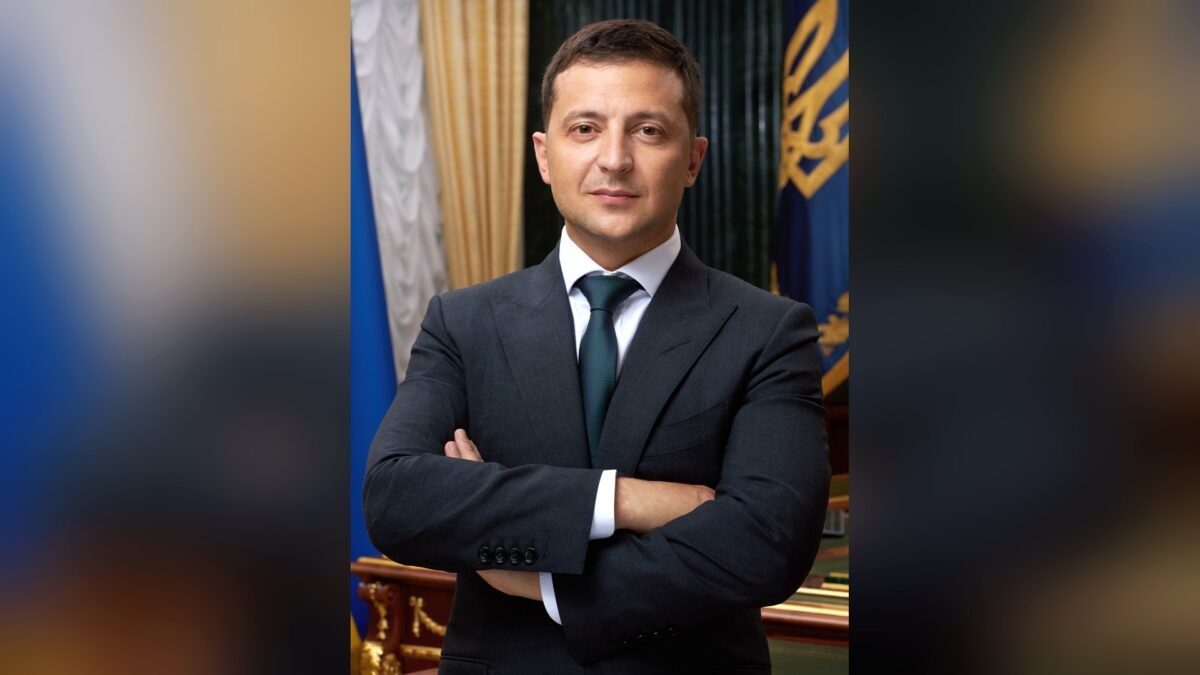
European Union leaders have left the future of Ukraine’s war financing unresolved after their two-day summit in Brussels ended without any new concrete funding commitments for 2027, despite a direct appeal from President Volodymyr Zelensky for an additional €70 billion (£61 billion) to keep his country fighting next year.
Zelensky addressed the 27 EU leaders in Brussels on Friday, laying out stark mathematics: the war will cost Ukraine roughly €155 billion in 2027, and Kyiv needs at least €70 billion more from its European partners — for defence, for weapons, and for what he called resilience. “This is a realistic amount,” he told the summit, according to Le Monde. “And I ask you to find this support. It will help us hold Russia back.”
Instead of pledging new money, the leaders asked the European Commission to come forward with a proposal addressing Ukraine’s additional financing needs for 2027. The two most contentious questions — whether to unlock the roughly €210 billion in immobilised Russian central bank assets held mostly in Belgium, and how any further costs would be shared among member states — remained unresolved when the summit closed, according to reports from the Brussels meetings.
The European Council said Ukraine’s 2026 budgetary and defence needs already have funding identified, largely through the €90 billion EU loan agreed to cover 2026 and 2027. But the figures made plain in Brussels show that facility will not be enough for 2027 on its own, leaving a gap that has now become the single most urgent item on the EU’s agenda.
The Commission’s Task: Find the Money
European Council President António Costa, speaking at the closing press conference, framed the deferral as continued commitment rather than hesitation. “Our commitment to peace goes hand in hand with more pressure on the aggressor. Not less,” Costa said in his official remarks published by the European Council. “We have identified the means to cover its needs for this year. Now we must deliver. This requires continued reform efforts by Ukraine. And our international partners must also step up their support.”
Costa confirmed the leaders had “asked the Commission to come forward with a proposal to address Ukraine’s additional financing needs for 2027”, noting that Russia’s intensifying hybrid campaigns across Europe — including sabotage and airspace violations — made continued support more urgent, not less.
German Chancellor Friedrich Merz, whose country is Kyiv’s largest European donor, had arrived at the summit urging exactly that sense of urgency. “We must do everything we can to help Ukraine through the winter and also to help next year,” Merz said at the start of the two-day meeting, according to multiple outlets. French President Emmanuel Macron added that it was “crucial that we collectively provide Ukraine with all the necessary means to defend itself and protect its civilian population and infrastructure”, Le Monde reported.
The leaders also tasked the Commission with presenting a plan for the bloc’s 2028–34 long-term budget, after the summit exposed continuing disagreements over its size, spending priorities and member-state contributions. A special summit dedicated to the budget has been scheduled for 26 November, according to Euronews reporting.
Frozen Assets: The Option Nobody Could Agree On
Hanging over the entire discussion was the unresolved question of the roughly €210 billion in Russian central bank assets immobilised in EU countries — the bulk of it held by the Belgian depository Euroclear. Several European leaders, including Merz, revived the proposal to channel those assets as a loan to Ukraine, and EU diplomats said the option should be “firmly back on the table”, according to Euronews. But Belgium, France and Italy remain hesitant, wary of the legal risks and potential Russian retaliation.
Without the assets, the arithmetic does not work. The €90 billion loan facility — structured earlier to span 2026 and 2027 — was designed on the assumption it would cover both years. Zelensky’s request upends that plan, and EU diplomats acknowledge the bloc will be expected to come up with “tens of billions” more, in Euronews’s reporting. With tighter public spending across the continent and waning voter appetite for ever-larger aid packages, each new commitment is harder than the last.
The Ukrainian president himself has warned that the stakes are existential. He has previously argued, according to summit reporting, that Europe faces difficult choices of its own if Ukraine fails — a warning intended to frame the €70 billion not as charity but as a down payment on European security.
A Summit Shadowed by the Trump Row
The summit was overshadowed throughout by the deepening rift between Zelensky and US President Donald Trump — a rift this site has been covering as it widened. Days before the Brussels meeting, Trump struck a deal to import Russian diesel and eased certain sanctions on Russian oil products, a move Zelensky had condemned as a “gift” to Moscow that would fund its war machine.
Trump then escalated further, criticising Ukraine’s strikes on Russian oil refineries as a “disgrace”, telling Newsmax that Zelensky was “more difficult to deal with than [Russian President Vladimir] Putin”, and suggesting Ukraine needed a “new president”, according to Associated Press reporting. Zelensky, arriving in Brussels, thanked what he called the “real leaders” of Europe for standing by his country.
At the summit’s margins, Zelensky also raised two more grievances: restrictions imposed on the US-controlled Starlink satellite communications system, which he said had disrupted drone interceptions and military logistics. “Starlink was not turned off, but the speed limits were lowered,” he told reporters at a press conference, calling it a “very dangerous and unpleasant surprise”, according to Xinhua. He also complained that Washington had not informed Ukraine in advance about the diesel deal, while adding that Ukrainian and American negotiating teams remained in contact.
Europe’s response, in substance if not in euros, was a closed-rank embrace. Leaders promised to keep sanctions in place for as long as Russia pursues its full-scale invasion. Costa, standing beside Zelensky and European Commission President Ursula von der Leyen, delivered the message directly: “This is no time to withdraw the support to Ukraine. This is no time to relieve Russia’s sanctions,” he said in joint doorstep remarks published by the European Council. “Dear Volodymyr, you can count on us. Not only to support you in war, but most important for your future as a member of the European Union.”
Winter Is Coming — the Fifth Since 2022
The timing of the summit added urgency to every conversation in the room. Ukraine is entering its fifth winter since Russia’s full-scale invasion in February 2022, and the pattern of recent years is clear: Moscow systematically targets the country’s energy and water infrastructure as temperatures fall. Euronews noted that the summit’s agenda explicitly included helping Ukraine get through another cold winter, with Russia “trying everything to destroy the energy and water infrastructure”, in von der Leyen’s words.
Merz’s warning about helping Ukraine “through the winter and also to help next year” was not rhetorical decoration. Kyiv’s cities faced daily attacks by hundreds of Russian drones and missiles even as the leaders sat down in Brussels, according to Le Monde. The gap between the scale of those attacks and the speed of European decision-making is the chasm Zelensky flew to Brussels to close — and it remains open.
Analysis: Why It Matters
It is tempting to read the Brussels summit as a failure of nerve, but that would miss how European decision-making actually works. The EU’s instinct in moments of fiscal paralysis is to proceduralise the problem: send it back to the Commission for a proposal, set a deadline, reconvene. That machinery has produced every major Ukraine package so far — and it is precisely what happened here. The non-decision on the €70 billion is less an answer than a deferral of the answer to a moment when the political cost of refusal will be higher: the 26 November budget summit, and beyond that, the depths of winter.
The numbers are worth dwelling on, because they explain why this summit was always going to be painful. In 2022, Europe could mobilise emergency spending with wartime urgency. Four years on, that urgency has been replaced by arithmetic: strained national budgets, rising energy costs, voters asking increasingly sharp questions about where the money goes, and a war bill — €155 billion for a single year — that dwarfs anything the EU has ever underwritten for a non-member. The €70 billion Zelensky asked for is more than the annual GDP of several EU member states. The question in Brussels was never really whether Ukraine deserves the money; it was who writes the cheque, and no leader wants to be the one who answers first.
That is why the immobilised Russian assets are the real story of this summit, not the deferral. They are the only option on the table that does not require 27 finance ministers to find new billions in already-stretched budgets. Belgium’s hesitation is understandable — Euroclear sits in Brussels, and the legal and retaliatory risks land first on Belgian soil — but as long as the assets remain locked, every future financing discussion will run into the same wall. Expect the Commission’s proposal to be, in large part, an attempt to solve the Belgian problem: indemnities, guarantees, legal scaffolding designed to make the politically impossible merely difficult.
Then there is the American variable, which changes everything and which the summit could not discuss openly. Europe is now, functionally, Ukraine’s lender of last resort. Whatever Trump does — and his trajectory since the diesel deal suggests a Washington increasingly comfortable striking bargains with Moscow over Kyiv’s head — the EU cannot afford for Ukraine’s defence to collapse for lack of funding, because the security consequences land in Europe, not in Florida. Zelensky’s invocation of European leaders as “real leaders” was diplomatic theatre, but it was theatre with a point: flattery as strategy, reminding 27 capitals that history will record who stood and who hesitated.
The risk, though, is that Brussels has mistaken motion for progress. Tasking the Commission is what the EU does when it does not know what else to do, and Kyiv does not have the luxury of indefinite process. Ukraine’s financing gap is a cash-flow problem as much as a commitments problem: soldiers must be paid, fuel must be bought, air defences must be maintained, month by month. Every summit that ends with “we will come back to this” is a summit that pushes the day of reckoning closer to the moment when the money actually runs out.
What to Watch Next
- The Commission’s proposal: The document the 27 leaders requested will be the single most important EU paper of the winter. Watch for whether it includes a concrete mechanism for the frozen Russian assets — and whether Belgium accepts the legal protections offered.
- The 26 November budget summit: The special European Council dedicated to the 2028–34 budget will be the next test of whether Europe can still make big financial decisions. If it deadlocks, the 2027 Ukraine gap becomes harder, not easier.
- Washington’s next move: The Trump–Zelensky rupture has not stabilised. Any further US restrictions — on intelligence sharing, on weapons flows, or on the sanctions regime — will land directly on the EU’s balance sheet.
- Winter strikes: Russia’s campaign against Ukrainian energy infrastructure will test both Kyiv’s resilience and European resolve. A catastrophic winter blackout would transform the financing debate overnight.
- The Starlink question: Zelensky’s complaint about throttled satellite speeds points to a dependency Ukraine has never resolved. Watch for any European effort to build or fund alternatives — a project Euronews noted Zelensky’s own staff are already pushing.
Sources
- Remarks by European Council President António Costa, press conference following the European Council meeting of 15–16 October 2026 — European Council (Consilium)
- Remarks by President António Costa at the joint doorstep with Presidents Volodymyr Zelenskyy and Ursula von der Leyen, 16 October 2026 — European Council (Consilium)
- War in Ukraine: Europe stands united behind Kyiv but must revisit how to finance its support — Le Monde, 17 October 2026
- Budget, Ukraine, migration: Five takeaways from the EU leaders’ summit — Euronews (via europesays), 16 October 2026

About the Author — Abdul Mannan
Related Articles
Deaths Confirmed After Major Fire at Canadian Forces Base Wainwright in Alberta
Canada's military has confirmed deaths and injuries after a fire broke out in the training area of Canadian…

Fourteen Killed as Paddy-Laden Truck Rams Devotees Near Gwalior’s Sheetla Mata Temple During Navratri
At least 14 people were killed and dozens injured when an out-of-control paddy-laden truck broke through a police…
Deadly Fire Erupts at Canada’s CFB Wainwright After ‘Serious Incident’; Defence Minister Confirms Fatalities
A "serious incident" at Canadian Forces Base Wainwright in Alberta triggered a major fire that has killed and…