
Deaths Confirmed After Major Fire at Canadian Forces Base Wainwright in Alberta

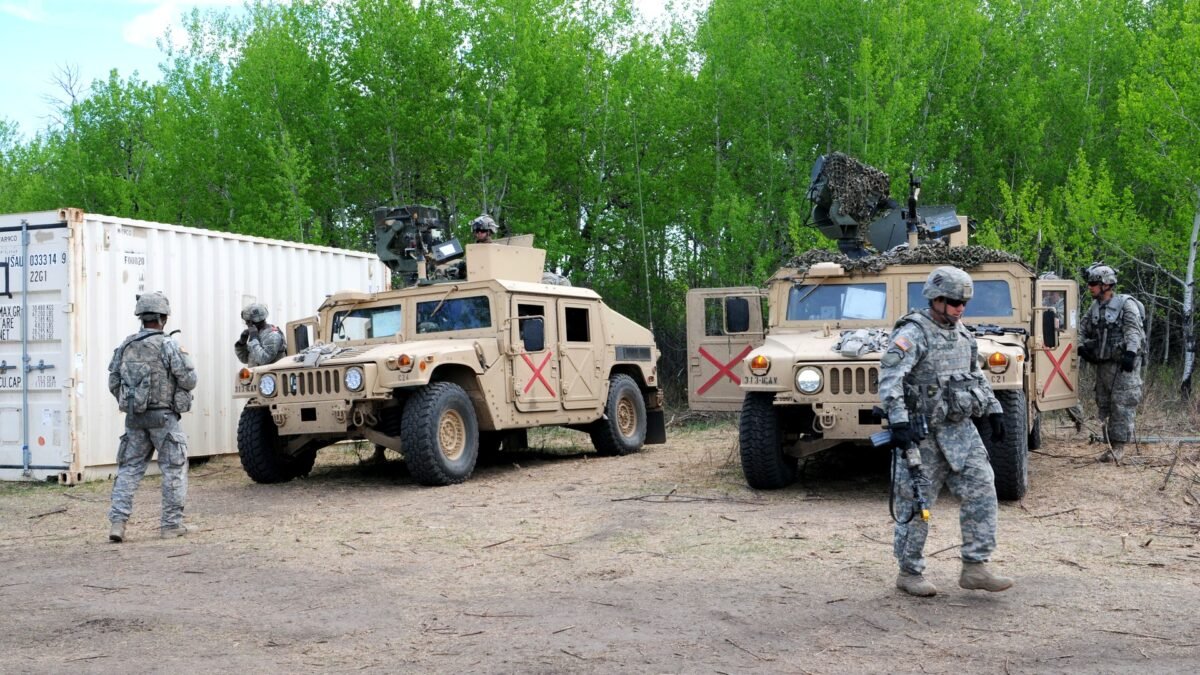
Canada’s military has confirmed that people were killed and injured after a major fire broke out at Canadian Forces Base (CFB) Wainwright in Alberta on Saturday, in what Defence Minister David McGuinty described as a “very, very active and delicate” situation — one he said he could not recall the like of in recent memory.
According to an official statement from the Department of National Defence, the fire ignited within the training area of the base at approximately 4:00 p.m. local time on Saturday, October 17, and “spread rapidly beyond the boundaries of the training area.” Military and civilian emergency services responded quickly to control the blaze and to support those affected, the department said.
“It is with profound sadness that the Canadian Armed Forces confirms the incident resulted in fatalities and injuries,” the statement said. The military said its immediate priority was supporting those affected and notifying next of kin, and that it would not confirm casualty or injury details until that process was complete.
What officials have said
Speaking to reporters on Saturday evening, Defence Minister David McGuinty confirmed that the incident had caused deaths and injuries but declined to give a cause or a death toll, according to reporting by The Times and the New York Post. The Royal Canadian Mounted Police were involved in investigating the incident, McGuinty said, adding: “I cannot recall an incident like this in recent memory.”
Prime Minister Mark Carney said on X that a “serious incident creating a major fire” had occurred at the base, adding that his “thoughts are with all the brave women and men affected.” Carney said he was working closely with the Government of Alberta and local authorities, according to the New York Post.
Alberta Premier Danielle Smith described the fire as “significant and tragic” and said it was “affecting many of [the province’s] brave military personnel,” according to The Times. General Jennie Carignan, chief of the defence staff, said: “This is a profoundly difficult moment for the entire Canadian Armed Forces.”
Unconfirmed reports of seven dead, gas-line theory
Canadian television network Global News reported that at least seven people had been killed and dozens more injured, citing unnamed military sources — a figure neither the military nor the defence minister would confirm. Officials have stressed that casualty numbers will not be released until next-of-kin notifications are finished, and the Global News figure should be treated as an unconfirmed report rather than an official toll.
Military sources also told Global News that an explosion and fire was caused by a live-fire training exercise striking a gas line or gas well on the base, according to The Times. That account has not been confirmed by officials, who say the cause is still under investigation.
Hospitals overwhelmed, fire spread beyond the base
The blaze was whipped by fierce winds that drove the flames beyond the base fence and into the surrounding rural area. Wind gusts reached up to 100 kilometres an hour during the day, and the Municipal District of Wainwright said the fire had ripped through the fences of the base. By around 11 p.m. on Saturday, the district said the fire was being held and that property and critical infrastructure were protected.
The scale of the casualties overwhelmed medical facilities near the base. A disaster response protocol — known as a code orange — was declared at hospitals in Edmonton, about 180 kilometres northwest of the base, to help care for a large number of patients.
Dr Warren Thirsk, an emergency department physician at Edmonton’s Royal Alexandra Hospital, told the Canadian Broadcasting Corporation (CBC) that healthcare facilities around the base were “completely overwhelmed” by the number of patients requiring care. “It is more patients than any of us want to count right now. It’s a disaster,” he told the CBC. “It’s a one in every 15 to 25-year disaster.”
The emergency also disrupted advance voting in the area: local reporting said an Elections Alberta advance voting location at the Wainwright Communiplex was closed after the fire spread rapidly into the surrounding district. The disruption came days before Albertans were scheduled to vote on Monday on a proposal to begin the process of seeking independence from Canada, according to ABC News International — a politically charged vote now unfolding against the backdrop of the tragedy.
One of Canada’s busiest training bases
Canadian Forces Base Wainwright is one of the country’s busiest military training facilities and, according to the CBC, “the principal base for live fire training exercises.” Around 690 military personnel and 300 civilian workers are on site on a regular day, the broadcaster reported.
The base is home to the Canadian Manoeuvre Training Centre, which runs Exercise Maple Resolve — the Canadian Army’s largest live confirmation training event, an annual exercise that has drawn more than 5,000 soldiers from Canada, the United States, Britain, France and Australia to validate units for global deployment, according to the Department of National Defence. The exercise’s live-fire components, heavy weapons, armoured vehicles and helicopters operate across the base’s vast rolling training terrain.
The combination of live-fire ranges, heavy ordnance and Alberta’s energy infrastructure — pipelines and gas wells cross much of the province, including rural training lands — has long made the base’s training area a complex environment to manage, and investigators will now face questions about exactly how Saturday’s fire began.
Analysis: Why It Matters
This is a peacetime disaster of a kind Canada rarely confronts, and that is precisely what makes it politically and institutionally seismic. McGuinty’s remark that he “cannot recall an incident like this in recent memory” was not rhetoric for the cameras — mass-casualty accidents at Canadian military installations are genuinely rare, and the contrast between a nation that prides itself on a well-run, safety-conscious military and a fire that killed and injured service members during what should have been routine training is jarring. For the families waiting on next-of-kin notifications, the withholding of casualty figures — however correct in protocol — stretches the country’s anxious pause.
The most explosive unanswered question is the reported cause. If a live-fire exercise did strike a gas line or gas well, as unnamed military sources told Global News, this was not an act of nature but a preventable collision between training operations and energy infrastructure — and it raises immediate questions about how carefully range planners map subsurface and pipeline assets before ordnance is fired. Alberta’s training lands sit atop one of North America’s densest webs of pipelines and wells; a training exercise that did not account for that would point to a systemic risk, not an individual error. Until the RCMP-backed investigation reports, officials are right to withhold conclusions, but the scrutiny will be intense.
The timing compounds the pressure on Ottawa. Prime Minister Carney — still establishing his government’s footing — now owns a military tragedy that demands both transparency and restraint, while Alberta Premier Smith is dealing with a provincial emergency alongside a separatist referendum vote on Monday. The fire forced the closure of an advance voting location; Albertans will cast their ballots with images of burning training ranges and overwhelmed hospitals fresh in mind. It would be unfair to draw a causal line between the vote and the fire, but it is impossible to pretend the two events inhabit separate worlds of public feeling.
There is also a readiness dimension. Wainwright is the heart of the Army’s collective training pipeline — the place where brigades are validated for deployment. A disaster that disrupts training operations, damages ranges and — most importantly — shakes confidence in live-fire safety could ripple into Canada’s commitments to NATO and its partners. The Canadian Manoeuvre Training Centre exists to prepare soldiers for peer-level conflict; nothing erodes the credibility of that preparation faster than a training ground that proves lethal by accident.
Finally, the medical response deserves attention beyond the casualty count. A “one in every 15 to 25-year” patient surge, in a doctor’s words, is a stress test of Alberta’s trauma system far from the big cities — and Edmonton passed it only through emergency protocol. As climate change lengthens fire seasons and military training intensifies in an era of rearmament, the line between a rural training accident and a regional medical emergency may prove thinner than planners assumed. That is a lesson Ottawa will have to fund, not just learn.
What to Watch Next
- The official casualty toll. The military will release confirmed numbers only after next-of-kin notifications are complete. Whether the Global News report of seven dead holds will set the scale of this disaster.
- The investigation’s findings on cause. The RCMP-assisted inquiry must establish whether a live-fire exercise struck a gas line or well — and if so, who knew the infrastructure was there and what safety measures were in place.
- McGuinty’s next briefing. The defence minister promised further information as it became available; opposition parties will press for a full public accounting and possibly an independent review of range safety.
- The Alberta independence vote on Monday. Watch whether turnout or sentiment shifts in the Wainwright area after the fire disrupted advance voting and dominated provincial headlines.
- Training operations at Wainwright. Any suspension of live-fire training at the base — even temporary — would be a major signal about the military’s confidence in its own range safety, and could affect allied exercises like Maple Resolve.
Sources
- National Defence / Canadian Armed Forces — “Incident at Canadian Forces Base Wainwright” (official release, October 18, 2026)
- The Times — “Canada military base fire: several people killed and injured”
- New York Post — “‘Serious’ incident resulted in deaths, injuries and major fire at Canadian military base”

About the Author — Abdul Mannan
Related Articles

Zelensky Asks EU for €70bn More as Brussels Summit Ends Without New Ukraine Funding Deal
Zelensky asked 27 EU leaders in Brussels for an additional €70bn to cover Ukraine's 2027 war costs; the…

Fourteen Killed as Paddy-Laden Truck Rams Devotees Near Gwalior’s Sheetla Mata Temple During Navratri
At least 14 people were killed and dozens injured when an out-of-control paddy-laden truck broke through a police…
Deadly Fire Erupts at Canada’s CFB Wainwright After ‘Serious Incident’; Defence Minister Confirms Fatalities
A "serious incident" at Canadian Forces Base Wainwright in Alberta triggered a major fire that has killed and…