
Australian MP Helen Haines in Critical Condition After Suspected Targeted Vehicle Attack in Wangaratta

Australia Investigates Suspected Targeted Attack
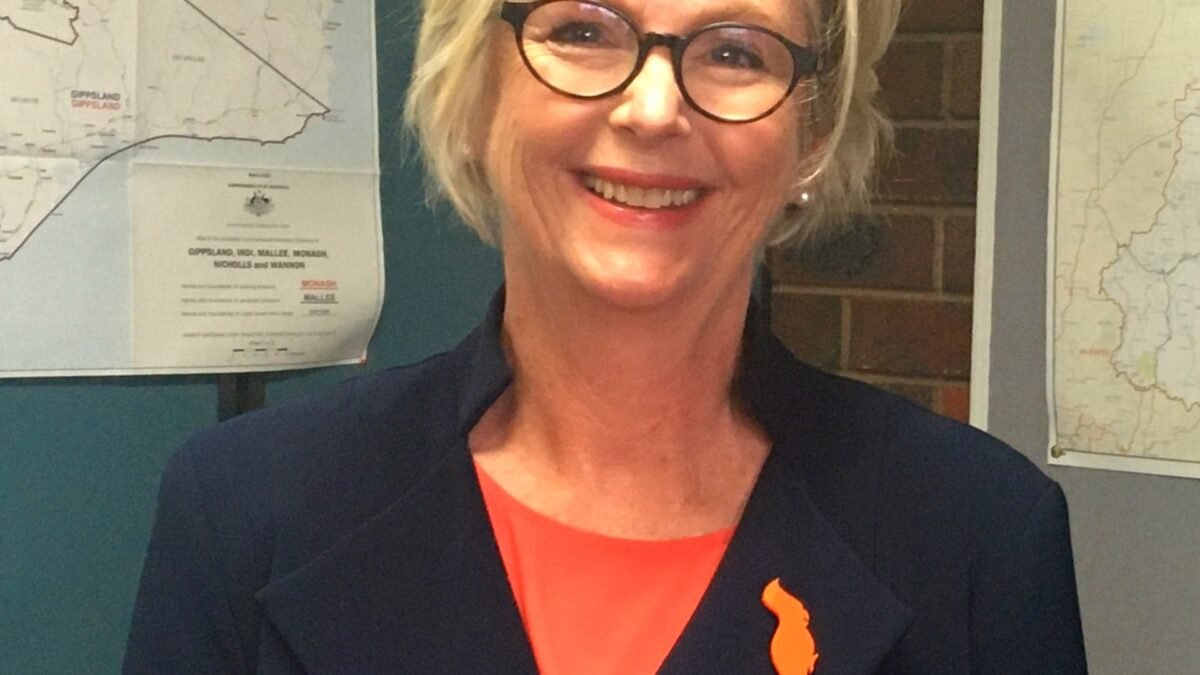
Australian independent MP Helen Haines is in a critical condition in hospital after being struck by a car outside her electorate office in the Victorian town of Wangaratta on Monday afternoon, in what police and the prime minister have described as a suspected targeted attack.
Prime Minister Anthony Albanese confirmed the incident in a televised press conference on Monday evening, calling it a “serious incident” and announcing that the country’s national counter-terrorism apparatus had been activated to investigate.
“I want to update Australians on a serious incident that has occurred in Victoria this afternoon. Helen Haines, the member for Indi, was attacked outside her electorate office in Wangaratta,” Mr Albanese said, according to Reuters.
“All of our thoughts are with Helen, her family, her friends, her team, and her community at this extremely difficult time. We are praying for her full recovery. I want to thank the first responders for their extraordinary work.”
The 65-year-old federal MP was loading items out of her car boot in a parking bay on Murphy Street, outside her regional electorate office, when a white Toyota LandCruiser struck her at about 3.30pm local time, according to Victoria Police and eyewitness accounts reported by Australian media.
She was pinned underneath the vehicle and rushed to hospital with severe lower-body injuries. As of Monday evening, she remained in a critical condition.
A 43-Year-Old Man in Custody
A 43-year-old man from Tarrawingee, a small locality in north-east Victoria, was arrested at the scene by a bystander, police said. Witnesses reported that the driver had passed Ms Haines in the car park before turning the vehicle back towards her.
A local barber told 7News Australia that he pulled the driver from the car and wrestled him to the ground, and police confirmed that a knife had been recovered from inside the Toyota LandCruiser, according to reports.
“It is not known yet if the parties are known to each other,” police said, in statements carried by Australian broadcasters.
Victoria Police’s Acting Superintendent Ashley Mason told a press conference that there was no further threat to the public, but investigators had yet to determine whether the act was deliberate or what motivated it.
The question of motive is now at the centre of the investigation. Mr Albanese told reporters that it was “too early in this investigation for me to provide you with details of what the motivation is behind this attack”.
He confirmed that the Joint Counter Terrorism Team — comprising the Australian Federal Police, Victoria Police and the domestic spy agency ASIO — had been activated alongside state investigators. “The Australian Federal Police, Victoria Police and ASIO are working together on this,” he said.
Family Asks for Privacy
In a statement issued by her office on Monday afternoon, Ms Haines’s family said she was receiving medical care and thanked those who had come to her aid.
“This afternoon, our beloved Helen was involved in an incident outside her Wangaratta Electorate Office, and is receiving medical care,” the statement read. “We thank the swift assistance of bystanders and the dedicated health workers who assisted her, and police for their response.”
“Our family, and Helen’s staff, will be making no further comment at this time, and ask that their privacy be respected by the public and media. Please keep Helen in your thoughts.”
The statement did not give further details of her condition, though AAP, Australia’s national newswire, reported that she remained critical on Monday evening.
Who Is Helen Haines?
Dr Helen Haines has represented the regional seat of Indi in north-east Victoria as an independent in the federal parliament since 2019, when she succeeded fellow independent Cathy McGowan. She was re-elected in 2022 and again in the 2025 federal election.
Before entering politics, she worked as a nurse, midwife and health researcher. She and her husband have lived in north-east Victoria for almost four decades, where they run a small farm.
Ms Haines came to national prominence on a platform of political integrity and transparency, championing the establishment of a federal anti-corruption commission — a campaign she pursued long before the crossbench independents known as the “teals” reshaped Australian politics in 2022.
In 2022 she was awarded the McKinnon Prize in Political Leadership alongside then-Foreign Minister Penny Wong, an independent non-partisan award run by the Susan McKinnon Foundation and the University of Melbourne, recognising political leaders who build connection and trust.
Mr Albanese described her on Monday as “fiercely intelligent, but most importantly… a thoroughly decent human being, full of integrity and respected right across the Parliament and by everyone who comes into contact with her”.
Analysis: Why It Matters
Political violence is vanishingly rare in Australia
Targeted attacks on sitting parliamentarians are almost unheard of in modern Australia. While MPs have faced harassment, stalking and intimidation — and electorate offices have occasionally been vandalised — the use of a vehicle as a weapon against a federal lawmaker outside her own office represents an extraordinary escalation.
The incident will inevitably be compared with the broader global pattern of political violence of the past decade, including the murders of British MPs Jo Cox in 2016 and David Amess in 2021, both of whom were attacked while performing constituency duties. In Australia, it will prompt immediate questions about whether the country’s political class, long considered relatively accessible to the public, needs to reassess that openness.
The counter-terrorism framing carries its own weight
The decision to activate the Joint Counter Terrorism Team is significant — but it is not, at this stage, evidence that the attack was ideologically or politically motivated. Australian authorities routinely deploy counter-terrorism resources to high-profile incidents involving public figures as a precaution, precisely because ruling out a terrorism link requires the agencies best equipped to do so.
Mr Albanese’s careful wording — “it is too early to say what had motivated the attack” — keeps both possibilities open. The investigation’s dual track, with state police examining the mechanics of the crash and federal agencies probing the driver’s background and any ideological trail, is the standard playbook for exactly this kind of ambiguity.
Indi is more than a seat
Helen Haines occupies a special place in Australian political folklore. The Indi movement — the community-led campaign that unseated Liberal incumbent Sophie Mirabella in 2013 with Cathy McGowan, and was carried forward by Haines in 2019 — became the template for the teal independent wave that redrew the political map at the 2022 election.
An attack on Haines is therefore felt as an attack on one of the most symbolically loaded seats in the country. Her long-standing anti-corruption advocacy also means she is a figure some will inevitably view through the lens of political grievance, even before any motive is established.
Women in public life face a rising tide of abuse
Research across multiple democracies has documented a steady rise in threats, harassment and intimidation directed at women in politics, with women MPs reporting disproportionate levels of abuse. If the investigation establishes that Ms Haines was deliberately targeted, it will feed directly into that debate in Australia — where parliamentary committees have repeatedly examined the safety of MPs and staff, particularly women.
The security question is now unavoidable
Regional MPs’ offices are deliberately open, shopfront-style premises — designed to be welcoming to constituents. Monday’s attack will force a painful review of that model: the balance between accessibility and protection, between a parliamentarian’s duty to be present in her community and the state’s duty to keep her safe.
Expect federal security agencies to examine threat assessments for all 151 House of Representatives members, and for the issue of MP security — perennially sensitive in a country proud of its unguarded democracy — to dominate the next sitting weeks of parliament.
What to Watch Next
- Medical updates: Ms Haines’s condition remains the story’s immediate centre; any change will be announced by her family or hospital authorities, who have so far disclosed little beyond “critical”.
- Charges and the motive question: the 43-year-old suspect’s interview with investigators — and whether he is charged with attempted murder, assault or a terrorism-related offence — will shape the entire investigation.
- Counter-terrorism classification: whether the Joint Counter Terrorism Team formally designates the incident a terrorism matter, or stands its resources down, will be the first hard signal of the case’s nature.
- A security review for MPs: the Albanese government will face pressure to announce a review of protections for federal MPs, particularly those with regional electorate offices.
- The political response: cross-party condemnation is assured; the harder test will be whether leaders can resist speculation about motive before the police report their findings.
Sources
- Reuters — “Australia PM says independent MP Helen Haines has been attacked”
- AAP — “Terror probe after MP critically injured in attack”
- ABC News Australia — “MP Helen Haines critically injured in ‘attack’ near electorate office, PM says”
- University of Melbourne — “Senator Penny Wong and MP Helen Haines awarded 2022 McKinnon Prize”

About the Author — Abdul Mannan
Related Articles
Egypt’s Parliament Delays Vote on Military Backing for Saudi Arabia as Houthi Attacks Intensify
Egypt's parliament postponed until Monday its vote on authorising military support for Saudi Arabia, as Sisi pledged Cairo…
Four Soldiers Killed, 39 Hurt in Wainwright Base Fire; Carney Declares National Mourning
Four service members were killed and 39 injured — 19 critically — when a wind-driven fire swept a…
Deaths Confirmed After Major Fire at Canadian Forces Base Wainwright in Alberta
Canada's military has confirmed deaths and injuries after a fire broke out in the training area of Canadian…