
Egypt’s Parliament Delays Vote on Military Backing for Saudi Arabia as Houthi Attacks Intensify

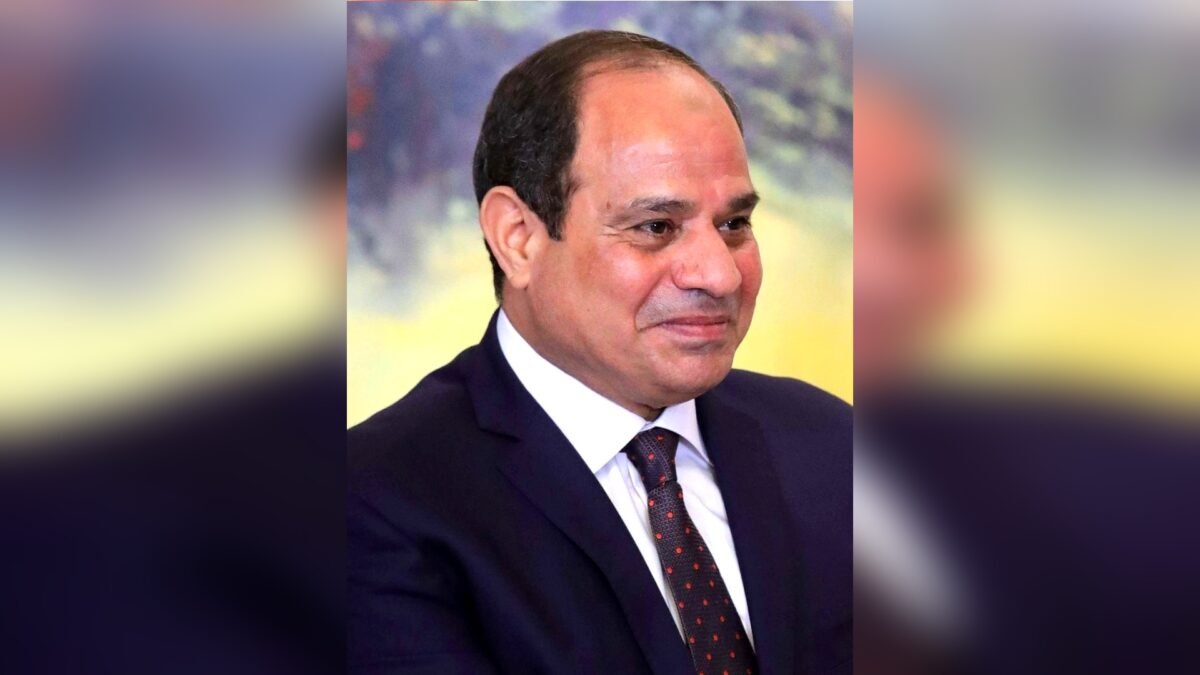
Egypt’s parliament on Sunday postponed until Monday its vote on President Abdel Fattah el-Sisi’s request for authorisation to send military support to Saudi Arabia, as the kingdom comes under near-daily attack from Yemen’s Iran-aligned Houthis — a decision that could draw one of the Arab world’s largest armies into a war that is rapidly becoming another front in the wider US-Israeli confrontation with Iran.
Two lawmakers told the Agence France-Presse that the urgent parliamentary session, convened after Sisi asked for authorisation on Saturday, was extended so that all members could be heard. Lawmaker Ibrahim Kholeif told AFP the session was extended “to give all lawmakers the opportunity to speak and express their views,” adding that parliamentarians were mostly in support of the move, according to The News, which carried the AFP report.
Another member of parliament, Maha Abdel Nasser, told AFP that proceedings would resume on Monday “to allow all lawmakers to be heard,” while Egyptian media reported that deliberations could continue into Tuesday. Both lawmakers said no details were being discussed about what form Egypt’s military support for Saudi Arabia could actually take.
The postponement came a day after Sisi told a military academy graduation ceremony in Egypt’s New Administrative Capital that it was “inconceivable” for Cairo to stand by while Saudi Arabia’s security and stability were threatened, and formally requested parliament to authorise the military to help defend the kingdom “if requested.”
Following a meeting of Egypt’s National Defence Council on Sunday, chaired by Sisi and attended by the parliamentary speaker, the prime minister and the army chief, the presidency said in a statement that “Egypt will provide Saudi Arabia with all necessary and possible forms of support to defend its security and stability, protect its resources, territorial integrity and Islamic holy sites,” according to Reuters.
Sisi said on Saturday that Egypt would act in accordance with guidance from Saudi King Salman and Crown Prince Mohammed bin Salman, who visited Cairo on September 15 for talks after fighting in Yemen reignited, Reuters reported.
Houthi attacks intensify
The emergency session was called in response to an intensifying campaign of missile and drone strikes by the Houthi movement against Saudi Arabia, which has escalated since the collapse of a truce in Yemen and the reigniting of the country’s civil war earlier this year.
The deadliest single incident came on October 10, when a missile struck a complex housing Terminals 3 and 4 — which handle domestic flights — at Riyadh’s King Khalid International Airport, killing at least 13 people, including an American, and wounding hundreds, according to the Wall Street Journal and Reuters. The coalition’s military spokesperson has said that King Khalid International Airport came under 20 attacks since October 1, and that strikes on Saudi airports had left 19 people dead and 364 injured, the reports compiled by regional media show.
Saudi authorities said on Sunday that a hostile projectile struck the southern city of Najran, injuring six people and damaging three homes and three vehicles, according to the Wall Street Journal. A Saudi official told the Journal in a statement: “The kingdom of Saudi Arabia will take all necessary measures to ensure that its citizens and residents are safe and its territory is secure,” adding that the Houthis “represent a global threat and require a global response.”
The Journal also reported that the kingdom is looking to recruit foreign fighters to help its Yemeni allies, while remaining open to a diplomatic solution to a conflict that, in the words of people familiar with Saudi strategy, otherwise looks hard to contain.
The Houthis, who control the capital Sanaa and much of northern Yemen, have described their strikes as retaliation for Saudi military action against Yemen. The Houthi-run parliament’s speaker, Yahya al-Raei, wrote to his Egyptian counterpart on Saturday warning Cairo against military involvement alongside Saudi Arabia, according to the Houthi-run Saba news agency — a claim reported by the Houthi channel al-Masirah that remains a single-party assertion.
Rashad al-Alimi, chairman of Yemen’s Presidential Leadership Council, welcomed Egypt’s stance as a joint response to shared threats, regional outlets reported.
A coalition under strain
The Saudi-led coalition that intervened in Yemen in 2015 to support the internationally recognised government against the Houthis has been fighting a grinding campaign for more than a decade. Egypt joined the coalition at the outset but played a limited combat role, according to Reuters — a precedent that hangs over the current debate in Cairo about how far any new commitment would go.
But the character of the war has changed. Fighting between the coalition and the Houthis has escalated sharply in recent weeks, becoming another front in the wider conflict that began when the United States and Israel launched strikes against Iran in late February. The Houthis have imposed a blockade on the Bab el-Mandeb strait, choking a critical oil-shipping route, and have repeatedly targeted Saudi airports, energy infrastructure and — more recently — Red Sea shipping.
The coalition’s military spokesperson said air defences downed two ballistic missiles aimed at Khamis Mushait and three drones over Riyadh and the Eastern Province over the weekend, according to regional reporting, even as strikes continued to land.
The mounting attacks have begun to bite into Saudi Arabia’s economic ambitions. The Future Investment Initiative — the kingdom’s flagship investor gathering, nicknamed “Davos in the Desert” and scheduled for October 26 to 29 in Riyadh — has become a barometer of international nerves. The Wall Street Journal reported on Sunday that some bankers and executives at JPMorgan Chase and Citigroup are carefully monitoring travel plans to the conference and in some cases already cancelling meetings, with no formal decision yet made by either institution. Reuters reported earlier that the kingdom plans to offer a hybrid format so executives can attend remotely.
Diplomatic flurry around the escalation
The region’s diplomacy has gone into overdrive around the Saudi-Houthi escalation. French Foreign Minister Jean-Noel Barrot was due to arrive in Riyadh on Sunday evening ahead of President Emmanuel Macron’s tour of the Gulf, where he is expected to reaffirm Paris’s support for the kingdom, The News reported.
Russian Foreign Minister Sergei Lavrov was scheduled to visit Tehran on Monday for consultations with Iranian officials on bilateral agreements, Iran’s foreign ministry said in a statement.
Iran’s Foreign Minister Abbas Araghchi, meanwhile, urged Washington to consider Tehran’s proposal for reopening the Strait of Hormuz, according to The News, which reported that Iranian officials have reiterated that Tehran’s terms for easing regional tensions — including a seven-day ceasefire proposal first submitted in September — remain on the table for Washington to review. Under the framework outlined by Tehran, the strategic waterway would reopen by the sixth day, followed by formal talks on the seventh, the report said.
Hours after Egypt’s parliament announced the delay, Egyptian Foreign Minister Badr Abdelatty said in a post on X that he had discussed regional developments and the importance of de-escalation during a phone call with his Saudi counterpart, Prince Faisal bin Farhan, according to Devdiscourse.
Why It Matters: The Analysis
Egypt’s entry into the fight against the Houthis would not simply add another flag to the Saudi-led coalition — it would fundamentally change the geometry of a conflict that is already spilling beyond Yemen’s borders. Cairo commands one of the largest standing armies in the Middle East and sits astride the Suez Canal, a waterway whose revenues have already been damaged by Houthi attacks on commercial shipping. When a regional military power of that weight moves toward a war vote, the region pays attention.
Yet the design of Sisi’s request is as revealing as its substance. Authorisation is conditional — “if requested” — and deliberately silent on what form the support would take. That ambiguity is not an accident. It gives Cairo the option of providing defensive help, such as air-defence batteries, naval escorts or logistical support, without committing Egyptian troops to offensive operations inside Yemen, where the 2015 precedent shows how easily intervention can turn into a long, thankless entanglement. The conditional phrasing also keeps the burden of the decision on Riyadh: Egypt will not be the one who asks for the war, only the one who answers.
The one-day postponement of the vote is itself a diplomatic instrument. A parliament that votes on Sunday rushes; a parliament that debates through Monday and possibly into Tuesday is seen to deliberate — and deliberation buys time for back-channel coordination with Riyadh, Washington and the Gulf capitals that would be affected by an Egyptian deployment. It also lets the domestic and international audiences absorb the scale of what is being contemplated: this is the first time since 2015 that Egypt has formally moved toward authorising combat involvement in Yemen, and the political stakes of getting it wrong are enormous.
For the Houthis, the calculation is straightforward deterrence messaging. The warning letter to Cairo’s parliament — even as a single-party claim — signals that the movement views Egyptian involvement as a red line, and hints that Egyptian interests, from the Suez Canal to Red Sea shipping, could become targets. The Houthis have already demonstrated an ability to strike 1,000 kilometres into Saudi territory; Cairo will have weighed the risk that joining the coalition brings the war to its own doorstep.
And the shadow over all of this is the wider war with Iran. Every front that opens — Yemen, the Bab el-Mandeb, the Strait of Hormuz, Red Sea shipping — tightens the link between the Saudi-Houthi confrontation and the US-Israeli campaign against Tehran. If Egypt deploys, the conflict becomes unmistakably a regional war with a major Arab army involved, and the off-ramps narrow. If the vote produces only a pledge without a request from Riyadh, Cairo will have signalled solidarity without paying the price. Monday’s resumed debate will show which of these outcomes the region is heading toward.
What to Watch Next
- Monday’s resumed parliamentary debate: whether Egypt’s parliament votes to authorise military support, and whether the deliberations stretch into Tuesday as local media suggested.
- Whether Riyadh formally requests Egyptian help: Sisi’s authorisation is conditional on a Saudi request — no request, no deployment.
- The form of any support: air defence, naval or logistical aid would signal a defensive posture; ground forces or strike aircraft would mark a far deeper commitment.
- Houthi retaliation signals: whether the movement follows its warning to Cairo with strikes on Egyptian or Saudi maritime and energy targets.
- Diplomatic traffic: Macron’s Gulf tour, Lavrov’s Tehran visit, and whether Washington engages with Iran’s Hormuz ceasefire proposal will shape the conflict’s next phase.
Sources
- Reuters — Egypt says ready to give Saudi Arabia necessary support amid Houthi conflict (October 18, 2026)
- The News (AFP) — Egypt parliament delays vote on military support to Saudi Arabia (October 19, 2026)
- The Wall Street Journal — Saudi Arabia’s military limitations are being exposed by Houthi attacks (October 19, 2026)
- New York Post — Egypt prepared to defend Saudi Arabia after deadly Houthi airport attack (October 17, 2026)
- The Wall Street Journal — Some Wall Street leaders are weighing bailing on ‘Davos in the Desert’ after attacks on Riyadh (October 19, 2026)

About the Author — Abdul Mannan
Related Articles
Four Soldiers Killed, 39 Hurt in Wainwright Base Fire; Carney Declares National Mourning
Four service members were killed and 39 injured — 19 critically — when a wind-driven fire swept a…
Deaths Confirmed After Major Fire at Canadian Forces Base Wainwright in Alberta
Canada's military has confirmed deaths and injuries after a fire broke out in the training area of Canadian…

Zelensky Asks EU for €70bn More as Brussels Summit Ends Without New Ukraine Funding Deal
Zelensky asked 27 EU leaders in Brussels for an additional €70bn to cover Ukraine's 2027 war costs; the…