
Trump Blames Immigration for France Riots, Warns Paris Could Become a ‘Muslim City Very Soon’

Trump: “Paris Is Going to Be a Muslim City Very Soon”
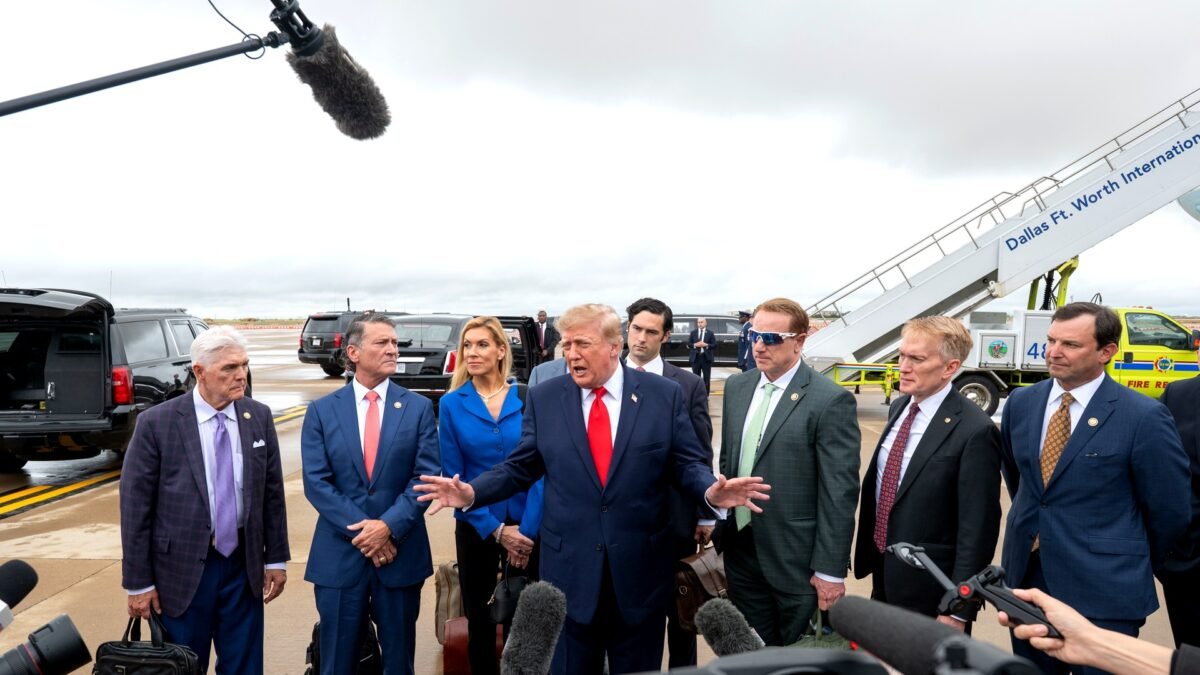
United States President Donald Trump on Monday blamed immigration for the wave of unrest that has swept across France, predicting that Paris would become “a Muslim city very soon” and urging France and Europe to close their borders. The remarks, made to reporters outside the White House as he departed for a campaign rally in Kansas, according to the New York Post, marked his sharpest intervention yet in the French crisis and set up a direct clash with French President Emmanuel Macron’s own account of what is driving the turmoil.
“I told him a long time ago, ‘You’re making a big mistake in France. You’re letting everybody from the world come in. The whole world was coming in,'” Trump said, describing an earlier warning he said he had given Macron, according to the Washington Examiner. “As you know, Paris is going to be a Muslim city very soon, and that wasn’t the deal.”
Trump said he had warned the French president from the start of their relationship during his first term. “I told him as soon as I met him. I said, ‘You’re making a big mistake,'” Trump said, according to the Washington Examiner. “We closed our borders. He didn’t, and you know what? His borders are a problem.”
“Not Schools, Not Anything — It’s Immigration”
According to The Times, Trump reduced the unrest to a single cause: “What’s happening in France has to do with immigration, not schools, not anything,” he told reporters on Monday. “It’s immigration, and I told President Emmanuel Macron, close up your borders.”
He went further, warning of consequences for Europe as a whole. “If Europe doesn’t close its borders and bring the criminals out, like the people that are protesting, Europe is finished,” Trump said, according to both USA Today and The Times.
The comments followed a Truth Social post on Sunday in which Trump wrote: “France is burning! The immigration of people from an entirely different world, people with hatred in their hearts, has shattered that once-great country. Close your Borders and take control, before it is too late!” according to The Times. USA Today reported that Trump also used the platform to claim that “the migrants have taken over France” and that they must “CLOSE THE BORDERS, FAST!”
Vice President JD Vance echoed the line on Saturday, writing on X that “Western liberals imported the third world into France and other countries in the name of diversity and compassion” and that they had “ignored fundamental questions of assimilation and compatibility,” according to Madhyamam Online.
A Weekend of Burning Cars and Looted Shops
Trump’s remarks came after a weekend in which nationwide demonstrations in France degenerated into some of the country’s worst unrest in years. The protests began in late September as a student movement demanding more funding for education and better conditions in schools, according to the Washington Examiner. They were later joined by labour unions, farmers and other workers’ groups expressing outrage over the cost of living and record-high fuel prices, according to USA Today.
The scale of the violence, according to the outlets reporting it, was severe. Reuters reported that French authorities recorded nearly 2,400 arrests and close to 1,000 injured officers, according to Newsmax. The Times reported that at least 3,000 shops were ransacked nationwide, nearly 1,000 police officers were injured, and the 19th-century town hall in Limoges was destroyed by fire. Madhyamam Online reported that Interior Minister Laurent Nunez said around 1,800 people had been arrested, that Paris police recorded a “record” 855 arrests, and that around 500 police officers, firefighters and paramedics were injured.
In Paris, police imposed an overnight curfew from 11pm on Monday until 6am on Tuesday in two areas of the capital, including Place de la Republique and the Les Halles shopping district, with demonstrations and gatherings banned from 8pm, according to EuropeSays. Several other cities introduced restrictions, including overnight curfews for minors. Prime Minister Sebastien Lecornu called for partial curfews in affected areas rather than a nationwide restriction, and said that despite the severe violence and extensive property damage, “no one was killed, and that is a miracle,” according to EuropeSays.
The government also ordered major online marketplaces, including eBay, Vinted, Meta, TikTok, Amazon and Leboncoin, to immediately remove listings for stolen goods after looted items appeared for sale, according to The Times. Anne Le Henanff, the digital minister, summoned platform executives to a meeting with justice ministry representatives.
Macron’s Response: Blame the Far Left, Not Immigrants
Macron offered a markedly different account in a televised national address from the Elysee Palace on Sunday night. He condemned what he described as “unbridled violence” and distinguished between peaceful demonstrators with legitimate grievances and those who had smashed property and looted shops, according to The Times and NowLivo.
“Watching these images, we have all asked ourselves how could French people do this to France?” Macron said, according to BritBrief. “Nothing justifies” violence, he added, saying officials would be able to ban certain gatherings if deemed necessary. “Those who looted will have to pay back for the damage, and those who sought to bring down the Republic will be held accountable,” he said, according to The Times.
On causes, Macron pointed in two directions: he said high fuel prices tied to the conflict in the Persian Gulf were one reason people had taken to the streets — an explanation for part of the public’s economic anger — while blaming the looting and attacks on buildings on far-left groups joined by criminals, according to NowLivo. His ministers have likewise blamed “ultra-left” groups for the violence, according to The Times.
Trump’s suggestion that Macron was blaming him personally for the unrest was rejected by fact-checkers. According to NowLivo and MEAWW, citing reporting from the BBC, AFP, Reuters, PBS and Politico, Macron did not blame Trump for the riots — neither his address nor the official transcript contains any such statement. When a reporter raised the claim at the White House on Monday, Trump called it “fake news,” according to Democrata.
Macron also acted on the political fallout: he tasked Interior Minister Laurent Nunez with heading a security and intelligence review to prevent future riots, and refused Nunez’s offer to resign on Sunday, according to the Washington Examiner. Opposition figures called for the minister’s removal, and the mayors of Paris, Marseille and Limoges criticised the authorities’ response, according to The Morning Post blog. National Rally chairman Jordan Bardella dismissed Macron’s address as “pathetic,” while former prime minister Edouard Philippe, who is standing for the presidency, said he would have “preferred decisions enabling the restoration of order and the re-establishment of the authority of the state,” according to The Times.
Analysis: Why It Matters
1. Two stories about the same street
What makes this episode striking is that Washington and Paris are now narrating the same burning barricades in two completely different languages. For Macron, the peaceful core of the protests is about purchasing power, school conditions and fuel prices — legitimate grievances that he says must be heard — with the violence the work of ultra-left fringe groups and criminals. For Trump, none of that is the story: it is immigration, “not schools, not anything.”
The distinction matters because it dictates the prescription. Macron’s answer is a security and intelligence review, prosecutions of looters and a listening exercise on living costs. Trump’s answer is border closures and removals. French authorities, according to NowLivo, had not established a link between immigrants and the rioting — but Trump’s framing does not depend on the French police blotter. It depends on an image of a capital he has been warning about for the better part of a decade.
2. The midterms clock
USA Today placed Trump’s remarks in an unmistakable domestic frame: the midterm elections are two weeks away, the president’s approval rating is sagging, and Republicans are facing ballot-box troubles tied to voter frustration over the economy and the higher costs caused by the Iran war. In that context, the French riots become useful stagecraft — a cautionary tale deployed for an American audience.
This is a familiar Trump technique: take a foreign crisis, extract a one-line moral about immigration, and aim it at the home electorate. It costs nothing diplomatically that he has not already spent, and it converts distant footage of burning cars into an argument for his own border policies. The Kansas rally he was departing for when he spoke is the tell — the audience for “Europe is finished” was never in Europe.
3. The Franco-American blame loop
The exchange exposes how quickly a domestic French crisis becomes a transatlantic argument. Macron pointed to the Persian Gulf conflict as a driver of French fuel prices — France, he noted, is living with the consequences of a conflict it did not join. Trump heard blame in that and called it fake news; the fact-checkers found no evidence Macron blamed Trump personally. Both leaders are really arguing with a caricature of the other.
Beneath the noise, there is a genuine policy collision. France’s government needs lower fuel prices and a credible budget; Trump needs the Iran war to end on his terms. Macron’s aside about the Gulf conflict was, in part, a message to Washington: your war is our inflation. Trump’s retort was the mirror image: your borders are your problem. Neither man is answering the other’s question.
4. A European week of unrest — and a French succession looming
France is not alone. Cost-of-living protests were also reported over the weekend in Belgium, Italy and Portugal, according to European media cited by The Morning Post blog. In Milan, looting led to 271 arrests, including 220 minors, and Prime Minister Giorgia Meloni held meetings on measures to crack down on youth violence.
But France’s crisis has a particular sharpness because of what is coming: the presidential election is about six months away, and Macron cannot stand again. Every curfew, every torched town hall and every televised address is now also a campaign event — for Bardella’s National Rally, for Philippe’s centre-right bid, and for whoever else enters the field. The unrest is sharpening the debate over public order, purchasing power and public services exactly as the succession battle begins.
5. Words with a long memory
Trump’s “Muslim city” line did not arrive from nowhere. He told reporters he had been warning Macron since 2017, and earlier in October he had already attributed French student protests to migration and Islam, according to NowLivo. For his supporters, this is consistency — a leader who called it years ago. For his critics, it is the same broad brush that paints a complex, multi-cause protest movement as a single story about borders.
What is new is the timing and the venue: a president two weeks from midterms, standing outside the White House, using another country’s riots to prosecute a domestic immigration argument while that country’s own leader insists the causes are economic and the culprits are the far left. The two accounts cannot both be the whole story — but in an election fortnight, the whole story was never the point.
What to Watch Next
- Whether the curfews hold. Paris police imposed overnight curfews in the capital’s protest hotspots; several other cities followed. The coming weekend will test whether the measures — and the ban on certain gatherings Macron flagged — actually calm the streets or simply move the confrontations elsewhere.
- Macron’s security review. Interior Minister Nunez is heading a security and intelligence review after surviving a resignation crisis. Its recommendations — expected to cover how demonstrations are policed and how looters are pursued — will be the first concrete test of Macron’s “crackdown on looters” pledge.
- The budget and the bond market. The unrest has already rattled French bonds and stocks, and investors are watching for a budget bill that reins in the country’s finances. The fiscal crisis and the street crisis are now feeding each other.
- Trump’s campaign trail. Watch how much of the Kansas rally — and the rest of the midterm run — is built around the “migrants have taken over France” frame. If it lands with voters, expect more foreign-footage-as-immigration-argument in the final two weeks.
- The French succession. With the presidency about six months from a vote Macron cannot contest, every development in the unrest is campaign material. Bardella’s dismissal of Macron’s address as “pathetic” and Philippe’s call for “restoration of order” are opening salvos in a race that the riots have just made harder to predict.
Sources
- USA Today — Trump weighs in on French riots, raising immigration fears before midterms
- The Times — French cities under curfew after two nights of rioting
- The Times — Macron vows rioters will pay for seeking ‘to bring down the Republic’
- New York Post — Trump predicts Paris is going to be a ‘Muslim city very soon’ as riots, looting rage in France
- Washington Examiner — Trump warns Paris will become ‘Muslim city’ unless France closes borders

About the Author — Abdul Mannan
Related Articles
Trump Signs Executive Order Creating NIH Women’s Health Division, White House Task Force Led by Melania Trump
President Trump signed an executive order creating a Women's Health Division at the NIH and a White House…
Trump Defends Russia Sanctions Freeze as Peace-Talk Tactic, Says Zelenskyy ‘Doesn’t Want to End This War’
Donald Trump used Sunday Truth Social posts to defend suspending new Russia sanctions as a way to keep…
Trump Gives Netanyahu ‘Complete and Total Endorsement’ Days Before Israel’s 27 October Election
President Donald Trump on Sunday gave Benjamin Netanyahu a 'Complete and Total Endorsement' ahead of Israel's 27 October…