
Trump Defends Russia Sanctions Freeze as Peace-Talk Tactic, Says Zelenskyy ‘Doesn’t Want to End This War’

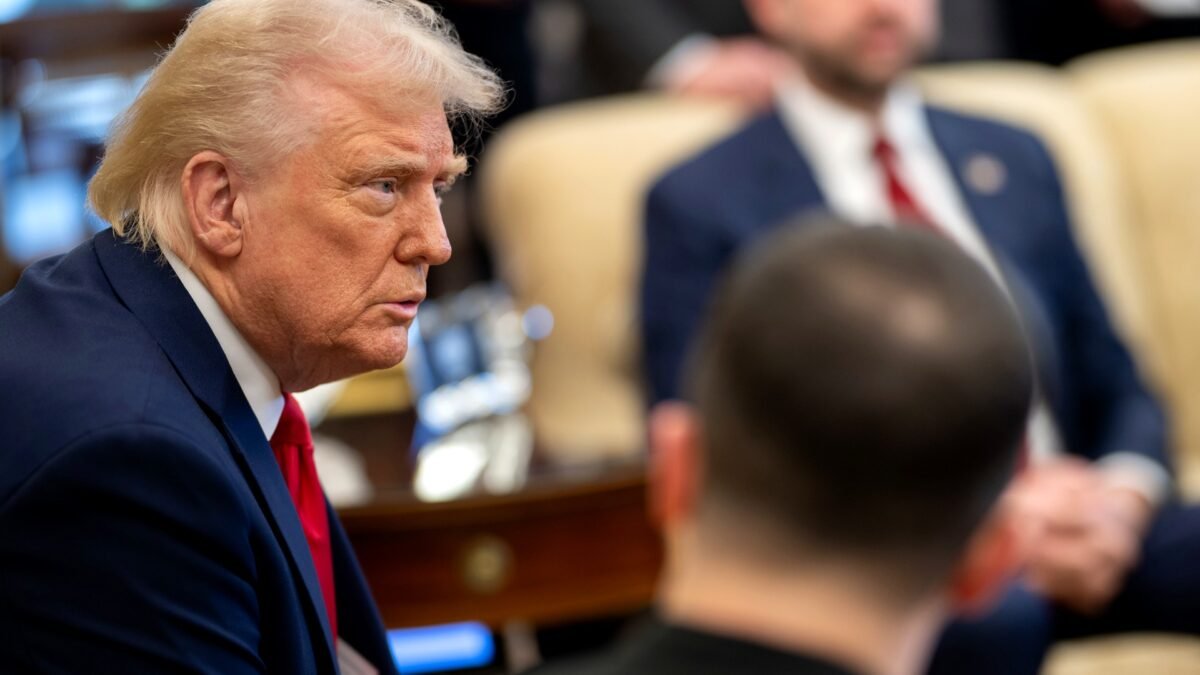
US President Donald Trump on Sunday mounted an extraordinary public attack on Ukrainian President Volodymyr Zelenskyy, declaring that the Ukrainian leader “doesn’t want to end this war” and defending his decision to suspend new American sanctions on Russia as a deliberate tactic to keep Moscow at the negotiating table.
In a series of posts on his Truth Social platform, Trump said the sanctions freeze — signed into effect late Friday, two days before sweeping new penalties were due to apply — was designed to protect what he called promising peace talks, according to Newsmax, which published the posts in full.
“My decision on Russia is a very simple one,” Trump wrote, in comments reported by Newsmax and the Washington Examiner. “I am in the process of negotiating Peace in the war between Russia and Ukraine, and don’t want to do anything that will drive, foolishly, Russia away from the bargaining table.”
He added that “great progress is being made, and that includes current hostage negotiations!” — without saying which hostages he meant or which negotiation he was describing.
The posts mark the sharpest escalation yet in the deepening row between the two wartime partners, and arrived just hours after Ukraine launched one of its largest drone strikes of the year on Russian energy infrastructure, striking a key oil terminal overnight on Saturday in defiance of Trump’s repeated demands that Kyiv stop attacking Russia’s energy sector.
The Zelenskyy attack
Trump’s criticism of Zelenskyy was blistering and personal. “Zelenskyy doesn’t care, and frankly, with all of the money that Europe is famously giving him, and that Crooked Joe Biden gave him in the past, he doesn’t want to end this war, and probably never did,” Trump wrote, according to Livemint’s account of the post.
“He could have made a better deal two years ago than he can now,” Trump added. “His country is in shambles, a large portion of his land is lost, his oceans and seas are gone, and his male population is low, wounded, and/or dead. I WANT THIS WAR END!”
The president also directly tied Ukraine’s drone campaign against Russian refineries to domestic American economic pain. “Zelenskyy is using Diesel Refineries in Russia as a target, knowing that these attacks are seriously hurting the world diesel markets, including those in the United States,” Trump wrote, according to Livemint. “Farmers, ranchers, and businesses of all kinds are suffering greatly from this, but Russia is, nevertheless, sending, at a low price, millions of barrels of diesel to the World.”
Zelenskyy pushed back the same day. In an interview with NBC News broadcast on Sunday, the Ukrainian president warned that siding with Russian President Vladimir Putin would be a “historic mistake,” according to the BBC’s wire coverage of the weekend exchanges. He also told NBC’s Meet the Press that Trump’s new diesel-import arrangement with Moscow “will hurt Ukraine,” according to Press TV.
The sanctions freeze, explained
On Friday night, Trump signed an executive order invoking the national-interest waiver provisions of the Lindsey O. Graham Sanctioning Russia and Iran Act of 2026 — a law he himself signed on September 18. The waived provisions would have imposed tariffs of up to 500 percent on Russian imports and up to 100 percent on goods from the top five purchasers of Russian oil and gas, according to Newsmax.
The move came two days before the first tariffs under the act were scheduled to take effect, according to the BBC’s account. Sanctions imposed under earlier executive orders remain in force, Newsmax reported, and the executive order lets the administration reinstate the penalties at any time.
Secretary of State Marco Rubio framed the suspension as a 60-day analytical pause, saying on Sunday that “the only thing that has been lifted is the diesel embargo,” according to the Washington Examiner. The pause, Rubio said, will be used to study the potential impact of the penalties on the US and global economies.
The diesel question is central. Earlier this month, Trump announced a deal under which Russia would supply hundreds of thousands of metric tonnes of diesel to American and global markets in an effort to bring down fuel prices. Zelenskyy denounced the arrangement as a “financial reward for Putin,” arguing that selling more energy commodities would replenish Moscow’s war chest.
Trump, in his Sunday posts, took the opposite view: Russia’s discounted diesel shipments are helping American consumers right now, and Ukrainian strikes on refineries are driving prices back up. According to the Centre for Research on Energy and Clean Air, China accounts for roughly half of Russia’s crude exports and India for about 37 percent — meaning the waived tariffs on energy buyers would have landed overwhelmingly on Beijing and New Delhi, America’s two most sensitive trade relationships in Asia.
A relationship in freefall
The Sunday exchange caps a week of escalating tension between Washington and Kyiv. Trump has grown openly hostile to the Ukrainian leader in recent weeks: he told Newsmax last Thursday, “I don’t trust anybody, honestly,” and has repeatedly rebuked Zelenskyy for continuing to strike Russian oil sites, blaming those attacks for high gasoline prices.
Other flashpoints have accumulated. The administration’s new diesel deal with Moscow drew Ukrainian condemnation. Disputes over Ukraine’s access to the Starshield military communications technology strained the partnership further last week. And the sanctions waiver itself — signed just as the administration was promoting fresh peace proposals — drew an immediate warning from Zelenskyy that abandoning the pressure instrument would be a mistake the United States would regret.
Russian envoy Kirill Dmitriev, for his part, celebrated the waiver, calling it “an important and truly historic moment” and arguing the measures would have inflicted “serious damage” on American and global markets, according to the BBC’s reporting.
Trump also used his Sunday posts to link the Russia negotiation to a wider diplomatic agenda, arguing that keeping Moscow cooperative serves US interests “particularly amid tensions with Iran” — and notably claiming that “Russia is doing very little, if anything, to help the Islamic Republic of Iran,” warning his strategy could be undermined if “stupid people get in the way.”
The posts came as Trump continues a midterm-elections campaign blitz across the country, with nationwide elections set for November 3 — a contest that has sharpened the administration’s focus on the cost of living, and fuel prices in particular.
Analysis: Why It Matters
1. Sanctions as a bargaining chip — or a surrender of one?
The defining question of the weekend is whether suspending sanctions preserves leverage or gives it away. Trump’s theory is simple and openly transactional: pressure instruments are most useful when the other side believes they might be used, and most damaging when they are actually fired during delicate talks. On this logic, waiving the Graham Act penalties is not weakness but tactics — a cooling measure that keeps Putin talking while the details of a settlement are worked out.
The competing theory — held by Zelenskyy, much of Congress, and most European capitals — is that sanctions are not just instruments of punishment but of credibility. Their value lies precisely in being enforced predictably, and suspending them signals to Moscow that pressure is negotiable. From Kyiv’s perspective, every waiver teaches the Kremlin the same lesson: hold out, escalate the rhetoric, and Washington will blink first. Both theories have historical evidence behind them; the uncomfortable truth is that neither side can prove its case until the talks either produce a settlement or collapse.
2. The personal dimension is now the diplomatic dimension
What makes this episode different from earlier US-Ukraine frictions is how thoroughly personal it has become. Trump is no longer debating policy with Zelenskyy; he is publicly questioning the Ukrainian leader’s motives, his honesty, and even his desire for peace. Calling a wartime ally’s leader a war-prolonger is not a negotiating tactic in any conventional diplomatic playbook — it is the kind of language usually reserved for adversaries.
That matters because personal chemistry between leaders has repeatedly determined the trajectory of this war’s diplomacy. The February 2025 Oval Office confrontation, in which Trump and Vice President JD Vance openly berated Zelenskyy on camera, froze US-Ukraine relations for weeks and reshuffled European security planning. Sunday’s posts suggest the personal rupture has never truly healed — and that Washington’s Ukraine policy is increasingly being shaped by Trump’s view of Zelenskyy himself rather than by the strategic stakes of the war.
3. Fuel prices have become the foreign policy
Strip away the rhetoric, and the most consistent thread in Trump’s argument is domestic economics: diesel prices, farmers, ranchers, and the cost of living ahead of the November 3 midterms. The president is explicitly trading a foreign-policy pressure instrument for near-term relief at the pump.
That is a defensible democratic priority — but it carries a risk. Once energy prices become the declared metric of success for Russia policy, Moscow gains a durable lever: it can modulate fuel flows to American markets in ways that reward or punish the administration. A foreign-policy strategy priced in dollars per gallon is one that an energy superpower can game, and the Kremlin has decades of practice at exactly that.
4. The India and China problem has not gone away
Rubio’s 60-day study period will, at some point, have to answer the question the waiver postponed: can Washington impose 100 percent tariffs on the top buyers of Russian energy without detonating its own relationships with Beijing and New Delhi? Roughly 87 percent of Russia’s crude goes to China and India combined, according to CREA figures. Secondary sanctions of that scale would effectively mean trade war with two of the world’s largest economies simultaneously — which is precisely why the waiver’s economic-impact review exists, and precisely why a future re-imposition looks politically harder the longer the pause lasts.
5. Kyiv’s leverage is eroding — and Zelenskyy knows it
Zelenskyy’s “historic mistake” warning is not just rhetoric; it is a recognition that Ukraine’s bargaining position weakens every time Washington distances itself. If the US treats sanctions relief as a goodwill gesture to Moscow, Kyiv’s own leverage — its drone campaign against Russian energy infrastructure — becomes the main pressure instrument left in play. But Trump’s Sunday posts explicitly criminalized that campaign in the language of American consumer pain.
The Ukrainian strategy now depends on keeping Europe united, funded, and engaged — a harder task as European governments face their own fiscal pressures and as the Brussels summit’s €70 billion funding question remains unresolved. The war’s next phase may be decided less by what happens on the battlefield than by whether Kyiv can find a sponsor willing to replace the one it is losing.
What to Watch Next
- The 60-day clock: Rubio’s analytical pause sets a deadline around mid-December. Whether the administration re-imposes the Graham Act penalties, extends the waiver, or lets it quietly lapse will be the clearest signal of whether this was tactics or policy.
- Putin’s response: Moscow has pocketed the waiver so far without offering visible concessions. Watch whether the Kremlin reciprocates with anything concrete — a prisoner exchange, a ceasefire proposal, or even a pause in strikes on Ukrainian energy infrastructure.
- Ukraine’s drone campaign: Kyiv showed this weekend it will not stop striking Russian refineries on Washington’s say-so. Any further major strikes — and any Trump response — will test whether the administration’s threats carry weight.
- Congressional reaction: The waiver provisions were written into law by Congress. Lawmakers from both parties have already criticized the move; the question is whether the 60-day window produces legislation that narrows the president’s waiver authority.
- The November 3 midterms: If fuel prices fall, Trump’s bet is vindicated at the ballot box. If they don’t — or if a collapsed negotiation makes the waiver look like a giveaway — the political arithmetic reverses.
Sources
- Newsmax — “Trump Defends Lifting Russia Sanctions to Keep Talks Alive” (18 October 2026)
- Washington Examiner — “Trump says Zelensky ‘doesn’t want to end this war’ and defends Russia strategy” (18 October 2026)
- Livemint — “Trump slams Zelenskyy, accuses him of prolonging Russia war after Kyiv launches one of biggest drone strike in Moscow” (19 October 2026)
- Press TV — “Trump defends Russia sanctions waivers, rebukes Zelensky for refusing to end war” (19 October 2026)

About the Author — Abdul Mannan
Related Articles
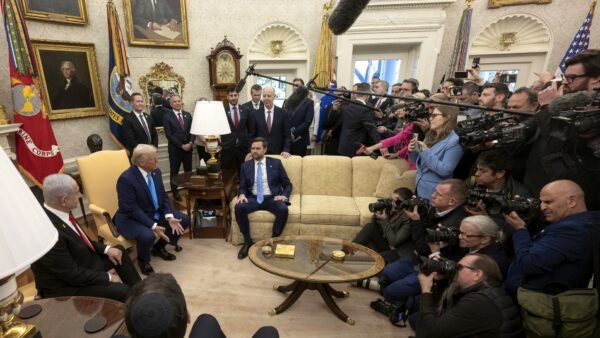
Trump Gives Netanyahu ‘Complete and Total Endorsement’ Days Before Israel’s 27 October Election
President Donald Trump on Sunday gave Benjamin Netanyahu a 'Complete and Total Endorsement' ahead of Israel's 27 October…

Two Killed, 11 Hurt as Pickup Truck Drives Through Youth Soccer Game in Wichita
A 34-year-old woman drove a pickup truck through a youth soccer game at Wichita's Stryker Sports Complex on…
Trump Delays Final Call on Russia Sanctions for Up to 60 Days
Trump says no final decision has been made on the Russia sanctions waiver as Rubio announces a 60-day…