
Trump Gives Netanyahu ‘Complete and Total Endorsement’ Days Before Israel’s 27 October Election

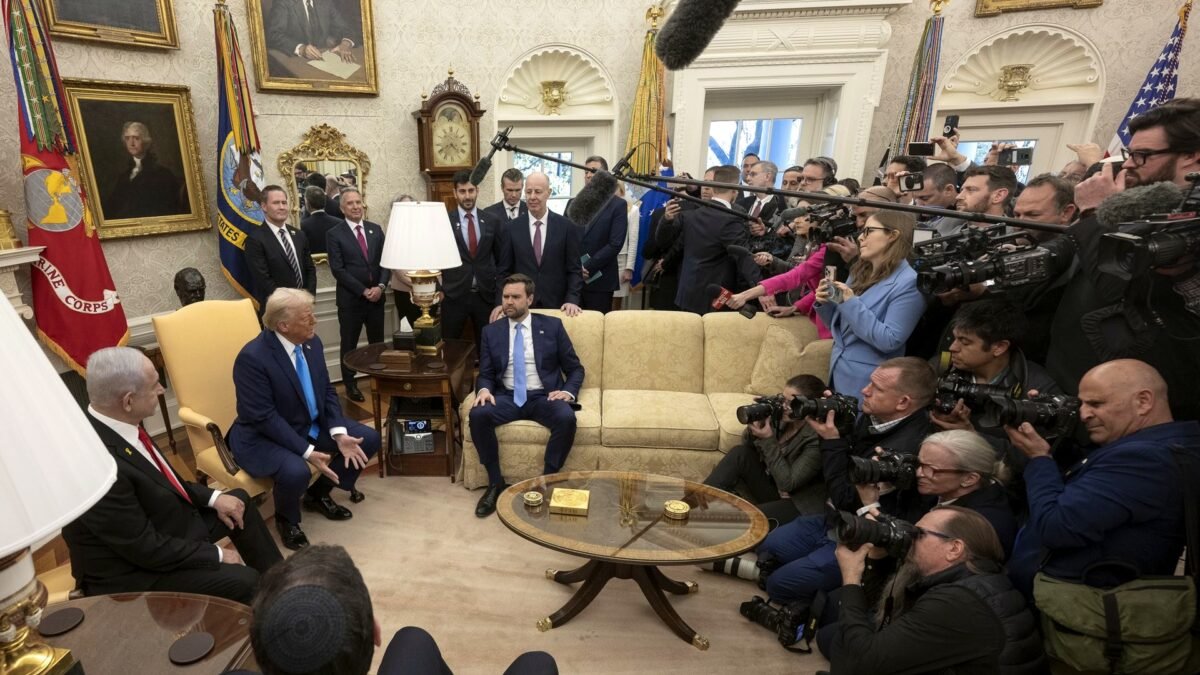
WASHINGTON — President Donald Trump on Sunday gave Benjamin Netanyahu a formal, full-throated endorsement ahead of Israel’s national election on 27 October, calling him a “great warrior Prime Minister” and declaring that only a Netanyahu victory would keep the United States committed to the joint confrontation with Iran.
The endorsement, posted on Trump’s Truth Social platform as an open letter addressed to “the Great People of Israel,” is believed to be the first time a sitting American president has publicly backed a candidate in an Israeli election, according to reporting by Axios. It landed nine days before the vote — the first Israeli national election since the Hamas-led attack of 7 October 2023 — and explicitly tied the ballot to the future of US-Israeli military action against Iran.
“If Israel has the wrong Leader, which would be anyone other than Bibi, America will have to do this work ourselves, and I am not inclined to do so,” Trump wrote, according to accounts of the post carried by the Wall Street Journal, the New York Post and Sky News. He described Netanyahu as “Strong, Brave, and Brilliant in the face of tremendous opposition” and added: “Please let this Letter serve to represent my Complete and Total Endorsement of Bibi Netanyahu in his coming Race for Re-Election as Prime Minister of Israel.”
The president went on to claim that Iran had been “militarily and financially destroyed” by the joint American-Israeli campaign and warned that “unless they change their ways, rapidly, we will soon finish the job.” “This is the kind of Partner that the United States of America is demanding of Israel,” he wrote.
A landmark intervention — after weeks of hesitation
The significance of the move lies as much in its timing as in its wording. As recently as Thursday, Trump had refused to commit himself. Asked in a Newsmax interview whether he planned to get involved in the Israeli race, he answered, “Well, they’d like me to be,” and when asked whether he trusted Netanyahu, he replied, “I don’t trust anybody, honestly,” according to Newsmax. In a Time magazine interview published on 1 October he had declined to endorse anyone, saying his priority was to “help them defend Israel,” and he would not say whether he could work with Netanyahu’s chief rival, former IDF chief of staff Gadi Eisenkot.
On Sunday, Trump told Axios in a short phone interview: “I was always going to do that. I just didn’t want to do it too soon. It is important that Israel has a person they can count on.” Asked whether he could work with a different Israeli leader, he answered: “Maybe I will, maybe I won’t. Who wants to take the chance?”
Axios noted that the reversal came after months of reported friction between the two men over strategy toward Iran. In June, according to several outlets, Trump accused Netanyahu of acting “crazy” for expanding operations against Hezbollah and weighing strikes in Beirut; in recent weeks Axios reported that the two had discussed a potential major new military operation against Iran, with Trump said to be hesitant about further strikes. On Thursday Trump said Iran had asked for a pause in attacks because negotiations were continuing: “They’ve asked us to please stop. And we do, because we’re negotiating with them.”
The contrast with Thursday’s other American statement on Israel was stark. On the same day, US Ambassador Mike Huckabee rejected an Israel Hayom report that Washington was pushing a Netanyahu-Eisenkot unity government, writing on X: “The US government is NOT trying to manipulate Israel’s election or telling @IsraeliPM what to do. Period. Full stop.”
A race with no clear winner
The election on 27 October will decide the composition of Israel’s 120-seat Knesset, and through it who becomes prime minister — a choice made by coalition arithmetic, not a direct vote. A governing majority requires 61 seats. Some seven million Israelis are eligible to vote, according to the Morning Chronicle.
Polling suggests neither camp commands a majority. A Zman Yisrael/Times of Israel poll taken on 14–15 October projected Eisenkot’s centrist Yashar party at roughly 24–26 seats against about 20 for Netanyahu’s Likud, with the opposition bloc at 54 seats and the pro-Netanyahu bloc at 49. A Kan public broadcaster survey published Sunday put Eisenkot’s bloc at 52 and Netanyahu’s at 51. A Channel 14 poll, by contrast — that channel is generally supportive of the Netanyahu coalition, according to the Algemeiner — projected a narrow majority for the right-wing bloc. An earlier Zman Yisrael poll found the two blocs tied at 53 seats each, with Arab parties holding the balance on 14.
In direct preference for prime minister, Eisenkot led Netanyahu 46% to 40%, the Times of Israel poll found. If no bloc reaches 61, Netanyahu would remain as caretaker prime minister until new elections are held, according to the Wall Street Journal.
Netanyahu, who turns 77 on 21 October, is Israel’s longest-serving prime minister, with nearly 19 years in office across several terms, the Journal reported. He returned to power in December 2022 at the head of a coalition with ultra-nationalist parties, and his campaign has leaned heavily on his close relationship with Trump as a reason to keep him in office, according to Sky News.
Much of the campaign has centred on who bears responsibility for the security failure that allowed the 7 October 2023 attack, which killed around 1,200 people and triggered the Gaza war, according to the Journal. Opposition parties argue Netanyahu must accept responsibility; he has blamed his security chiefs for withholding information and failing to wake him on the day of the attack — allegations they deny.
Reactions from Jerusalem to Tehran
Netanyahu moved within hours to convert the endorsement into campaign capital. He released a roughly 35-second Hebrew-language video aimed at Israeli voters, warning: “There is still a job to finish,” referring to the confrontation with Iran. “President Trump says I will do this, and he says he will do this, only if the two of us do it together. And therefore I ask you to listen to him,” he said, according to the Journal. He also thanked Trump on X, calling him “my friend Donald” and vowing: “The White House is Israel’s greatest friend, and we will ensure that the Iranian regime does not acquire nuclear weapons.”
On Sunday Netanyahu also posted on Facebook framing the vote as a stark choice: “It’s either right — or Palestine,” warning against what he called a left-wing government of Eisenkot backed by the Arab parties, according to JFeed. He added: “We have two years left in my friend President Trump’s term, and this is precisely the time to accomplish our main tasks on all fronts.”
Eisenkot answered the endorsement at a Tel Aviv conference, saying he “admires” Trump but that “Israel is a democratic country, only Israelis can choose their leaders,” according to the Morning Chronicle. His Yashar party is contesting a platform in which Eisenkot has said “Israel must do everything, including attacking Iran, to destroy its nuclear capability,” according to Responsible Statecraft — meaning the dispute is over who should deliver the Iran campaign, not whether it should be delivered.
Other opposition voices were sharper. Yair Golan of the Democrats party said he respected Trump but called Netanyahu “a diplomatic and security danger to Israel,” according to Silent Dossier. From the government’s far right, National Security Minister Itamar Ben Gvir welcomed the intervention, declaring “there is only one person capable of serving as Prime Minister, and that is Benjamin Netanyahu,” the Morning Chronicle reported.
In Tehran, Foreign Minister Abbas Araghchi hit back on X: “Last time you wanted to ‘finish the job’, Iran emerged even stronger. Want to try your luck again? Be our guest. But be careful; we have unfinished jobs too,” according to Globe TV. He accused Netanyahu of “driving America into another war to stay out of jail,” a reference to the prime minister’s ongoing corruption trial, which the New York Post has noted could see him face prison.
Analysis: Why It Matters
The presidency just crossed a line it had never crossed. American presidents have tilted Israeli politics before — through withheld loan guarantees, timed visits, or carefully worded doubts — but none had ever issued an explicit, signed, public endorsement of a candidate. Axios’s “first time ever” verdict is the story within the story: whatever one thinks of Trump’s verdict on Netanyahu, the precedent now exists, and every future president will be asked whether silence counts as a judgment. That it came seventy-two hours after Huckabee’s thundering denial that America manipulates Israeli elections suggests either extraordinary indiscipline inside the administration or a deliberate two-track act — and both readings are unsettling for the diplomatic fiction that allies do not pick each other’s leaders.
The endorsement is explicitly transactional — and the transaction is Iran. Read the letter carefully: Trump is not arguing that Netanyahu is the better domestic leader; he is telling Israeli voters that the American security umbrella is conditional on a name. “America will have to do this work ourselves, and I am not inclined to do so” makes US protection a prize for choosing correctly. That is a remarkable thing for an ally’s president to say aloud: alliance commitments are supposed to run to states, not to individuals. Eisenkot’s response — agreeing on the Iran mission while rejecting the interference — neatly exposes the trap. He is offering voters the same hawkishness without the humiliation of being told their ballot is a loyalty test.
Its electoral effect will likely be to harden camps, not to convert them. Israel Democracy Institute pollster Tamar Hermann told the Journal she saw “no swing as a result of this,” predicting only that it “could strengthen Netanyahu voters in their decision to vote for Netanyahu.” That fits the numbers: with the blocs separated by one to five seats and Likud trailing Yashar in every major independent poll, an endorsement that preaches to Likud’s base is more turnout machine than persuasion engine. The endorsement’s true target may be the ultra-Orthodox parties and far-right allies who drifted this summer — the same parties that saved Netanyahu in June’s 61–53 survival vote — reminding them that defecting now would mean defying Washington.
It binds the American and Israeli calendars together. Netanyahu’s Facebook post was unusually candid: “We have two years left in my friend President Trump’s term.” His arithmetic is plain — a Netanyahu government and a Trump presidency overlapping through 2028 is his strategic window for “main tasks on all fronts,” most plausibly Iran’s nuclear programme. For Trump, the endorsement is also domestic: with the US midterms on 3 November, just a week after Israel votes, it signals to his base that he remains the man who “finished the job” on Iran — even as the JTA notes the two-month US-Iran war has been paused since April, with slowed oil flows through the Strait of Hormuz and rising gasoline prices, the very pocketbook issues that decided 2024.
The risk for Netanyahu is that foreign praise cannot fix domestic records. The Post’s catalog of his vulnerabilities — the Gaza, Lebanon and Iran wars, the corruption trial, the Oct 7 failure — is not erased by a Truth Social post. Indeed, the endorsement gives the opposition its closing argument in a single line: “only Israelis can choose their leaders.” Hermann’s other finding — that Israelis who believe Israel’s security is a central consideration for Trump fell from 44% in June to 28% in July — suggests the public already suspects the American president’s motives are his own. An endorsement that reeks of the endorser can weigh more than the endorsee.
What to Watch Next
- The final polls. With surveys ranging from a 60–60 tie in Likud’s own numbers to a Channel 14 right-wing majority and a Kan 52–51 opposition edge, the last surveys before 27 October will show whether the endorsement moved anything — or merely moved the narrative.
- Whether Iran becomes the campaign’s closer. Watch for any new Israeli or American statement on Iran’s nuclear programme in the nine days left — Netanyahu’s video already made “finishing the job” his closing pitch, and Axios has reported both leaders discussing a possible major operation.
- Eisenkot’s coalition signals. If the opposition bloc lands short of 61, attention turns to the Arab parties and the centre: can Eisenkot’s “only Israelis decide” line hold a coalition together, or does the arithmetic hand Netanyahu caretaker power by default?
- The corruption trial calendar. Netanyahu turns 77 on 21 October — six days before the vote — and his trial continues regardless of the result. A win does not end his legal exposure; it only changes the forum in which it plays out.
- 3 November in America. The US midterms follow Israel’s vote by a week. Trump’s willingness to spend American credibility on a foreign endorsement is itself a data point for voters judging his “America First” record — and for Rubio, who on Saturday was still warning of a West Bank “crisis” while the president was doubling down on the prime minister.
Sources
- The Wall Street Journal — Trump Endorses Israel’s Netanyahu for Re-Election
- New York Post — Trump endorses Netanyahu ahead of Israel’s elections: ‘Will never let you down’
- Sky News (via Capital FM) — Trump endorses Netanyahu ahead of Israeli elections
- The Algemeiner — Trump Gives Netanyahu ‘Complete and Total Endorsement’ Nine Days Before Israeli Election
- Morning Chronicle — Trump backs ally Netanyahu ahead of Israel’s tight election

About the Author — Abdul Mannan
Related Articles

Two Killed, 11 Hurt as Pickup Truck Drives Through Youth Soccer Game in Wichita
A 34-year-old woman drove a pickup truck through a youth soccer game at Wichita's Stryker Sports Complex on…
Trump Delays Final Call on Russia Sanctions for Up to 60 Days
Trump says no final decision has been made on the Russia sanctions waiver as Rubio announces a 60-day…
Trump Rallies Supporters in Highland Heights, Backing Barr and Gallrein Ahead of Nov. 3 Midterms
President Donald Trump headlined a midterm rally at Truist Arena in Highland Heights, Kentucky, stumping for GOP nominees…