
Rubio Lands in Mumbai for Three-Day India Visit as Trade Deal Nears ‘Landing Point’

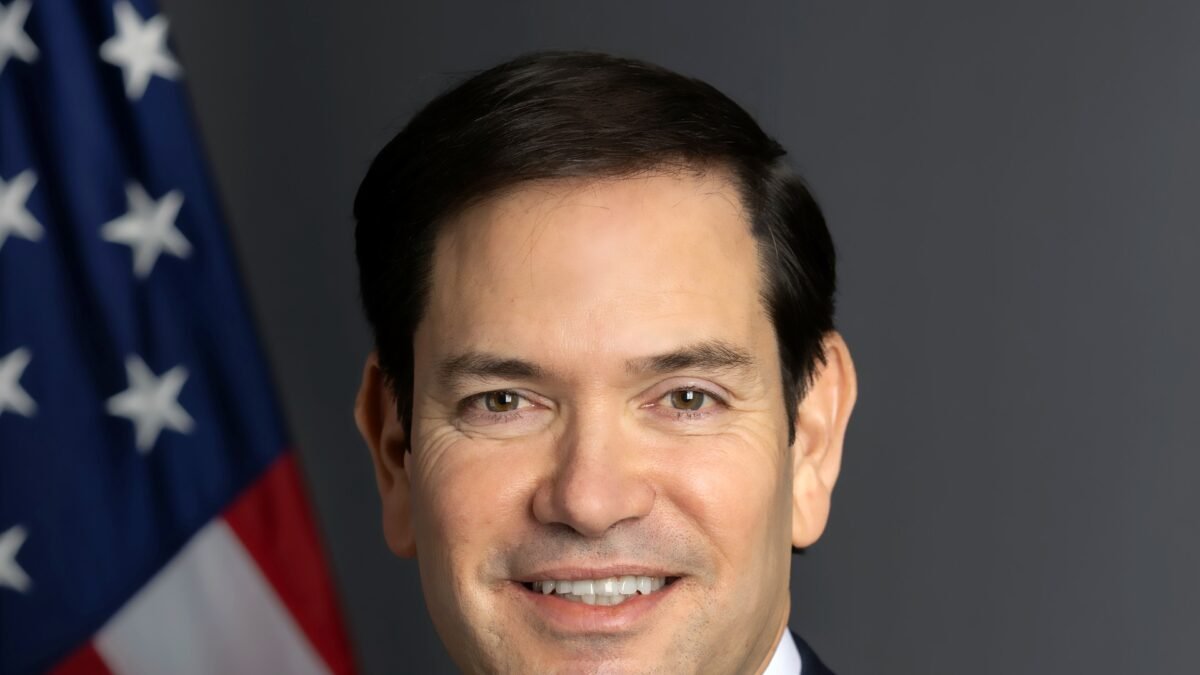
Rubio Arrives in Mumbai as Washington and Delhi Push for a Trade Deal “Landing Point”
United States Secretary of State Marco Rubio arrived in Mumbai on Tuesday afternoon for a three-day official visit to India, landing at Chhatrapati Shivaji Maharaj International Airport at about 2:15 pm local time, according to wire and local reporting on the visit. The trip is his second official visit to India this year and comes at a moment when the two governments are publicly signalling that a long-negotiated bilateral trade agreement is approaching its final stretch.
Rubio was accompanied by his wife, Jeanette Rubio, and United States Ambassador to India Sergio Gor, according to IANS. Welcoming the delegation on X, Gor wrote: “Great to be back in Mumbai, this time with my friend US Secretary of State Marco Rubio. Looking forward to a productive visit and to advancing U.S.-India ties.”
The first item on the itinerary was emblematic rather than transactional. Rubio’s first stop after landing was the Gateway of India, the basalt arch on Mumbai’s waterfront, which he visited alongside Maharashtra Chief Minister Devendra Fadnavis and Ambassador Gor, according to ANI’s live coverage. From there the programme moved to the substantive business of the day: bilateral talks with External Affairs Minister S. Jaishankar.
After the meeting, Rubio posted on X that he and Jaishankar “discussed energy security and defense cooperation while reaffirming the importance of advancing the U.S.-India strategic partnership,” according to ANI. The two sides were expected to review the full breadth of the bilateral relationship — energy, trade, investment, defence, and critical and emerging technologies — as described by Ministry of External Affairs spokesperson Randhir Jaiswal at his weekly briefing in New Delhi on October 16. Jaiswal said the visit would give both countries “an opportunity to review India-US relations and discuss ways to further strengthen the Comprehensive Global Strategic Partnership that we have with the United States,” and to “exchange views on regional and global developments.”
Rubio also laid a wreath at the 26/11 memorial at the Taj Mahal Palace hotel, honouring the victims of the November 2008 Mumbai terror attacks, and interacted with the press there, ANI reported. Later in the evening, at 6:35 pm, he was scheduled to attend the “Freedom 250” reception at the Jio World Convention Centre. On Wednesday, the programme takes him from Mumbai to Jamnagar in Gujarat, where he is expected to visit Reliance’s giant refining complex — a stop that underscores how central energy has become to the relationship.
The Trade Deal Near Its “Landing Point”
The most closely watched thread of the visit is trade. Speaking to reporters in Samarkand, Uzbekistan, ahead of the India trip, Rubio said Washington and New Delhi were “very close” to finalising a bilateral trade agreement, according to Dainik Jagran’s live coverage. The deal has not been confirmed as done — outstanding issues could still influence the negotiations — but the language on both sides has been unusually convergent. Jaishankar himself has indicated that the negotiations are nearing what he called a “landing point,” the same outlet reported.
That cautious optimism marks a notable turn. The trade file has been the most politically charged part of the US-India relationship in recent years, with Washington pressing India on market access and tariffs while Delhi has guarded its agricultural and manufacturing sectors. A signed agreement — even a framework agreement — would be the headline achievement both governments want from this visit.
Energy Takes Centre Stage
The Jamnagar leg of the trip may prove just as consequential as the talks in Mumbai. According to reporting on the visit, Rubio is expected to tour Reliance’s Jamnagar refinery and discuss potential cooperation on Venezuela’s oil supplies, with India’s refining capacity presented as an important link in the global energy supply chain. Rubio said India had “made substantial progress in diversifying oil imports,” a formulation that acknowledges, without criticising, New Delhi’s long-standing energy relationship with Moscow.
That context is unavoidable. India is one of the largest buyers of Russian crude — the Centre for Research on Energy and Clean Air has put India’s share at roughly 37 per cent of Russia’s crude exports — and the oil file has become the central friction point between Washington and Delhi. Days before Rubio’s arrival, President Donald Trump signed an executive order waiving provisions of the Lindsey O. Graham Sanctioning Russia and Iran Act, pausing a diesel embargo for 60 days, a move the White House framed as preserving leverage in Ukraine peace talks. Rubio’s visit arrives with that background firmly in place: the United States wants India to diversify its oil sourcing, and India wants tariff relief and technology access. The Jamnagar stop is where those two objectives meet.
A Relationship Resetting in Real Time
Rubio’s previous official visit to India came in May, when he held talks with Prime Minister Narendra Modi. The fact that the Secretary of State is back within five months signals the pace of engagement the Trump administration wants to maintain — and the urgency it attaches to closing the trade file before the United States’ November 3 midterm elections.
The visit also follows a period of visible strain in US-India ties over energy and sanctions policy, making the “very close” trade language a deliberate signal to markets and political audiences alike. For Delhi, a trade agreement and energy cooperation would deliver economic relief and a hedge against tariff risk. For Washington, locking in India’s alignment on energy diversification — and on the West Asia crisis, which both sides are expected to discuss — would be a diplomatic win it can point to at home.
Analysis: Why It Matters
1. The “Landing Point” Is a Political Timetable
When both Rubio and Jaishankar use the language of an imminent landing, they are setting expectations that are hard to walk back. A framework deal announced before November 3 would give the Trump administration a foreign-policy deliverable in the final stretch of the midterms, and give Delhi relief from tariff uncertainty. The risk is symmetric: if the “landing point” slips, the rhetoric will be remembered as over-promising. The substance matters less right now than the signal — both sides are telling their domestic audiences this is nearly done.
2. Energy Is the Real Agenda
Trade headlines will dominate the coverage, but the itinerary tells a different story about priorities. A Secretary of State does not detour to Jamnagar for a refinery tour by accident. The Jamnagar visit, paired with discussions of Venezuela’s oil supplies and Rubio’s public praise for India’s diversification efforts, suggests Washington’s strategy on the Russian-oil question has shifted from pressure to partnership: offer India alternative supplies and refining economics instead of threats. That is a more durable approach than tariffs as punishment — and a tacit admission that the pressure strategy was not working.
3. The Symbolism Is Doing Real Work
The Gateway of India photo opportunity, the wreath at the 26/11 memorial, and the press interaction at the Taj are not decorative. In Indian domestic politics, the 26/11 memorial is a symbol of national resolve, and a visiting American secretary paying respects there reads as an endorsement of Delhi’s counterterrorism narrative. The symbolism also travels in the other direction: American audiences will see images of warm reception and strategic partnership at a moment when the relationship has looked shaky. Both governments get the pictures they need.
4. West Asia Looms Over Every Meeting
The MEA said both sides would “exchange views on regional and global developments” — diplomatic code for the conflicts neither can avoid. With the Strait of Hormuz disruptions driving fuel prices to record highs in parts of the world, India’s energy concerns and America’s war aims are now the same conversation. Whatever Rubio and Jaishankar discussed about West Asia will shape not just the trade deal’s energy chapter but the broader question of how Asian powers position themselves in an ongoing US-Iran confrontation.
5. The Second Visit Tells Its Own Story
Two official visits in five months, with the second running 72 hours and spanning two cities, is an unusually intensive engagement for a Secretary of State. It suggests the relationship is not in autopilot mode — and that both capitals believe the stakes of the next few weeks are high. Whether the urgency is about the trade deal, energy, or the West Asia calendar, the tempo itself is the message.
What to Watch Next
- Jamnagar on Wednesday: Any announcements around the Jamnagar refinery visit — particularly on Venezuelan crude or refining cooperation — will show how concrete the energy diversification push really is.
- Trade-deal language: Watch for whether the two sides move from “very close” to announcing a framework or timeline for signing. A concrete deadline would confirm the political timetable.
- Rubio’s on-record remarks: Any press statements during or after the Mumbai leg could reveal how directly Washington is linking tariff relief to India’s oil sourcing.
- The regional readout: Whether either side publicly mentions West Asia or Ukraine in their readouts will signal how much of the visit was about the trade file versus the war file.
- Freedom 250 and beyond: The evening reception is the soft-diplomacy capstone — expect the visit to close with a joint statement setting up the next round of talks.
Sources
- IANS via Hi India — “US Secretary of State Marco Rubio arrives in Mumbai, set to hold talks with EAM Jaishankar” (October 20, 2026)
- Dainik Jagran — “Marco Rubio India Visit LIVE: US Secy Meets Jaishankar In Mumbai” (October 20, 2026)
- DailyWorld via IANS — Rubio arrival report (October 20, 2026)
- Daily Prabhat via ANI — Rubio on India’s oil-import diversification and Jamnagar visit (October 20, 2026)
- Dainik Jagran English — “Marco Rubio in India: Jaishankar Talks and Trade Deal” (October 20, 2026)

About the Author — Abdul Mannan
Related Articles
Alberta Votes Overwhelmingly to Stay in Canada in Historic Referendum, Handing Carney a Defining Win
Alberta voters have decisively rejected the path toward separation from Canada, with about 76% choosing to remain —…
Houthi Missiles Kill Dozens of Recruits at Yemen Training Camp in Deadliest Strike Since War Reignited
Three ballistic missiles struck a training camp for government security forces in Yemen's Shabwa province on Monday, killing…

Exiled Rwandan Critic Robert Kabera Found Beheaded in Uganda
The body of former RDF sergeant major Robert Kabera, a YouTube critic of President Paul Kagame, was found…