
Exiled Rwandan Critic Robert Kabera Found Beheaded in Uganda

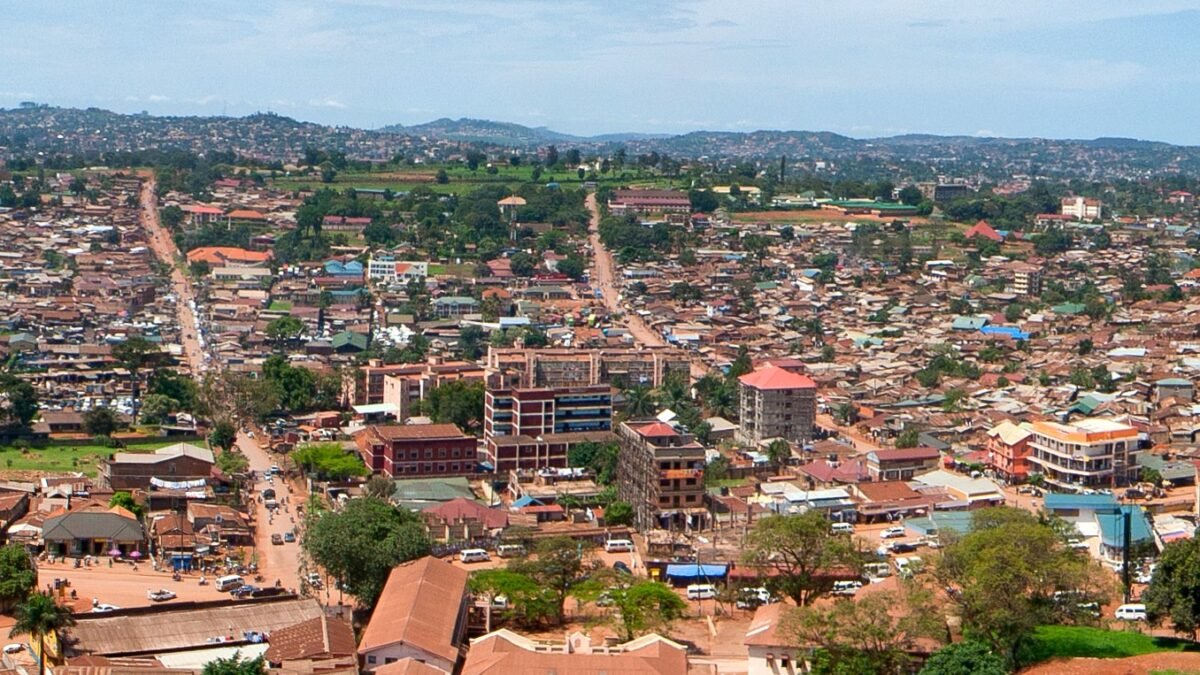
A former sergeant major in the Rwanda Defence Forces who had become one of President Paul Kagame’s most visible online critics has been found beheaded in neighbouring Uganda, in a killing that has unsettled Rwandan exiles across the region and revived longstanding questions about the safety of dissidents who flee Kigali’s reach.
Robert Kabera, 50, was found dead on Saturday, 17 October, in Luwala village in Kamengo sub-county of Mpigi District, roughly 45 kilometres from Uganda’s capital, Kampala. Ugandan police spokesperson Kituuma Rusoke said on Monday that officers had registered a murder case after the body was discovered, and that Kabera’s head had not been recovered. The body was taken to the city mortuary at Mulago for examination as investigators began trying to establish how, and by whom, he was killed.
Relatives identified the body, according to Ugandan media reports cited by several outlets. Police believe the killing took place either on the night of 16 October or in the early hours of 17 October, and have said publicly that they have established no motive and made no arrests. Investigators have not announced any link between the killing and Kabera’s political activities, according to the BBC.
According to his family, Kabera had travelled to the area to inspect a construction site where he was building a house. He had been living in the area and was last seen on Friday night.
From army musician to exile YouTuber
Kabera was, by most accounts, an unlikely dissident. A sergeant major in the Rwandan military, he had been a familiar figure in the country’s military music scene as a member of the Army Jazz Band, according to a 2008 profile cited by the Associated Press.
That changed in November 2020, when he fled Rwanda for Uganda, saying his life was in danger. He sought asylum on grounds of political persecution and said his troubles began with his ties to the late gospel singer Kizito Mihigo, who died in a police cell in Rwanda earlier that year, according to reporting by The Voice and Uganda’s Daily Monitor.
Rwanda’s military prosecutors later announced that they were investigating allegations of sexual assault against him. Kabera denied the claims as fabricated and politically motivated, saying he had already crossed into Uganda before the alleged offence took place. The BBC has reported the same contested account: that he fled after being accused of sexual assault, a charge he denied, and that he sought asylum in Uganda citing political persecution.
From exile, Kabera rebuilt himself as a musician and a YouTube personality, building an audience of more than 144,000 subscribers. His channel carried over 800 videos, many of them sharply critical of Kagame and his administration. The account of his life should carry both the allegation against him and his denial of it, as analysts of the case have cautioned.
His widow, Jeanne d’Arc Rwigema Uwizeye, told BBC Great Lakes in a written message that she now feared for her family’s safety. “It is scary. I feel crazy, the children and I don’t have security,” she said.
Opposition calls for a full investigation
Reacting to the killing, the exiled opposition group Rwanda National Congress (RNC) called for a thorough investigation and urged the authorities to bring those responsible to justice.
“Today, his family is grieving, his voice is gone, and Rwandans in exile are confronting a terrifying question: where can we be safe?” the group said in a statement posted on X.
The RNC also clarified that Kabera was not a member of the party, while appealing for stronger protection for exiles. Some dissidents have called for an independent investigation, according to Ugandan media.
The Rwandan government had not publicly commented on the killing at the time of reporting, the BBC noted. Kigali has repeatedly denied targeting political opponents, and President Kagame maintains that his government respects the rule of law.
A troubling pattern
Kabera’s death fits into a pattern that has haunted Rwandan exiles for years. In 2011, the journalist Charles Ingabire was shot dead at a pub in Kampala. In 2014, Patrick Karegeya, a former Rwandan intelligence chief who had helped set up an opposition party, was found dead in a hotel room in Johannesburg, South Africa; South African authorities later issued arrest warrants for two Rwandan nationals in connection with that killing.
No evidence has been made public linking the Rwandan state to Kabera’s death, and the Ugandan police have not suggested that any exists. As analysts have noted, unless the investigation identifies the killers and a motive, suspicion will keep filling the gap.
Analysis: Why It Matters
The exile’s paradox
Kabera did what exiles are supposed to do: he crossed a border. He reached Uganda in 2020, won protection, and spent six years building a new life — a house under construction 45 kilometres outside Kampala, a YouTube audience, a family. Yet his body was found on the road near that half-built house. The killing exposes the uncomfortable reality that for high-profile Rwandan dissidents, geography has never been the guarantee it looks like on a map. The region is small, its intelligence networks are old, and Uganda’s large Rwandan refugee population lives in the open, where names, faces and addresses are knowable.
A deliberately brutal method
Police have announced no motive, and it would be wrong to read intention into an open investigation. But beheading is not a method of quiet robbery. It is a method that terrorises the living — the family left behind, and every other exile reading the news. Whether the killer’s aim was intimidation or something else entirely is for the investigation to determine; what is already clear is the effect. His widow’s words — “the children and I don’t have security” — show the damage is immediate and personal. If the aim was to silence a voice, the method guarantees the echo is louder than the act.
The attribution trap
Every previous killing of a Rwandan critic abroad has run into the same wall: no public evidence, official denials from Kigali, and a permanent fog between accusation and proof. Kabera’s case is entering that fog now. The RNC’s careful note that he was not one of its members is itself revealing — it shows the opposition knows exactly how this script goes, and wants no part of a political frame it cannot control. The credibility of Uganda’s investigation will, as in earlier cases, shape how the world reads this death. A fast, transparent, evidence-led inquiry is the only instrument that can drain the suspicion; a slow, opaque one will feed it.
Kampala’s double role
Uganda is both refuge and graveyard in this story. It hosts one of the largest Rwandan exile populations on the continent, and it is also where Charles Ingabire was shot dead in 2011. Kampala now finds itself under scrutiny again — not as an accused party, but as the custodian of the only process that can answer the central question. How Uganda handles this investigation will be read by exiles as a signal about whether the country remains a safe harbour or has become something else. The government’s relationship with Kigali, always a delicate balance of regional diplomacy, makes the test harder, not easier.
The contested man
There is a temptation in stories like this to flatten the victim into a symbol. Kabera’s record resists that. He was a soldier of the regime before he was its critic; a man facing a serious criminal allegation he said was fabricated; a musician; a YouTuber with 144,000 subscribers; a father building a house. The criminal allegation and his denial of it are both part of the factual record, and both must travel with the story. Journalism’s job here is not to canonise him but to insist, as his family does, that a man was murdered and that his killers be found — whatever else he was.
What to Watch Next
- The police investigation. Uganda Police have said inquiries have commenced. Watch for whether investigators name suspects, establish a motive, or request help from international forensic partners — and how quickly.
- Kigali’s response. The Rwandan government has not commented. Any statement — or continued silence — will be parsed closely by exiles and diplomats alike.
- Calls for an independent probe. Dissident groups are already asking for one. Whether regional bodies or human-rights organisations take up the call will signal how seriously the case is being taken beyond Uganda.
- Exile security in Uganda. The Daily Monitor reports the killing has caused safety concerns among Rwandan refugees in Uganda. Watch for whether community groups change their posture, and whether Kampala takes any visible protective steps.
- The family. Kabera’s widow says she and her children have no security. Whether Ugandan authorities offer her protection will be an early measure of how seriously they take the wider threat her statement describes.
Sources
- Daily Monitor (Uganda) — “Uganda Police speak out on beheaded Rwandan dissident”
- Nile Post — “Police break silence on murder of Rwandan dissident beheaded in Mpigi”
- Pulse Uganda — “Uganda Police confirms murder by beheading of Rwandan dissident Robert Kabera in Mpigi”
- The Observer (Uganda) — “Rwandan ex-soldier, government critic beheaded in Uganda”

About the Author — Abdul Mannan
Related Articles

Putin Proposes Three-Way Summit With Trump and Xi on Ukraine at APEC — Without Zelenskyy
Vladimir Putin has proposed a three-way summit with Donald Trump and Xi Jinping on the sidelines of November's…
Australian MP Helen Haines in Critical Condition After Suspected Targeted Vehicle Attack in Wangaratta
Australian independent MP Helen Haines is in a critical condition after being struck by a car outside her…
Egypt’s Parliament Delays Vote on Military Backing for Saudi Arabia as Houthi Attacks Intensify
Egypt's parliament postponed until Monday its vote on authorising military support for Saudi Arabia, as Sisi pledged Cairo…