
UK to Deploy RAF Typhoon Fighter Jets to Defend Saudi Arabia Against Houthi Attacks

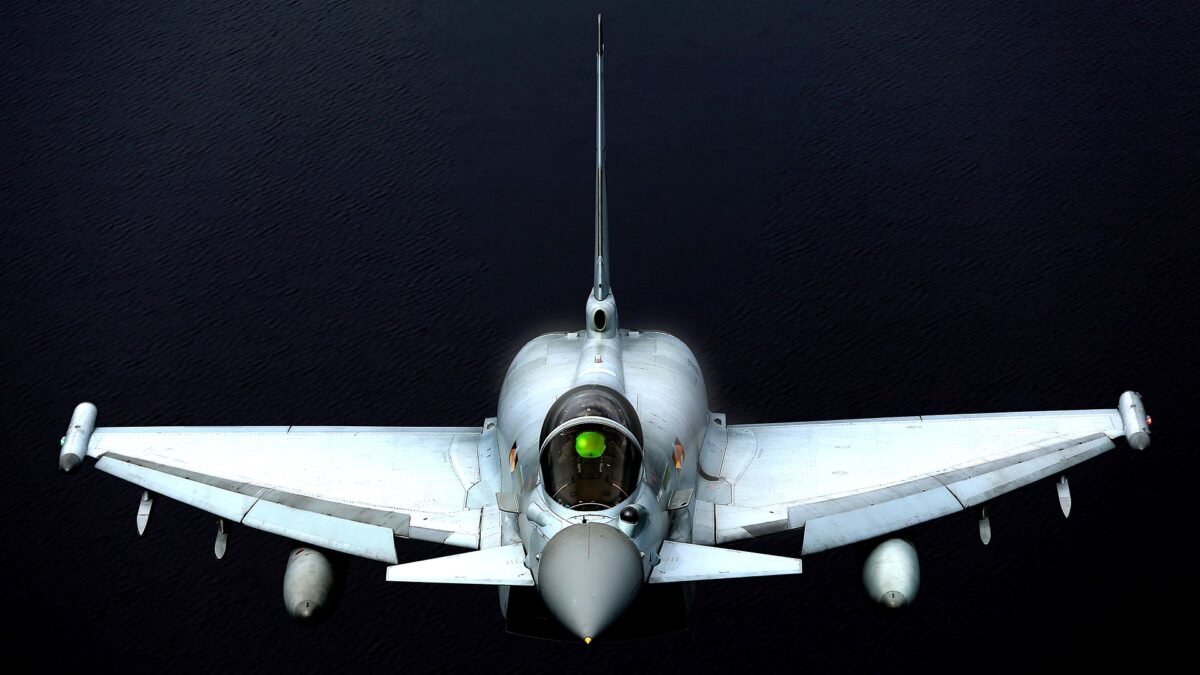
The United Kingdom announced on Tuesday that it will deploy Royal Air Force Typhoon fighter jets to Saudi Arabia to defend the kingdom against intensifying attacks by the Iran-allied Houthi rebels of Yemen, marking Britain’s most direct military involvement yet in the escalating conflict.
The Typhoons will fly what the Ministry of Defence described as “defensive counter-air missions” to protect Saudi cities and critical national infrastructure from Houthi ballistic missiles and drones, according to a statement reported by CNN on Tuesday. Prime Minister Andy Burnham personally authorised the deployment, The Times reported, following a wave of Houthi strikes that has overwhelmed Saudi air defences.
Announcing the move, Defence Secretary Wes Streeting said: “The continuing attacks from the Houthis on our ally Saudi Arabia are absolutely despicable. The targeting of the airport in Riyadh in particular shows the lengths the Houthis are going to escalate the situation in the region.”
“That’s why today I have approved further UK military support. RAF Typhoons will fly defensive air missions to help protect Saudi airspace from drones and missiles. This builds on the UK equipment and personnel we already have in the country to defend against Houthi air attacks,” Streeting said in a statement.
The deployment is strictly defensive. A Downing Street spokesperson told reporters that the Typhoons would intercept missiles and drones launched against Saudi Arabia and would not conduct offensive strikes inside Yemen, CNN reported.
A defence source told The Times the rules of engagement were unambiguous: “[The RAF] will carry out defensive air missions above Saudi. If Houthi drones or missiles come over the border towards Saudi Arabia they will take them out.”
The attack that changed the calculus
The decision follows a devastating series of Houthi strikes on Riyadh’s King Khalid International Airport, one of which killed 13 people and wounded more than 300, according to CNN — making it the deadliest attack on Saudi Arabia in more than a decade. A defence source told The Times the airport attack was “like Heathrow being blown up”.
Saudi Arabia announced on Tuesday that it had downed a missile over the capital, Riyadh, where the airport remains closed, The Times reported.
The conflict has intensified sharply since the Houthis announced in July that they would target Saudi shipping in the Red Sea as well as infrastructure inside the kingdom, following a Saudi attack on the Houthi-controlled airport in the Yemeni capital, Sanaa, according to CNN. Over the past month, the rebels have launched repeated ballistic missile and drone strikes at Saudi oil facilities, airports and cities.
Backed by Saudi warplanes, Yemen’s anti-Houthi governmental ground forces have launched a counter-offensive to recapture lost territory, but despite a heavy airstrike campaign and a large ground offensive, the Houthis have remained in control of key locations and continued launching missiles and drones, CNN reported. The Times reported that Saudi Arabia has been struggling to cope with the attacks and that its offensive in Yemen is floundering.
The Houthis have also widened their ambitions beyond Yemen’s borders. Last month, the Iran-allied rebel group launched a lightning offensive on Yemen’s western coast, capturing key territory including the Bab al-Mandeb maritime chokepoint on the Red Sea, CNN reported — a move that potentially expands Tehran’s influence over another critical trade corridor.
On Monday, Houthi fighters killed dozens of newly recruited Yemeni governmental forces in a ballistic missile attack on southeastern Shabwa province, CNN reported, citing local officials. The US mission to Yemen condemned what it called a “cowardly attack by the Iran-backed Houthi militia” on Yemenis who had “volunteered to keep their communities and country safe.”
Building on existing British support
The Typhoon deployment deepens an already growing British military footprint in the kingdom. In September, Britain announced it would provide “additional defensive military assistance” to Saudi Arabia following renewed Houthi attacks, including an RAF Voyager air-to-air refuelling aircraft — a package that notably stopped short of fighter jets, Reuters reported.
The UK is already providing air-to-air refuelling support and has deployed air defence equipment and British personnel to help protect the kingdom, a Downing Street spokesperson told reporters, according to CNN.
Bloomberg reported, via Reuters, that Britain will also provide an Atlas A400M transport aircraft and military advisers alongside the Typhoons. The Times reported that RAF Typhoons based in Qatar will fly the defensive missions over Saudi skies.
Britain is not alone in moving to shore up Saudi defences. France has agreed to deploy defence assets and military personnel to the kingdom, and more than 100 American military advisers are on the ground providing intelligence and targeting support under a newly established joint forces command, CNN reported. Pakistan has forces stationed in Saudi Arabia, and the Egyptian parliament is debating whether to send support after President Abdel Fattah al-Sisi called an emergency session on deploying military assistance to the kingdom.
The RAF brings recent experience to the mission. The Times noted that Typhoons have been carrying out similar defensive missions to protect Gulf states and Cyprus from Iranian missiles and drones.
Analysis: Why It Matters
Defensive airpower, offensive politics
London has chosen the sharpest available tool short of war: putting its own fighter jets between Houthi missiles and Saudi cities, without crossing a single border. “Defensive counter-air” is a deliberately narrow mandate — shoot down what’s incoming, hit nothing on the ground — and it tells you exactly what Downing Street is trying to avoid: being drawn into Yemen’s war, or into a direct shooting exchange with the Houthis, whose missiles are getting through anyway.
But make no mistake about what this is. When a British defence secretary approves combat aircraft to fly live intercept missions over a foreign capital, Britain has entered the war’s air battle, whatever the word “defensive” is doing in the press release. The Houthis will see it that way. Tehran, which backs them, will see it that way. And every future escalation will be read through the lens of RAF jets already being in the fight.
The airport changed everything
States absorb a great deal of low-level missile traffic without changing strategy — interception rates become a statistic, and statistics are politically manageable. A burning international airport with hundreds of casualties is not a statistic. The strike on King Khalid International, the deadliest attack on Saudi soil in more than a decade, converted the Houthi campaign from a harassment problem into a regime-security problem: if Riyadh cannot keep its own airport open, what exactly is its vast defence budget buying?
The Times’ reporting that Saudi Arabia is “struggling to cope” is the quiet sentence in this whole story. The kingdom has the world’s third-largest defence budget and one of the densest air-defence grids on earth — yet it needed British refuelling aircraft in September and British fighter jets now. That gap between spending and security is what forced Riyadh to assemble this coalition, and it is what will define the Houthi strategy from here: keep attacking the thing the defences demonstrably cannot protect.
A coalition is assembling, quietly
Read the whole board and something larger than a bilateral defence deal is emerging. France is sending assets. More than a hundred American advisers are embedded under a joint forces command. Pakistan has forces in the kingdom. Egypt’s parliament is debating a deployment. Now Britain is committing fighter jets. This is what a coalition looks like before anyone calls it one — assembled quietly, country by country, while the formal war it surrounds is still officially a Yemeni civil conflict.
It mirrors, in miniature, how the Gaza and Hormuz crises escalated: first advisers and refuellers, then defensive assets, then the slow normalisation of Western combat power in someone else’s war. Each step is defensible on its own terms. Taken together, they represent a steady internationalisation of a conflict that is becoming harder and harder to call local.
The Iran thread runs through everything
The Houthis are described in every Western statement as “Iran-allied” or “Iran-backed,” and the fine print matters: the missiles hitting Riyadh are the same supply chain — Iranian designs, Iranian components, Iranian doctrine — that has targeted Israel, US bases and Red Sea shipping. By interposing RAF Typhoons between those missiles and Saudi cities, Britain is now physically inserting itself into the Iran-versus-its-neighbours missile war.
The RAF has done this before, defending Gulf states and Cyprus from Iranian missiles and drones, as The Times noted. What is new is the scale and the publicity: an announced, authorised deployment rather than a quiet intercept. London is signalling to Tehran that its proxies’ escalation ladder has a Western air force waiting on every rung — while betting, carefully, that “defensive only” keeps the signal below the threshold of retaliation. That is a bet the Houthis and their sponsors get to test, and they will.
The aviation economy is the real pressure point
The defence source’s comparison — “like Heathrow being blown up” — reveals how the government is thinking about this. An airport that stays closed is not just a security failure; it is an economic and political one. Riyadh’s airport is a hub for Hajj and Umrah pilgrims, for business travel, for the entire logistics chain of a country trying to sell itself as a tourism and investment destination. Every day it stays shut, the Houthis collect a victory they could never win on a battlefield.
The same logic applies to oil infrastructure and Red Sea shipping, now with the Bab al-Mandeb chokepoint in Houthi hands. The Houthis have grasped something the coalition has not yet answered: in modern warfare, you do not need to defeat an enemy’s army to impose strategic costs. You need to keep one airport closed, one strait contested, one oil terminal uncertain. British jets can shoot down drones. The question is whether they can shoot down that strategy.
What to Watch Next
- The first intercept. The RAF has flown similar missions over the Gulf before, but the first confirmed shoot-down of a Houthi missile over Saudi Arabia by a British jet will be the moment the deployment becomes real — and the moment the Houthis will try to answer.
- Whether “defensive only” survives contact with reality. If Saudi jets keep striking Yemen while British jets guard the sky above Riyadh, the Houthis will treat it as one campaign. The distinction between British defence and Saudi offence is legally clean and practically messy.
- The airport. How long King Khalid International stays closed is the single clearest measure of whether this deployment is working. Its reopening would be the first real dividend; its continued closure would be the Houthis’ continuing argument.
- Egypt’s parliament. If Cairo approves military assistance after Sisi’s emergency session, the Arab-state pillar of the coalition locks in — and the optics shift from “Western powers protect Saudi” to a genuine regional response.
- Tehran’s next move. Iran calibrates Houthi pressure as leverage in its own standoff with Washington. With US advisers on the ground, British jets overhead and Hormuz already a tinderbox, any Iranian escalation around the Red Sea or the Gulf would land in a far more crowded theatre than last year.
Sources

About the Author — Abdul Mannan
Related Articles

Hegseth Makes Unannounced Visit to Israel for Talks With Netanyahu Days Before Election
U.S. Defense Secretary Pete Hegseth made an unannounced visit to Israel on Monday, meeting Benjamin Netanyahu at Ovda…

Macron Takes France’s Fuel Plea to the Gulf as Hormuz Disruption Tightens Its Grip
Emmanuel Macron is in Doha on a state visit, the final leg of a four-nation Gulf tour to…
Riyadh’s Iconic Kingdom Centre Empties Its Offices as Houthi Attacks Rattle Saudi Capital
Management at Riyadh's 99-storey Kingdom Centre ordered all office staff to work remotely until further notice after overnight…