
Pakistan, Türkiye, Qatar and Indonesia Sign ‘Badr’ Defence MoU in Doha

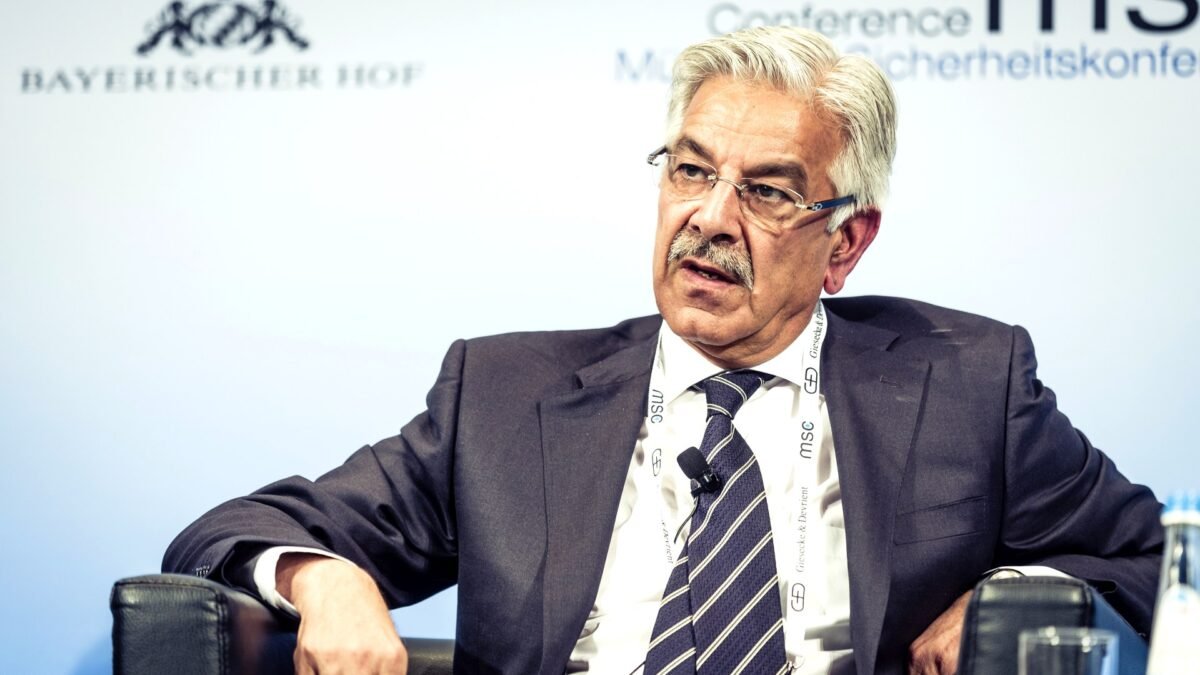
Pakistan, Türkiye, Qatar and Indonesia have signed a new multilateral defence agreement in Doha, deepening military-industrial cooperation among the four countries at a moment of mounting security pressure across the Middle East. The “Badr” memorandum of understanding was concluded on Wednesday, October 21, 2026, during Turkish Defence Minister Yaşar Güler’s visit to the Qatari capital, according to a statement from the Turkish Defence Ministry.
The MoU was signed by Pakistan’s Defence Minister Khawaja Asif, Türkiye’s Yaşar Güler, Qatar’s Deputy Prime Minister and Minister of State for Defence Affairs Sheikh Saud bin Abdulrahman bin Hassan Al Thani, and Indonesia’s deputy defence minister, according to reporting on the ceremony by Pakistani media. Haluk Görgün, the head of Türkiye’s Presidency of Defence Industries, also attended the signing, a sign that the document is aimed as much at industry as at governments.
In its statement, the Turkish Defence Ministry said the accord was “a sign of their desire to further deepen cooperation and develop partnerships.” The ministry said the agreement “holds substantial economic importance” and sought to foster cooperation in military production, boost military capabilities, and help collaboration in technical military training, research and development, according to Reuters.
“By leveraging the unique military production capabilities of each country,” the ministry’s statement added, the initiative would “facilitate cooperation and integration, enhance defense industrial capacities, and enable the fulfillment of the needs of allied and friendly nations,” Reuters reported.
Qatar’s Defence Ministry issued its own statement saying the Badr memorandum “aims to foster cooperation in the field of defence manufacturing, enhance defence capabilities among the four countries, and promote collaboration in technical defence training, as well as in research and development areas, thereby contributing to the creation of solutions and industries worthy of the evolution of modern defences,” according to an Al Jazeera explainer.
According to Qatar’s Defence Ministry, the MoU was signed between the defence ministries of the four countries, along with Pakistan’s defence production establishment and Türkiye’s Presidency of Defence Industries. Pakistan TV reported that the framework covers cooperation in defence manufacturing, joint military exercises, technical military training, and research and development.
Posting on X after the ceremony, Pakistan’s Khawaja Asif said: “Pakistan places great importance on strengthening defence cooperation with trusted partners. This memorandum reflects our shared commitment to contributing to regional peace and stability,” according to Pakistan TV. He said the four countries would explore opportunities for joint production and technology transfer.
A pact shaped by the region’s wars
The Badr memorandum arrives against a backdrop of sustained conflict. Reuters noted that Türkiye, which has NATO’s second-largest army and a robust domestic defence industry, has been helping Gulf nations — including Qatar, where it maintains a military base — bolster their defences amid the Iran war.
It also follows an unusually active summer of Turkish-led security diplomacy. In August, Türkiye signed a mutual defence pact with nuclear-armed Pakistan and Saudi Arabia, under which an attack on one party constitutes an attack on all, Reuters reported. The new four-way MoU extends a similar partnership logic to the defence industry rather than to mutual defence commitments.
The name itself carries symbolic weight: Turkish media reported that “Badr” is the Arabic word for full moon, a reference that will resonate across the Muslim-majority signatories.
The four partners already have defence-industry ties to build on. Existing cooperation includes Türkiye’s MILGEM-class corvette project with Pakistan and established defence industry links with Qatar and Indonesia, according to Bloom Pakistan’s reporting on the signing. Analysts note the move comes as the prolonged war with Iran and Houthi attacks on Saudi Arabia heighten regional security concerns and expose vulnerabilities related to foreign supply chain disruptions and technology restrictions.
What the experts say it will do
Defence analysts who spoke to Al Jazeera said the agreement is structured so that each country brings something the others lack. “Türkiye contributes technological expertise, systems integration and a mature defence industry; Pakistan and Indonesia offer manufacturing capacity, skilled workforces and sizeable domestic markets; and Qatar provides investment potential and demand,” an analyst identified as Mevlutoglu told Al Jazeera.
Together, the four nations could “establish integrated supply chains, allowing these countries to jointly develop, manufacture and sustain defence systems,” he added — an arrangement that would give buyers a larger role in producing and supporting their own equipment while providing manufacturers with longer-term orders and investment.
Albert Vidal, a research associate at the International Institute for Strategic Studies, told Al Jazeera that Pakistan and Indonesia were both willing to purchase Turkish weapons and locate part of their production at home. That, he said, could bring down costs for Turkish companies and bring jobs to Pakistan and Indonesia, while Qatar brings “financial depth” to the partnership.
Analysis: Why It Matters
From buying weapons to making them
The most important sentence in the Turkish Defence Ministry’s announcement is not about defence at all — it is about economics. Calling the accord of “substantial economic importance” frames Badr as an industrial policy first and a security agreement second. For decades, Pakistan, Indonesia and the Gulf states have been primarily customers of foreign arms makers, dependent on suppliers who can delay deliveries, attach conditions or cut off spare parts at the moment of greatest need. A joint production framework is an attempt to change that buyer-seller relationship from inside: instead of haggling over purchase prices, the four countries want to co-own the factories, the supply chains and the maintenance networks.
This is a rational response to lived experience. States across the region have watched sanctions regimes, export-license freezes and supply disruptions turn imported arsenals into expensive liabilities. Türkiye itself learned this lesson early — Western arms embargoes in the 1970s and more recent export restrictions pushed Ankara to build one of the world’s fastest-growing domestic defence industries. The Badr MoU is, in effect, an offer to export that lesson rather than just the hardware: Türkiye supplies the technological know-how and systems-integration experience, while Pakistan and Indonesia supply the manufacturing floors and the engineers, and Qatar supplies the capital. It is a division of labour that maps neatly onto each country’s comparative advantage.
Ankara’s widening security web
The MoU also needs to be read as the latest stitch in a rapidly widening Turkish security web. Within ten weeks, Türkiye has signed a mutual defence pact with Pakistan and Saudi Arabia, announced a mandate to deploy personnel to Saudi Arabia under its joint defence arrangement with the kingdom, and now created a four-country defence-industry framework spanning the eastern Mediterranean to Southeast Asia. Each agreement does something slightly different — collective defence, force presence, industrial integration — which suggests a deliberate architecture rather than a series of one-off deals.
For Pakistan, the timing is significant. Islamabad is managing the heaviest diplomatic traffic in years: the Iran war rages on its western horizon, tensions with Afghanistan and the TTP continue, and the ceasefire diplomacy of recent weeks has run through Doha and Ankara — the same two capitals now anchoring the Badr framework. By signing a multilateral MoU rather than a bilateral deal, Pakistan gains a seat in a room where Türkiye, Qatar and Indonesia all have skin in the game, without committing to the kind of mutual-defence obligations that the August pact with Saudi Arabia carried. It is hedging by multiplication: more partners, more options, more leverage.
What Badr is not
It is worth being precise about what a memorandum of understanding does not do. It is not a treaty, it is not legally binding in the way a ratified agreement is, and it contains no collective-defence clause — nobody in Doha on Wednesday committed to fight for anyone else. The August mutual-defence pact remains the hard security instrument; Badr is the soft, industrial one. Memoranda like this one are often best understood as statements of intent that create bureaucratic momentum: committees get formed, working groups meet, pilot projects get funded, and over several years something real may emerge — or it may quietly expire when governments change.
There are real obstacles. Defence co-production requires harmonised standards, shared intellectual property rules and — hardest of all — agreement on who gets to export the finished product to whom. Turkish, Pakistani and Indonesian defence companies have their own commercial interests and their own existing partnerships that may not align. Qatar’s “financial depth,” as the IISS analyst put it, is welcome, but investors want clarity on governance and returns before committing. The distance between a signing ceremony photograph and a jointly produced weapons system is measured in years and in lawyers.
The Pakistan angle: jobs, technology and signalling
For Pakistan specifically, the MoU offers three things at once. First, jobs: locating part of Turkish weapons production at home, as the IISS analyst suggested is likely, means industrial employment and skills transfer in a country where both are in short supply. Second, technology: joint production is one of the few routes by which a country like Pakistan can climb the defence-technology ladder without paying full price for someone else’s finished systems. Third, signalling: appearing alongside Türkiye, Qatar and Indonesia as a co-founder rather than a junior partner tells the world — and, frankly, tells Pakistanis — that Islamabad remains a consequential actor in regional security architecture, even as it wrestles with economic strain and political turmoil at home.
Khawaja Asif’s comment about “regional peace and stability” is the standard diplomatic gloss, but the subtext is clearer: Pakistan wants the partnership’s economic and technological benefits while keeping its strategic autonomy intact. Whether the Badr framework delivers either will depend less on Wednesday’s ceremony than on what the defence ministries and industry bodies do in the next twelve months.
What to Watch Next
- The first concrete project. Memoranda live or die on follow-through. Watch for the announcement of a specific joint-production programme — a drone, a naval system, an armoured vehicle — that turns Badr’s general language into factory orders.
- How the August mutual-defence pact evolves. The Türkiye–Pakistan–Saudi Arabia collective-defence commitment and the Badr industry MoU are two halves of one strategy. Any movement on implementing the mutual-defence pact will shape how seriously governments take the industrial one.
- Türkiye’s parliament mandate. A Turkish lawmaker told Reuters that parliament will consider a mandate allowing Turkish military personnel to be deployed to Saudi Arabia. Its passage would confirm that Ankara’s Gulf security role is still expanding.
- Pakistan’s next diplomatic moves. With the Iran war continuing and the Pakistan–Afghanistan ceasefire requiring monitoring, Islamabad’s bandwidth is stretched. Whether the defence ministry can resource the Badr working groups while managing live crises is an open question.
- Who else wants in. The MoU speaks of meeting the needs of “allied and friendly nations” — language that leaves the door open to expansion. Watch whether Saudi Arabia, Malaysia or other Muslim-majority states express interest in joining or mirroring the framework.
Sources
- Reuters via Devdiscourse — “Turkey, Qatar, Pakistan, Indonesia sign defence cooperation accord, Ankara says”
- Al Jazeera explainer (republished) — “How Qatar, Turkiye, Pakistan and Indonesia are deepening defence ties”
- Pakistan TV — “Pakistan, Qatar, Türkiye and Indonesia sign ‘Badr’ defense pact in Doha”
- Bloom Pakistan — “Pakistan, Turkiye, Qatar and Indonesia Sign Badr Defence MoU”

About the Author — Abdul Mannan
Related Articles

PTI Rules Out ‘Minus’ for Opposition Leader Achakzai, Says No Talks on Fazl Replacement
PTI chairman Barrister Gohar Ali Khan says Mahmood Khan Achakzai retains Imran Khan's full confidence and rules out…
Peshawar High Court Takes Up PTI Challenge to KP Emergency and Governor’s Rule, Issues Notices to the Centre
The Peshawar High Court has opened hearings on PTI petitions seeking to overturn the emergency and governor's rule…
Pakistan Army Chief Asim Munir Heads to Tehran as Pakistan Pushes to Revive US-Iran Diplomacy
What we know Pakistan’s army chief, Field Marshal Asim Munir, is due in Tehran on Tuesday for talks…