
Pakistan Army Chief Asim Munir Heads to Tehran as Pakistan Pushes to Revive US-Iran Diplomacy

What we know
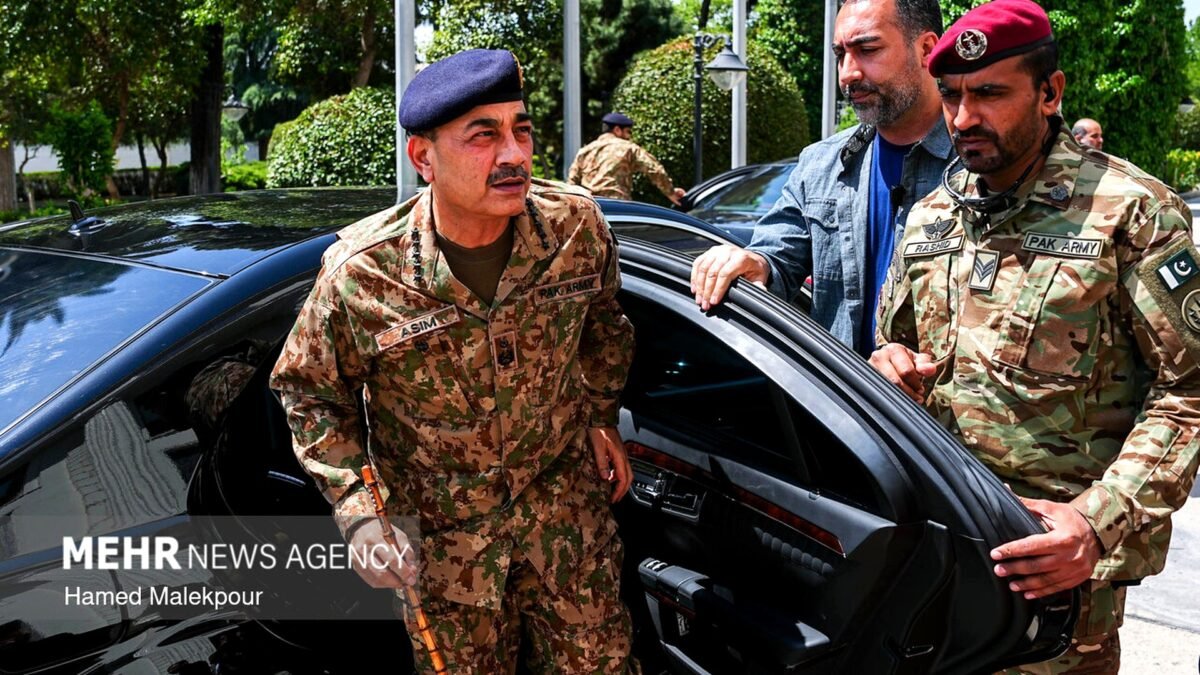
Pakistan’s army chief, Field Marshal Asim Munir, is due in Tehran on Tuesday for talks centred on reviving diplomacy between Iran and the United States, according to a Pakistani official and Iranian media cited by Reuters. The visit was first reported by Reuters on Monday evening, and as of that report Islamabad had not publicly announced the trip, nor released a detailed itinerary.
The scheduled visit places Pakistan’s chief military negotiator back at the centre of a dispute that has consumed the region for most of this year. Pakistan has played a key mediating role between Washington and Tehran in 2026, Reuters reported, and Tuesday’s meetings follow earlier summer discussions between Munir and Iranian leaders that focused on three concrete objectives: preventing further escalation, reopening the Strait of Hormuz to shipping, and bringing the conflict to an earlier end.
The expected agenda in Tehran includes mediation, bilateral cooperation and regional security, according to Asia Daily, which reported that Munir is expected to meet Iranian officials across Tuesday. That account aligns with the Reuters reporting: the same practical questions that occupied the summer talks — how to reduce fighting, restore shipping access and make another agreement hold — now confront the mediation effort again.
The visit also comes with immediate bilateral friction to manage. Pakistan suspended commercial movement through two major border crossings with Iran, Gabd-Rimdan and Taftan, on October 16, while passenger movement continued at Gabd-Rimdan, according to Asia Daily. The disrupted route reportedly handled more than 4,000 tonnes of liquefied petroleum gas daily, and traders on the Pakistani side reported more than 2,000 containers stranded at Gabd-Rimdan, with money tied up in cargo and perishable goods at risk. Pakistani officials cited security concerns, smuggling prevention and changes to border administration; Iranian Foreign Ministry spokesperson Esmail Baqaei described technical problems and precautionary measures, with officials on both sides consulting over restoring normal operations.
How the diplomacy got here
The road to Tuesday’s meetings runs through several rounds of Pakistani-facilitated diplomacy, each of which narrowed the gap without closing it. According to Asia Daily’s reconstruction of the sequence, the conflict involving the United States and Iran began in February 2026; on April 11 and 12, senior American and Iranian representatives held talks in Islamabad — negotiations lasting 21 hours between US Vice President JD Vance and Iranian Parliament Speaker Mohammad Bagher Ghalibaf — that ended without a settlement.
A further step came in June, when Washington and Tehran signed what became known as the Islamabad Memorandum of Understanding, brokered by Pakistan. The memorandum created a negotiating framework rather than a completed settlement, Asia Daily reported, with planned discussions covering nuclear issues, sanctions, dispute-management mechanisms and the security questions generated by the fighting. Munir helped negotiate that arrangement, and the same outlet identifies him as Pakistan’s chief military negotiator in the process.
That framework broke down in July. The interim arrangement collapsed over two core disagreements, Asia Daily reported: security guarantees and arrangements for navigation through the Strait of Hormuz. On the Hormuz question, a proposal concerning the strait and a period of seven days has been under discussion, with Iranian Foreign Minister Abbas Araghchi receiving Washington’s response in late September. The proposal’s terms, Munir’s possible role in carrying a further response, and any date for renewed negotiations have not been publicly specified.
Since then, fighting in and around the Strait of Hormuz has continued while formal negotiations have remained stalled, according to Asia Daily. Iran-backed Houthi missile and drone attacks targeted Saudi energy and aviation facilities during October, and on October 10 an attack on Riyadh’s King Khalid International Airport killed 12 people and injured more than 300, according to Saudi Arabia’s General Authority of Civil Aviation; Foreign Minister Ishaq Dar said six Pakistani nationals were among the injured. On October 5, Pakistan, Saudi Arabia and Türkiye agreed under the Makkah Joint Defence Agreement to deploy forces and capabilities rapidly — an arrangement Islamabad has described as defensive, with Saudi forces conducting combat operations — while the coalition supporting Yemen’s internationally recognised government provided air support for Operation Dawn of Yemen, which began the same day and seeks to recover territory held by the Houthis.
Tuesday’s visit is therefore not an isolated gesture. Prime Minister Shehbaz Sharif, Foreign Minister Ishaq Dar and Interior Minister Mohsin Naqvi have also exchanged messages with Iran’s leadership in efforts to secure a lasting peace, Asia Daily reported, and Pakistan has worked alongside Qatar and other regional partners to maintain communication between Washington and Tehran. Iranian officials describe Pakistan as the principal mediator, with messages also passing through Qatar. The visit also lands in a crowded diplomatic week: Russian Foreign Minister Sergei Lavrov was in Tehran on Monday, October 19 — the day before Munir’s expected arrival — meeting President Masoud Pezeshkian, whose office said he welcomed initiatives involving regional countries on peace, security and development and favoured resolving regional problems through dialogue rather than military means, while blaming American interference and military presence for regional tensions.
Why the Strait of Hormuz is central
The strait connects Gulf energy exporters with international shipping routes, and roughly one fifth of the world’s oil normally passes through the narrow waterway between Iran and Oman, Asia Daily reported — making disruption there a concern for fuel importers far beyond the countries at war. Munir’s summer meetings explicitly addressed reopening the strait. The continuing dispute involves both the physical safety of vessels and the rules governing their passage, and for a shipping company the route must be reliably usable before crews and cargo are committed to it.
The consequences travel far beyond the Gulf. Interrupted energy shipments make fuel supplies less predictable and put pressure on transport and production costs, and the knock-on effects have been felt in countries nowhere near the fighting. For the negotiating governments, restoring navigation is tied to the wider security bargain, because shipping remains exposed while hostilities continue.
Analysis: Why it matters
A soldier doing the talking
The most striking feature of Tuesday’s visit is who is making it. Munir is not a foreign minister; he is the chief of Pakistan’s armed forces. Yet he has become, in Asia Daily’s phrase, Pakistan’s chief military negotiator — the man who helped build the June memorandum and the channel through which proposals between Washington and Tehran keep moving when formal talks stall.
There is a reason for that. In moments of deep distrust, messages carry weight according to the authority of the messenger. A military chief can speak credibly on the two questions that matter most to Tehran right now — security guarantees and the rules for Hormuz — in a way no civilian envoy can, because those questions are, in substance, military ones. The April Islamabad talks brought together a vice president and a parliament speaker and produced 21 hours of negotiation without agreement. The June memorandum came through Munir’s channel. That contrast tells its own story about where the real movement in this dispute has happened.
Frameworks are cheap; sequencing is everything
The June memorandum’s fate is the warning label on Tuesday’s visit. A framework agreement, as Asia Daily explained, sets out what governments will negotiate and how they intend to proceed; the harder work is deciding the detailed obligations each side will accept, the order in which those obligations take effect, and what happens when one side is accused of breaking its promises. The July collapse came over precisely those questions — security guarantees and Hormuz navigation.
This is the classic sequencing trap of conflict diplomacy. Iran wants assurances that accepting a deal will leave it safer; the United States wants the strait reopened and verifiable; neither will move first without the other’s guarantee. Tuesday’s meetings can only matter if they advance the sequencing question — the “how” of the next agreement, not just the “what.” A proposal concerning Hormuz and a seven-day period, with Washington’s late-September response already in Araghchi’s hands, suggests the technical shape of a deal exists. What remains unknown is whether Munir will carry anything more than a restatement of positions.
Pakistan’s double bind
No aspect of Tuesday’s visit is more delicate than the contradiction at the heart of Pakistan’s position. Islamabad is simultaneously the principal mediator with Iran and a committed defence partner of Saudi Arabia — the country Iran-backed Houthis have been attacking. The Makkah Joint Defence Agreement’s rapid-deployment decision on October 5, the October 10 airport attack that killed 12 and injured more than 300, and Dar’s statement that six Pakistanis were among the injured: these are not abstractions in Tehran, where officials can read the same facts and draw their own conclusions about which side Pakistan is on.
The mediation survives that tension only if Pakistan can present itself as a channel, not a partisan. The border-trade suspension of October 16 complicates the picture further — it is either a legitimate security and anti-smuggling measure, as Pakistani officials say, or, viewed from Tehran, pressure. Munir’s visit is the first high-level test of whether Pakistan’s relationships with both camps can be held in productive tension rather than snapping toward one of them.
The Hormuz hinge
Strip away the diplomatic architecture and Tuesday’s visit comes down to a waterway barely 30 kilometres wide at its narrowest point. Roughly one fifth of the world’s normal oil flow passes through Hormuz, and the entire 2026 conflict’s economic logic — the fuel-price pressures, the shipping costs, the energy anxiety from Europe to Asia — flows from what happens in that strait. Munir’s summer talks put reopening it first among three objectives, and nothing about Tuesday’s agenda suggests it has slipped down the list.
For Pakistan itself, the stakes are economic as much as strategic: the LPG that normally crosses at Gabd-Rimdan — more than 4,000 tonnes a day — is a reminder that Pakistan’s own economy breathes through this region’s stability. A mediator with skin in the game is both more credible and more constrained.
What to watch next
Five things will determine whether Tuesday marks a turning point or another round of the loop. First, whether the visit produces a public readout — an announced follow-up, a stated date, anything that converts a trip into a process. Second, the status of the Hormuz proposal and Washington’s late-September response: any hint that Munir carried a reply would be the first sign of movement since July. Third, whether the Lavrov and Munir visits prove complementary or competitive — Russia has its own relationship with Tehran and its own stakes in the energy question. Fourth, how Islamabad handles the Saudi commitment question: Tuesday’s tone in Tehran will be read in Riyadh too. And fifth, the border crossings: if Gabd-Rimdan and Taftan reopen quickly, it will signal that the bilateral relationship has headroom beyond the mediation role. If they stay shut, Tuesday’s diplomacy is swimming against its own government’s tide.
Sources
- Reuters — Pakistan army chief Asim Munir to visit Tehran on Tuesday
- Asia Daily — Pakistan’s Asim Munir Due in Tehran to Revive Stalled Diplomacy
- The Business Standard — Pakistan army chief Asim Munir to visit Tehran today (Reuters)
- Mehr News Agency — Field Marshal Asim Munir meets Mohammad Bagher Qalibaf, Tehran, April 2026 (photo gallery)

About the Author — Abdul Mannan
Related Articles
Shehbaz Sharif Pushes FBR Reform Overdrive, Weighs New Tax Agency as Rs650 Billion Shortfall Looms
Prime Minister Shehbaz Sharif ordered an acceleration of FBR reforms and a nationwide faceless tax system as the…

Bilawal Bhutto-Zardari Says KP Emergency Could End if Opposition Engages on Counterterrorism Plan
PPP Chairman Bilawal Bhutto-Zardari said Sunday that the emergency and governor's rule in Khyber Pakhtunkhwa could be lifted…
Shehbaz Sharif Says Federal Government Was ‘Compelled’ to Impose Governor’s Rule in Khyber Pakhtunkhwa
Shehbaz Sharif said in Gujranwala on Saturday that the Centre was "compelled" to impose emergency and Governor's Rule…