
PTI Rules Out ‘Minus’ for Opposition Leader Achakzai, Says No Talks on Fazl Replacement

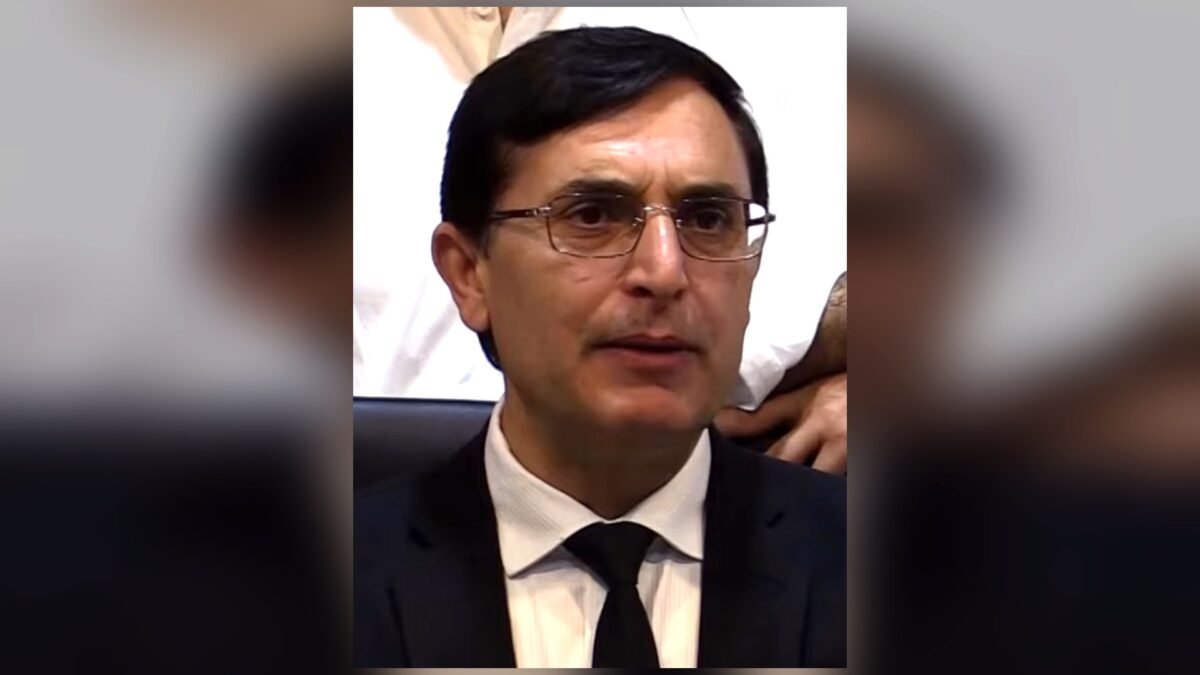
Pakistan Tehreek-e-Insaf (PTI) Chairman Barrister Gohar Ali Khan on Monday moved to shut down speculation about a rift inside the opposition ranks, declaring that National Assembly Opposition Leader Mahmood Khan Achakzai retains the full confidence of the party’s founder Imran Khan and ruling out any discussion of replacing him with Jamiat Ulema-e-Islam-Fazl (JUI-F) chief Maulana Fazlur Rehman.
Speaking to Geo News at Parliament House, Gohar dismissed talk of a “minus” for Achakzai, the veteran politician from the Pakhtunkhwa Milli Awami Party (PkMAP) whom PTI backed for the opposition leadership, and said there had been no discussion whatsoever about Fazlur Rehman becoming the National Assembly’s opposition leader.
“We accept the PTI founder’s decision and will move forward accordingly,” Gohar said, according to The News, stressing that the party had no authority to decide whether to accept the opposition leader or not. He added that Imran Khan himself had named Achakzai and Allama Raja Nasir Abbas — the Senate opposition leader — as leaders and had directed the party to move forward under their guidance.
“The PTI founder gave me instructions, and those are what we accept and follow,” Gohar said, adding that neither opposition leader had been disrespected in any way. Gohar noted that everyone in the party was free to express an opinion, but once the party made a decision, it was accepted by all. “If there had to be a ‘minus’, it would have happened by now,” he said.
Gohar also maintained that Imran Khan himself could not be “minus-ed” from the political equation, claiming that 90 per cent of the nation stood with him — a characteristically sweeping assertion from a party leader that should be read as political rhetoric rather than a measurable figure.
The question behind the question
The remarks were directed at a growing chatter in Islamabad’s political circles that PTI might be quietly reconsidering Achakzai’s position — or that the veteran cleric Fazlur Rehman, who has been hovering around the centre of efforts to mediate between the government and the opposition, might be installed as the opposition’s parliamentary face in the lower house.
Gohar rejected that framing outright. There had been “no discussion” about Fazlur Rehman becoming the National Assembly’s opposition leader, he said, and everything was proceeding at the PTI founder’s discretion.
The context is delicate. Fazlur Rehman has in recent weeks been courted by both sides. A government delegation comprising National Assembly Speaker Sardar Ayaz Sadiq, the Prime Minister’s adviser on political affairs Rana Sanaullah and Dr Tariq Fazal Chaudhry met the JUI-F chief at his Islamabad residence, while PTI and the opposition alliance Tehreek-e-Tahafuz Aain-e-Pakistan (TTAP) also held separate meetings with him. PTI MNA Junaid Akbar said the party remained open to Fazlur Rehman helping to end the political stalemate, subject to the party’s agreement, while a TTAP spokesperson disputed reports that the JUI-F chief had formally entered the process as a mediator.
Achakzai and Senate Opposition Leader Allama Raja Nasir Abbas have meanwhile been in contact with each other — the two leaders discussed negotiations and a proposed All Parties Conference during a telephone conversation, agreeing, according to sources cited in reporting, to make talks with the government conditional on a meeting with Imran Khan.
Against that backdrop, Gohar’s statement draws a clean line: Fazlur Rehman may be welcome as a potential mediator, but he is not being auditioned for the opposition leader’s chair.
Arrested parliamentarians and production orders
In the same conversation with Geo News, Gohar disclosed that he had spoken to National Assembly Speaker Ayaz Sadiq about issuing production orders for 10 arrested parliamentarians. He said lawmakers Adil Bazai and Chaudhry Imtiaz had been arrested and that the speaker had been informed about the arrests, according to The News.
Gohar also confirmed that Senator Mishal Yousafzai had been issued a show-cause notice, describing it as an internal party matter.
‘Meeting demand led to governor’s rule’
In a separate conversation with the media on Adiala Road in Rawalpindi — the road leading to the jail where Imran Khan is incarcerated — Gohar claimed that it was the demand for a meeting with the PTI founder that led to the imposition of governor’s rule in Khyber Pakhtunkhwa.
The remark ties the opposition-leadership question to the single most sensitive chokepoint in Pakistan’s current political crisis: access to the jailed former prime minister. The federal government imposed emergency and governor’s rule in KP, the province ruled by the Imran Khan-founded party since 2013, on October 11, suspending the PTI-led provincial administration. Islamabad cited rising terrorism incidents and the provincial government’s lack of support for counterterrorism operations as the reasons; PTI rejects that account and has challenged the measures before the Peshawar High Court.
The court issued notices on Tuesday to the attorney general and federal authorities on separate petitions filed by Gohar and Advocate Salman Khan, adjourning further hearings until November 10. Gohar’s Adiala Road claim reframes the emergency as a political measure aimed at the party’s leadership access to Imran Khan rather than a security one — a charge the government has repeatedly denied.
Access to Imran Khan has indeed become a legal and political battleground of its own. PTI has launched a contempt petition over the manner in which the former premier was taken to hospital for a check-up and then returned to jail, and party leaders have said they approached authorities with a request to release Khan’s three sisters and restore family meetings of his wife, Bushra Bibi. Defence Minister Khawaja Asif, for his part, said on Monday that the government was calling on the opposition to discuss terrorism, and suggested that voices within PTI were emerging in favour of pursuing politics rather than confrontation.
Analysis: Why It Matters
1. The ‘minus’ vocabulary has a history
In Pakistan’s political lexicon, the “minus-one” formula carries heavy baggage. It refers to a recurring pattern in which a party’s founder or top leader is sidelined — “minused” — while the party continues to function without them. It was applied to Nawaz Sharif in 1999, to Benazir Bhutto in the 1990s, and the phrase has shadowed every major opposition leader since. When Gohar says “if there had to be a minus, it would have happened by now,” he is not just answering a question about Achakzai — he is pre-emptively rejecting the very framework in which political opponents and media commentators keep placing PTI’s leadership.
The phrasing does double duty. Applied to Achakzai, it kills the speculation about his removal. Applied to Imran Khan — “Imran could not be minus” — it rejects the idea that the party can be detached from its founder, who has been in jail since 2023 on corruption charges he denies. The insistence that 90 per cent of the nation stands with him is unverifiable rhetoric, but it is rhetoric aimed at a specific audience: anyone inside the system contemplating a PTI without Imran.
2. Achakzai holds an unusual position
Achakzai is not a PTI member. The PkMAP chairman is a veteran Baloch nationalist politician with decades of parliamentary experience, and his elevation to the opposition leader’s slot in the National Assembly reflects the peculiar mechanics of Pakistan’s opposition politics: the leader of the opposition is technically the nominee of the opposition benches, and PTI — after the disqualification of former opposition leader Omar Ayub as an MNA in August 2025 following his conviction in cases linked to the May 9, 2023 riots — needed a credible, senior figure acceptable across the opposition.
The post matters. The opposition leader chairs the Public Accounts Committee under parliamentary convention, sits on appointment panels, and is the constitutionally recognised face of the opposition. For a party whose own leader cannot walk into the House, having a heavyweight like Achakzai in that chair lends parliamentary legitimacy to an opposition that is otherwise operating through lawyers, courts and social media. Keeping him there is not just loyalty — it is structural self-interest.
3. Fazlur Rehman is useful as a mediator, not as a replacement
The most interesting part of Gohar’s statement is the explicit decoupling of two roles Fazlur Rehman has been playing in recent weeks. As a mediator, the JUI-F chief is valuable: he talks to the government, he talks to PTI, and both sides have at least pretended to welcome his involvement. As opposition leader, however, he would represent something entirely different — a reconfiguration of the opposition’s parliamentary identity around a figure whose party has its own distinct base and its own history of rivalry with PTI.
PTI wants the mediation channel kept open without paying the price of ceding the opposition leadership. That is a difficult position to hold for long, because in Pakistani politics the mediator who succeeds often becomes the indispensable centre of gravity — and the mediator who is visibly blocked from a formal role may simply become someone else’s channel. Gohar’s clean “no discussion” line is meant to freeze that dynamic before it starts moving on its own.
4. The arrested parliamentarians tell their own story
Lost in the headline about Achakzai is the quieter revelation: 10 parliamentarians arrested, production orders requested, two more lawmakers — Adil Bazai and Chaudhry Imtiaz — detained. The opposition’s parliamentary contingent is being thinned by arrests even as its leader’s position is being politically defended. This is the two-front war PTI is fighting: the formal institutions of parliament are simultaneously the arena where it defends its standing and the place where its members keep disappearing into custody.
Gohar raising the production orders with the Speaker is a reminder that the opposition leader’s office is not ceremonial. Getting detained members back into the House — even briefly, under escort, to vote or speak — is one of the few procedural tools an opposition leader has to assert that the legislature still functions as a legislature. The fact that the request had to be made at all says something about the current temperature of Pakistani democracy.
5. Everything still funnels through Adiala
Gohar’s Adiala Road claim — that the demand for a meeting with Imran Khan is what triggered governor’s rule in KP — is unproven, and the government has consistently maintained that the emergency was about terrorism and the provincial government’s disengagement from the counterterrorism fight. But the claim is politically potent precisely because every major development in this crisis now passes through the question of access to the jailed founder: the court cases, the hospital check-up, the contempt petition, the sisters’ arrests, the family meetings, even the opposition leader’s position.
As long as decisions about PTI’s parliamentary leadership, its negotiating stance and its protest calendar are all made by a man who can only be reached through lawyers and court orders, every spokesperson’s statement will carry the same vulnerability: is this really Imran’s decision, or the decision of whoever last managed to see him? Gohar’s insistence that “the PTI founder gave me instructions” is both the party’s answer to that question and the reason the question keeps being asked.
What to Watch Next
- The production orders test: Whether Speaker Ayaz Sadiq actually issues production orders for the arrested parliamentarians — and whether they are honoured — will indicate whether parliamentary procedure still has any protective power for the opposition.
- Fazlur Rehman’s next move: The JUI-F chief has been cast as mediator by both sides but formally rejected by neither. If a genuine negotiation track opens, watch whether his role stays informal — PTI’s preference — or whether he converts mediation capital into a formal opposition position.
- The internal PTI dynamics: The Mishal Yousafzai show-cause notice, described by Gohar as an internal party matter, is a small window into the party’s disciplinary tensions. More such notices — or none — will signal how stable the current command structure really is.
- The KP emergency litigation: The Peshawar High Court’s November 10 hearing on the emergency and governor’s rule petitions will determine whether the courts or the cabinet get the final word on the suspension of an elected provincial government.
- The Imran Khan access question: The contempt petition over the hospital move, the sisters’ release request and the weekly family visits all revolve around the same core: who gets to see the PTI founder, and on whose terms. Every future negotiation — with Fazlur Rehman or anyone else — will stall on this point.
Sources
- The News — “PTI rejects ‘minus-Achakzai’ claim, says no talks on Fazl as NA opposition leader” (October 20, 2026)
- Geo News — “Imran Khan Has Full Confidence in Achakzai, Says Barrister Gohar” (official Geo News video, October 20, 2026)
- Centreline — “PTI rules out Achakzai’s removal, says no talks on making Fazl opposition leader” (October 20, 2026)
- Islamabad Post — “PTI rules out Achakzai’s removal, says no talks on making Fazl opposition leader” (October 20, 2026)
- 99 News — “Fazlur Rehman May Help Revive Government-PTI Talks as Opposition Seeks Imran Khan Meeting” (October 2026)
- The News — “21 ex-cricket greats write to Shehbaz for Imran’s full medical care” (August 2026, background on the medical-care dispute)

About the Author — Abdul Mannan
Related Articles
Peshawar High Court Takes Up PTI Challenge to KP Emergency and Governor’s Rule, Issues Notices to the Centre
The Peshawar High Court has opened hearings on PTI petitions seeking to overturn the emergency and governor's rule…
Pakistan Army Chief Asim Munir Heads to Tehran as Pakistan Pushes to Revive US-Iran Diplomacy
What we know Pakistan’s army chief, Field Marshal Asim Munir, is due in Tehran on Tuesday for talks…
Shehbaz Sharif Pushes FBR Reform Overdrive, Weighs New Tax Agency as Rs650 Billion Shortfall Looms
Prime Minister Shehbaz Sharif ordered an acceleration of FBR reforms and a nationwide faceless tax system as the…