
US and Israel Draw Up Plans for Renewed Iran Strikes After Midterms, NYT Reports

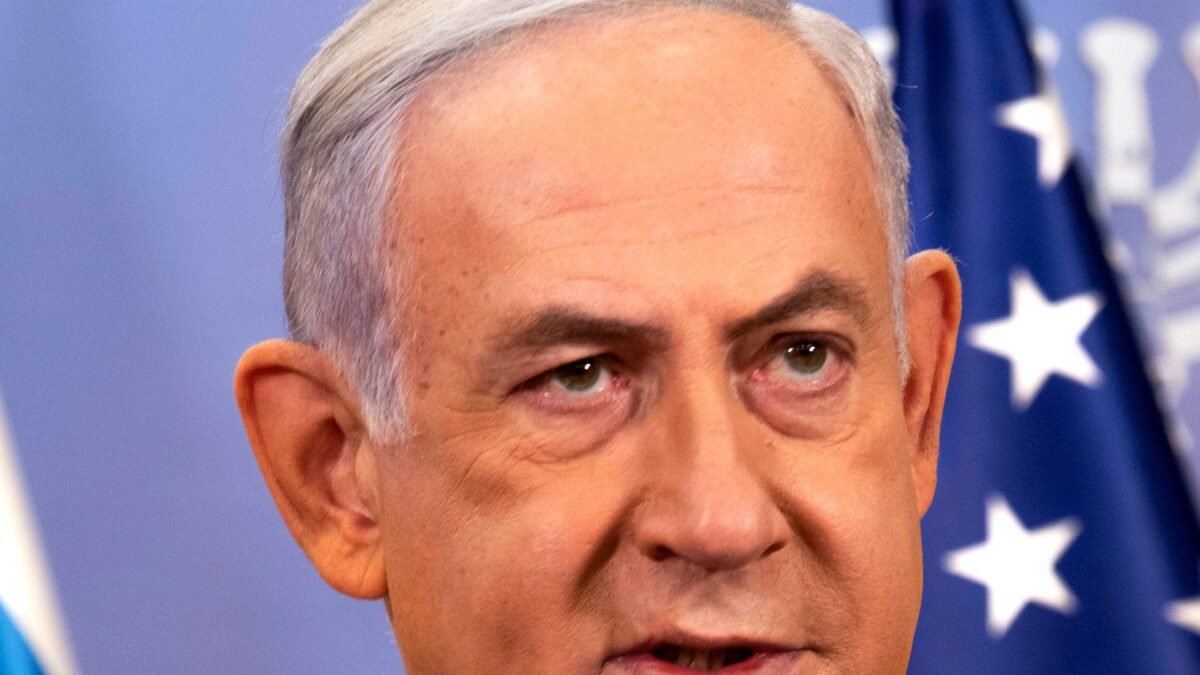
The United States and Israel have drawn up specific plans for renewed strikes on Iran to be carried out after the American midterm elections on 3 November, the New York Times reported on Wednesday, citing US officials and other people briefed on the deliberations. The reported operation would be “short but intensive”, lasting roughly three days, and would hit Iran’s nuclear facilities, energy infrastructure, and missile and drone systems.
According to the report, the two militaries have intensified their preparations in recent days, with aircraft flying over Iraq to rehearse the manoeuvres a strike campaign would require. The American force assembled for the operation is said to include three aircraft carriers, thousands of Marines, fighter jets and special operations units, and is expected to be fully in place in early November, when the hours of darkness over Iran — the conditions the US military prefers for attacks — also lengthen.
Some US officials told the Times that one more big round of attacks could do enough damage to Iran’s economy to push it toward collapse and force the country to make diplomatic concessions after nearly eight months of war. Others suggested that oil refineries would be kept off the target list to avoid pushing petrol prices higher.
Nothing has yet been approved. The paper said President Donald Trump has vetoed plans for a return to major combat several times this year, and a White House official told it the administration does not comment on military plans “that may or may not exist”.
The plan
Among the possible targets, the Times said, is Iran’s energy infrastructure, its nuclear sites, and its missile and drone arsenal. One site under consideration is Pickaxe Mountain, a deeply buried nuclear-related facility near Natanz. US officials told CNN on 15 October that strike packages could include the GBU-43/B Massive Ordnance Air Blast bomb — known as the “mother of all bombs” — against that site, though one official cautioned that the weapon was “definitely not designed as a deep penetration warhead”. Trump told the Newsmax network that evening: “Now we’re looking at Pickaxe Mountain. We may have to go there. We’ll take a shot at that one.”
The timing, according to the report, is driven by logistics as much as by politics. The American military buildup will not be complete until early November, and the days after the midterms offer the longest nights over Iranian territory this season. Officials said there was a small possibility Trump could order a campaign even earlier, but his public position has been clear: on 8 October he wrote on Truth Social: “We will not be attacking Iran at any time prior to the Midterm Elections to be held in the United States on November 3rd.”
On Wednesday, Trump told reporters the United States was not negotiating with Iran and that something would happen “fairly soon”. “Most people seem to think it’s after the election, we’re gonna see what happens,” he said.
The October sortie
Two days before the Times report appeared, the planning had already broken into the open in the skies. On 19 October, US Defence Secretary Pete Hegseth met Israeli Prime Minister Benjamin Netanyahu at Ovda air base in southern Israel — a visit Hegseth later acknowledged without discussing its substance. The same day, dozens of Israeli fighter jets and refuelling tankers flew roughly 1,300 kilometres (800 miles) to the Iranian border and back, crossing Syrian and Iraqi airspace along a route consistent with a strike run on Iran, and turned back as they approached the border.
Israel knew Iranian air defences would detect the aircraft, US officials told Axios and other outlets. Several American officials had the impression that some figures in the Israeli government hoped Iranian air defences would fire on the jets and provide a justification for an attack, according to the Times. Others, in both countries, described the flight as routine deterrence, while acknowledging it could have led to a miscalculation and restarted the war.
Israel’s official line was that the flight was an exercise designed to deter Iran from attacking before Israel’s own election on 27 October. Netanyahu released a video the same day of a telephone call with Trump, apparently filmed at an air base. “Donald, we have a job to finish [in Iran]…and we’ll finish it together. We’ll finish it, and no one else will do it,” Netanyahu said. “You’re a great warrior, and we’ll prove that very soon,” Trump replied.
The flight came a day after Trump endorsed Netanyahu’s re-election campaign on 18 October, nine days before the vote — a remarkable public intervention by a sitting US president. Trump threatened to “soon finish the job” against Iran “unless they change their ways, rapidly”, warned he might not want to proceed if Netanyahu lost, and said America could be left facing Iran alone.
Trump’s veto power
Whatever the plans say, the decision rests with Trump — and he has repeatedly pulled the plug. The Financial Times reported on Wednesday, citing three people familiar with the matter, that Netanyahu had ordered the Israeli military to prepare a multi-day bombing campaign for the weekend of 10 October, targeting nuclear facilities, power plants, other civilian infrastructure and sites linked to the Iranian government, at an intensity greater than the campaign the two countries began in February. Trump stopped it because he opposed restarting the war before the midterms, those people said. “There will either be a deal or an attack,” one of them said.
Israeli military sources, speaking to the Jerusalem Post, disputed that account, saying the military was not preparing to strike Iran on 10 October and suggesting the leak was designed to sway Israel’s election. They noted it was unusual for Lieutenant General Eyal Zamir, the military chief of staff, to have been left out of Netanyahu’s meeting with Hegseth.
An Israeli Channel 12 report in mid-October said Netanyahu had urged Trump to restart the war before both Israel’s election and the US midterms. Trump has vetoed such plans several times this year, most recently this month, when US and Israeli defence officials said the operation was nearly ready to launch, according to the Times.
In an interview published on 22 October, Netanyahu said of the Times report: “This report is not true. I’m not going to get into correcting this biased report,” without saying which part he disputed. In the same interview he said he had instructed the military and the Mossad to bring down the Iranian government — and on 20 October he told his own supporters: “We must complete the elimination of the Iranian regime, that is the primary objective.”
Israel’s election clock
Israelis vote on 27 October in the country’s first election since the Hamas-led attacks of October 2023. Senior US officers told Zamir in early October that White House officials and the Pentagon had instructed them to prepare for a massive attack on Iran within three weeks — a window ending shortly before the midterms. Zamir warned them that an attack before 27 October could force Israel to postpone its election, because Israeli officials assess Iran would answer a US strike with heavy missile fire on Israeli cities.
Postponing the vote would require a law passed by at least 80 of the Knesset’s 120 members, under section 9A of Israel’s Basic Law: The Knesset, and only when special circumstances prevent an election — a bar requiring votes from both the governing coalition and the opposition. The Knesset last postponed an election in 1973, moving it from 30 October to 31 December after Egyptian and Syrian forces attacked on 6 October.
Zamir repeated his warning to General Dan Caine, the chairman of the US Joint Chiefs of Staff, and Israeli security officials and opposition figures have urged him to oppose any Israeli attack before the vote unless there is a genuine military need. Security officials fear statements by Netanyahu and Defence Minister Israel Katz could prompt Iran to strike Israel first.
Katz said on 22 October that Israel’s enemies might plan attacks to influence the vote, citing “information in our possession”, and said any future attack would be the responsibility of opposition leaders Yair Lapid, Naftali Bennett and Yair Golan. He offered no evidence. “Based on the information I am familiar with, there is no reason to attack there or anywhere else before the election,” Lapid replied.
The polls suggest a knife-edge contest. A Channel 13 poll on 23 September gave Gadi Eisenkot’s Yashar party — Eisenkot is a former military chief of staff and Netanyahu’s main challenger — 22 seats to Likud’s 18, with Netanyahu’s coalition on 51 seats to the opposition’s 52, short of the 61 needed to govern. An average of eight pollsters in mid-October put Netanyahu’s bloc at about 54 seats. If no bloc reaches 61, Netanyahu would stay on as caretaker prime minister during coalition talks — with the legal authority, as caretaker, to order military action.
Iran’s warnings
Tehran has spent the week advertising what it would do if the bombing resumes. Hossein Mohebbi, the spokesman for the Islamic Revolutionary Guard Corps, said on 21 October: “We are in the stage of preparing to unveil the ‘father of all bombs’. This is something new for the enemy,” without describing the weapon. The same day he said Iran would launch offensive operations against any country that attacked it.
Major General Ali Abdollahi, the chief of staff of Iran’s armed forces, said on 20 October that “the outbreak of any new war against Iran would inevitably spread its fire to engulf everyone”, and that Iran would answer with cheap drones and other “asymmetric equipment” against US and Israeli systems. Esmaeil Baghaei, the Foreign Ministry spokesman, said the same day that Iran would answer any US attack with equal or greater force.
On 22 October, Mohsen Rezaei, the secretary of Iran’s Supreme National Security Council, named new targets: undersea cables, data centres and artificial intelligence facilities linked to the US across the Gulf could be destroyed if war breaks out, he told Press TV, putting more than $2 trillion of US-linked technology infrastructure at risk. “We have not yet included these assets among our targets,” Rezaei said. Mohebbi had said on 19 October that “seven major internet cables run beneath the Strait of Hormuz”.
The same day, the Revolutionary Guards threatened on their Sepah News website to strike US bases across the region if the US Navy kept escorting ships through the strait. “The US military must know that if this trend continues, the conflict will extend to its bases in the region,” the Guards said. They said they had struck four ships transferring oil between vessels in the northern-central Gulf overnight and that three other vessels had hit mines west of the strait, caught fire and stopped. The Guards offered no evidence beyond their statement, and the incidents have not been independently confirmed.
Foreign Minister Abbas Araghchi said on 21 October that the strait — through which about one-fifth of the world’s oil passed before the war — would stay closed to some shipping until the US accepted Iran’s terms. “Until an agreement or understanding is reached regarding this strait, it will not be open to everyone,” Araghchi said, adding that indirect talks continued through Pakistan and Qatar. “Every possibility exists in the future, including the possibility that the Americans and the Zionist regime will launch another war against Iran,” he said.
The military pressure is not only rhetorical. The US military has cut troop numbers at bases in Jordan, Qatar and Kuwait in recent days, in reductions similar to those made before the war began in February, and the State Department planned to move some diplomats and their families out of Saudi Arabia, citing the risk of renewed fighting with the Houthis in Yemen, according to US officials.
The war so far
The US and Israel began striking Iran on 28 February, in an opening attack that killed Ayatollah Ali Khamenei, the supreme leader, according to multiple reports. US and Israeli strikes killed at least 3,636 people in Iran by 7 April, including 1,701 civilians — at least 254 of them children — and 1,221 military personnel, according to Human Rights Activists in Iran, a US-based monitoring group. Iran’s Health Ministry counted at least 2,362 civilian deaths over the same period.
Iran answered with missiles and drones aimed at Israel and at Gulf states hosting US forces. An Iranian missile killed nine Israeli civilians in a residential area of Beit Shemesh on 1 March, and by August 19 US soldiers had been killed in the war, many of them in Iranian strikes on Gulf bases, according to the Jerusalem Post. The first phase, from February to April, drove up energy prices and inflation and strained American stocks of missile interceptors.
An interim truce between the US and Iran broke down on 8 July after Iran struck commercial ships in the Strait of Hormuz. The US naval blockade of Iran remains “in full force”, Trump wrote on 8 October. Brent crude has traded near $110 a barrel this week — a five-month high — as markets price the risk of another escalation.
Analysis: Why It Matters
The plan is the message
Leaks like this are rarely accidents. The New York Times report lands eight days before Israel’s election and twelve days before America’s midterms, at a moment when both Netanyahu and Trump are publicly posturing over how the Iran war ends. Published war plans serve two audiences at once: Tehran, which is meant to read them as coercion and make concessions before the bombs fall, and domestic voters, who are meant to read them as resolve. The fact that the Times sourced the story to US officials — officials who have spent months briefing against Netanyahu’s pressure campaign — suggests Washington is trying to manage the narrative as much as the war. Publishing the plan constrains Trump as well: once the timetable is public, any deviation from it becomes a story of its own.
Two elections, one war clock
Every military date in this story is subordinated to a ballot. Netanyahu’s reported 10 October campaign had to be stopped, according to the Financial Times, precisely because it fell before Israel’s 27 October vote — and an Iranian missile barrage could have forced the very postponement Zamir warned about. Trump’s 8 October pledge not to strike before 3 November is not strategy; it is scheduling. Wars of choice are being slotted into campaign calendars, which means the fighting is hostage to outcomes neither military can control. The most dangerous implication of the Times report is that the window it describes — after 3 November, when both votes are behind — is the first moment either leader can act without an electorate watching. That is when wars of choice usually happen.
Gas prices as the veto
Buried in the report is the detail that some US officials want refineries kept off the target list to avoid pushing petrol prices higher. That single sentence explains almost everything about American conduct in this war. Trump has vetoed repeated plans to return to major combat, and the pattern is consistent: military logic says hit the energy infrastructure that funds Tehran; political logic says a petrol-price spike twelve days before the midterms is suicidal. Iran understands this perfectly — hence Mohebbi’s boasting and Rezaei’s threats against undersea cables and data centres. Tehran’s strategy is to make the economic cost of war visible to American voters. The question is not whether the US can destroy Iran’s nuclear sites; it is whether Trump believes he can afford to, politically, before 3 November — and whether he cares about the cost after it.
Iran’s counter-leverage
Tehran’s warnings this week were strikingly specific: cables, data centres, AI facilities, Gulf oil infrastructure — more than $2 trillion of US-linked assets, according to Rezaei. The specificity is deliberate. Iran cannot match American airpower, so it advertises the targets where it is strongest: the economic arteries of the Gulf and the digital infrastructure of the American tech presence there. The Revolutionary Guards’ threat to strike US bases if the Navy keeps escorting ships through Hormuz completes the picture: Iran is telling Washington that escalation will not be contained to Iranian territory. Whether these threats are bluff or capability is almost beside the point — they are designed to raise the price of American action high enough that even a president who says he wants to “finish the job” thinks twice.
October was the dress rehearsal
The most telling episode in this story may not be the Times report at all but the 19 October sortie — dozens of Israeli jets flying 1,300 kilometres to Iran’s border and back while Hegseth sat with Netanyahu at Ovda. Some US officials read it as an attempt to provoke Iranian fire and manufacture a casus belli; Israel called it deterrence. Either way, the machinery of escalation is being tested in the open: the flight paths are flown, the tankers are positioned, the US military is thinning its own bases in Jordan, Qatar and Kuwait. This is how wars begin in the modern era — not with a single bolt from the blue, but with a series of rehearsals that shorten the distance between a political decision and a military one. The plans reported on Wednesday may never be approved. But the jets, the tankers and the carriers are already where they would need to be if they were.
What to Watch Next
- Israel’s vote on 27 October: a Netanyahu win or loss reshapes everything — his own pledge to make regime change “the primary objective”, his legal authority as caretaker, and Trump’s willingness to “finish the job” alongside him.
- Trump’s post-midterms posture: the 3 November elections remove the political constraint he has cited all month. His Truth Social pledge expires with the vote; watch for new language within 48 hours.
- The US buildup in early November: three aircraft carriers, Marines, special operations units — whether the force actually completes its deployment, or disperses, will tell us whether the plans are being kept warm or stood down.
- Iran’s next move at Hormuz: the Guards’ unconfirmed vessel attacks and the threat to US bases are the most immediate flashpoint. Any independently verified attack on shipping or a US installation would change the timeline overnight.
- The Pakistan-Qatar back channel: Araghchi says indirect talks continue through Islamabad and Doha. Any movement on Iran’s seven conditions for reopening the strait would be the clearest sign that Tehran still prefers a deal to a war.
Sources
- Livemint — “US, Israel plan ‘short but intensive’ strikes on Iran after mid-term elections; will Trump approve?” (22 October 2026)
- YAC News — “Netanyahu pushes Trump to renew strikes on Iran, US and Israel plan post-midterm offensive” (22 October 2026)
- NewsBeep — “U.S. and Israel Have Drawn up Plans for New Iran Strikes After Midterms, NYT Report Says” (22 October 2026)
- InvestingLive — “US and Israel plan specific renewed Iran strikes after US midterms, New York Times reports” (22 October 2026)

About the Author — Abdul Mannan
Related Articles
European Parliament Awards 2026 Sakharov Prize to International Criminal Court Amid US Sanctions
The European Parliament has awarded the 2026 Sakharov Prize to the International Criminal Court and its officials, a…

Kim Yo Jong Says North Korea Will Have Anti-Seoul Loudspeakers Ready Within Days, Warning of ‘Most Horrible and Distressing Situation’
Kim Yo Jong says North Korea will place anti-Seoul propaganda loudspeakers on standby along the entire inter-Korean border…
Kremlin Says Russia Will Resume Three-Way Ukraine Peace Talks in November After Witkoff Meets Putin in St Petersburg
The Kremlin says Russia is ready to resume three-way talks with the US and Ukraine after 10 November,…