
European Parliament Awards 2026 Sakharov Prize to International Criminal Court Amid US Sanctions

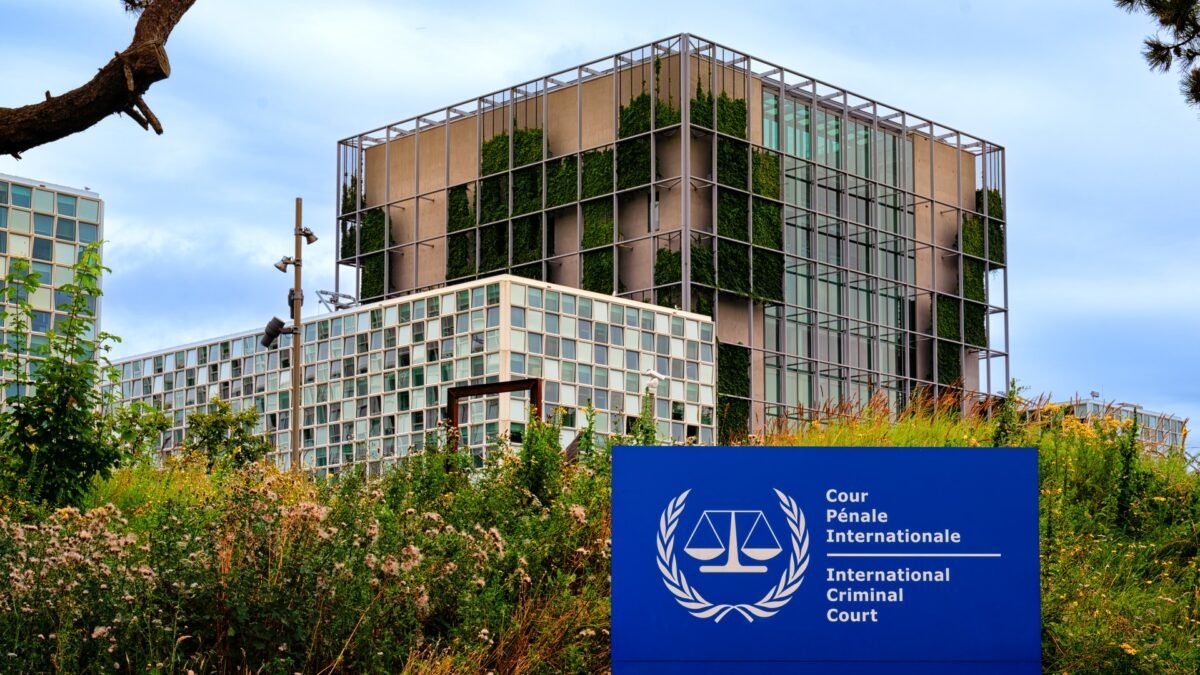
The European Parliament has awarded its 2026 Sakharov Prize for Freedom of Thought to the International Criminal Court and its officials, announcing the decision at the Strasbourg plenary on Thursday to a standing ovation — a deliberate and unmistakable show of European backing for the Hague-based tribunal less than two weeks after the United States sanctioned the court as an institution.
European Parliament President Roberta Metsola announced the award, telling members that the decision recognised the court’s work in defending the international legal order. “The EU is built on respect for multilateralism and international institutions,” she said, as she declared that the prize recognised “the important work of the court in upholding international law and justice,” according to Reuters.
The award was decided by the Conference of Presidents — Metsola and the leaders of Parliament’s political groups — after a nomination that turned out to be as political as the court’s own docket. The Socialists and Democrats (S&D) group, which had put the court forward at the initiative of French member Chloé Ridel, secured backing from Renew Europe, the Greens and The Left. That coalition was enough to defeat the two other finalists: Tanzanian opposition leader Tundu Lissu and the imprisoned Iranian twin sisters Taraneh and Romina Rahimi, according to Brussels Signal’s reporting of the vote.
The right of the Parliament split. The European People’s Party, the European Conservatives and Reformists and Europe of Sovereign Nations all backed Lissu, while Patriots for Europe held out for its own candidates, the Rahimi sisters — leaving the court with the largest share of votes. The prize carries €50,000 and will be presented to the court and its officials in Strasbourg on 16 December, at the last plenary session of the year.
The timing of the award is the story. On 9 October, the Trump administration imposed sanctions on the court itself — an escalation of earlier American measures against its judges, prosecutors and staff — with US Secretary of State Marco Rubio announcing that transactions with the court would be banned after a six-month grace period. France 24 has reported that the sanctions cut the court off from US-based financial services, technology companies and the use of US dollars, with Washington citing what it called political bias.
The Sakharov Prize is the second major international recognition for the embattled tribunal this month. Less than two weeks ago, the Nobel Peace Prize was awarded to Navanethem “Navi” Pillay — who served as an ICC judge from 2003 to 2008 — for her efforts to promote peace and international law, an award widely read as a show of support for the court.
ICC President Tomoko Akane welcomed the Strasbourg decision, saying the “unprecedented challenges” the court faces made the prize all the more significant. “It underscores the importance of continued international cooperation and support to enable the court to carry out its mandate independently and impartially, in the service of justice and the victims of the gravest crimes,” the Japanese judge said, adding: “There is no peace without justice and no security without law,” according to Reuters.
The court sits at the centre of one of the most contentious fault lines in global politics. Established under the Rome Statute, the ICC is the world’s first permanent international criminal court, tasked with investigating and prosecuting genocide, war crimes, crimes against humanity and the crime of aggression. It acts as a court of last resort, stepping in only where national authorities are unwilling or unable genuinely to prosecute. The Trump administration’s campaign against it escalated after the court announced in 2024 arrest warrants against Israeli Prime Minister Benjamin Netanyahu and his former defence minister — warrants issued over alleged war crimes and crimes against humanity in Gaza that Washington and Jerusalem have furiously denounced.
The Sakharov Prize, named after the late Soviet dissident Andrei Sakharov, has been awarded annually since 1988 to individuals and organisations defending human rights and freedoms. Last year’s prize went to the Belarusian journalist Andrzej Poczobut and his Georgian colleague Mzia Amaglobeli.
Reaction inside the Parliament made clear that supporters see the award as the beginning of an argument, not the end of one. S&D president Iratxe García Pérez called it “a victory for international justice, a defeat for autocrats, and a powerful reminder that accountability matters,” and renewed her group’s demand that the European Commission activate the EU’s Blocking Statute to counter the American sanctions, according to EU Reporter.
The advocacy group No Peace Without Justice went further, congratulating Parliament but accusing the Commission of leaving the court undefended. In a statement, the group said the Commission “can shield European citizens and companies” from the US measures by activating the Blocking Statute, Council Regulation (EC) No 2271/96, and had instead “chosen dialogue and delay” — adding that “the Union cannot honour the Court in Strasbourg and leave it undefended in Brussels.”
Analysis: Why It Matters
A prize that is also a rebuke
There is nothing accidental about the sequencing here. Within a single month, Oslo and Strasbourg have each handed the world’s war-crimes court their highest honours, while Washington has moved to choke its finances, its technology supply chains and its access to the dollar. That is not a coincidence of calendars; it is a transatlantic split made visible. The Sakharov Prize has always been as much a political instrument as a humanitarian one — it is awarded by politicians, after political negotiation — and this year it has been aimed, with unusual precision, at an institution that the United States is actively trying to punish. The standing ovation in the chamber was the Parliament saying out loud what diplomats usually only whisper: that Europe and America no longer agree on whether international justice is an ally or an adversary.
The vote inside the Parliament tells its own story
The court did not win by acclamation; it won because the right could not agree. The largest group in the chamber, the EPP, backed a different candidate. Patriots for Europe backed yet another. If the politics of The Hague were ever described as above politics, the Strasbourg ballot disproves it. What carried the court was a centre-left to left-green coalition that shares one conviction: that defending the ICC is defending the rules-based order itself. The fracture on the right, meanwhile, is worth watching, because it mirrors a broader European argument about whether the court is a universal instrument of justice or a selective one — an argument the sanctions debate will now sharpen.
Honour is cheap; protection is not
The sharpest criticism of the award comes from the court’s own supporters. A prize ceremony costs nothing; standing between a European bank and an American sanctions threat costs political capital, and the Commission has so far refused to spend it. The Blocking Statute is not a theoretical instrument — it dates to 1996, was revived for the Iran sanctions dispute, and would let European companies defy foreign sanctions without facing US penalties in EU courts. The Commission’s refusal to activate it for the ICC exposes the gap between Strasbourg’s rhetoric and Brussels’ caution. As No Peace Without Justice put it, the prize settles an argument the Commission has been avoiding: if the court embodies the European legal order, defending it is the defence of that order — and a medal without a shield is only half a defence.
How the sanctions actually bite
It is worth being precise about what Washington has done, because the mechanics matter more than the symbolism. Cutting the court off from US financial services, US technology firms and the dollar is not a gesture; it is an attempt to make the institution unbankable and unprocessable. ICC officials have already faced personal sanctions; the 9 October measures extended the pressure to the court as an entity, with a six-month grace period before transactions are banned outright — a clock that runs out around April next year. The targets are the court’s ability to pay staff, procure services and move money. The US has used this playbook before, against ICC officials in 2020 over the Afghanistan investigation; the difference now is scale and intent. Strasbourg’s applause will not pay a single invoice, which is exactly why the Blocking Statute debate — dry as it sounds — is the most consequential question in this story.
The court’s impossible position
The deeper significance of the prize is what it asks the ICC to keep doing: prosecute the powerful, impartially, while its most powerful critic tries to bankrupt it. The court depends entirely on the cooperation of states — more than 120 are parties to the Rome Statute — for arrests, evidence and funding. Its 2024 warrants against Netanyahu and his then defence minister remain unexecuted; its investigations touch American and Israeli officials, which is precisely what drew Washington’s fire. The Sakharov Prize, and the Nobel before it, amount to a wager by Europe that institutional honour can substitute for enforcement power. That wager will be tested not in acceptance speeches but in the months ahead, when the sanctions grace period expires and the court must still function — still investigate, still issue warrants, still demand that states honour them. A prize cannot arrest anyone. It can only remind the world that someone still believes arresting the guilty matters.
What to Watch Next
- 16 December in Strasbourg. The ceremony is the first public test of the sanctions regime: will the court’s sanctioned officials actually be able to travel to France and collect the prize, and will any European state or company hesitate to host or process payments for them?
- The Blocking Statute decision. The S&D demand is now backed by Parliament’s highest honour. Watch whether the Commission moves from “dialogue and delay” to activation — or whether member states split on defying Washington.
- The sanctions clock. Rubio’s six-month grace period for transactions with the court expires in the spring. The practical question is whether any bank, software vendor or contractor continues to serve the ICC after that deadline.
- The wider standoff. The AP has reported concerns that US-Israeli strikes on Iran could resume after Israel’s close election and the US midterm elections. Any escalation would further strain the very international legal order the prize celebrates.
- Arrest-warrant diplomacy. The court’s authority ultimately rests on states executing its warrants. Watch for any new ICC action — and any state’s refusal to comply — as the real measure of whether the Sakharov honour changed anything.
Sources
- Reuters: “International Criminal Court wins EU’s 2026 Sakharov prize”
- EU Reporter: “European Parliament awards Sakharov Prize to International Criminal Court amid US sanctions”
- Brussels Signal: “EP awards Sakharov Prize to International Criminal Court”
- No Peace Without Justice: press release on the Sakharov Prize and the Blocking Statute
- Delano: “ICC wins Sakharov Prize amid US sanctions”

About the Author — Abdul Mannan
Related Articles

Kim Yo Jong Says North Korea Will Have Anti-Seoul Loudspeakers Ready Within Days, Warning of ‘Most Horrible and Distressing Situation’
Kim Yo Jong says North Korea will place anti-Seoul propaganda loudspeakers on standby along the entire inter-Korean border…
Kremlin Says Russia Will Resume Three-Way Ukraine Peace Talks in November After Witkoff Meets Putin in St Petersburg
The Kremlin says Russia is ready to resume three-way talks with the US and Ukraine after 10 November,…
Russia Frees Detained American Teacher Stephen Hubbard as Witkoff Holds Ukraine Talks with Putin
Russia freed 74-year-old American teacher Stephen Hubbard after four years in Russian custody, with Vladimir Putin announcing the…