
Trump Says Musk Has Restored Ukraine’s Starlink Access After Nine-Day Slowdown — but Won’t Say If He Made the Call

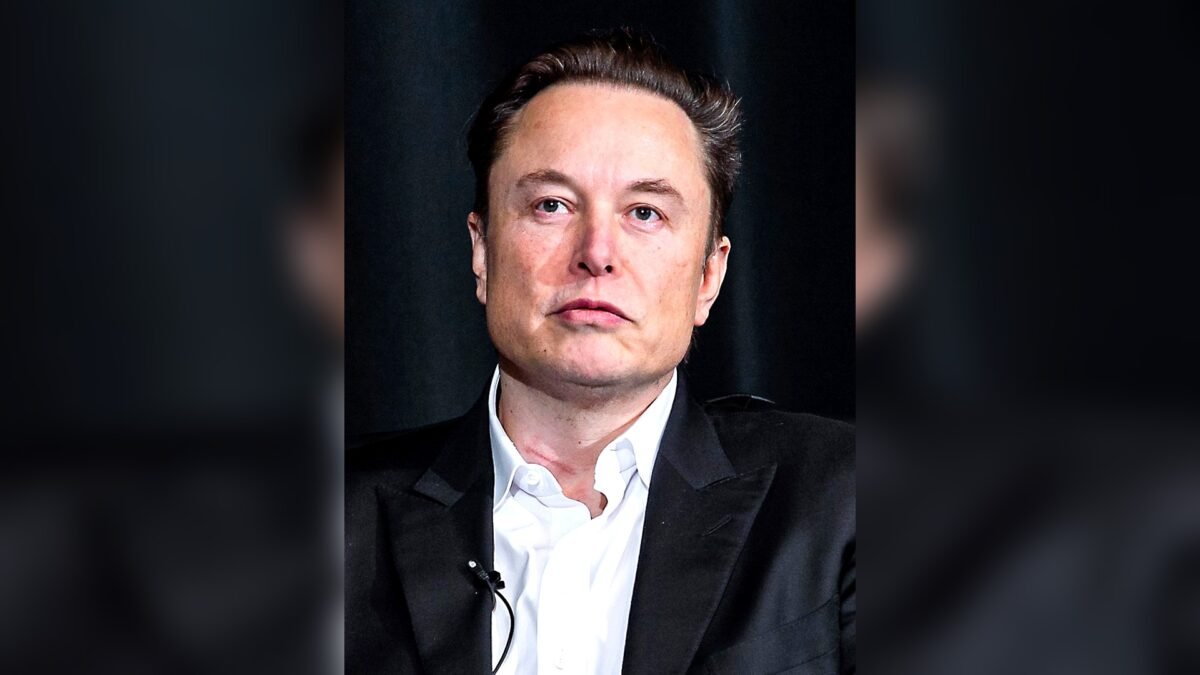
US President Donald Trump said on Thursday that Elon Musk had restored full access to Ukraine’s Starlink satellite internet service, capping a nine-day saga in which a mysterious speed limit on the military-grade version of the system disrupted Ukrainian drone missions and pitched relations between Kyiv and Washington into their deepest crisis in years. The president, however, declined to say whether he had personally asked the SpaceX chief to lift the restrictions, leaving the central question of who ordered the slowdown unresolved.
According to Reuters, Mr Trump told reporters in Washington that the billionaire had “put it back” — referring to the restored service — but deflected when asked whether he had spoken to Mr Musk about the matter. “I don’t want to comment on it, whether I called or whether somebody else called, doesn’t make any difference, I guess. The bottom line — he put it back,” the president said. He did not elaborate further.
The remarks followed a Wall Street Journal report published earlier on Thursday that said Mr Trump had called Mr Musk and asked him to lift the restrictions on Ukraine’s use of Starlink. According to the Journal, which cited US and Ukrainian officials, the system began working more normally shortly after that conversation. Some Ukrainian officials cautioned that the service had not returned to full functionality, though speeds were markedly higher than under the cap, the newspaper reported.
Ukrainian President Volodymyr Zelenskyy had said earlier on Thursday that speeds had not yet been restored for Ukraine, and added that he hoped to discuss the matter with US Secretary of State Marco Rubio in the coming days. The Journal separately reported that Mr Trump had told Mr Musk he was frustrated the speeds remained capped — a striking detail suggesting that whatever had been decided behind the scenes had not worked as cleanly as intended.
A cap nobody would own
The slowdown first surfaced on 14 October, when Ukrainian officials said SpaceX had introduced limits on some Starlink services without warning. Serhiy Beskrestnov, a presidential adviser on communications technology, wrote on Telegram that Ukraine’s defence forces had received no advance notice of the limitation, and that several combat missions had been disrupted as a result.
What followed was a remarkably public disagreement over a system that has become indispensable to Ukraine’s war effort. According to Reuters reporting from Kyiv on 14 October, the restriction capped Starshield — the military-grade variant of Starlink controlled, at least formally, by the US government rather than by Mr Musk directly — at speeds of about 100 miles per hour (160 km/h). Ukrainian officials said that during flights, connections dropped for 10 to 20 seconds at speeds of just 110 to 120 km/h, making drones harder to control and forcing units, including the 7th Rapid Reaction Corps in the south-east, to cancel some missions.
Mr Zelenskyy turned the dispute into a public campaign. He said Ukrainian technicians had run tests showing that Starlink-equipped drones lost their connection when flying faster than about 100 miles per hour inside Ukraine, while identical terminals moving at more than 112 miles per hour inside the European Union worked normally. “In other words, this is a planned operation,” he said. Speaking on NBC’s Meet the Press on Sunday, he put it more plainly: “Just give us back Starlink.”
Nobody, however, would claim responsibility. The Telegraph reported on 16 October, citing four unnamed sources, that Mr Musk had approached Mr Trump with the idea of slowing Starlink in Ukraine and that the president had “agreed.” Mr Musk, writing on his X social media platform, insisted that any speed or usage limits on Starshield “are decided by the US military and ultimately POTUS.” Mr Trump told reporters, “it wasn’t me, and I don’t think it was Elon.” Mr Rubio said on Saturday: “We had nothing to do with it. Nobody ordered that Starlink speed to be slowed down. It sorta happened.”
That account sat uneasily alongside several facts. The Wall Street Journal reported on 20 October, citing US officials and people familiar with the matter, that Mr Musk had personally ordered last week’s slowdown — a report Reuters said it could not immediately verify. CNN reported that two senior US officials said the order had not come from Mr Trump, while Reuters had previously reported, citing two US officials and a Western official briefed on the matter, that the instruction had originated inside the White House. Defence Secretary Pete Hegseth said the Pentagon had never ordered the restrictions, and suggested the problem lay with terms of service that Kyiv needed to meet — a claim Ukrainian officials rejected.
Europe joins the pressure
The episode quickly took on a transatlantic dimension. The European Union described the reporting by the Journal and CBS News as “extremely worrying” and demanded that Mr Musk immediately restore full functionality. The pressure reflected a blunt reality: Europe has no comparable constellation of its own, and its only low-Earth-orbit broadband rival to SpaceX, Eutelsat, enjoyed its best trading day in 16 months as investors speculated that the controversy might drive demand for alternatives.
Financial markets registered the unease in other ways. Most US-listed space stocks fell sharply in the week the restrictions became public, a reminder that private companies now sit at the centre of infrastructure that once belonged exclusively to states — and that their commercial fortunes move with geopolitical shocks.
For Ukraine, the stakes are not abstract. Starlink, alongside its Starshield sibling, underpins battlefield communications, logistics, live drone video feeds and targeting. More than 30,000 terminals operate across the country. The service has been central to Ukraine’s drone war since the earliest days of the full-scale invasion in February 2022, guiding longer-range strikes that have, according to Reuters, wreaked havoc on Russian logistics. The reported cap landed hardest on interceptor drones, which need speeds of roughly 450 km/h to catch Russia’s jet-powered Shahed-type attack drones targeting civilian infrastructure — nearly three times the apparent 160 km/h ceiling.
Washington’s wider pressure campaign
The timing of the slowdown did not go unnoticed in Kyiv. It arrived as the Trump administration was pressing Ukraine to halt its strikes on Russian oil refineries — a campaign that has bitten into Moscow’s export revenues but that Washington argues risks escalating energy prices and the wider war. Starlink, pointedly, does not work inside Russia itself, and the Ukrainian drones striking Russia’s oil industry use other means of communication.
The Starlink episode forms part of a broader deterioration in the relationship. According to multiple reports this month, Mr Trump announced a deal to buy Russian diesel and waived new sanctions on Moscow, urged Kyiv to stop attacking Russian refineries, and called on Ukrainians to replace Mr Zelenskyy. Mr Zelenskyy has acknowledged that relations with Washington have sunk to new lows. Ukraine has also said it did not receive the usual advance warning from its allies about some recent missile strikes on Kyiv — a separate but related sign of fraying cooperation.
Whether the restored service marks a turning point or a pause is unclear. A Ukrainian military source told the Financial Times that full functionality had now been restored and speed limits lifted, but other Ukrainian officials cited by the Journal described a partial recovery. The gap between those accounts matters: on the front line, a connection that works at “higher speeds” is not the same as one that works at full capacity.
Analysis: Why It Matters
The phone call that no one will confirm
The most striking feature of Thursday’s resolution is how much remains hidden. A sitting US president says a service has been restored, the newspaper that broke the story says he placed the call that restored it, and the president refuses to confirm or deny it. That is not an accident of evasive briefing; it is a choice. Confirming the call would raise an obvious follow-up question: if the president could end the restriction with one phone call, why did he deny any knowledge of it for a week? Denying it, on the other hand, would leave unanswered who exactly holds the switch. The ambiguity allows both Mr Trump and Mr Musk to walk away from a bruising episode without assigning blame — but it leaves Ukraine and European allies with a system they cannot fully trust and a process they cannot see. Trust, once spent in wartime, is hard to rebuy, and a communications backbone that can be throttled by unacknowledged decision is a strategic vulnerability no staff officer would design on purpose.
One man’s switch, a whole alliance’s war plan
The deeper problem revealed by the Starlink saga has nothing to do with who ordered what. It is that the most important battlefield communications network of the largest land war in Europe since 1945 rests, in the final analysis, with one private citizen and one private company. States have always relied on private industry for weapons; they have rarely relied on a single executive’s personal judgement for the network that carries their war. The episode demonstrated that SpaceX’s commercial decisions — or the US government’s undisclosed ones — can shift the military balance in a matter of hours, without consultation, warning, or democratic oversight. That is a fact that European capitals are now confronting seriously. Eutelsat’s market surge was not an investment thesis; it was a verdict. The race for sovereign satellite capacity in Europe — including the planned IRIS² constellation — has just acquired its most persuasive argument, written not by Brussels strategists but by events on the ground in Ukraine.
The refinery pressure behind the throttle
It would be a mistake to read the Starlink slowdown as a standalone technical dispute. It arrived in the same month that Washington was openly pressing Kyiv to stop hitting Russian refineries, waiving sanctions on Moscow and publicly questioning Mr Zelenskyy’s continued leadership. Whether or not the cap was conceived as leverage, it functioned as leverage — and Ukrainian officials read it that way, which is all that matters for the politics of the alliance. If the restriction was intended as quiet coercion, it was poorly executed: it became public within days, rallied European support behind Kyiv, and put Mr Musk’s company at the centre of an international controversy it had every commercial reason to avoid. If it was not intended as coercion, the administration’s handling — denials, contradictory statements, and a Secretary of State who claimed a military-grade system did not exist for Ukraine — managed to produce every political cost of coercion with none of the benefits. Either way, the episode weakened Washington’s hand with the very ally it was trying to influence.
Musk’s impossible position
Mr Musk now occupies a role that has no precedent: simultaneously the largest private defence-space contractor, the owner of the most influential social media platform in American politics, a political ally of the president, and the public face of a service on which Ukrainian lives depend. Each of those roles pulls in a different direction. As a contractor, he answers to the Pentagon; as a platform owner, he answers to his own politics; as the face of Starlink, he answers to Ukrainian drone crews. The contradictory public statements of the past week — his insistence that limits are set by “the US military and ultimately POTUS,” the Journal’s reporting that he ordered the slowdown personally, the White House’s insistence that nobody ordered anything — suggest that this impossible position is now producing impossible outcomes. The restoration of service resolves the immediate crisis, but it does nothing to resolve the structural one: there is no clear, public, accountable chain of command for decisions that determine whether Ukrainian drones can fly.
What Kyiv learned
Ukraine has been here before. Mr Musk restricted Starlink coverage near Crimea in 2022, thwarting a planned Ukrainian naval drone attack — an episode that already prompted Kyiv to seek alternatives. The difference this time is that the restriction came amid open pressure from Washington, making it inseparable from alliance politics. Kyiv’s response — public tests, presidential statements, a direct appeal on American television — was a deliberate strategy of transparency aimed at making a private decision politically costly. It worked, at least this once. But Ukraine cannot run its air defences on the hope that each future throttle becomes a public scandal. Expect accelerated investment in redundant communications, deeper engagement with European satellite providers, and a quieter but no less determined effort to reduce dependence on any single provider. The lesson of October 2026 for every military on earth is that commercial space infrastructure is now as politically contingent as any arms shipment — and that the paperwork behind it was never designed for that weight.
What to Watch Next
- The Rubio–Zelenskyy conversation. Mr Zelenskyy said he hoped to speak with Secretary of State Marco Rubio in the coming days. Whether that call produces written guarantees — service-level commitments, advance-warning protocols, a formal escalation channel — will show whether Washington intends to fix the system or merely quiet the story.
- The Starshield ownership question. Mr Rubio’s claim that Starshield is not available to Ukraine conflicts with the reported 2024 Pentagon contract expanding Ukraine’s access to roughly 3,000 terminals. Clarifying who owns, controls and can limit that service is now unavoidable.
- The refinery campaign. The underlying dispute — Ukraine’s strikes on Russian oil refineries versus Washington’s demand that they stop — has not been resolved. If Kyiv continues the campaign, expect further friction; the Starlink episode may prove to have been a warning shot rather than a misunderstanding.
- European satellite procurement. Watch for accelerated funding decisions on European sovereign constellations and procurement announcements involving Eutelsat’s OneWeb. October’s controversy is the strongest commercial argument Brussels has ever been handed.
- The full-functionality question. Ukrainian officials disagree on whether service has been fully restored. Front-line reporting in the coming days — not press briefings — will settle whether the cap is truly gone.
Sources
- CNN — Controversy over Musk military system in Ukraine pitches relations with US into deeper crisis
- Reuters (via KTWB) — Trump says Musk restored Ukraine’s Starlink access, declines to say if they spoke
- Reuters (via Duke FM) — Ukraine says SpaceX limits Starlink operations, disrupting military missions
- BBC News World — Trump says Musk has restored access to Ukraine’s Starlink network

About the Author — Abdul Mannan
Related Articles

Federal Judge Curbs DHS Hunt for Noncitizen Voters in Nine States, Ruling Data ‘Flawed’ and Operations Amount to Voter Intimidation
A federal judge in Oakland has curbed Homeland Security's pre-election hunt for noncitizen voters in nine states, ruling…

Ilhan Omar Gives First Detailed Account of ‘Bizarre’ Predawn Federal Raid and Says She Must Move Out of Washington Home
Ilhan Omar has given her first detailed account of the October 12 predawn federal search of her Washington…
Democrats Sue Trump Administration Over Voter-Roll Pressure in Pre-Midterm Court Battle
Democratic leaders and election groups have sued the Trump administration in federal court, seeking to stop federal pressure…