
Democrats Sue Trump Administration Over Voter-Roll Pressure in Pre-Midterm Court Battle

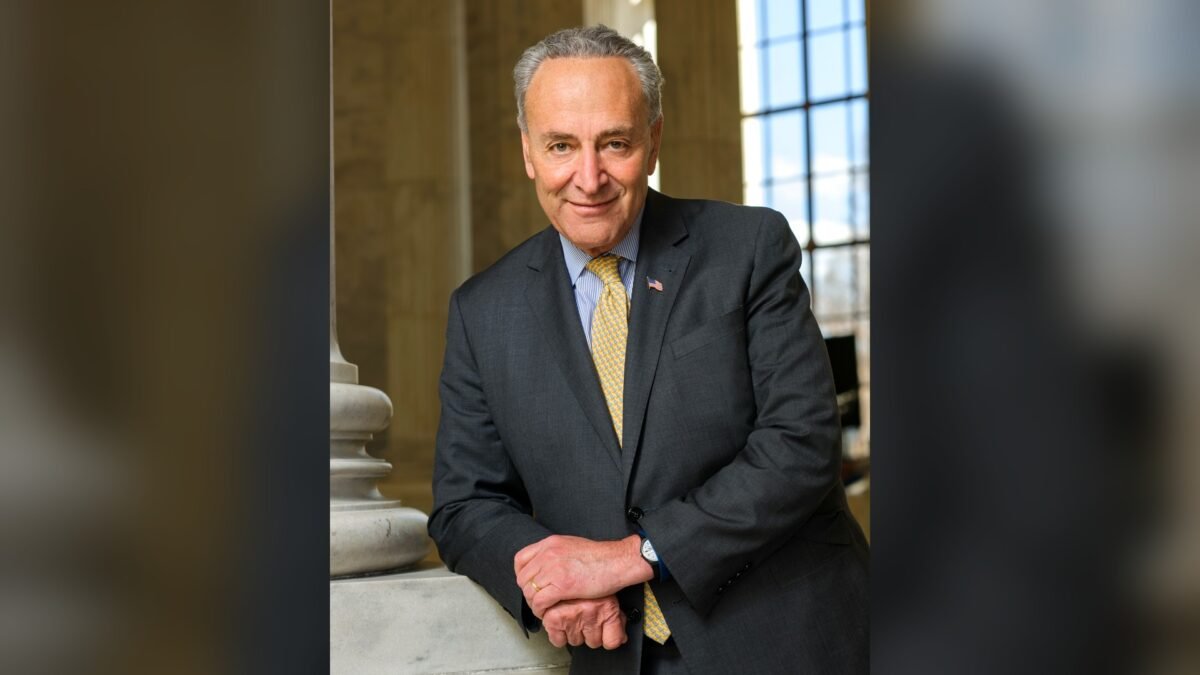
Senior Democrats in Congress have gone to federal court to stop President Donald Trump’s administration from what they describe as unlawful pressure on the states over who is allowed to vote, just two weeks before the November 3 midterm elections.
The lawsuit, a 44-page complaint filed on Tuesday in the U.S. District Court for the District of Columbia, asks a judge to bar the administration from removing lawfully registered voters from state voter rolls, from denying them ballots, and from threatening state election officials with criminal prosecution, according to The Hill and the Associated Press.
The plaintiffs include Senate Minority Leader Chuck Schumer and House Minority Leader Hakeem Jeffries, alongside the Democratic campaign committees for the Senate and House, the Democratic Governors Association, the Nevada Democratic Party, and a naturalised American citizen registered to vote in California, reports say.
Named as defendants are President Trump himself, the Department of Justice and the Department of Homeland Security, together with Attorney General Todd Blanche and Homeland Security Secretary Markwayne Mullin, according to LAist, which cited the Associated Press.
At the heart of the case is an allegation that federal officials have used what the complaint calls “shoddily compiled lists” — claims about noncitizens on state voter rolls that, the Democrats argue, “crumbled upon the barest inspection” — to push state and local election administrators to take people off registration lists, to withhold their ballots, or to segregate returned ballots while citizenship is rechecked.
“None of this is lawful,” the complaint states. “The Executive Branch enjoys no authority to superintend state voter list maintenance, to supplant state determinations of who is qualified to vote, or dictate who gets a ballot or whose ballot gets segregated.”
The filing also accuses the administration of violating Section 11(b) of the Voting Rights Act and the U.S. Constitution by threatening election officials with prosecution if they refuse to comply with federal demands.
The legal challenge sets up a courtroom fight over one of the most basic questions in American democracy — who gets to decide who votes — with the midterm campaign in its final fortnight.
California at the centre of the dispute
California has emerged as the key battleground in the case. The Democrats’ lawsuit cites a separate Justice Department action in the state: an October 15 federal lawsuit in which the administration sued California and Los Angeles County after officials there refused to set aside the ballots of about 20,000 voters whom federal authorities have identified as “likely” noncitizens, according to USA Today.
On October 13, the Justice Department had given the state 48 hours to take steps to prevent the suspected voters from casting ballots or to verify their citizenship, warning of legal action if the deadline passed, USA Today reported. Immediately after the deadline expired, Justice Department lawyer Andrew Darlington asked a federal judge to stop the state from counting mail ballots in the November elections from the voters on the federal list until their citizenship status could be confirmed.
Announcing that suit, Attorney General Blanche said: “State-facilitated voter fraud is unacceptable in the United States of America. If found responsible in a court of law, the State of California will have seriously undermined confidence in our electoral system and violated laws that protect our nation’s representative system of government.”
Homeland Security Secretary Mullin said his department had compared publicly available California voter registration files with federal immigration data in what he described as a preliminary analysis, and that the review was continuing. “Even one noncitizen vote cancels out the ballot of an American citizen and undermines our elections,” he said.
Democrats argue the federal claims rest on data with a long record of inaccuracy, and that eligible Americans — including naturalised citizens — are at risk of being denied ballots or having their votes go uncounted.
Governor Gavin Newsom’s office called the California lawsuit “unfounded,” while Senator Adam Schiff described it as “another dangerous attempt to destabilise our safe and secure elections,” according to reports.
The administration’s response
The Justice Department has rejected the accusations, saying its activities are intended to enforce election law and protect the integrity of voting. In a statement to The Washington Post on Wednesday, department spokeswoman Kiersten Pels said: “Every action the Department has taken to protect the integrity of this year’s elections is grounded in the law and being litigated in open court.”
A White House spokeswoman, Lauren Bis, told the Post that the administration was seeking accountability in elections and accused Democrats of interfering with “common sense election-security measures.”
“Anyone who illegally votes in our elections will be held accountable,” Bis said.
Administration officials have also argued that their requests to states are narrower than the Democrats portray. In an October 16 letter, acting Deputy Attorney General Trent McCotter said the department “has not requested a purge, cancellation of registrations, or any programmatic action” but only “temporary ballot segregation pending citizenship verification,” which he called a standard election-administration practice.
First Assistant U.S. Attorney Bill Essayli for the Central District of California wrote on X that “we will not allow California to dilute the votes of American citizens.”
A judge the White House has fought before
The Democratic leaders’ lawsuit has been assigned to Chief Judge James Boasberg, according to the Associated Press. Boasberg has been repeatedly attacked by the Trump administration since the start of the president’s second term over rulings that have gone against it, making his courtroom one of the most scrutinised venues in Washington.
The complaint is unusually direct in its language. It accuses the president of repeatedly spreading false claims about elections, saying: “For over a decade now, President Donald J. Trump has bombarded the American people with lies and misinformation about American elections and voter fraud,” and adds that he has used those claims “as a pretext to seize control over elections, even as courts overwhelmingly reject that effort.”
Trump has repeatedly called on Republicans to “nationalise the voting,” according to the complaint — a proposal that would represent a radical shift in a system in which the states have traditionally run their own elections.
This is the second major election lawsuit Democrats have filed this cycle, following an earlier case seeking to bar armed federal agents from polling places during the midterms, according to reports.
Meanwhile, the Justice Department has pursued separate litigation against states over access to voter registration records, citing allegations of noncitizen voting — a campaign Democrats say the new lawsuit is meant to confront head-on.
Analysis: Why It Matters
This lawsuit matters less for what a court will decide about any single state than for the fight it forces over the architecture of American elections — and over who holds the pen when the rules are being rewritten.
The states’ lane is the whole lane
Elections in the United States are, and have always been, run overwhelmingly by the states. Congress sets certain floor rules, and federal courts police discrimination, but the machinery — registration lists, polling places, ballot design, counting — belongs to state and local officials. That division is not a quirk; it is the design. When a federal administration tells California how to maintain its voter rolls, it is pressing on a load-bearing wall of the constitutional structure. The Democrats’ complaint frames its case in exactly those terms, asking a judge to declare that the executive branch simply lacks the authority to “superintend” state voter-list maintenance. Whatever the evidence about noncitizen voting turns out to be, the threshold legal question is prior and harder for the government: by what grant of power does Washington get to give the order at all?
Thirteen days is the story
The timing of this fight is inseparable from its substance. With the midterms roughly two weeks away, millions of voters have already cast ballots in early voting, and mail ballots are in the postal stream in states across the country. A demand to segregate ballots — even “temporarily,” even only pending verification — lands on election administrators at the precise moment their capacity to absorb new processes is lowest. That is the Democrats’ urgency argument: the injury they ask the court to prevent is not hypothetical or distant; it is the refusal of a lawful ballot, in an election already underway, in a race the complaint says is decided by margins that make every excluded vote count.
The data question underneath the legal question
Both sides concede the core fact that nobody disputes: only American citizens may vote in federal elections. The fight is over how you find the rare exceptions without catching eligible voters in the net. The administration says it matched public voter-registration files against federal immigration data using a “multilayered, multiagency” method, and that California was offered the chance to review names within 48 hours. The Democrats say those lists are “shoddy,” that similar federal claims have collapsed under scrutiny before, and that naturalised citizens — whose names, addresses and records change in ways simple database matching mishandles — are the classic victims of this kind of exercise. Courts have repeatedly found that citizenship databases are riddled with stale records, and the history of voter-purge litigation is littered with eligible voters removed because an algorithm said they looked like someone else. The credibility of the federal lists will be the first witness stand of this case.
California as the proving ground
Why California? It is the largest state, it mails a ballot to every registered voter — a record 23,164,977 of them as of early September — and it is the state the administration has made the demonstration case of its election campaign. The 20,000 names on the federal list are a tiny fraction of that total, but the principle being litigated is not the size of the list; it is whether Washington can order a state to stop counting votes it is prepared to accept. If a court answers that question against the administration, the precedent constrains every similar demand being made in other states. If it answers the other way, the green light reaches well beyond California.
The judge at the centre of it all
That this case landed before Chief Judge James Boasberg is no footnote. Boasberg has become one of the most prominent judicial figures in Washington, precisely because the White House has spent much of the year denouncing him over adverse rulings. His handling of the case will be watched not only for its legal reasoning but as a stress test of whether the ordinary federal judiciary can still serve as a neutral referee when the presidency is a named party. Both sides know this, which is part of why the case’s rhetoric is so sharp: the Democrats accuse the administration of seizing control of elections; the administration accuses the Democrats of interfering with election security. The court now has to do what neither campaign will — decide.
What to Watch Next
- Boasberg’s calendar. With two weeks to the election, the critical question is not just what the chief judge decides, but when. Expect the plaintiffs to seek emergency consideration of their request to block the administration’s pressure, and watch for the scheduling of any hearing or temporary order in the coming days.
- California’s ballots. The October 15 Justice Department case against the state remains live in the Central District of California. Its outcome — whether 20,000-plus ballots are segregated pending citizenship verification — will be the first practical measure of how far this federal campaign can actually reach into a state’s count.
- The other states. The Democrats’ complaint alleges a campaign of demands and threats beyond California. Watch for other states to surface — in their own court filings, or in letters that find their way into the public record — describing similar federal pressure on their voter rolls.
- The accuracy fight. At some point, the federal citizenship lists will have to be tested against reality — either in court, where the plaintiffs say they have “crumbled upon the barest inspection” before, or by states that check them independently. The number of names that do not hold up will shape the narrative on both sides.
- The polling-place case. Democrats’ earlier suit this cycle, aimed at keeping armed federal agents away from polling places, could move on its own track. Together, the two cases draw the outline of a broader Democratic legal strategy: meet every federal move into election administration with a court filing of its own.
Sources

About the Author — Abdul Mannan
Related Articles
Trump Praises Rally-Goers Who Struck Hecklers at Chaotic South Carolina Midterm Event
Donald Trump cheered from the stage as supporters struck hecklers during a chaotic midterm rally in South Carolina,…
Trump Unveils $8 Billion Diesel Aid for Farmers and Loans Emergency Heating Oil in Pre-Midterm Fuel Push
With diesel prices at record highs two weeks before the midterm elections, the Trump administration has unveiled $8…

Chemical Tank Blast in Toledo Forces Hundreds to Evacuate as Hazardous Release Spills Into Michigan
A chemical tank blast at an MC Tank terminal in northern Toledo forced a one-mile evacuation and a…