
Türkiye Submits Mecca Defence Pact With Saudi Arabia and Pakistan to Parliament for Ratification, Mulls Troop Deployment Mandate

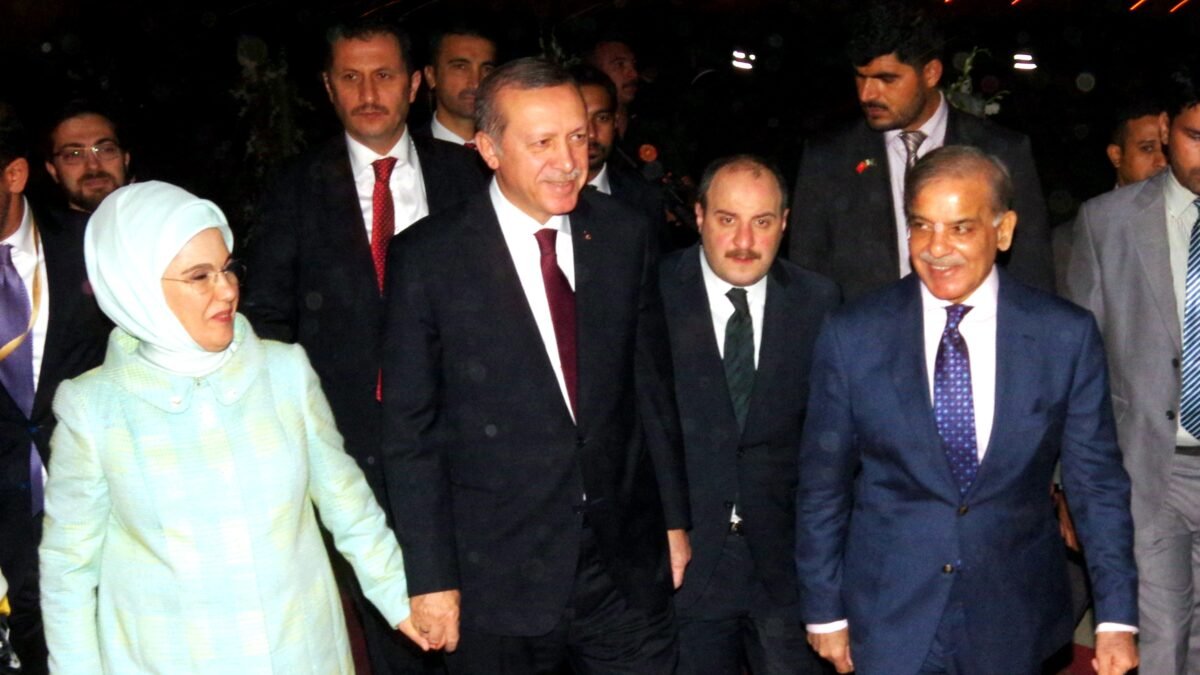
Türkiye has taken the first formal legislative step towards binding itself into a mutual-defence alliance with Saudi Arabia and Pakistan, submitting the trilateral Mecca Joint Defence Agreement to its parliament for ratification. Three parliamentary sources told Reuters on Tuesday that the accord, signed by the three countries in August, was formally tabled in Ankara, and a ruling-party lawmaker has since confirmed that a separate mandate to deploy Turkish military personnel to Saudi Arabia under the pact will follow once ratification is approved.
The move, reported by Reuters on October 20, 2026, brings NATO’s second-largest army closer to a formal mutual-defence commitment with Riyadh at a moment when the kingdom is under near-daily missile and drone attacks from Yemen’s Houthi movement. The parliament’s foreign affairs commission could begin debating the agreement as early as Friday, October 23, according to one parliamentary source, with a simple majority sufficient for approval.
The pact and what it commits the signatories to
The Mecca Joint Defence Agreement was signed on August 7, 2026, in the Saudi city of Mecca by Turkish President Recep Tayyip Erdogan, Saudi Crown Prince Mohammed bin Salman and Pakistani Prime Minister Shehbaz Sharif. A joint statement issued at the signing did not specify what each country had committed to, but the text submitted to parliament, seen by Reuters, contains 16 articles laying out a joint defence architecture for the region.
Article 1 of the accord obliges the signatories to use “all necessary means” to eliminate threats to one another’s territorial integrity. Article 2 then provides the alliance’s core mechanism: in the event that one party is subjected to an armed attack or military aggression by another country or group of countries, the parties shall immediately provide assistance to the party under attack, “utilising the full range of mutual assistance measures available to them.” The formulation mirrors NATO’s Article 5, which treats an attack on one member as an attack on all.
The same article, however, gives each signatory room for manoeuvre. It states that Saudi Arabia, Pakistan and Türkiye will each “decide on the scope and nature of the support to be provided following an objective assessment of the assistance required,” and that the three countries will cooperate “within their available resources,” including military capabilities and equipment. Article 16 requires every member to complete its own ratification procedures, with the agreement taking effect only when the final ratification document is deposited with the alliance’s secretariat.
The text also bars any member state from withdrawing before ten years have elapsed, with exit permitted thereafter on three months’ written notice, according to accounts of the agreement carried by regional media.
The parliamentary path in Ankara
Ratification in Türkiye is a multi-stage process. Parliament Speaker Numan Kurtulmuş, who was on an official visit to Kyrgyzstan when the agreement was submitted, is expected to refer the text to parliament’s foreign affairs commission on his return. The contents and details of the agreement are expected to become public once it reaches the commission, which could begin its debate as early as Friday.
President Erdogan’s communications director, Burhanettin Duran, described the submission as “an important milestone towards the institutionalisation of strategic cooperation between the three nations.” Writing on X, he said: “This strategic partnership developed between our countries aims to strengthen collective deterrence, enhance joint capabilities in the defence sector, and safeguard security and stability in our region.”
A Turkish official, speaking to Reuters on condition of anonymity, said Türkiye’s own contribution under the alliance was expected to be limited to military equipment, intelligence sharing and weapons systems, adding that no deployment of Turkish forces under the pact had taken place so far.
Deployment mandate: the next step
On Wednesday, a lawmaker from Erdogan’s ruling AK Party told Reuters that Türkiye will submit a separate mandate to parliament allowing military personnel to be deployed to Saudi Arabia under the pact, once the bill ratifying the accord has been approved. That statement has been read as the strongest signal yet that Ankara intends to put boots on the ground in the kingdom.
But there is a deliberate two-step structure at work. Türkiye’s constitution requires separate parliamentary permission to deploy troops abroad regardless of any international agreement, so the ratification bill and any deployment mandate are legally distinct votes. Turkish Foreign Minister Hakan Fidan has been careful to draw the line publicly: asked how Türkiye could help Saudi Arabia defend against Houthi attacks, he said the Mecca Agreement was not an “offensive agreement,” adding that Türkiye would not send troops to another country to carry out attacks on its territory.
The picture that emerges from the official statements is a defensive one: Turkish hardware, intelligence and air-defence support flowing to the kingdom, with any personnel deployment aimed at protecting Saudi infrastructure rather than striking targets in Yemen or beyond. Still, the AK Party lawmaker’s remarks confirm that the prospect of Turkish personnel on Saudi soil is now firmly on the parliamentary agenda.
Why the timing matters: the Houthi campaign against Saudi Arabia
The ratification push comes as Saudi Arabia faces its most intense assault in years. The Iran-aligned Houthis, known formally as Ansar Allah, have been striking the kingdom with drones and long-range missiles on a near-daily basis since the four-year Yemen truce collapsed in June 2026.
The attacks have been deadly and disruptive. Falling debris from the interception of a drone aimed at Saudi Aramco’s Shaybah oil field killed two workers — a Filipino and a Nepali national — and injured two others, according to the Saudi energy ministry. A strike on King Fahd International Airport in Dammam killed one person and injured eight others, Saudi aviation authorities said. Riyadh’s own King Khalid International Airport was closed for days, a major investment conference was postponed, and the Houthis have claimed responsibility for attacks on the kingdom’s Red Sea port of Yanbu as well.
The escalation has already triggered a partial American withdrawal. The US State Department this week ordered the departure of non-emergency US government employees and their family members from Saudi Arabia, with spokesman Tommy Pigott citing “attacks on civilian airports and other critical infrastructure resulting in civilian casualties and severe travel disruptions.” Families of US personnel have also been moved out of missions in the United Arab Emirates, Jordan, Qatar and Bahrain, according to reports citing US officials.
The Houthis say their campaign is aimed at Saudi Arabia’s military infrastructure and will continue until Riyadh stops its operations in Yemen, where a Saudi-backed coalition supports the internationally recognised government. Yemen’s armed forces announced four military operations in 48 hours this week using ballistic missiles and drones, and Saudi-led coalition spokesman Col Turki Al-Maliki said the coalition had intercepted and destroyed eight Houthi drones in a single 24-hour period, including four over the Riyadh and Madinah regions.
At an emergency meeting of the alliance in Riyadh earlier in October, the three countries agreed to ensure the “rapid deployment” of military forces and capabilities in Saudi Arabia to counter the Houthi campaign. Since the August signing, the partners have established a strategic political and defence committee in Istanbul and a Saudi-based secretariat headed initially by a Pakistani secretary-general, according to reports on the pact’s rollout.
Analysis: Why It Matters
A wartime alliance moving from paper to law
The significance of this week’s developments lies not in the pact’s promises — those were made in Mecca in August — but in the speed with which Ankara is converting them into binding law. International agreements of this kind often linger for years awaiting ratification. The Türkiye–Saudi–Pakistan pact, signed barely ten weeks ago, is already before a parliamentary commission, with a possible debate date of Friday and a deployment mandate publicly promised to follow. That tempo reflects a simple reality: Saudi Arabia is taking incoming fire every day, and paper commitments are no longer enough.
The two-step structure — ratify first, deploy second — is worth reading carefully. It serves two audiences at once. Domestically, the separate deployment mandate gives the Turkish parliament a vote it must take before any soldier leaves Turkish soil, preserving a constitutional safeguard that opposition parties will demand. Externally, the ratification bill itself is already a deterrent signal to the Houthis and their backers in Tehran: the legal machinery of a mutual-defence alliance is being switched on.
The Erdogan–Fidan tightrope
Notice the careful calibration in what Turkish officials have — and have not — said. The AK Party lawmaker speaks of a mandate to deploy military personnel to Saudi Arabia. Foreign Minister Fidan insists the agreement is “not an offensive agreement” and that Türkiye will not send troops to attack another country. The anonymous official adds that Türkiye’s contribution is expected to stay limited to equipment, intelligence and weapons systems.
These statements are not contradictory; they are choreographed. Ankara wants Riyadh to feel protected, Washington to see a responsible ally taking on regional burden-sharing, and Tehran to understand that Turkish forces are not coming to strike Iran or its proxies — merely to harden Saudi defences. Whether Tehran believes that distinction is a different question, and one that will shape Iranian responses in the coming weeks.
What Pakistan gains — and risks
For Islamabad, the pact’s progress is both vindication and exposure. Pakistan’s parliament resolved in 2015 to stay neutral in Yemen while pledging to defend Saudi territory and the holy sites if threatened — a position Shehbaz Sharif repeated at the United Nations in September, calling any threat to Mecca and Medina a red line. The trilateral pact is, in effect, that pledge written into a treaty with two powerful partners and given a secretariat, a committee and a rapid-deployment commitment.
The gain is strategic depth: Pakistan is no longer a lone actor underwriting Gulf security but part of a formal three-nation alliance that includes a NATO member and the Gulf’s dominant military spender. The risk is the familiar one of entrapment. Pakistan’s own army chief, Field Marshal Asim Munir, was in Tehran this month as Islamabad tried to revive negotiations between the US and Iran without alienating Riyadh or Washington. A treaty that obliges Pakistan to respond to an “armed attack” on Saudi Arabia — with the line between a Houthi drone strike and an Iranian operation growing blurrier by the day — could one day force Islamabad to choose between its Gulf commitments and its stated aim of keeping dialogue with Tehran alive.
A signal to Tehran as well as to Sanaa
The pact does not exist in a vacuum. The New York Times reported this week that the United States and Israel have drawn up plans for renewed strikes on Iran after the US midterm elections, while the Wall Street Journal reported that Iran has threatened to expand attacks across Gulf nations, including economic assets, and to target US personnel more aggressively in the event of new American strikes. A third US aircraft carrier is heading to the Middle East, and Iran’s Revolutionary Guard has warned that the conflict “will extend to its bases in the region” if current trends continue.
Set against that backdrop, the Mecca pact looks like one pillar of a widening architecture: Washington and Jerusalem preparing the stick, Ankara, Riyadh and Islamabad formalising the shield. Tehran will read it that way regardless of Fidan’s defensive framing. That reading carries its own dangers — an alliance meant to deter can just as easily be interpreted as an encirclement taking shape, inviting pre-emptive pressure from the other side.
What to watch next
The immediate watchpoints are procedural but consequential. First, does the Turkish parliament’s foreign affairs commission take up the agreement on Friday as one source suggested, and how quickly does the full assembly vote? Second, when does the promised deployment mandate materialise, and does it name specific numbers, locations or rules of engagement? Third, which of the three partners ratifies next — Pakistan’s parliament or the Saudi consultative council — and does the agreement’s full text become public in any of the three capitals?
Beyond procedure, watch who else wants in. Pakistan’s Foreign Minister Ishaq Dar has said more than six countries have expressed interest in joining the pact, and the UAE’s recalibrated posture — Sheikh Mansour bin Zayed’s meeting with Crown Prince Mohammed bin Salman in Riyadh, the first senior Emirati visit after the two fell out over Yemen — suggests the alliance could acquire an informal Gulf wing even without new signatures.
Finally, watch how the pact’s “rapid deployment” commitment is actually tested. The Riyadh meeting promised fast movement of forces and capabilities into the kingdom. If the Houthi campaign continues to escalate — if there is another Dammam or another Shaybah — the world will find out whether the Mecca agreement is a functioning alliance or another Middle Eastern paper pact.
Sources
- Reuters — “Turkey submits Saudi-Pakistan defence pact to parliament for ratification, sources say” (October 20, 2026)
- Reuters — “Turkey planning mandate to send military personnel to Saudi Arabia under Mecca pact, ruling party official says” (October 21, 2026)
- DevDiscourse (Reuters wire) — “Turkey submits Saudi-Pakistan defence pact to parliament for ratification, sources say” (October 20, 2026)

About the Author — Abdul Mannan
Related Articles

Iran’s IRGC Navy Claims Seven Vessels Hit in Persian Gulf, Warns US Bases Could Be Next
Iran's IRGC Navy said on Thursday its forces struck four vessels conducting what it called illegal oil transfers…

Aramco Orders Staff to Evacuate Dhahran Headquarters as Houthi Attacks Escalate
Saudi Aramco has told staff to evacuate its Dhahran headquarters and work remotely in the first such order…

US Orders Non-Emergency Staff and Families Out of Saudi Arabia After Deadly Houthi Strikes on Dammam Airport and Oil Field
The US State Department has ordered non-emergency government employees and their families to leave Saudi Arabia after Houthi…