
Houthis Say They Struck Saudi Oil Sites and Airports as Missiles Hit Aden

Yemen’s Iran-allied Houthi movement said on Saturday that it had launched a wave of attacks on Saudi oil facilities and airports, while Yemen’s internationally recognised government said the group had also fired ballistic missiles at coast guard sites in the southern port city of Aden. The claims, reported by Reuters, mark a sharp escalation in a conflict that had been largely quiet for four years and now forms a second front in the wider war over Iran.
According to Reuters, Houthi military spokesman Yahya Saree said the group had targeted King Khalid International Airport in Riyadh, an Aramco facility in Yanbu, the Rabigh oil refinery, crude oil pumping stations and the East-West Pipeline. He also said the group had targeted King Fahd International Airport in Dammam, an airport in Najran and an airbase in Khamis Mushait.
The Saudi-led coalition fighting the group said it had destroyed two ballistic missiles fired towards Yanbu and Taif, according to Reuters. Saudi authorities did not comment directly on the Houthi statements, Reuters reported, although the kingdom’s Civil Defense agency said debris from intercepted missiles had fallen in the Mecca and Medina regions, home to Islam’s holiest sites.
Parts of intercepted missiles fell in Wadi al-Mughammas in Mecca, while debris also fell in areas of Jeddah, Taif and Rabigh, according to the Civil Defense account carried by Reuters. It was not immediately clear whether that debris was linked to the Houthis’ reported targeting of the Rabigh refinery, and it was not immediately clear whether any of the reported attacks had hit their targets in the kingdom or had been intercepted.
Earlier on Saturday, Saudi Arabia’s Civil Defense briefly issued alerts warning residents of potential danger in Taif and Yanbu, as well as in the holy city of Mecca and the kingdom’s second-largest city, Jeddah. About ten minutes later, the agency said the threat had passed, according to Reuters.
The Houthis had warned airlines earlier this month against using Saudi airspace, exempting only the airspace over Mecca and Medina, as they intensified attacks on the kingdom, Reuters reported. That warning set the tone for a campaign that has moved steadily from threats to repeated strikes on the infrastructure of daily life: airports that carry pilgrims, workers and tourists, and the oil installations that fund the Saudi state.
Missiles reported in Aden
On a separate front inside Yemen, the internationally recognised government said the Houthis had fired three ballistic missiles at coast guard sites in Aden, the southern port city that serves as the government’s seat. According to Reuters, the government’s Interior Ministry said two of the missiles had struck a coast guard headquarters, while a third hit a coast guard building in the Tawahi district.
Saree said the group’s forces had targeted what he called Saudi-backed military gatherings at Al-Nasr camp and a naval military base in Aden, saying Saudi officers were overseeing mobilisation there, Reuters reported. There was no immediate comment from the Saudi-led coalition on that assertion.
Aden matters because it is where Yemen’s division is most visible. The Houthis control the capital, Sanaa, and much of the north, while the internationally recognised government operates from the south. A strike on Aden’s coast guard is therefore not only a military act; it is a challenge to the government’s claim to control the territory it administers, and to the coalition that backs it.
The renewed fighting has shattered a 2022 United Nations-brokered truce that largely halted cross-border attacks between the Saudi-led coalition, which backs Yemen’s internationally recognised government, and the Houthis, who control Sanaa, according to Reuters. For four years that truce held, imperfectly but recognisably, while diplomacy searched for a political settlement. The events of Saturday suggest that search has, for now, been overtaken by war.
A campaign that has been building for weeks
Saturday’s claims did not arrive without warning. The Houthi campaign against Saudi Arabia has intensified through October, and each step has widened the target list. On 24 September, according to Reuters, Saudi Arabia intercepted six ballistic missiles fired by the Houthis that the coalition said were aimed at Taif and the Yanbu area on the Red Sea coast. The Houthis said at the time that they had also struck a sensitive target in Riyadh and Aramco facilities in Yanbu.
The most serious episode came on 10 October, when a missile struck the domestic terminal complex at Riyadh’s King Khalid International Airport. According to Saudi civil aviation authorities, cited by AP and Al Jazeera, 12 people were killed and 309 were injured in that attack, which partially collapsed a terminal roof and forced the airport to suspend operations. Flights were diverted, foreign embassies warned their citizens to stay away, and major carriers suspended services. By the following Wednesday, according to AP, limited domestic flights had resumed, but the episode had already demonstrated something new: that the kingdom’s main air gateway could be hit, repeatedly, with deadly effect.
On 22 October, according to Turkish media reports, the Houthis claimed four further attacks over 48 hours, saying they had struck the Saudi Defence Ministry in Riyadh, King Fahd International Airport in Dammam, an Aramco facility in Yanbu and Abha International Airport. The group claimed the Dammam strike had disrupted air traffic and the Yanbu strike had started a fire, claims that could not be independently verified. Separately, AFP reported that essential staff at Aramco’s headquarters in Dhahran had been told to work from home, a measure that spoke to the strain the campaign was placing on the kingdom’s most important company.
Read together, these episodes trace a clear arc. What began in September as intercepted missiles aimed at western cities became, in October, deadly strikes on the capital’s airport, followed by claims against defence, energy and aviation targets across the country. Saturday’s announcement extends that arc further, adding the East-West Pipeline — the artery that carries Saudi crude from the Gulf coast to the Red Sea — and the port city of Aden to a target list that already spans the kingdom.
Why the oil targets matter
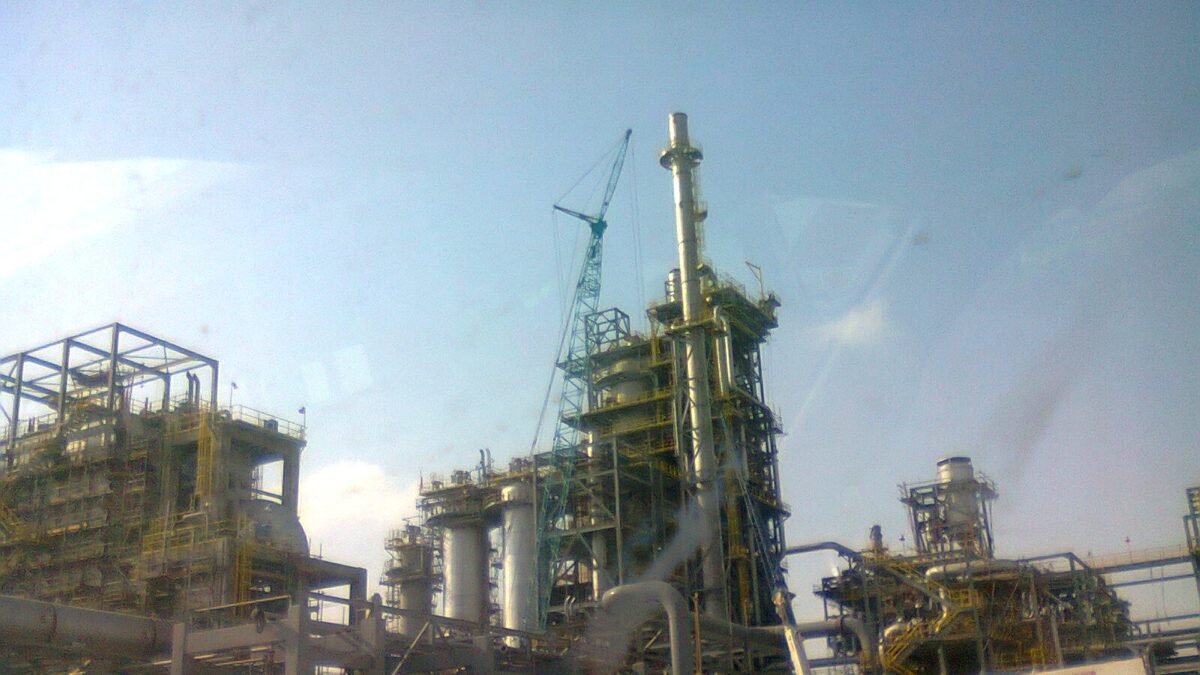
The choice of targets is the message. Yanbu, on the Red Sea coast, is the western outlet of Saudi Arabia’s oil system: the terminus of the East-West Pipeline and home to refineries that process crude for domestic use and export. Rabigh, further south on the same coast, hosts a major refinery complex. Pumping stations and the pipeline itself are the connective tissue between the kingdom’s eastern oilfields and its western ports.
That geography has become strategically urgent since the Strait of Hormuz was effectively disrupted by the wider Iran war. With the Gulf route constrained, Saudi Arabia has leaned more heavily on its Red Sea outlets, and the Houthis have followed that logic to its conclusion: if the kingdom’s oil must travel west, then the west becomes the battlefield.
The market context sharpens the point. Brent crude traded above $116 a barrel on Friday, according to market reports, as investors priced in the risk of a wider regional war. Energy shares rose even as broader stock markets fell. Every claim against a Saudi oil site, whether it causes damage or is intercepted, feeds that risk premium, because traders cannot be sure which claim will prove true until long after the market has moved.
It is worth being precise about what Saturday’s reports do and do not establish. The Houthis said they attacked a long list of sites. The coalition confirmed intercepting two missiles. Civil Defense confirmed debris in several cities. What remains unverified is whether the named oil facilities themselves were hit, and to what extent. That gap between claim and confirmation is itself part of the campaign: uncertainty about damage is often enough to move markets, unsettle travellers and force governments to spend on defence.
Analysis: Why It Matters
The truce is gone, and with it the old map of the war
The 2022 truce mattered because it separated Yemen’s war from the region’s wars. While the Houthis fought Israel-linked shipping in the Red Sea and traded fire with the United States, the Saudi front stayed quiet, and Riyadh pursued a negotiated exit from a conflict it had entered in 2015 to restore the internationally recognised government. Saturday’s attacks erase that separation. Yemen’s war is now openly part of the Iran war, and Saudi Arabia is a belligerent on two fronts at once: the Gulf, where it faces Iran, and its own south-western border, where it faces the Houthis.
That changes the diplomacy. A negotiation that once concerned Yemen’s internal settlement — salaries, ports, roads, a roadmap to elections — must now reckon with a regional war in which Yemen is a theatre, not the subject. Mediators who could once treat Riyadh and Sanaa as two parties to a civil war must now treat them as pieces of a larger confrontation involving Washington, Tehran and Tel Aviv.
Airports and refineries are being chosen for their audiences
There is a reason the target list reads like a gazetteer of Saudi modernity: the capital’s airport, the eastern airport at Dammam, the southern airports at Najran and Abha, the refineries at Yanbu and Rabigh, the pipeline that binds them together. Each site has an audience beyond its military value. Airports speak to foreign workers, pilgrims and investors. Refineries speak to oil markets. The pipeline speaks to the world’s energy planners.
The Houthis appear to understand that a strike need not destroy a facility to damage it. A missile alert over Mecca and Jeddah, even one lifted after ten minutes, tells millions of people that the war can reach them. A claim against Riyadh airport, even one only partly confirmed, tells airlines to recalculate risk. The campaign’s power lies partly in its repetition: each claim, each alert, each interception accumulates into a sense that Saudi airspace and Saudi energy are no longer safe assumptions.
Saudi Arabia’s dilemma is deepening
Riyadh faces a choice it has avoided for years. Retaliation against the Houthis risks a full return to the grinding war of 2015–2022, with its civilian toll and its damage to the kingdom’s reformist image. Restraint, on the other hand, invites further strikes and raises questions about deterrence, particularly among Gulf partners who watch how the kingdom protects its own territory.
The October pattern suggests Riyadh has tried to walk a middle path: intercepting missiles, issuing and then lifting alerts, resuming flights when possible, and keeping its public statements measured. But the middle path depends on the strikes remaining limited. A deadly airport attack on 10 October, followed by claims against the Defence Ministry and the oil system, tests whether that path can hold.
The humanitarian stakes are being overlooked
Amid the strategic analysis, it is easy to forget that Yemen remains one of the world’s worst humanitarian crises, a decade after the war began. The Council on Foreign Relations notes that the conflict, which began when the Houthis seized Sanaa in 2014 and drew in a Saudi-led coalition in 2015, quieted under the 2022 ceasefire but never produced a settlement. Renewed fighting threatens to reverse what little recovery followed: port closures, damaged infrastructure and diverted aid all fall hardest on civilians who have already endured famine, disease and displacement.
Aden’s coast guard may seem a minor target, but the port city is a lifeline for southern Yemen. Attacks there, and on the infrastructure that moves food and fuel, risk turning a strategic campaign into a humanitarian one. The international community’s response will be judged not only on whether it condemns the strikes, but on whether it protects the corridors through which Yemenis survive.
The region’s wars are merging into one
Perhaps the most consequential reading of Saturday’s events is the simplest: the Middle East’s separate conflicts are becoming a single war with several fronts. The Iran war, the Yemen war, the strikes in Lebanon and the West Bank, the attacks on Gulf shipping — these are no longer distinct stories that happen to share a region. They are connected operations in which an attack on one front is designed to shape decisions on another.
The Houthis have said openly that their campaign is tied to the wider confrontation with Israel and the United States. Saudi Arabia’s involvement in that confrontation, through its alliance with Washington and its position on Gulf security, makes it a target by association. Until the Iran war itself finds a settlement, Yemen’s front is likely to remain active, because it offers Tehran’s allies a way to pressure Riyadh and Washington at a cost far lower than a direct confrontation.
What to Watch Next
- Saudi confirmation: whether Riyadh confirms damage to any named oil facility or airport, or continues to report only interceptions and debris, will determine how seriously markets and airlines treat the Houthi claims.
- The coalition’s response: any Saudi or coalition strikes on Houthi-held territory in the coming days will signal whether Riyadh has moved from interception to retaliation.
- Flight and pilgrimage disruption: further alerts over Mecca, Jeddah or Riyadh, or extended airport closures, would widen the campaign’s impact from energy markets to ordinary travel.
- Oil market reaction: Brent crude’s movement when markets reopen will show whether traders treat Saturday’s claims as a new escalation or as part of an already-priced risk.
- Diplomatic movement: whether the United Nations envoy for Yemen, or Gulf mediators such as Oman, attempt to revive a ceasefire track, and whether Washington links Yemen to its wider Iran diplomacy, will indicate whether any off-ramp remains.
Sources

About the Author — Abdul Mannan
Related Articles
US Strike on Iran ‘Absolutely’ Possible This Weekend, Says Trump Envoy Tom Barrack
US Ambassador to Turkey Tom Barrack has said American strikes on Iran could come as soon as this…
Israel Strikes Iran’s Nuclear Sites, Iran Hits US Base in Saudi Arabia as Rubio Promises War Will End ‘in Weeks’
Israel strikes Iran's nuclear sites including Bushehr and Arak while Iran hits a US airbase in Saudi Arabia,…
At Least Six Killed as Gunmen Open Fire at Church Funeral in Jordan’s Karak
Gunmen killed at least six people and wounded 28 at a Greek Orthodox church funeral in Jordan's Karak…