
At Least Six Killed as Gunmen Open Fire at Church Funeral in Jordan’s Karak

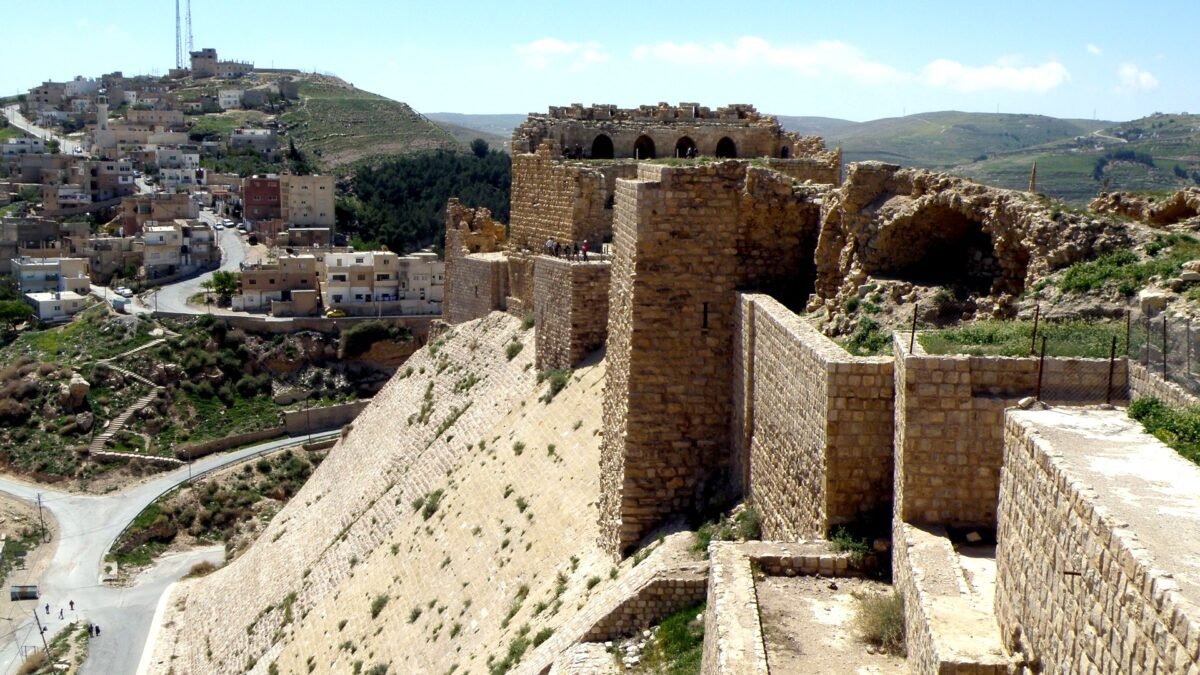
At least six people were killed and 28 wounded on Friday when unidentified gunmen opened fire inside a Greek Orthodox church in southern Jordan during a funeral procession, state television reported, citing the country’s Public Security Directorate.
The attack took place in the village of Hamoud in Karak governorate, roughly 120 kilometres south of the capital Amman. According to state-owned Al-Mamlaka television, two masked gunmen got out of a vehicle and began firing at the mourners as the funeral procession was getting under way, an assault that lasted several minutes before the attackers fled. Security forces were deployed around the church and launched a manhunt for the suspects, Reuters reported.
Witnesses said they heard an explosion as the procession started, followed by sustained gunfire. Between 150 and 200 people were inside and around the church at the time, according to reports, and most of the victims were aged between 50 and 70. Some of the wounded sustained critical injuries, and officials warned that the death toll could rise.
No group has claimed responsibility for the attack, and Jordanian authorities have not announced the identities of the suspects or a motive. The Public Security Directorate warned the public against circulating unofficial information and urged citizens to rely on statements issued by the relevant authorities.
What happened
According to accounts carried by Al-Mamlaka and relayed by Reuters, a funeral attendee named Khaled Burqan told the state broadcaster that dozens of people were at the procession when one assailant armed with a pistol and another carrying a rifle stepped out of a vehicle and opened fire. The witness said the shooting lasted several minutes and targeted a gathering of dozens of mourners.
Jordan’s minister of government communication, Mohammad Momani, described the incident as a heinous attack and said security agencies were responding at the scene, adding that information would be released once verified. Officials said security forces had sealed off the area and were pursuing those involved.
King Abdullah II of Jordan vowed to punish those responsible with “an iron fist”, declaring: “Whoever imagines that the bullets of treachery can divide the ranks of Jordanians will fail in his endeavour before our steadfastness and unity.”
Lebanese President Joseph Aoun, the only Christian head of state in the Arab world, described the shooting as a “heinous terrorist attack”. In a presidency statement, he said: “Its aim is to strike at coexistence and spread strife,” adding that “terrorism has no religion and no homeland.”
The community in Karak
Hamoud lies in Karak province, home to historic Christian communities living alongside the Sunni Muslim majority. Christians number about 300,000 people in Jordan’s population of roughly 11.5 million, and the country is home to several biblical sites that attract Christians from around the world.
Taylor Luck, a senior Middle East correspondent with the Christian Science Monitor, told Al Jazeera that the Karak community is home to Christians and Muslims who “have lived side by side for generations”, adding that the community prides itself on its interfaith solidarity and coexistence. “If the attack was intended to create divisions, we are likely to see this community come back even stronger,” he said.
Political analyst Xavier Abu Eid told Al Jazeera that the shooting holds significance not just for Jordan’s Christian population but also for Amman’s public diplomacy as a custodian of both Christian and Muslim holy sites in Jerusalem.
Such deadly attacks are extremely rare in Jordan, a country widely seen as one of the most stable in the region. The most prominent recent attack in Karak came in 2016, when a group of ISIL-linked fighters holed up in the town’s Crusader-era castle and killed 10 people, including security officers and a Canadian tourist, before Jordanian security forces shot and killed the attackers.
Analysis: Why It Matters
Jordan’s stability is the story, not just the shooting
The raw numbers — at least six dead, 28 wounded — make this one of the deadliest attacks on civilians in Jordan in a decade. But the shock value comes from where it happened. Jordan markets itself, and is widely perceived, as the Middle East’s stable exception: a pro-Western monarchy that has absorbed waves of refugees, policed its borders through the Gaza war and the Syrian conflict, and kept sectarian violence off its streets. An armed attack on a Christian funeral shatters that image precisely because the image has been so carefully and accurately maintained. Investors, tourists and Western governments price Jordan as a safe bet; attacks like this force them to re-examine the discount.
The target was deliberately chosen
The attackers did not hit a checkpoint, a government building or a tourist bus — the usual categories of militant violence. They hit a church funeral: a religious minority, gathered in grief, at their most vulnerable. Whether the motive turns out to be sectarian, criminal or political, the symbolism is unmistakable, and Jordanian officials will have understood that instantly. The Public Security Directorate’s unusually quick warning against unofficial information suggests the authorities are determined to control the narrative before speculation — sectarian or otherwise — can do the attackers’ work for them.
King Abdullah’s “iron fist” language is a policy signal
The king’s statement was not mere condolence. Vowing to punish perpetrators with “an iron fist” — and framing the attack as an attempt to “divide the ranks of Jordanians” — signals a security response that will be swift, visible and severe. Jordan’s security apparatus has deep experience with counter-terrorism, and the monarchy has historically responded to high-profile attacks with rapid arrests and long sentences. Watch for a sweeping dragnet in Karak and southern Jordan in the coming days, and for whether the government names a suspect group quickly, which would suggest the attackers were already on a watchlist.
The 2016 Karak precedent cuts both ways
The last time Karak saw this kind of violence, in December 2016, ISIL-linked gunmen killed ten people at the Crusader castle. Jordan’s response then was decisive: special forces stormed the castle within hours, the attackers were killed, and the government used the incident to reinforce its regional counter-terrorism credentials. That history gives Amman a tested playbook for today. But it also raises the uncomfortable question of why Karak, specifically, has now been hit twice in a decade — and whether the southern governorates harbour militant networks that the security services have not fully dismantled.
The regional picture matters
This attack did not happen in a vacuum. The region is in a state of acute tension: the US-Iran war that began in February, Houthi attacks on Saudi Arabia, October’s record number of attacks on commercial shipping, and an Israeli election days away. Jordan has positioned itself as a mediator and a buffer — the R4+E3 foreign ministers’ meeting in Istanbul, hosted by Turkey just today, discussed exactly this regional security environment. Militant groups of every stripe have an incentive to punish Amman for its Western alliances and its quiet role in regional security. The investigation’s first priority will be establishing whether the Hamoud attackers acted alone or on behalf of an organised network; the answer will determine whether this is a local tragedy or the opening of a new front.
What to Watch Next
- Suspect identification: Whether Jordanian authorities name the gunmen, their affiliations and their motive — and how quickly. A fast identification suggests intelligence was already tracking them.
- The casualty figures: With some of the 28 wounded reported in critical condition, the death toll may change. Official figures from the Public Security Directorate will settle early discrepancies between reports.
- The security crackdown: Expect heightened security across southern Jordan, possible arrests, and a visible show of force intended to reassure the Christian community and the public at large.
- Claim of responsibility: No group has claimed the attack. If one does, it will transform the incident from a local outrage into a geopolitical signal.
- Jordan’s counter-terrorism posture: Whether Amman uses the attack to deepen intelligence cooperation with regional partners, including in the Istanbul R4+E3 framework, or treats it as an isolated criminal act.
Sources
- Reuters — Unidentified gunmen open fire at church in Jordan, causing deaths and injuries, state TV says
- Catholic News Agency via National Catholic Register — At Least 6 Killed, Dozens Wounded in Jordan as Gunmen Open Fire in Church During Funeral
- nexa.news — Six Killed and 28 Injured in Church Funeral Shooting in Jordan
- The Sun — At least 6 killed and 28 injured as gunmen storm church and open fire during funeral service in Jordan

About the Author — Abdul Mannan
Related Articles
Turkey Brings Seven Foreign Ministers to Istanbul for First R4+E3 Talks on Hormuz, Gaza and Ukraine
Turkey hosts the first-ever R4+E3 foreign ministers meeting in Istanbul — seven countries talking Hormuz, Gaza, Yemen and…
Netanyahu Orders West Bank Closure After Deadly Hebron Shooting Wounds Five
Israeli Prime Minister Benjamin Netanyahu ordered a West Bank closure after a shooting near Hebron wounded five people,…
Türkiye Submits Mecca Defence Pact With Saudi Arabia and Pakistan to Parliament for Ratification, Mulls Troop Deployment Mandate
Türkiye has submitted the trilateral Mecca Joint Defence Agreement to parliament for ratification and an AK Party lawmaker…