
Justice Department Charges James Comey for Third Time Over Alleged 2016 Leak to The New York Times

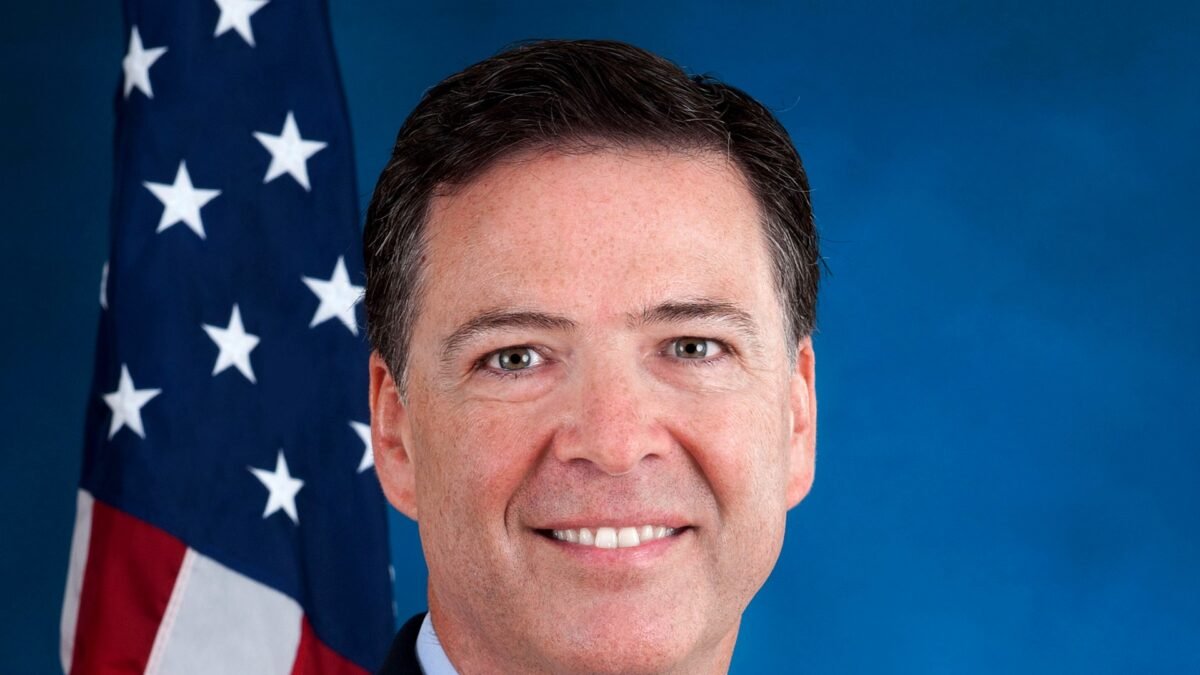
The United States Justice Department has charged former FBI Director James Comey for a third time, unsealing court papers on Monday, 26 October 2026, that accuse him of directing the disclosure of national defence information to a reporter a decade ago, according to CNN and NPR. The new case does not rest on a grand jury indictment. It rests on a two-count charging document known as a criminal information, filed under seal three weeks earlier, on the tenth anniversary of the alleged disclosure — and whether that document can lawfully keep the case alive is likely to be decided before any jury ever hears evidence about what was allegedly disclosed.
Comey denies wrongdoing. In a video posted on social media after the papers became public, he said, according to CNN: “It would almost be funny if it weren’t such an appalling abuse of the Department of Justice, one that we cannot become numb to.” He added that he remained innocent, was not afraid, and still believed in what he called the independent federal judiciary. His lawyer, Patrick Fitzgerald, said in a statement reported by several outlets that the government had filed an information that was neither approved by a judge nor issued by a grand jury, and that Comey “steadfastly maintains his innocence” and categorically denied violating the law.
The papers were made public on Monday after being filed under seal on 5 October 2026 in the United States District Court for the District of Columbia, according to NPR and the New York Post. Judge Trevor McFadden had granted the Justice Department’s request to keep the filing sealed on the day it was made, according to a report summarising the court record, on the ground that publicity could compromise an ongoing investigation. Comey’s lawyers then sought to have the case unsealed and dismissed, and the unsealing followed. The documents made public on Monday contain, by the agreement of the reporting so far, scant detail about the specific information at the centre of the allegations.
That scarcity of detail matters. Readers should not mistake the headline for the evidence. The filing, as described by outlets that have reviewed it, alleges a course of conduct on or about 5 October 2016. It does not, in the public version, describe the national defence information itself, name the reporter, or identify the intermediary described only as “Individual #1”. The connection to a specific newspaper article comes principally from Comey’s own lawyers, who say the case concerns an alleged disclosure to The New York Times on 5 October 2016. The Justice Department has said only that the matter is an ongoing criminal investigation and has declined further comment beyond its explanation of the filing procedure.
What the two counts allege
According to NPR, which reviewed the court papers through its justice correspondent, Comey faces two criminal counts. The first alleges the disclosure of sensitive national defence information. The second alleges a conspiracy to disclose such information. The conduct is said to date to October 2016, when Comey was still director of the FBI under President Barack Obama. Prosecutors say, according to NPR, that Comey directed FBI staff to speak to a Times reporter and that, by doing so, he illegally leaked sensitive information.
A more detailed account of the charging language appeared in a report that said it had reviewed the three-page information. That report said the first count charged Comey with willfully communicating national defence information to a person not entitled to receive it, in violation of 18 U.S.C. § 793(d), a provision of the Espionage Act. The conspiracy count, in that account, alleged that Comey, “through one or more co-conspirators directed Individual #1 to disclose national defense information to a reporter for a national news publication.” The same report said the filing also sought forfeiture of any proceeds traceable to the offences. Those particulars should be read as the prosecution’s allegations, not as findings. No court has yet tested them, and the filing’s brevity means the public record does not yet show what information prosecutors say crossed the line, or why they say it was national defence information rather than material that could lawfully be discussed.
The newspaper article at the centre of the lawyers’ account was published by The New York Times on 5 October 2016 under the headline “Yahoo Said to Have Aided U.S. Email Surveillance by Adapting Spam Filter”, written by reporter Charlie Savage, according to the New York Post and other reporting. The article concerned claims about United States email surveillance. In a filing summarised by the New York Post, Special Assistant United States Attorney Dustin Farahnak wrote that the investigation had uncovered evidence that Comey sought to correct misinformation that had appeared in the press by way of Reuters the day before. The filing, as summarised in that report, said Comey directed staff to speak to Savage about specific accuracy concerns related to the Reuters article, and thereby illegally transferred classified information.
Comey’s lawyers dispute that account entirely, and they dispute it on history as well as on law. According to NPR, they say in court papers that this very incident was twice already investigated by two separate United States attorneys, and that both declined to prosecute. Fitzgerald was reported as saying the underlying matter had already been examined twice during the first Trump administration, including in work associated with former special counsel John Durham, with both reviews determining that no charges should be brought. That is the defence’s characterisation of the earlier reviews. It has not been independently confirmed in the public reporting by a statement from either of the prosecutors said to have declined the matter, and the Justice Department has not, in the material published so far, addressed the earlier decisions directly. The point is nevertheless central to how Comey’s team will frame the case: not as a newly discovered leak, but as a decade-old episode that prosecutors had already looked at and left alone.
The controversy over alleged leaks to The New York Times, CNN noted, began in the early days of Trump’s first administration, but it concerned a different set of disclosures from the 2016 episode now charged. After he was fired as FBI director by Trump, Comey shared with his team at least one memorandum describing his conversations with the president, and that information was then shared with a New York Times reporter. That later episode has been the subject of extensive public debate and of investigations, including by the Justice Department’s inspector general and by Durham, who examined the origins of the federal investigation into Russian interference in the 2016 election. Durham brought charges against three people associated with that inquiry and, while he criticised some decisions by Comey and other senior officials, CNN reported that he did not find evidence to support criminal prosecutions against them. The new case should not be conflated with the memorandum episode. The charges unsealed on Monday concern October 2016, while Comey was still in office, and a newspaper article about email surveillance — not the 2017 memoranda.
An information, not an indictment — and a deadline fought over to the day
The most consequential feature of the new case may be procedural, and it is the feature the Justice Department itself chose to explain first. A criminal information is a charging document filed by prosecutors without a grand jury vote. An indictment, by contrast, is returned by a grand jury. The distinction is not a technicality here. It is the whole fight over whether the case was brought in time.
According to CNN, a Justice Department official said the information was “not enforceable” as a final charging instrument and that the department had yet to file its official charges. The purpose of the filing, the official said, was to push back the ten-year deadline for bringing charges under the Espionage Act, which expired earlier in October. “Filing a criminal information to toll the statute of limitations is a widely recognized practice in federal court and has been approved by multiple Circuit Courts of Appeals,” the official said, according to CNN. “This is an ongoing criminal investigation, and we will not comment further.” A department spokesperson used materially the same language to the New York Post, saying the department had “filed a waiverless criminal information to toll the statute of limitations” in relation to the allegations concerning Comey.
Comey’s lawyers filed a motion to dismiss on 9 October, while the case was still under seal, according to reporting on the court record. Their argument, as summarised by NPR, is that the law requires a grand jury indictment within the limitations period, and that an information filed by prosecutors alone does not satisfy that requirement. The ten-year period, on their account, expired on 5 October 2026 — the tenth anniversary of the alleged disclosure and the very day the information was filed. The government disagrees, and the court has not yet ruled on the motion, according to NPR. Until a judge rules, the case exists in an unusual posture: charges have been publicly announced and publicly debated, but their legal foundation has not yet been accepted by a court, and no indictment has been returned.
Elie Honig, a former federal prosecutor and CNN’s senior legal analyst, called the manoeuvre “a bizarre, and likely improper, use of a criminal ‘information’ to end-run the statute of limitations”, according to CNN. Honig said that typically an information must be agreed to by a defendant, and that Comey had not consented. “It therefore likely cannot extend the statute of limitations, which would have expired on October 5, 2026,” Honig said. That is an analyst’s assessment, not a ruling, and it should be weighed alongside the Justice Department’s contrary position that appellate courts have approved the practice. What is not in dispute between the two sides is that the procedure is unusual. NPR’s correspondent described the department’s attempt to slide the case in under the deadline as “very unusual”, and noted that the legal fight had been playing out behind closed doors since 5 October, with the public learning of it only when the case was unsealed three weeks later.
The practical consequence is that the first contested question for the judge will not be whether Comey disclosed anything, but whether the government is entitled to prosecute him at all for conduct from 2016. If the judge accepts the defence argument, the case could end without any examination of the underlying facts. If the judge accepts the government’s tolling argument, prosecutors would still need to obtain an indictment and then prove the disclosure counts beyond a reasonable doubt, with evidence the public has not yet seen. Either way, the timetable is now set by litigation over the filing itself, not by a trial date.
President Donald Trump, asked about the new charges on his return to Washington from a rally in Mississippi, said he knew nothing about them, according to a pool report quoted by CNN. “I don’t know too much about it. I just heard about it,” Trump said. “I think he’s a dirty cop, James Comey, but I know nothing about it.” Trump fired Comey as FBI director in May 2017, and the two men have been fierce critics of one another since then, according to NPR. The president’s remark should be reported as his own characterisation, not as evidence about the charges, and the Justice Department has not said that the White House directed the filing.
The two earlier cases against Comey
The case unsealed on Monday is the third criminal case the Justice Department has brought against Comey since Trump returned to office, according to CNN and NPR. None has yet produced a conviction. Understanding the new filing requires understanding why the earlier cases stalled or remain unresolved, because the same themes — procedure, prosecutorial authority, and claims of selective prosecution — run through all three.
Comey was first indicted in September 2025 by a federal grand jury in Virginia on charges of making a false statement and obstruction, in connection with testimony he gave before the Senate Judiciary Committee on 30 September 2020, according to reporting summarising the court record. In that testimony, Comey denied authorising another person at the FBI to serve as an anonymous source in news reports regarding the investigation of Hillary Clinton and her emails when she was the Democratic presidential nominee in 2016. A judge dismissed that first indictment on 24 November 2025, after ruling that Lindsey Halligan, the then-interim United States attorney who obtained the indictment, had been invalidly appointed. The dismissal turned on the lawfulness of the prosecutor’s appointment, not on whether the testimony allegations were true. On the same day, the same judge dismissed an unrelated indictment obtained by Halligan against New York Attorney General Letitia James, who had been accused of bank fraud and making false statements to a financial institution in connection with a home mortgage. James, like Comey, has been a staunch critic of Trump, according to the same reporting.
The second case was brought in North Carolina in April 2026. Comey was charged with threatening the president after posting on Instagram in May 2025 a photograph of seashells on a beach arranged to form the numbers “86 47”, according to CNN and NPR. Prosecutors claim, in the account summarised by those outlets, that “86” was code suggesting that someone should kill Trump, the 47th president. Comey has denied any wrongdoing in that case and is seeking to have the indictment dismissed. One of the arguments he is making, according to NPR, is that he is being selectively and vindictively prosecuted because of his criticism of Trump. That case remains pending. The seashell photograph, the meaning of “86”, and the First Amendment limits on prosecuting political expression will be central if it proceeds, but none of those questions bears directly on the 2016 disclosure allegations, except as background to Comey’s broader claim that the prosecutions are connected by motive rather than by evidence.
Comey’s career before these cases explains why each of them attracts attention beyond the courtroom. He served as the seventh director of the FBI from September 2013 until his dismissal on 9 May 2017, having previously served as United States Attorney for the Southern District of New York and as Deputy Attorney General under President George W. Bush. As FBI director he oversaw the investigation into Clinton’s use of a private email server while secretary of state, and the early stages of the investigation into Russian interference in the 2016 election. His handling of the Clinton investigation in 2016 — including a public statement in July 2016 and a letter to Congress in late October 2016 — was criticised by figures in both parties at different moments, for different reasons. That history does not prove or disprove the new allegations, but it explains why a prosecution that turns on a single October 2016 newspaper contact will be read, by supporters and critics alike, through a decade of argument about Comey’s judgement in that election year.
A ruling about his daughter on the same day
The new charges became public on the same day that a federal judge in New York ruled that the Justice Department had unlawfully fired Comey’s daughter, Maurene Comey, from her post as a federal prosecutor. The coincidence of timing was noted in contemporaneous reporting, but no reporting reviewed for this article suggested a causal connection between the two events, and they arise from different courts, different judges, and different legal questions. They should be reported together only as context for a family at the centre of two separate legal disputes with the same department, not as parts of a single case.
Maurene Comey, an assistant United States attorney in the Southern District of New York who had worked on prosecutions including those of Ghislaine Maxwell and Sean Combs, was dismissed in July 2025. She sued, arguing that she had been fired because of her relationship to her father or because of her perceived political beliefs. On Monday, United States District Judge Jesse Furman ruled that the firing was unlawful, ordered her retroactive reinstatement, and directed back pay, according to the New York Post and reporting on the ruling. The ruling found that the dismissal violated civil service protections governing federal employees and rejected the government’s argument that the attorney general could dismiss a career prosecutor at will without providing a reason. The reinstatement was limited to the period before 20 December 2025, when Maurene Comey took private-sector employment, and the judge left her First Amendment claim unresolved pending further briefing, according to a summary of the ruling. The Justice Department was reported to intend to appeal. Maurene Comey was reported, citing Reuters, not to be seeking to return to her former position, having joined a New York law firm. The ruling, like the dismissal in the first Comey case, turned on the limits of executive and prosecutorial authority rather than on the merits of any criminal allegation, and it will be tested on appeal if the department pursues one.
Analysis: procedure first, substance second — and that order is the story
The unsealing of a ten-year-old leak allegation through a sealed information, on the last day of the limitations period, tells the public less about what happened in October 2016 than about how the Justice Department is prepared to use procedure to preserve a prosecution. That is not a judgement about whether the underlying allegation is true. It is an observation about what can actually be known from the present record, and about what must happen before the underlying allegation can be tested at all.
1. The tolling fight will decide whether there is a case at all
In an ordinary prosecution, the charging instrument and the evidence arrive together, and the argument is about the facts. Here they have been deliberately separated. The government filed a short information to stop the clock, then asked a judge to keep it secret while the defence challenged it. The public learned of the case only after that sealed contest had been running for three weeks. If the court holds that an information cannot toll the limitations period without a grand jury indictment, the government’s own explanation for the filing collapses, and the 2016 allegations cannot proceed on this instrument. If the court holds the opposite, the government must still persuade a grand jury and then a trial jury, on evidence that has not been disclosed. Either outcome leaves the same lesson: in this case, the law of deadlines and charging instruments is not a preliminary hurdle. It is the first and possibly decisive battleground, and readers who focus only on the word “leak” will miss the legal question that will actually be argued first.
2. Leak prosecutions test the line between correcting the record and disclosing secrets
The defence account, as summarised in the filings, presents Comey’s alleged contact as an effort to correct misinformation in a Reuters report. The prosecution account presents the same contact as a transmission of national defence information to a person not entitled to receive it. Both accounts can describe the same telephone call or conversation in opposite legal terms, because the distinction in leak cases rarely turns on whether a conversation happened. It turns on what was said, whether it was classified, whether the speaker knew it was classified, and whether any disclosure was authorised or served a lawful purpose. The public record presently answers none of those questions. The filing does not describe the information, and the summary of the Farahnak filing does not quote the words allegedly disclosed. That gap is not a reason to assume the allegation is weak, nor a reason to assume it is strong. It is a reason to withhold judgement about the substance until the government is required to particularise its case in an indictment or in pre-trial proceedings, and until the defence has an opportunity to test the classification and authorisation questions that leak prosecutions ordinarily raise.
The press dimension adds a further layer that courts have treated with care. Prosecuting a former FBI director for speaking to a reporter about an intelligence matter raises questions that go beyond one defendant: how officials may respond to inaccurate reporting about classified programmes, what channels exist for correction, and what risk attaches to informal contact with journalists. None of those questions is answered by the present filing, and the Times article itself was published reporting about surveillance, a subject on which the government’s own public statements have historically been limited. A trial, if one follows, would need to separate the public interest in accurate reporting from the government’s interest in protecting genuinely sensitive information — a separation that cannot be performed on the basis of a three-page information alone.
3. The claim of selective prosecution cannot be resolved by counting cases
Comey argues, in the pending seashell case and in his public statements, that he is being selectively and vindictively prosecuted because of his criticism of Trump. The Justice Department, by bringing three different cases on three different factual bases, invites the opposite inference: that each case stands on its own evidence. Counting the cases proves neither proposition. The first case failed on the appointment of the prosecutor, which says nothing about the truth of the testimony allegations. The second case turns on the interpretation of a social media image, which says nothing about 2016. The third case turns on a 2016 contact, which says nothing about the seashells. A court considering selective prosecution will look for evidence of discriminatory purpose and of similarly situated persons who were not prosecuted — a demanding standard that is rarely met on the basis of public commentary alone. The public, meanwhile, will inevitably read the sequence as a pattern, because the defendant is the same, the criticisms are public, and the timing falls in the final week before midterm elections. Both readings can coexist in public debate, but only the court’s standard will decide the legal argument, and that standard requires more than a sequence.
It is also worth noting what the sequence does not show. The earlier declinations described by Comey’s lawyers, if accurate, would suggest that prosecutors in a previous administration looked at the same 2016 episode and decided not to charge it. That history, if established in court, would strengthen the defence’s argument that the new case reflects a change in prosecutorial judgement rather than new evidence. But the public record does not yet establish what those earlier reviews examined, what evidence they had, or whether the present prosecutors possess material the earlier reviews lacked. The Justice Department has not addressed the declination claim in the statements published so far. Until it does, or until the court record fills the gap, the declination history remains an assertion by one side, significant if true, but not yet a proven fact about the department’s internal decisions.
4. Timing, secrecy, and the week before the midterms
The filing was made on 5 October, sealed the same day, challenged on 9 October, and unsealed on 26 October — eight days before the midterm elections on 3 November 2026, and on the same day as the Maurene Comey ruling. The Justice Department’s longstanding practice is to avoid taking overt investigative steps close to an election that could affect its outcome, although that practice is a matter of policy and guidance, not a statute, and its application to a case filed weeks earlier and kept under seal is contested. The department has not, in the material published so far, explained why the information was filed on the final day of the limitations period rather than earlier, or why it sought sealing. The natural inference from the deadline itself is that the timing was driven by the calendar: a filing on 6 October would, on the defence’s account, have been too late. That explanation accounts for the date of filing, but it does not account for the three weeks of secrecy, during which the defence was already litigating the case without public knowledge. Secrecy in a criminal case is sometimes justified to protect an investigation or witnesses, and the sealing request was said to rest on such a ground. The public cannot assess that justification without seeing the sealing application, which has not been published in the reporting reviewed. The result is a case that arrives in public debate fully formed, with its first legal contest already under way, and with the reasons for its concealment still largely undisclosed.
5. What this does — and does not — say about the Justice Department
Three prosecutions of the same former FBI director, one dismissed on appointment grounds, one pending on a social media post, and one now contested on limitations grounds, will be cited by critics as evidence that the department has been turned against the president’s opponents, and by supporters as evidence that a former director who criticised the president is finally being held to account. Neither citation, on its own, is a substitute for the court record. Institutions are judged, in the end, by whether their charging decisions survive judicial scrutiny, whether the evidence is disclosed and tested, and whether the same standards are applied to comparable conduct by others. The first case did not survive scrutiny, for a reason unrelated to the facts. The second has not yet been tested. The third has not yet survived its first procedural test. A fair assessment of the department’s conduct in this matter must therefore wait for the judge’s ruling on the information, for any indictment that follows, and for the evidence the government is prepared to present. Premature conclusions, in either direction, would repeat the error the sealed filing itself invites: treating an allegation as a verdict.
Why it matters
This case matters for reasons that extend beyond James Comey. First, it will clarify, in a high-profile setting, whether prosecutors may use a criminal information to preserve Espionage Act charges that would otherwise expire, without a grand jury. That question affects not only this defendant but the balance between prosecutorial discretion and the grand jury’s historic role as a check on charging decisions. A ruling that informations can toll the period would give prosecutors a tool to hold cases open at the edge of a deadline. A ruling that they cannot would reinforce the indictment requirement as a substantive protection, not a formality.
Second, it matters for the relationship between law enforcement officials and the press. If the government’s theory is that correcting a news report through a reporter can itself be a crime when the correction conveys classified information, officials will need clear guidance on how to respond to inaccurate reporting without incurring criminal risk. If the defence’s theory prevails, the case will reinforce the principle that earlier prosecutorial decisions not to charge, after full investigation, should not lightly be revisited a decade later on the same facts. Either outcome will be cited in future disputes about leaks, and the reasoning of the court will matter more than the identity of the defendant.
Third, it matters because it arrives at a moment of acute political tension, days before voters decide control of Congress, and on the same day a court found the department acted unlawfully in firing the defendant’s daughter. The convergence of those events, whatever their separate causes, will shape public trust in the department’s independence. Trust in that independence is not restored by assertions from either side. It is restored, if at all, by transparent proceedings, by a judge’s reasoned ruling on the tolling question, and by evidence that is disclosed in time for the defence to answer it. The coming weeks will show whether this case proceeds on that footing.
What to watch next
- The judge’s ruling on the motion to dismiss. The court has not yet ruled on Comey’s argument that an information cannot satisfy the ten-year limitations requirement. That ruling will determine whether the case proceeds, ends, or must be reconstituted through a grand jury — if a grand jury route remains available at all after the deadline.
- Whether a grand jury indictment follows. If the information is held to toll the period, watch for whether prosecutors seek an indictment, and whether that indictment particularises the information allegedly disclosed. The specificity of any indictment will be the first real test of the substance.
- What the government discloses about the earlier reviews. Watch for any response to the defence claim that two United States attorneys previously investigated the same episode and declined to prosecute. A substantive response, or the absence of one, will shape the selective-prosecution debate.
- The seashell case in North Carolina. That separate prosecution continues in parallel, with its own dismissal arguments. Its progress, or lack of it, will affect the overall picture of how the department’s cases against Comey are faring in court.
- The Maurene Comey appeal. The ruling ordering her reinstatement and back pay left a First Amendment claim unresolved and was reported to face an appeal. Its appellate course will test the same questions about executive authority that arose in the first Comey dismissal.
- Any further public statement from the Justice Department. So far the department has limited itself to the tolling explanation and a statement that the investigation is ongoing. Whether it offers a fuller account of the evidence, or maintains silence until an indictment, will affect how much the public can fairly judge before a court does.
For now, the verified facts are narrow, and they should be kept narrow. A two-count information was filed under seal on 5 October 2026, unsealed on 26 October, alleging a 2016 disclosure to a reporter. Comey denies the allegations and says the case is time-barred and abusive. The Justice Department says the filing was a recognised way to preserve the case before the deadline expired. A judge has yet to decide who is right. Everything beyond those facts — the content of the alleged disclosure, the reason earlier prosecutors did not charge it, and the motive for bringing it now — remains alleged, asserted, or undisclosed, and should be reported as such until a court record establishes otherwise.
Sources
- CNN — “Justice Department charges former FBI Director James Comey for third time”
- NPR — “DOJ brings criminal charges against former FBI Director James Comey for third time”
- Reuters — “Ex-FBI director Comey charged again by US Justice Department, NBC News reports”
- New York Post — “Ex-FBI Director James Comey facing new criminal charges for allegedly leaking info to NY Times”

About the Author — Abdul Mannan
Related Articles
Trump Rules Out Iran Strike ‘Today’ Even as US Forces Stand Ready to Act Within 96 Hours
US President Donald Trump said there would be no strike on Iran on Sunday, even as US officials…
Trump Votes Early in Florida as Obama Rallies Democrats in Ohio and Michigan in Final Midterm Push
President Donald Trump voted early in Florida on Saturday while former President Barack Obama rallied Democrats in Ohio…

Eleven Shot, Including Six Youngsters, Near Florida A&M Stadium After Homecoming Game
Eleven people, including six juveniles, were shot near Florida A&M University's Bragg Memorial Stadium in Tallahassee on Saturday…