
Trump Votes Early in Florida as Obama Rallies Democrats in Ohio and Michigan in Final Midterm Push

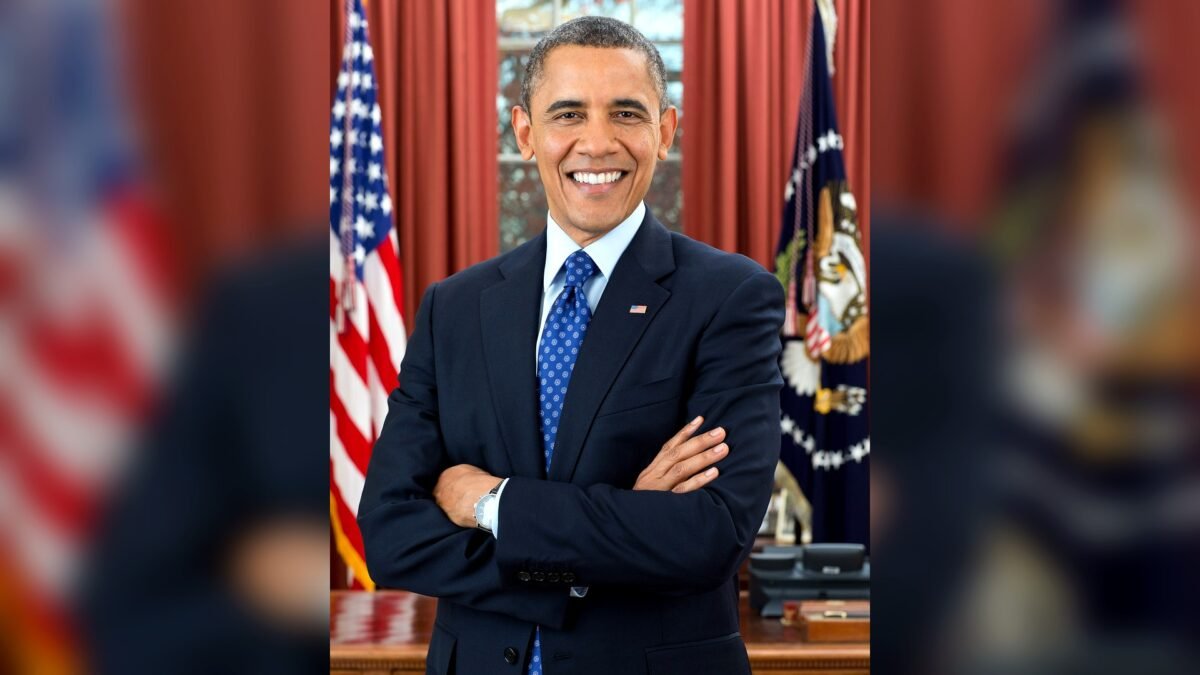
President Donald Trump cast his ballot early in Florida on Saturday, while former President Barack Obama took to the campaign trail for the first time this midterm season, rallying Democrats in Ohio and Michigan — a split-screen weekend that captured, in a single day, the closing argument of an election now just over a week away.
Trump voted in person at the Palm Beach County Supervisor of Elections office in West Palm Beach on Saturday afternoon, accompanied by First Lady Melania Trump, according to USA Today and the Palm Beach Post. Asked by reporters whether he had voted along party lines, he replied: “Very much so,” according to The Associated Press. He told reporters as he walked in that “everything is good,” and left wearing an “I Voted” sticker.
Hours earlier and a thousand miles away, Obama was addressing an energised crowd of more than 4,000 people at Cass Technical High School in Detroit, according to the Detroit Free Press, urging voters to treat the 3 November midterms as a check on the Trump administration. “This election is our last, best chance to at least rein in some of the foolishness of this administration,” Obama said during a speech of nearly 40 minutes. “It is the circuit breaker in the system. We gotta flip that circuit breaker.”
The two men’s schedules converge on Michigan on Sunday. Trump is due to rally Republicans in Port Huron, in the state’s east, at 3 p.m. local time, according to the Times Herald, which notes he will be the first sitting president to visit the city. It is his first campaign stop in Michigan this year, according to Reuters, despite his repeated attacks on the state’s Democratic Senate candidate from the White House and at rallies elsewhere.
Michigan matters because it holds one of the most competitive Senate contests in the country: an open-seat race between former Republican Representative Mike Rogers and Democratic candidate Abdul El-Sayed that, as Reuters notes, will help decide control of the chamber. Obama campaigned in Detroit for El-Sayed and for Jocelyn Benson, Michigan’s secretary of state, who is running for governor.
A tale of two campaign trails
Obama’s Saturday began in Cleveland, where he campaigned for Amy Acton, the Democratic candidate for governor of Ohio, and Sherrod Brown, who is seeking a return to the Senate, before travelling to Detroit. According to the Detroit Free Press, the Detroit rally drew a crowd that spilled into an overflow space, on the first day of in-person early voting in Michigan.
His message was deliberately broader than any single race. Real leadership, he told the crowd, must show voters concrete plans to lower costs and make health care and housing more affordable. “We can’t just be against something, we gotta be for something,” he said. “We gotta start showing what a future on the other side of this administration can look like.” That future, he said, looks like electing Benson as governor and El-Sayed as senator.
Obama, who won Michigan in both 2008 and 2012, also confronted directly the attacks that have defined the Senate race. Trump has sought to paint El-Sayed as a Muslim extremist and has repeatedly mocked his middle name, Mohamed, according to Reuters, while Rogers has alleged, without evidence, that El-Sayed has ties to the Muslim Brotherhood. El-Sayed has denied any affiliation with the group and has called it “shameful” for Rogers to question his allegiance.
Speaking in Detroit, Obama framed those attacks as an attempt to make El-Sayed look “less patriotic and less American than they are,” according to Reuters. He compared the episode to his own experience as the target of false claims that he was born in Kenya. “We have seen this movie before,” Obama said. “I starred in it … This stuff didn’t work on me. Not in Michigan. It’s not going to work on Abdul.” In an advertisement of his own, El-Sayed has defended his religion, saying: “Faith is a thing there’s just too little of in Washington,” according to Reuters.
Trump, for his part, has spent the weekend arguing the opposite case: that his own campaigning can defy the usual midterm pattern. “A sitting president always does badly in the midterms,” he told reporters after voting, according to the New York Post. “There’s no president that’s ever campaigned like I have.” He also spoke of the physical toll of the schedule, describing it as a strain on his voice, and said he was campaigning not for himself but for candidates across the country, “some of whom I don’t know.”
After voting, Trump headed to a rally in Perry, Georgia, according to the Palm Beach Post, continuing a run of appearances that has taken him through Florida, Georgia and South Carolina in recent days. His early vote itself carried a note of irony that has followed him for years: a president who has repeatedly criticised early and mail-in voting, and who called early voting “stupid” on the campaign trail in 2024, according to USA Today, cast his own ballot in person during Florida’s early-voting period, having previously voted by mail in Florida elections earlier this year.
The Michigan race at the centre of it all
The reason both parties’ biggest names are spending their weekend in Michigan is straightforward: the state’s Senate seat is open, genuinely competitive, and potentially decisive for control of the Senate. Rogers, a former congressman, and El-Sayed, a former Wayne County and Detroit health director, offer sharply different visions, and the race has been fought as much over identity and legitimacy as over policy.
El-Sayed emerged from a hard-fought Democratic primary in August. As the Detroit Free Press noted in its coverage of the candidates’ final debate, Rogers has pointed out that El-Sayed did not win Detroit itself in that primary — the state’s largest Democratic stronghold — even as he won statewide. That detail has become a staple of Rogers’s argument that El-Sayed’s coalition is narrower than it appears, while El-Sayed has turned the attack around, telling Detroit voters they are “sick and tired of watching politicians deny the outcome of elections,” in a pointed reference to Rogers’s past questioning of election results.
The Detroit rally was, in that sense, an attempt to close the gap in exactly the place where El-Sayed most needs to run up the score. A crowd of more than 4,000, an overflow room, and the presence of the party’s most popular living figure all serve the same purpose: converting enthusiasm into early votes on the very weekend that in-person early voting began in Michigan. Campaigns measure such weekends not in applause but in ballots cast, and the timing of Obama’s visit — day one of early voting — was no accident.
For Trump, Port Huron offers a different kind of stage. Eastern Michigan, in St. Clair County, is friendlier territory than downtown Detroit, and a rally there allows him to energise the Republican base in a region where turnout, not persuasion, may decide the race. The Times Herald reports that doors open at 11:30 a.m. for the 3 p.m. event at McMorran Place Arena, with admission on a first-come, first-served basis and screening by the Secret Service. The symbolism of a first-ever presidential visit to the city is unlikely to be lost on the local audience either.
Analysis: Why It Matters
The midterm referendum, made personal
Midterm elections are traditionally a referendum on the sitting president, and both men’s appearances on Saturday embraced that framing rather than resisting it. Obama called the election a “circuit breaker”; Trump argued that his personal campaigning could break the historical pattern in which the president’s party loses ground. When the two most recognisable figures in American politics spend the same weekend making opposite versions of the same argument, the election stops being a collection of local races and becomes a national choice — which is precisely what both parties want, for different reasons. Democrats want voters thinking about the administration; Republicans want them thinking about Trump himself, whose personal appeal has repeatedly outperformed his party’s brand.
Michigan is a bellwether, not just a battleground
There is a reason Michigan, rather than any other swing state, drew both men in the same weekend. It is a state Trump needs to hold in the Senate column and Democrats need to flip; it is a state where the industrial Midwest’s anxieties about jobs, costs and trade cut across party lines; and it is a state where the politics of identity — who counts as “American” enough to serve — are being tested in unusually explicit terms. If El-Sayed wins, he would be the first Muslim elected to the United States Senate, according to Reuters, a milestone that would itself become part of the story of this election. If Rogers wins, Republicans will argue that even Obama’s star power could not save a progressive candidate in a state Democrats must hold. Either result will be read nationally.
Early voting has changed the calendar
One of the quieter stories of this weekend is how thoroughly early voting has rewritten the campaign calendar. Both Obama’s rally and Trump’s ballot were timed to the opening of early voting — in Michigan on Saturday, and in Palm Beach County, where early voting for the 3 November election runs through 1 November, according to the county’s Supervisor of Elections office. The old rhythm, in which campaigns peaked in the final 72 hours, has given way to a rolling election in which every weekend is election weekend. That changes what rallies are for: less a final persuasion push, more a turnout machine operating while ballots are already being cast.
The attacks on El-Sayed are a test of an old playbook
The most consequential subtext of the Detroit rally may be the one Obama addressed most directly: whether attacks on a candidate’s faith and background still work. Obama’s decision to invoke his own experience with birther conspiracy theories was not nostalgia; it was a warning to voters that they had seen this tactic before and rejected it. But the tactic persists because it has, at times, worked — and because in a close race, even a small shift among persuadable voters matters. The Michigan result will therefore be read, fairly or not, as a verdict on whether identity-based attacks remain effective in a state that has twice voted for Obama and has also voted for Trump.
What the final week will actually be about
Strip away the pageantry, and the final week of this campaign will be fought on the ground both men named: costs, health care, housing, and the price at the pump. Obama’s insistence that Democrats must be “for something,” not merely against Trump, is an acknowledgement that opposition alone has rarely been enough to win midterms, even favourable ones. Trump’s insistence that his campaigning is historically unprecedented is an acknowledgement that his party faces the same headwinds every president’s party faces. The candidate who makes the cost of living feel personal — rather than abstract — in the next nine days is likely to win the states that decide Congress.
What to Watch Next
- Trump’s Port Huron rally on Sunday afternoon: what he says about the Michigan Senate race, and whether he escalates his attacks on El-Sayed in the candidate’s home state.
- Early-voting numbers in Michigan over the coming week, particularly turnout in Detroit and Wayne County, where Democrats need a large margin.
- Whether Obama makes further campaign stops before 3 November, and in which states — his schedule is the clearest signal of where Democrats believe the Senate will be decided.
- How the Rogers campaign responds to Obama’s Detroit appearance, and whether it leans further into the Muslim Brotherhood allegation that El-Sayed has denied.
- Final polling in the Michigan Senate race and in the battle for House control, as both parties’ closing messages collide in the last days before election day.
Sources
- Reuters — Trump campaigns in Michigan a day after Obama rallies Democrats
- Detroit Free Press — Obama skewers Trump as incompetent, corrupt as he rallies Dems in Detroit
- USA Today — Trump votes early and in person in Florida ahead of midterm elections
- Palm Beach Post — Trump ends latest Florida visit after casting early vote in Palm Beach

About the Author — Abdul Mannan
Related Articles
Eleven Shot, Including Six Youngsters, Near Florida A&M Stadium After Homecoming Game
Eleven people, including six juveniles, were shot near Florida A&M University's Bragg Memorial Stadium in Tallahassee on Saturday…
Appeals Court Rules Trump’s Los Angeles National Guard Deployment Was Unlawful in 2-1 Decision
In a 2-1 ruling, the Ninth Circuit held that President Trump's 2025 federalisation of 4,000 California National Guard…
Trump Backs Ramaswamy’s Controversial Ohio Ad, Slams Republicans Who Condemned It
President Trump praised Vivek Ramaswamy's attack ad featuring Democratic rival Amy Acton's estranged mother as "very powerful", attacking…