
Oleshky Ceasefire Takes Effect as Aid and Evacuation Open for Trapped Town

A localised ceasefire between Russia and Ukraine took effect in the Russian-occupied town of Oleshky early on Tuesday, opening a narrow window for humanitarian aid to reach residents who have endured months of severe food and medicine shortages and for civilians who wish to leave to be evacuated. Both sides confirmed the start of the pause on Tuesday morning, according to Reuters, in a rare instance of direct cooperation in a war now in its fifth year.
The pause began at 01:00 GMT, which was 3 a.m. in Kyiv and 4 a.m. in Moscow, according to Reuters. Russia’s defence ministry said on Telegram that it had stopped shelling in the direction of the Ukrainian-held city of Kherson, just across the Dnipro River from Oleshky, to prepare for the humanitarian operation, according to Reuters. Dmytro Lubinets, Ukraine’s parliament commissioner for human rights, confirmed in a Facebook post that the ceasefire had started at the same time, according to Reuters. “As head of the Ukrainian negotiating team, I confirm that the Ukrainian side is honoring its commitments,” he wrote, according to Reuters.
CNN reported that Lubinets said in a post on X that the ceasefire went into effect at 3 a.m. Kyiv time on Tuesday, and that Russia’s defence ministry said on Telegram that it had stopped shelling in the direction of Oleshky at the same time. The pause is intended to help evacuate elderly residents and bring urgently needed humanitarian aid into the town, according to CNN. Ukrainian authorities have said about 1,700 people remain in Oleshky, according to CNN.
The arrangement was announced on Friday 23 October and was brokered by United States First Lady Melania Trump, with additional involvement from Pope Leo, according to Reuters. The White House said last week that the First Lady had helped to secure the ceasefire, according to Reuters. The deal provides for a local halt in fighting, the delivery of humanitarian assistance and the evacuation of civilians who wish to leave, according to Ukrainian and Russian officials cited by Reuters. The two sides said humanitarian corridors would be established to allow aid deliveries and the movement of residents, according to Reuters.
What the ceasefire does not do is equally important. It is limited to Oleshky and its immediate surroundings. It does not address the wider conflict, and fighting continued elsewhere in Ukraine on Tuesday morning. Reuters reported that a Russian missile attack on Kyiv on Monday had killed at least one person and injured 10, including students at a dormitory, and that new explosions were heard in Kyiv on Tuesday morning, according to a Reuters witness. CNN separately reported that a 46-year-old woman was killed and more than a dozen people were injured in an attack on Kyiv that also damaged a bridge, citing Ukraine’s Emergency Service. Russia’s military said it had carried out a “massive strike” targeting Ukrainian military facilities, a logistics centre in Kharkiv and transport infrastructure in Kyiv, according to CNN. The differing casualty accounts reflect separate reports of attacks in and around the capital, and this article does not merge them into a single figure.
How long the Oleshky pause will last was not clear on Tuesday. CNN reported that it was unclear how long the ceasefire was due to last. The Associated Press reported that the arrangement was expected to run through Saturday and possibly longer, according to a report carried by QNC News. No formal end date had been announced by either Kyiv or Moscow. Kremlin spokesman Dmitry Peskov said on Friday that the evacuation operation itself was expected to take at least several days, according to Reuters. That uncertainty is itself part of the story: a truce whose length is measured in days, not weeks, leaves little margin for delay, bad weather or a breakdown in trust on the ground.
A town cut off
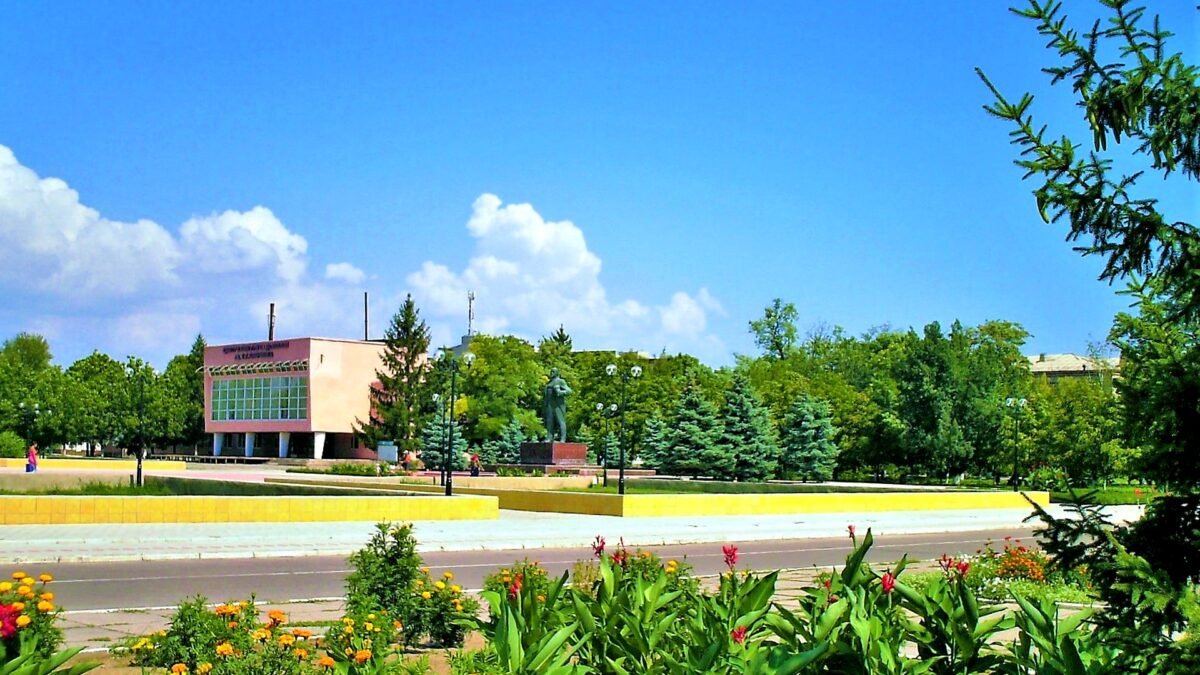
Oleshky lies on the eastern bank of the Dnipro River in Ukraine’s southern Kherson region, opposite Kherson city, which is held by Ukrainian forces, according to Reuters. Russian troops seized Oleshky during the first days of their full-scale invasion in February 2022 and have controlled it ever since, according to Reuters. When Russian forces withdrew from Kherson city and the territory north of the Dnipro in November 2022, Oleshky was left on the occupied eastern bank, facing Ukrainian-held territory across the river and its floodplains.
The town had a prewar population of about 24,000, according to Reuters. The United States has said only a few thousand people remain, according to Reuters. Estimates of the number still there vary, and no formal count has been possible in an occupied frontline town. Ukrainian authorities have put the figure at about 1,700, according to CNN, while other Ukrainian and United States estimates have put it at up to 2,000. Many of those who remain are elderly, and dozens are children. Russian officials have put the remaining population far lower. This article therefore gives a range rather than a single settled number, and treats the exact figure as disputed.
Residents and officials have reported severe shortages of food, medicine and other basic supplies, according to Reuters. Oleshky has suffered extensive war damage and was hit hard by flooding after the destruction of the nearby Kakhovka dam in 2023, according to Reuters. Reports at the time said that as much as 90 per cent of the town’s territory was flooded. The town has been largely cut off from running water, electricity, gas and central heating since the dam’s destruction, according to reporting carried by The Business Standard, which drew on Reuters material.
As the war ground on, the humanitarian crisis deepened. By the middle of last year, the constant threat of drones had choked off supply lines, causing food scarcity, according to Reuters reporting carried by Devdiscourse. From late May this year, the situation became severe, according to residents Reuters has spoken to. One resident, identified only as Vitaly, told Reuters that his family had survived for weeks by rationing a single cup of rice or buckwheat a day, occasionally adding a cucumber or tomato mixed with purslane, a common wild weed. During the summer months, some residents could sell vegetables, but prices were unaffordable for most, according to the same reporting. A kilo of tomatoes cost about 1,500 roubles, about 18.50 US dollars, Vitaly recalled. Ten eggs cost around 3,000 roubles, and no one was willing to sell potatoes, according to the same account. After counting their meagre food stocks, and remembering the previous winter, when the temperature in their apartment had dropped to between 1 and 3 degrees Celsius, they decided to leave, according to Reuters.
Another resident in contact with two families still in the town told the AFP news agency that people had “forgotten what bread is”, according to reporting carried by Europe Says. “They’ve forgotten what bread is. You need flour for bread, and there’s not even flour left,” Olga told AFP, according to the same reporting. Former residents told AFP earlier this year that those remaining faced severe shortages of food and medicine and had difficulty leaving, and that some had resorted to hunting pigeons or relying on whatever food they could grow in their gardens, according to the same reporting. The accounts are individual testimonies, not a survey, but they are consistent with the picture given by Ukrainian officials, United Nations monitors and residents who have managed to leave.
The physical journey out has itself become dangerous. Residents have offered harrowing accounts of risking their lives travelling along mine-strewn roads just to access food and water, one of which they call the “road of death”, according to reporting carried by The Business Standard. Roads are heavily mined, and strike drones cover the approaches, according to reporting carried by Crisis Zone. Ukraine and Russia blame each other for the humanitarian crisis in Oleshky, according to the same Business Standard reporting. Drones present the greatest threat to civilian life, and the town is within easy reach of unmanned aerial vehicles belonging to both armies, according to that reporting. Neither side’s account of who bears responsibility for blocked supplies has been independently verified, and this article presents both positions as claims rather than established fact.
Earlier this autumn, Lubinets said that 358 people had been in need of urgent evacuation from the area, with the total number affected reaching up to 6,000, including 200 children, according to reporting on the Ukrainian ombudsman’s appeals. The wider figure appears to cover Oleshky and surrounding settlements. Ukraine’s forces have delivered small quantities of aid by drone, including about four tons of products between March and September 2026, according to Ukrainian regional authorities cited in Ukrainian reporting. That is a fraction of what a town needs, and it underlines why a ground corridor, if it works, would matter so much more than drone drops.
How the truce was reached
The White House said Melania Trump helped secure the agreement after becoming involved in discussions on the humanitarian situation in Oleshky, according to Reuters. The White House said the First Lady and a representative worked with Russian and Ukrainian officials to agree the terms of the ceasefire, according to Reuters. Ukrainian human rights ombudsman Dmytro Lubinets publicly thanked Melania Trump and her team for helping coordinate the talks, according to Reuters. Russian officials also confirmed the agreement, according to Reuters.
CNN reported that the First Lady announced on Friday that she had worked with Ukrainian and Russian leadership to secure the localised ceasefire as the “exclusive intermediary”. That phrase is the White House’s description of her role, and this article attributes it as such rather than adopting it as an independent finding. “The people of Oleshky have limited electricity, live amid mined roads, and endure regular military attacks,” Melania Trump said in a statement on Friday, according to CNN. “Non-military, civilian leaders from both countries will work together to visit Oleshky residents in their homes and determine the level of assistance they require,” she added, according to CNN. “Residents who wish to evacuate will receive coordinated support and transportation to their preferred destination. I anticipate some will want to go to Russia, and some to Ukraine,” she said, according to CNN.
CNN reported that the First Lady’s office said last week that the circumstances of Oleshky had come to her attention during a private discussion at the 81st United Nations General Assembly in New York in September. Ukrainian President Volodymyr Zelensky said on Saturday that Kyiv had been working to negotiate the deal for “some time”, according to CNN. Kremlin spokesman Dmitry Peskov credited Trump for her “significant contribution”, according to CNN. President Donald Trump praised his wife’s efforts on Friday, saying “they contacted both sides, and both sides wanted to do it”, according to CNN. He said her focus remained on helping the children affected by the war, according to CNN.
Pope Leo also played a role, according to Reuters. He held a phone call with Ukrainian President Volodymyr Zelensky, the Vatican said, and urged Ukraine and Russia to cooperate to let aid and food in, according to Reuters. CNN reported, citing the Vatican, that Pope Leo had also discussed the humanitarian crisis in Oleshky on an October 16 phone call with Russian President Vladimir Putin while the Pope was in hospital recovering from lung cancer surgery. The Vatican’s account is the source for both calls, and neither call by itself produced the ceasefire. Together, they show that the town’s plight had reached the highest levels of religious and political diplomacy before the agreement was announced.
The Kremlin confirmed on Friday that a United States-brokered local ceasefire agreement had been struck regarding Oleshky and said that the Russian and Ukrainian militaries were working to determine the dates for implementing it, according to Reuters. Peskov told reporters on Friday that all civilians wishing to leave Oleshky would be allowed to do so and that the evacuation operation itself was expected to take at least several days, according to Reuters. Peskov praised Melania Trump’s role, saying it had been discussed in a recent phone call between Putin and Donald Trump, according to Reuters. “We welcome the efforts of the First Lady of the United States, Mrs Melania Trump, who has made a significant contribution to the coordination of the humanitarian operation,” Peskov said, according to Reuters.
On the military side, the mechanics were set out in parallel announcements. Valery Gerasimov, chief of Russia’s General Staff, said Moscow would honour what he termed a “regime of silence” across the Kherson area so engineers could scout routes and a relief convoy could travel without danger, according to Anadolu Agency reporting carried by QNC News. “To ensure the safety of the population and the delivery of essential humanitarian supplies, engineering reconnaissance will be conducted, and the safe passage of a humanitarian convoy to the settlement of Oleshky, Kherson Region, will be facilitated,” the Russian Defence Ministry quoted Gerasimov as saying, according to the same reporting. Ukraine’s General Staff announced its own matching pause to permit aid deliveries and the evacuation of civilians, according to the same reporting. Lubinets said the ceasefire was “part of a humanitarian mission being carried out with the mediation and coordination of US First Lady Melania Trump, in cooperation with Yana Lantratova, Russia’s Commissioner for Human Rights”, according to CNN.
As of Tuesday morning, both sides’ statements confirmed that the pause had started, but no independent reporting had yet shown that a convoy had reached the town centre or that evacuations had begun, according to reporting carried by Crisis Zone. No United Nations or International Committee of the Red Cross monitor had been publicly identified as part of the operation. That gap matters. A ceasefire announced in capitals is not the same as aid delivered in a mined town, and the first test of this agreement will be visible, practical and local: trucks arriving, doctors reaching homes, and people who want to leave being able to do so safely.
What happens on the ground
Under the terms described by the White House, civilian representatives from both countries will assess residents’ needs, and anyone wishing to leave will be offered transport to a destination in either Russia or Ukraine, according to reporting carried by QNC News. The plan calls for doctors, medicine, food and water to reach the town first, with evacuation corridors to follow, according to the same reporting. The sequence matters. Engineering reconnaissance comes first, because routes must be checked for mines before a convoy can use them. Only then can a relief convoy travel, and only then can evacuations be organised at scale. Peskov said the operation could last several days but that its exact length remained uncertain, according to the same reporting.
The Russian position, as stated by Lantratova, is that most people who wanted to leave had already departed voluntarily, according to reporting carried by Europe Says. Ukrainian officials fear coerced relocation to Russia, according to reporting carried by Crisis Zone. Melania Trump said in her statement that residents who wish to leave would be taken to their preferred destination, and that she expected some to choose Russia and some Ukraine, according to CNN. The difference between those accounts is not a detail. It is the central humanitarian question of the operation: whether departure is genuinely voluntary, whether families can choose their destination without pressure, and whether anyone observing the process can verify that choice afterwards.
The Kremlin said on Monday that the truce might serve as a precedent for similar localised ceasefires in the future, according to Reuters. That statement should be read carefully. A precedent is not a promise, and a single town’s pause does not imply a wider ceasefire. But the fact that Moscow chose to frame the Oleshky arrangement in those terms, before the operation had even begun, suggests that both sides understand its value beyond Oleshky itself. For Washington, it is evidence that contact between the two sides can still produce a concrete result. For Moscow, it is evidence of cooperation with the Trump administration at a moment when broader relations are under strain. For Kyiv, it is a test of whether Russian commitments on a humanitarian matter will hold on the ground.
The wider diplomatic context is also moving. Reuters reported that Washington is seeking to revive broader peace talks between Moscow and Kyiv. Zelensky said last week that three-way talks would continue in Abu Dhabi in early November, according to reporting carried by The Business Standard. The Oleshky arrangement was announced in the same week that Russia and Ukraine exchanged prisoners and that the White House was pressing for renewed diplomacy. None of that makes a broader peace settlement likely in the short term. The two sides remain far apart on territory, security guarantees and the future of the occupied regions. What Oleshky shows is narrower and, for the people involved, more immediate: that even in a war of this scale, a local, time-limited, humanitarian agreement is still possible when both militaries and both political leaderships agree to it.
Analysis: Why It Matters
A ceasefire measured in streets, not front lines
Most ceasefires in this war have been judged by maps: kilometres gained or lost, towns taken or held. Oleshky inverts that measure. Its value is not territorial. Neither side is conceding ground, and neither side is claiming a military advantage from the pause. Its value is measured in streets that can be crossed, homes that can be visited, and a road that can be checked for mines without someone being killed on it. That is a deliberately small ambition, and that is precisely why it was achievable when larger agreements have not been. The lesson is not that small truces end wars. It is that a war can contain within it a space, however temporary, where the logic of fighting is suspended for the logic of feeding people. Whether that space holds for a day or for a week will tell both sides, and the rest of the world, something real about the state of communication between two armies that otherwise communicate mainly through drones and artillery.
Why a First Lady, and why now
The most unusual feature of this agreement is its broker. Ceasefires are normally negotiated by generals, diplomats or international organisations. This one was coordinated, on the White House’s account, by the First Lady acting as an “exclusive intermediary”, working with civilian negotiators from both sides after United Nations officials had briefed her on conditions in the town. That is not a normal channel, and its novelty is part of its political meaning. It allowed both Moscow and Kyiv to engage without the formal apparatus of peace talks, and it allowed Washington to present the result as humanitarian rather than diplomatic. The timing also matters. The agreement was announced as Washington was trying to revive broader talks, as the Pope had intervened, and as international attention to Oleshky’s food crisis was rising, including a hunger strike announced by a Vice-President of the European Parliament in solidarity with the town’s residents. A town that had been cut off for months became visible at the same moment that several different channels of influence converged on it. That convergence, rather than any single intervention, is the most plausible explanation for why a deal was reached now.
The numbers are the argument
Strip away the diplomacy, and the case for the Oleshky truce rests on numbers that are hard to argue with. A town of about 24,000 people reduced to roughly 1,700 to 2,000. A family rationing a cup of rice a day. Tomatoes at 1,500 roubles a kilo, eggs at 3,000 roubles for ten, potatoes not for sale at any price. An apartment at 1 to 3 degrees Celsius in winter. Four tons of drone-delivered food over seven months for a town that needs far more. These figures, reported by Reuters, the United Nations and residents themselves, do not prove who is to blame for the blockade. They prove that the blockade, whatever its cause, had become a threat to life itself. That is why the agreement could be framed as humanitarian by all sides, and why none of the parties involved has sought to deny that the town’s residents needed help. When the facts on the ground are this stark, the argument for a pause does not need a political theory. It needs a road, a convoy and a few days of silence.
The choice of destination is the test
The most sensitive part of the operation has nothing to do with food or medicine. It is the question of where evacuated residents go, and whether they choose freely. Melania Trump’s statement anticipated that some residents would want to go to Russia and some to Ukraine, and promised coordinated transport to a preferred destination. The Russian human rights commissioner has said most people who wanted to leave already had. Ukrainian officials fear coerced relocation. Those positions cannot both be fully true, and the operation will be judged, in part, by which account the evidence supports. If residents are seen leaving in both directions, speaking freely, and reaching destinations they chose, the operation will have passed its hardest test. If departures are one-directional, hurried or undocumented, the questions will be sharper than any celebration of the truce itself. The presence of an impartial documenting organisation, which the White House has said will accompany the teams, would help, but documentation after the fact is not the same as protection during the act. The destination question is where humanitarian language meets political reality, and it is where this truce is most vulnerable.
A precedent both sides want to claim
The Kremlin’s suggestion that the Oleshky truce might serve as a precedent for similar localised ceasefires is worth taking seriously, not because it guarantees anything, but because it reveals how both sides see the value of the exercise. For Moscow, a successful local truce demonstrates cooperation with Washington and a willingness to address a humanitarian case that had attracted international criticism. For Kyiv, it demonstrates that Russian commitments can be tested, observed and, if broken, exposed. For Washington, it demonstrates that engagement can produce a result without a formal peace process. Each side can claim the precedent for its own purposes, and that is exactly what makes it fragile. A precedent that serves three different narratives will be defended by all three, but it will also be reinterpreted by all three if it fails. The real precedent, if one is set, will not be established by statements on Monday or Tuesday. It will be established by whether a second town, in similar circumstances, gets a similar pause, and whether the first operation is remembered as a model or as an exception.
What to Watch Next
- Whether a humanitarian convoy reaches Oleshky and aid is delivered to residents’ homes, and how quickly after the start of the pause.
- How many residents are evacuated, in which directions, and whether their destinations match the choices they expressed.
- Whether the pause holds through Saturday, is extended, or breaks down, and what either side says if fighting resumes in the area.
- Whether the Kremlin’s suggestion of a precedent leads to similar localised arrangements for other frontline towns, or remains a one-off.
- What the Oleshky operation means for the three-way talks in Abu Dhabi in early November, and whether humanitarian contact of this kind makes broader diplomacy easier or harder.
Sources
- Reuters — Russia, Ukraine begin localised ceasefire to allow for humanitarian operation in Oleshky
- CNN — Melania Trump-brokered one-city ceasefire between Russia and Ukraine takes effect
- Reuters — Oleshky: the occupied Ukrainian town for which Melania Trump helped broker a ceasefire
- The Associated Press, via QNC News — Melania Trump-backed Oleshky truce begins ahead of aid convoy

About the Author — Abdul Mannan
Related Articles
Xi Opens China’s Fifth Plenum With Discipline Drive Aimed at Securing His Fourth Term
China's Communist Party has opened its fifth plenum in Beijing, a four-day closed-door session on party discipline that…
Student List Wins Serbia Election as Vučić Concedes, Ending 14 Years of SNS Rule
Serbia's student-led opposition has won a snap parliamentary election after President Aleksandar Vučić conceded defeat, ending 14 years…
Lula Wins Fourth Term as Brazil Re-elects Him in Runoff Comeback Over Flávio Bolsonaro
Brazil's electoral authority has declared Luiz Inácio Lula da Silva re-elected, defeating Senator Flávio Bolsonaro in a runoff…