
Lula Wins Fourth Term as Brazil Re-elects Him in Runoff Comeback Over Flávio Bolsonaro

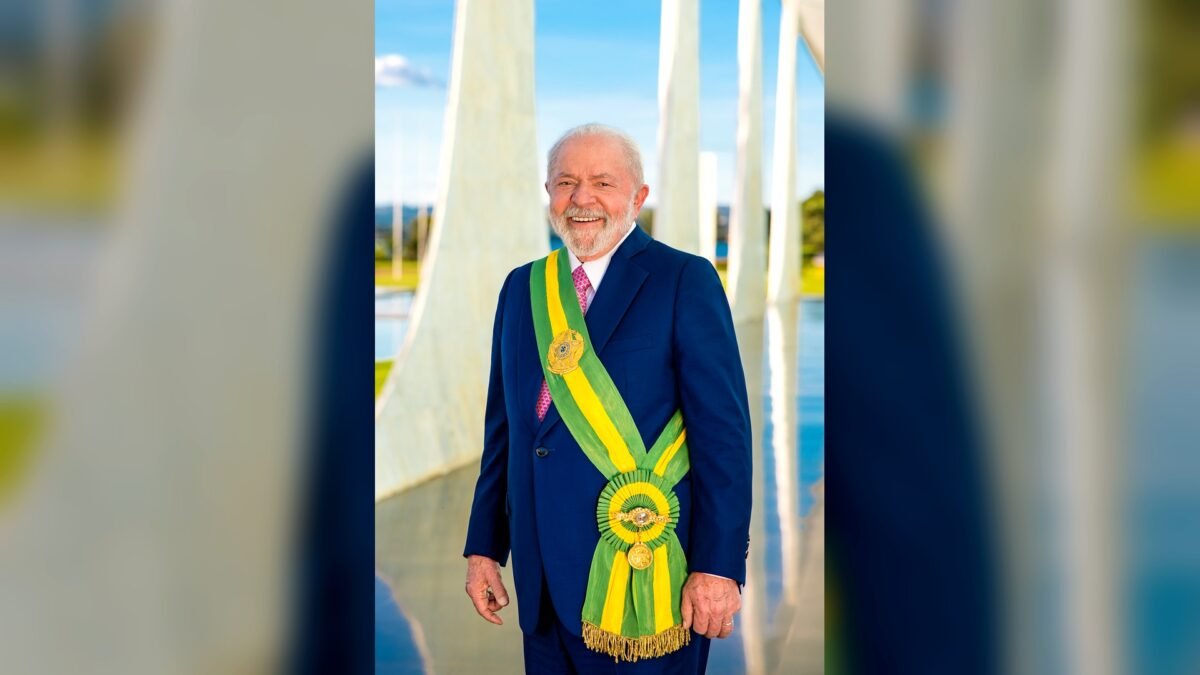
Brazil’s electoral authority declares Lula the winner
Brazil’s electoral authority has declared President Luiz Inácio Lula da Silva re-elected, according to Reuters, after he defeated Senator Flávio Bolsonaro in a presidential runoff on Sunday, 25 October, to secure a fourth non-consecutive term in office. The result, announced in the early hours of Monday, 26 October, caps a three-week runoff campaign that reversed the order of the first round and defied the momentum that had appeared to belong to his opponent.
According to the Superior Electoral Court’s dashboard, as reported from its 25 October update, Lula had won 51.76 per cent of valid votes against 48.24 per cent for Bolsonaro, with 99.86 per cent of polling sections tallied. In raw terms, that snapshot put Lula on 64,137,770 valid votes and Bolsonaro on 59,769,627, a margin of 4,368,143 votes. The figures exclude blank and invalid ballots, and the count had not yet reached 100 per cent when the electoral court marked Lula as elected, with the result described as mathematically decided.
Reuters reported that the electoral authority said Lula had won, while CNN reported that the 80-year-old leftist leader had become the first Brazilian president to be elected to the office four times. The Associated Press, as cited in contemporaneous reporting of the result, likewise recorded Lula’s victory in the runoff. The breadth of that confirmation matters in a contest as close and as polarised as this one: the headline result does not rest on a single outlet’s projection, but on the electoral court’s own tally, carried by multiple major news organisations.
The scale of the reversal is what makes the result historic. In the first round on 4 October, Bolsonaro had finished ahead, according to the Superior Electoral Court, with 47.03 per cent of valid votes against Lula’s 45.16 per cent, a gap of roughly 2.2 million votes. No candidate had reached the outright majority required to win in the first round, so the two men advanced to the runoff. CNN reported that Lula’s runoff victory makes him the first candidate since the return of direct presidential elections in 1989 to win the presidency after finishing second in the first round.
Lula’s political journey gives that statistic its weight. He served as president from 2003 to 2011, returned to office after winning the 2022 election, and has now added a fourth term to a career that has already included a dramatic fall and return. According to Reuters, he spent 580 days in prison on a corruption conviction that was later overturned, a period that prevented him from contesting the 2018 election, before he narrowly defeated Jair Bolsonaro in 2022. His opponent in this election was that former president’s eldest son, a senator who had sought to succeed where his father had failed four years earlier.
A turbulent election day
The runoff itself ended in confusion at polling stations, according to CNN. Voting was extended by two hours after last-minute pleas from both campaigns to the electoral authorities. Supreme Court Justice Cristiano Zanin granted a request from Lula’s campaign, which cited incidents affecting buses transporting voters to polling venues in several states. Bolsonaro’s campaign had also sought an extension in some areas, citing difficulties voters faced reaching polling stations because of heavy rain.
According to CNN, the order came at around 5 p.m. in Brasília, just as polls were scheduled to close, and many stations had already shut. Zanin and the Superior Electoral Court later clarified that only polling stations that had not yet closed should remain open until 7 p.m. local time. The decision drew a sharp response from Bolsonaro’s team, with the campaign director calling it, in CNN’s reporting, shameful and untimely. That dispute, even if it does not change the arithmetic of a margin of more than four million votes, is likely to feature in the argument about legitimacy that follows any close election in a divided country.
President Donald Trump said on Sunday that he was monitoring Brazil’s runoff, according to CNN. He declined to endorse either candidate, although he had previously praised Flávio Bolsonaro’s first-round performance and described the election as very important. That restraint, after a campaign in which Lula had accused the Trump administration of using tariffs and other pressure to interfere in Brazilian affairs, according to Reuters, leaves the immediate diplomatic temperature lower than it might have been, without resolving the underlying tension between Brasília and Washington.
What the campaign was fought over
Three issues dominated the campaign, according to CNN: the cost of living, crime and corruption. A September survey by Quaest and Pax, cited by CNN, found that 28 per cent of Brazilians saw violence as the country’s biggest problem, followed by corruption at 22 per cent and the economy at 19 per cent. Those numbers explain why both campaigns, despite their very different traditions, spent the runoff trying to sound tougher on crime and more attentive to household budgets.
Bolsonaro promised to designate major criminal factions as terrorist groups, to expand prisons and to lower the age of criminal responsibility, according to CNN. In one widely reported remark on 13 October, he said that those who thought he was radical on public security had seen nothing yet, and that even El Salvador’s hardline approach under President Nayib Bukele was not enough. Lula, whose party has traditionally emphasised rehabilitation and social causes of crime, struggled with a perception, reinforced by a widely circulated clip of him saying that drug traffickers were also victims of drug users, that the left was soft on crime. According to CNN, he later acknowledged that he had expressed himself poorly.
The runoff produced one of its most striking shifts on this ground. According to CNN, Lula signalled support for lowering the age of criminal responsibility from 18 to 16 for certain serious crimes, although he opposed including the change in a pending constitutional amendment. In the final televised debate, Bolsonaro pressed Lula over temporary prison leave, while Lula defended rehabilitation but said serious offenders should not qualify, and questioned whether Bolsonaro would pardon his father. Flávio Bolsonaro did not answer directly during the exchange, according to CNN, although he has repeatedly said he wants Jair Bolsonaro to accompany him up the presidential palace ramp at an inauguration.
On the economy, Lula could point to low unemployment and easing inflation, according to CNN, but those indicators had not changed the perceptions of households struggling with everyday prices. The same dynamic, CNN noted, was seen in the 2024 United States presidential election, when favourable statistics failed to overcome frustration with prices. Many voters remained loyal to Lula because of the social gains associated with his first two terms, while fearing that a Bolsonaro presidency could roll back social rights. Bolsonaro, for his part, sought to counter those concerns by distancing himself from some traditionally conservative positions. According to CNN, after previously opposing a proposal to end Brazil’s traditional six-day workweek, he reversed course and voted in favour when Congress promulgated a constitutional amendment on 16 October gradually reducing the maximum workweek without cutting pay.
Corruption shadowed both campaigns. During the final debate, according to CNN, Lula challenged Bolsonaro to open his financial records and pressed him over his ties to Daniel Vorcaro, the former head of the collapsed Banco Master, whose alleged connections to powerful figures have embroiled Brazil’s political and judicial establishment. Bolsonaro, meanwhile, accused Lula of corruption and raised allegations involving the president’s eldest son. Lula’s previous corruption convictions were annulled in 2021, according to CNN. The mutual accusations, experts told CNN, deepen a wider fatigue with the political system as a whole.
Women, religion and geography decided the margins
If one group decided this election, both campaigns and experts agreed it was women, according to CNN. Women account for nearly 53 per cent of registered voters and had been more resistant to Bolsonaro-aligned candidates than men. An October Datafolha survey cited by CNN put Lula ahead among women by 49 per cent to 40 per cent, while Bolsonaro led among men by 52 per cent to 40 per cent. Both campaigns addressed violence against women, particularly femicide, after several brutal cases drew national attention. According to the Brazilian Forum on Public Safety, cited by CNN, Brazil recorded 1,571 femicides in 2025, the highest number since the crime was defined in law in 2015.
Religion marked another sharp divide. According to Datafolha figures cited by CNN, Bolsonaro led among evangelicals by 62 per cent to 29 per cent, while Lula led among Catholics by 52 per cent to 42 per cent. Evangelicals, a growing demographic in a predominantly Catholic country, have become an important voting bloc for the right, while Lula’s campaign worked visibly to hold Catholic support, including through public religious observance during the campaign.
Geography told the same story of a country split almost down the middle. Roughly 40 per cent of Brazil’s electorate lives in the Southeast, where Bolsonaro won 51.4 per cent of valid votes in the first round against 39.7 per cent for Lula, according to CNN, carrying all four states in the region, including São Paulo, Minas Gerais and Rio de Janeiro, the country’s three largest electoral states. Minas Gerais, which has backed the eventual winner in every direct presidential election since 1989, went to Bolsonaro in the first round, according to CNN, by 48.24 per cent to 43.33 per cent, a difference of nearly 590,000 votes. In the Northeast, Lula’s stronghold, his first-round margin was smaller than in previous elections, with his share in Maranhão falling by nearly five percentage points, the sharpest decline in the region, according to CNN. Turnout also mattered: one in five eligible voters abstained in the first round, a potentially consequential group in a race where just 2.2 million votes separated the candidates at that stage.
Analysis: Why It Matters
A comeback that rewrites the electoral rulebook
The most immediate significance of this result is not simply that an incumbent survived, but how he survived. Brazilian presidential politics had, until now, treated a first-round lead as a powerful predictor. The candidate ahead after the first round had the momentum, the media narrative and, usually, the arithmetic of a broader coalition to build on. Lula has broken that pattern in the most difficult circumstances available: as an 80-year-old incumbent, facing a challenger who had just beaten him, in a country where the political mood, measured by a July Datafolha survey cited by CNN, leaned right or centre-right by 44 per cent to 39 per cent for the left or centre-left.
That reversal was not an accident of counting. It required Lula to do two things that incumbents in trouble often fail to do. First, he had to mobilise a base that had stayed home in significant numbers in the first round, above all in the Northeast, where his vote share had slipped. Second, he had to win over voters who were not already committed to him, particularly women, who had shown the clearest resistance to the Bolsonaro movement. The runoff campaign’s emphasis on crime, including Lula’s shift on the age of criminal responsibility, and on protecting social rights, reads in retrospect as a deliberate attempt to neutralise his opponent’s strongest ground while reminding wavering voters what they feared losing. Whether that coalition holds together in government is a different question from whether it could be assembled for one Sunday, and the narrowness of the final margin suggests it will need constant maintenance.
A mandate that is also a warning
A victory by 51.76 per cent to 48.24 per cent is a clear win, but it is not a landslide, and it should not be reported as one. Nearly half the valid votes went to a candidate who had won the first round, who leads a movement that remains the dominant force on the Brazilian right, and whose father still commands intense loyalty despite serving a prison sentence for plotting to overturn the 2022 result. The January 2023 attacks on government buildings in Brasília, days after Lula’s previous inauguration, remain the most vivid reminder in recent Brazilian history of what happens when a defeated movement refuses to accept a result.
That history makes the conduct of the losing side in the coming days as important as the count itself. A concession, or even a quiet acceptance of the electoral court’s tally, would lower the temperature considerably. A prolonged dispute, particularly one that seizes on the chaotic extension of voting hours on Sunday, would keep the country in campaign mode and make governing harder from the first week. The margin of more than four million votes gives Lula’s supporters a strong factual answer to any claim that the extension decided the outcome, since the extension affected only stations that had not yet closed. But factual answers do not always settle political arguments, and the coming week will test whether Brazil’s institutions, which have already absorbed the shock of 2023, can absorb a close result without a new crisis.
Governing without a friendly Congress
The hardest test for Lula’s fourth term may not be the opposition in the streets, but the opposition in Congress. According to CNN, the next president will face a more conservative Congress, and Reuters reporting during the campaign noted that Bolsonaro’s first-round success was mirrored in congressional elections for his Liberal Party and other right-wing politicians. A president who wins the palace but not the legislature must govern by negotiation, concession and, at times, delay. That is a familiar position for Lula, who has built his career on coalition-building, but it is a more difficult one at 80, with a polarised electorate and a right-wing bloc that has just demonstrated it can win nearly half the presidential vote.
The practical consequence is that the boldest promises of the campaign will be filtered through a legislature that may not share them. Crime policy, where both candidates moved towards tougher positions, may find common ground, particularly on measures that can be presented as protecting public safety without reopening the deepest ideological divides. Economic policy, where Lula’s emphasis on social protection meets a Congress more sympathetic to market-oriented reform, is likely to be contested line by line. The workweek amendment, promulgated during the campaign itself, shows that even apparently popular social measures require careful parliamentary management. Lula’s fourth term will therefore be judged less by the breadth of its announcements than by its ability to turn a narrow electoral coalition into a working legislative majority, week after week.
Brazil bucks a regional tide, but does not reverse it
Regionally, this result interrupts a story, but it does not end it. According to CNN, several presidential elections since April 2025, in Ecuador, Bolivia, Honduras, Chile, Costa Rica, Colombia and Peru, have resulted in victories for right-wing or centre-right candidates. Against that background, Brazil, the largest country in Latin America, has chosen to stay on a different path, under a leader who has emphasised sovereignty, multilateralism and closer ties with the Global South and China, Brazil’s largest export market, according to CNN.
That choice has consequences beyond Brazil’s borders. It keeps Latin America’s largest economy outside the conservative bloc that has been forming across the region, and it preserves a prominent voice for a more independent foreign policy at a moment when the United States, under President Trump, has been willing to use tariffs and public pressure as instruments of influence. At the same time, a single election in Brazil does not reverse the regional trend. The rightward shift in neighbouring countries, and the strength of the Bolsonaro movement at home, mean that Lula will be governing as an exception within his region as much as a leader of it. His foreign policy will therefore be watched not only for what Brazil says, but for whether it can build coalitions with governments that do not share its politics.
The Washington question comes first
No foreign relationship will matter more in the early months of Lula’s new term than the one with Washington. During the campaign, Lula accused the Trump administration of using tariffs and other means to interfere in Brazilian affairs, according to Reuters, and portrayed his opponent as aligned with United States interests at Brazil’s expense. Bolsonaro, in turn, rejected that charge and criticised Lula’s foreign policy, according to CNN. Trump, having praised Bolsonaro’s first-round performance without formally endorsing him, now faces a counterpart he has publicly criticised and who has just won a mandate partly on the theme of national sovereignty.
The most constructive reading of this moment is that both sides have an incentive to lower the temperature. Brazil needs stable access to its largest markets and a predictable framework for trade and investment. The United States needs a working relationship with the largest economy in South America, particularly on security, organised crime and regional stability, areas where CNN noted a Bolsonaro victory might have brought the two countries closer. The least constructive reading is that the sovereignty theme, having worked electorally, becomes a permanent posture, and that tariff disputes harden into a broader confrontation. The early signals, including any congratulatory message from Washington and the tone of Lula’s first statements as president-elect, will matter more than the campaign rhetoric that preceded them. They will show whether the two governments intend to treat the election as a closed chapter or as the opening of a new dispute.
What to Watch Next
- Whether Flávio Bolsonaro concedes or disputes the result, and how quickly, will set the tone for the transition and for public order in the days after the runoff.
- The Superior Electoral Court’s final certified tally, once the remaining polling sections are processed, will confirm the exact margin and close the argument about the vote count.
- Lula’s first statements as president-elect, particularly on the economy, crime and relations with the United States, will signal the priorities of the new term.
- The composition and leadership of the new Congress will determine how much of Lula’s programme can pass, and what compromises will be required.
- Reactions from Washington, from Latin American capitals and from China, Brazil’s largest export market, will show how the region and the wider world intend to work with a fourth-term Lula government.
Sources
- Reuters — Brazil’s Lula reelected president in runoff vote
- CNN — Lula defeats Trump ally Bolsonaro, keeping Brazil left as Latin America shifts right
- Fox News, citing The Associated Press — Conservative wave hits roadblock in Brazil as Lula holds off Bolsonaro challenge
- JBizNews — Lula wins Brazil’s presidential runoff, electoral court shows with 99.86% of sections counted (TSE dashboard snapshot)

About the Author — Abdul Mannan
Related Articles
Trump Says US Warships Could Stop Off Cuba on the Way Back From Iran as Rubio Urges Cubans to Work With the CIA
President Donald Trump has revived the prospect of US military pressure on Cuba, telling a Florida rally that…
Hundreds of Thousands March Across France for a Second Weekend as Evening Clashes Flare in Paris
Around 410,000 people joined largely peaceful protests across France on Saturday, with evening clashes in Paris and Marseille,…
US Cuts Staff at Four Middle East Embassies as Intelligence Chief Warns Iran Plots Against Americans Reach ‘Advanced Stages’
Washington is thinning its diplomatic footprint across the Middle East after U.S. intelligence warned that Iranian plotting against…