
Xi Opens China’s Fifth Plenum With Discipline Drive Aimed at Securing His Fourth Term

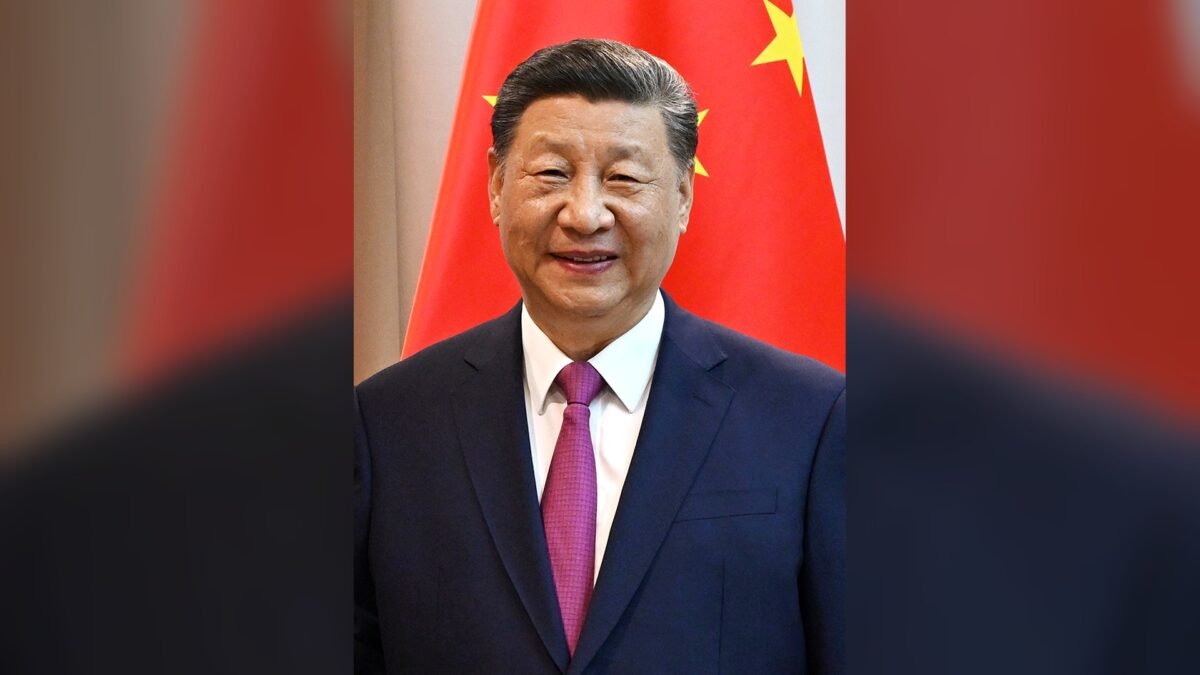
China’s ruling Communist Party opened its fifth plenary session on Monday, 26 October 2026, bringing together the country’s most senior officials for four days of closed-door talks in Beijing centred on tightening discipline inside the party and pressing its cadres to carry out the leadership’s orders. According to Reuters, President Xi Jinping briefed the Central Committee on a draft decision on what the party calls “full and rigorous party self-governance”, a theme that state news agency Xinhua said addressed the challenges facing the party, including strengthening its governing capacity, guarding against complacency and continuing the fight against corruption.
The meeting, known as the fifth plenum, is the fifth full session of the 20th Central Committee, the body elected at the party congress in 2022. According to Reuters, it runs from Monday to Thursday, 29 October, and analysts view it as potentially the last major party gathering before a leadership reshuffle in 2027, when Xi is widely expected to seek a fourth term as the party’s top leader. The session’s timing, a year before the next party congress, is one reason it is being watched so closely in Beijing and abroad: plenums are held at least once a year, and they are the occasions on which the leadership signals its priorities to the party, the state and the wider world.
State media said the session would pave the way for tighter discipline within the party. A readout from the powerful 21-member Politburo in September said the plenum would adopt a decision on advancing strict governance of the party, wording that is being read as a move to ensure obedience and effectiveness among officials far from Beijing, according to a BBC report on the meeting. The location of the session has not been announced, although previous plenums have been held at Beijing’s Jingxi Hotel, the BBC report added.
What makes this plenum unusual is what it is not about. Fifth plenums usually take up the next five-year economic development plan, but that work was already done at last year’s fourth plenum, which adopted recommendations for the 15th Five-Year Plan covering 2026 to 2030, according to the Seoul Economic Daily. With the economic framework already set, the focus this time has shifted to overhauling the party’s management system: how the world’s largest political party, with 101 million members according to Brookings, disciplines itself, supervises its cadres and enforces decisions taken at the top.
Xi delivered a work report on behalf of the Politburo at the opening of the session, according to Xinhua. In a speech on 22 October marking the 90th anniversary of the victory of the Long March, he had already signalled the direction of travel, calling for a sustained push on comprehensive and strict party governance and saying that the party must uphold its leadership and strengthen party building in order to walk what he called the road of the new Long March well, according to the Seoul Economic Daily.
A discipline campaign now in its second decade
The plenum’s agenda grows directly out of the anti-corruption campaign that has defined Xi’s rule since he took power in 2012. According to Reuters, millions of people within China’s vast bureaucracy have been investigated to varying degrees under the campaign, which has purged hundreds of senior officials and top generals, including some of the president’s one-time allies. Xi introduced the internal discipline campaign in 2014, two years after ascending to power, according to Reuters, and it has since become the central instrument through which he has reshaped the party and the military.
In an article published in the party’s flagship Qiushi journal days before the plenum, Xi laid out three priorities, according to Reuters: enforcing the party leadership’s decisions while ensuring uncontested authority, putting the sometimes vast power wielded by its cadres in what he called “an institutional cage”, and sustaining the high-pressure anti-graft campaign, while increasing its “penetrating power”, indefinitely. He also criticised what he called “two-faced” opportunistic officials who pay lip service to the party leadership while privately resisting its decisions and undermining its authority, as well as those who seek only short-term gains while jeopardising the country’s balanced development, according to Reuters.
The party has portrayed the campaign as both necessary and regenerative, saying the military must undergo a phoenix-like rebirth and “bathe in flames and be forged anew”, according to Reuters. Critics, by contrast, argue that the purges, particularly those targeting the highest ranks of the armed forces, are destabilising and undermine combat readiness, according to Reuters. That tension, between discipline as renewal and discipline as disruption, runs through almost every assessment of the plenum.
“The growing focus on discipline is not because behaviour is getting worse, but because the stakes are getting higher,” Ruby Osman, a senior policy adviser on China at London’s Tony Blair Institute, told Reuters. Osman added that many of Xi’s closest associates are likely to retire in the 2027 reshuffle and that disciplinary campaigns are a way to ensure a new generation with fewer personal ties shares his political standards.
A leadership body thinned by purges
One of the starkest measures of the campaign’s reach is the thinning of the leadership itself. The Central Committee has 205 full members and 152 alternates, according to Brookings, but attendance has fallen sharply. At last year’s plenum, only 168 of the 205 full members actually showed up, the lowest attendance in the post-Mao era, according to Brookings. Analysts expect turnout at this plenum to be lower still: according to Reuters, Jean Christopher Mittelstaedt of the University of Zurich said turnout among members “will most likely be the lowest at any post-Mao plenum, below last October’s 168 full and 147 alternate members”.
The New York-based Asia Society Policy Institute estimates that only 77.4 percent of the original 2022 cohort would be in a position to attend this week’s proceedings, meaning nearly a quarter of the leadership body has been removed in the party’s disciplinary drive, according to Reuters. Three of the 24 Politburo members elected in 2022 are gone, the most removed from a sitting Politburo in one term since 1980, according to Mittelstaedt, as reported by Reuters. Since last year’s plenum, two more Politburo members were toppled, leaving 21 members, according to Brookings, making the purge of this Central Committee’s Politburo the most sweeping since the aftermath of the 1989 Tiananmen crackdown.
The conclave is set to ratify the expulsions of two members of the elite Politburo, former Central Military Commission Vice Chairman Zhang Youxia and Ma Xingrui, over charges including corruption and disloyalty, according to Reuters. Under the party’s constitution, only a plenum can formally confirm such expulsions, which is one of the concrete institutional tasks before the meeting.
The military dimension is the most striking of all. The party’s supreme military council, the Central Military Commission, has shrunk from seven members at the start of Xi’s third term to just two, Xi himself and General Zhang Shengmin, who oversaw the purges of his peers, according to Brookings. Five out of the original seven members of the commission are gone, according to Reuters. At the theatre-command level, one grade below the commission, as many as 33 officers have been removed, according to Brookings.
The People’s Liberation Army started this term with 44 Central Committee members in 2022, but following dismissals and expulsions, only 17 are left standing in nominal terms, according to Brookings, and of those, most have not been seen publicly for several months. The only clearly active Central Committee officers from the army who have weathered the purges are Admiral Dong Jun and General Zhang Shengmin, according to Brookings, and even Zhang is rumoured to face trouble, given that his former colleagues’ corruption occurred on his watch. Of the 19 Central Committee members dismissed from their positions since the last plenum, 12 are from the army, according to Brookings, and since the February 2026 study it conducted with the Center for Strategic and International Studies, only a few senior officers have been promoted, with a few additional dismissals.
Despite the thinning leadership body, analysts do not expect major personnel moves or any indication of a potential succession plan at the four-day conclave, according to Reuters. Osman told Reuters that “this plenum is probably less about deciding individual promotions, more about signalling the system-wide changes Xi wants ahead of a competitive 2027 Party Congress”.
What the plenum can and cannot decide
Only a Central Committee plenum can repopulate the Central Military Commission, making this Xi’s likely last opportunity to reconstitute his high command before next year’s party congress, according to Brookings. It would be remarkable, Brookings argues, for Xi to pass on that opportunity and leave the commission in its current rickety state, and doing so could signal a lack of confidence that the remaining senior officers are capable of running the world’s second most powerful military. But even if Xi were to repopulate his high command, Brookings notes, he would still face a problem of trust: if he could not trust his own allies in the army’s high command, how can he trust any newly minted generals?
The plenum is also the only institution capable of appointing new Politburo members, according to Brookings, but Xi did not replace previous Politburo members who were purged and may see little reason to do so now. He was reluctant to replace General He Weidong after expelling him at the last plenum, according to Brookings, and he is even more unlikely to do so now with the party congress only one year away. At last year’s plenum, Xi skipped over all the alternate Central Committee members from the army who should have been promoted to become full members, according to Brookings, and since then only four army officers have been promoted to general, none of whom are currently full or alternate members of the Central Committee.
Meanwhile, as the plenum approaches and the purges continue, ministerial-level officials are jockeying to position themselves for promotion, including to the Politburo, at next year’s party congress, according to Brookings. Candidates for the next Politburo will likely need to be under 65 and usually have two ministerial positions under their belt to be eligible, though these requirements are increasingly flexible under Xi, according to Brookings. Around 55 officials may currently meet those criteria. At least 13 Central Committee members have taken on new roles since last year, according to Brookings.
What the outside world will actually see of the plenum is limited. The sessions are closed, no detailed minutes are published, and the formal outcome is expected to be a communique issued when the session closes on Thursday, 29 October, followed by a fuller document days later. Until then, the contents of the draft decision beyond its title, any personnel decisions taken behind closed doors, and whether expulsions or appointments will be announced remain unknown. That secrecy is itself part of the story: in a system where the real process of selecting the top leadership is kept secret within the party elite, according to the BBC report, the communique’s language, and what it omits, will be read line by line in capitals around the world.
Analysis: Why It Matters
The fifth plenum matters not because it will announce a new economic plan or a dramatic policy turn, but because it reveals how the man who rules China intends to keep ruling it. The agenda is the party itself, and that is a deliberate choice with consequences far beyond Beijing’s meeting rooms. When the leadership of the world’s second-largest economy spends its most important annual gathering talking about its own discipline, it is telling the world that internal control comes first, and that everything else, from economic management to foreign policy, will be run through that control.
1. Discipline as the precondition for everything else
Xi’s three priorities in the Qiushi article, enforcing decisions, caging cadre power and sustaining the anti-graft campaign indefinitely, describe a theory of government in which obedience is not a means to an end but the end itself. A party that cannot make its own officials implement its orders cannot deliver an economic plan, manage a financial risk or conduct a foreign policy, and Xi’s diagnosis, as reported by Reuters, is that the risk is not mainly corruption in the narrow sense but drift: officials who nod in public and resist in private, who chase short-term gains at the expense of balanced development, who treat power as a private asset. The plenum’s decision on “full and rigorous party self-governance” is therefore best read as an operating system update for the entire Chinese state. Its practical effects will show up not in a headline announcement but in the months that follow, in how local governments handle debt, how state firms handle investment, and how the bureaucracy handles orders it dislikes.
2. A fourth term built on a thinner, more dependent elite
The numbers tell a paradox that sits at the heart of this plenum. Xi is more dominant than any Chinese leader since Mao, yet the elite around him has never been thinner. A Politburo reduced from 24 to 21, a military commission reduced from seven to two, a Central Committee from which nearly a quarter of the original cohort can no longer attend: these are not the marks of a leader short of power, but they are the marks of a leader short of trusted lieutenants. Brookings puts the dilemma sharply: Xi can replace the men but not the trust, and in a conspiratorial system trust is the rarest political commodity. The 2027 congress will require him to replace many of his remaining allies, including members of the Politburo Standing Committee who should retire under the party’s informal rules, with younger officials who will seek to ingratiate themselves with him in the hope of one day replacing him. A plenum that tightens discipline now is, in that light, a way of shaping the pool from which that next generation will be drawn, rewarding loyalty and conformity over independent standing, and making sure the new elite owes its position to Xi’s standards rather than to its own networks.
3. The military question the plenum cannot avoid
No part of the plenum’s agenda carries greater weight for the outside world than the state of the high command. A military commission of two cannot run a modern armed force indefinitely, and the longer it stays at that size, the more questions it raises about command, readiness and decision-making in a crisis. The official line, as reported by Reuters, is that the purges are regenerative, a phoenix-like rebirth. The critics’ line is that they are destabilising, stripping experience and breeding caution among officers who have watched their predecessors fall. Both can be true at once: a force can be politically cleaner and operationally more cautious, more loyal and less willing to take initiative. For neighbouring countries and for the United States, the practical question is not whether the Chinese military is weaker or stronger in some abstract sense, but whether its chain of command is clear, its officers are empowered to act, and its political masters receive honest military advice. A plenum that repopulates the commission would signal that Xi believes he has found officers he can trust; one that leaves it hollow would signal the opposite, and either signal will be read in Taipei, Tokyo, New Delhi and Washington as carefully as in Beijing.
4. Appearances as substance
Kerry Brown, director of King’s College London’s Lau China Institute, told Reuters that “the plenum will present Xi as in control, and able to continue his command”, and that it is “likely everything will be centred on him, to dispel any rumours or doubts about his physical fitness and ability to continue in his role”. With substantive policy issues already largely set in previous gatherings, Brown added, “this will be a plenum where appearances will matter as much, if not more, than substance”. That observation deserves to be taken seriously rather than treated as cynicism. In a closed system, appearances are a form of communication: the order of names, the size of the attendance, the wording of the communique and the prominence given to Xi’s thought all tell the party’s 101 million members, and its rivals, who is in charge and on what terms. The 2021 historical resolution that elevated Xi alongside Mao and Deng, and the 2016 plenum that entrenched his discipline campaign, were both, in their different ways, exercises in exactly this kind of signalling. This plenum’s signal is continuity under a single leader, enforced by discipline, ahead of a congress that is almost certain to reappoint him. The absence of a succession plan is itself the message: there is no heir because there is not meant to be one yet.
5. Why the rest of the world should pay attention to an internal meeting
It is tempting to dismiss a closed party meeting as an internal affair, of interest only to specialists. That would be a mistake. China’s internal governance shapes its external behaviour in direct ways: a leadership confident in its control can negotiate, compromise and absorb setbacks; a leadership anxious about loyalty tends to prize unity over flexibility, to interpret criticism as disloyalty and to prefer control to concession. The plenum coincides with a period of intense external pressure, from trade disputes and technology restrictions to regional security tensions, and the discipline drive is partly a response to that pressure: a party that feels encircled tightens its ranks. The lesson for other governments is therefore not to look for a policy announcement in the communique, but to watch for the temperament it reveals. A party that emerges from this week more unified behind Xi, with a clearer chain of command and a fresh mandate for discipline, will be a more predictable negotiating partner in the short term and a harder one to move in the long term. A party that emerges with visible fractures, unexplained absences or a communique that hedges on Xi’s authority would be a different matter altogether, and far more unsettling.
What to Watch Next
- The closing communique on Thursday, 29 October: its language on party self-governance, on Xi’s role and on any expulsions or appointments will be the first authoritative readout of what the plenum actually decided.
- Whether the Central Military Commission is repopulated: new appointments would show Xi believes he has rebuilt a trusted high command; a commission left at two would deepen questions about military leadership.
- Formal confirmation of the expulsions of Zhang Youxia and Ma Xingrui, and any further personnel announcements buried in the communique or in subsequent party notices.
- The fuller plenum document expected days after the communique, which should reveal how far the new discipline rules reach into spending, projects, promotions and the military chain of command.
- Positioning ahead of the 2027 party congress: which ministerial-level officials gain prominence in the months after the plenum, and whether any credible alternative centre of authority emerges within the party.
Sources
- Reuters: China’s Communist Party opens fifth plenum (26 October 2026)
- Reuters: Tougher discipline, and Xi’s authority, key at China’s Communist Party’s fifth plenum (23 October 2026)
- Brookings: Xi’s party — What to look for at the upcoming Chinese Communist Party plenum (23 October 2026)
- Seoul Economic Daily: China’s Communist Party opens plenum focused on party discipline (26 October 2026)

About the Author — Abdul Mannan
Related Articles
Student List Wins Serbia Election as Vučić Concedes, Ending 14 Years of SNS Rule
Serbia's student-led opposition has won a snap parliamentary election after President Aleksandar Vučić conceded defeat, ending 14 years…
Lula Wins Fourth Term as Brazil Re-elects Him in Runoff Comeback Over Flávio Bolsonaro
Brazil's electoral authority has declared Luiz Inácio Lula da Silva re-elected, defeating Senator Flávio Bolsonaro in a runoff…
Trump Says US Warships Could Stop Off Cuba on the Way Back From Iran as Rubio Urges Cubans to Work With the CIA
President Donald Trump has revived the prospect of US military pressure on Cuba, telling a Florida rally that…