
Fed Holds Rates at 3.75% to 4% in 10-2 Vote as Two Officials Push for Another Hike

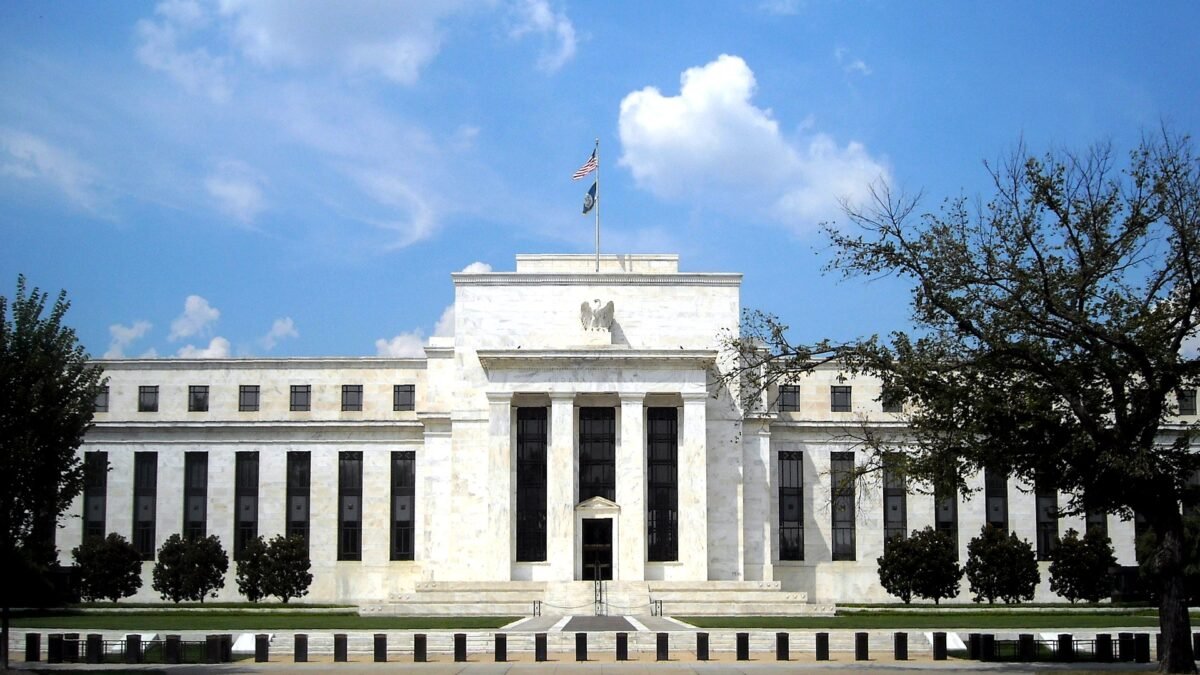
The United States Federal Reserve left its benchmark interest rate unchanged on Wednesday, 28 October 2026, holding the target range for the federal funds rate at 3.75% to 4%, according to the Federal Open Market Committee. The decision, approved by a vote of 10 to 2, pauses the tightening cycle one meeting after the central bank raised rates for the first time in three years, and it leaves the next move openly in question.
Two members of the rate-setting committee voted against the hold. According to the Federal Reserve, Governor Lisa D. Cook and Cleveland Federal Reserve President Beth M. Hammack each preferred to raise the target range by a quarter of a percentage point at this meeting. Their dissents turned what markets had widely expected into a recorded split: a majority willing to wait for more evidence, and two policymakers arguing that waiting itself carried a cost.
The committee’s statement described economic activity as expanding at a strong pace, an upgrade from the description of a solid expansion used after the September meeting, according to Reuters. It said domestic spending had been resilient, productivity growth was strong, capital investment was robust, job gains had kept pace with growth in the workforce, and the unemployment rate had changed little. At the same time, it repeated a sentence that has framed this whole phase of policy: inflation remains elevated.
“The accumulation of more information will help the Committee determine the policy stance appropriate to ensure a timely return of inflation to the Committee’s 2 percent goal,” the statement said, according to the Federal Reserve. “The Committee will deliver price stability.” That pairing — stronger language on growth, unchanged language on inflation, and an explicit appeal to further information — is the clearest summary of where policy now stands. The economy, in the committee’s judgement, is not weakening in a way that demands relief. Prices, in the same judgement, are not cooling fast enough to declare the task finished.
Chair Kevin Warsh used the press conference that followed the decision to explain the majority’s patience and to announce a change in how the committee will organise its own work. According to Reuters, Warsh said the committee would set aside one of its eight scheduled meetings in 2027, and two in 2028, for broad strategy discussions, with no vote on the federal funds rate and no policy statement expected from those sessions. The remaining meetings would continue to set policy. The change, Warsh said, was intended to give the committee time to consider longer-term questions without crowding out its regular assessment of near-term developments.
Warsh also declined to offer the kind of forward guidance that markets have often relied upon in the past. According to Reuters, he does not give such guidance on the outlook and does not submit personal forecasts to the central bank’s quarterly projections. That stance matters for how this decision should be read. A hold under a chair who refuses to pre-commit the next meeting is not a promise about December. It is a statement about October: on the evidence available that day, ten members judged that holding was the right call, and two judged otherwise.
Financial markets took the decision in their stride at first. According to Reuters, United States stock indexes rose after Warsh began speaking, with the Nasdaq Composite and the S&P 500 each up by 0.2%. The Wall Street Journal reported a slightly fuller picture by the close: the Dow Jones Industrial Average rose 0.2%, or roughly 98 points, while the S&P 500 and the Nasdaq Composite each rose 0.3%. Bond markets were less settled. Reuters reported that the two-year Treasury yield, the maturity most sensitive to expectations for the policy rate, fell by one basis point to 4.726%, while the 10-year yield rose by one basis point to 5.007% and the 30-year yield rose by two basis points to 5.325%. The Wall Street Journal, reporting Asian trading on Thursday, put the two-year yield at 4.688% and the 10-year yield at 4.998%, a reminder that the longer end of the market remains near 5% and unconvinced that inflation has been beaten.
Traders nevertheless moved to price a higher chance of another increase before the year ends. According to the Wall Street Journal, money markets priced in an 82% probability of a rate rise in December, citing LSEG data. Other market readings put the figure slightly higher, at around 83% to 85%. The spread between those estimates matters less than their direction: after a hold, the market did not conclude that tightening was over. It concluded that tightening was postponed, pending data.
The context for that judgement is a year in which the cost of living has been pushed higher by energy prices. According to The Times, the Federal Reserve raised rates last month for the first time in three years in response to higher costs driven by the United States–Iran conflict. The Times also reported that initial estimates showed the headline Personal Consumption Expenditures price index, the measure the Federal Reserve uses for its 2% target, rising in September and remaining at 3% or higher on an annualised basis, with little progress in recent months. That is the arithmetic behind the dissents: inflation roughly a full percentage point above target, a strong economy, and a previous increase only a month old. For Cook and Hammack, according to the Federal Reserve’s own record of the vote, the case for acting again immediately was strong enough to dissent.
For the majority, the case for waiting rested on timing and information. Warsh told reporters that the period ahead was information-rich, according to USA Today, and that the committee was keen to take notice of what was happening in the world. He said that in the coming weeks the committee would determine the appropriate approach to delivering the price stability it had promised. The statement itself pointed to uncertainty that remains elevated owing, in part, to geopolitical developments, according to the Federal Reserve. In other words, the same forces lifting energy prices also cloud the outlook, and the majority preferred to watch how those forces developed before adding a second consecutive increase.
The decision was the Federal Reserve’s final rate decision before the midterm elections on 3 November, according to USA Today. That calendar fact does not, on its own, explain the vote: the statement, the dissents and the press conference all point to an economic argument, not a political timetable. But the timing does raise the stakes of the next data releases. Growth and inflation figures published in the days after the meeting will be read not only as economic evidence but as the material on which the December decision will turn.
What the decision means in practice
The federal funds rate is the rate at which banks lend reserves to one another overnight. The Federal Reserve does not set every borrowing cost in the economy directly, but the target range anchors short-term rates and influences the conditions in which mortgages, business loans, credit cards and government borrowing are priced. Holding the range at 3.75% to 4% therefore preserves the level reached after September’s increase. It does not make borrowing cheaper. It does not make it more expensive either. It extends the period in which households and firms must live with the higher level while the central bank gathers more evidence.
The implementation note issued alongside the statement, according to a summary of the Federal Reserve’s documents, left the related administered rates unchanged as well: interest on reserve balances at 3.90% and the primary credit rate at 4.00%. The committee also continued its policy of maintaining ample reserves in the banking system, according to the Federal Reserve, and directed the New York trading desk to continue buying Treasury bills and reinvesting maturing principal in the manner set out in September. Those technical details rarely make headlines, yet they are part of the same decision: the stance of policy is expressed through the whole set of rates and operations, not through the headline range alone.
For savers, a hold at this level prolongs a period in which cash deposits can earn a meaningful return, at least before tax and inflation. For borrowers, it prolongs a period in which new fixed-rate borrowing remains expensive by the standards of the past decade, even though individual mortgage and loan offers move with longer-term bond yields and with each lender’s assessment of risk, not mechanically with the policy rate. The distinction matters, and it is one reason the bond market’s reaction deserves as much attention as the stock market’s. A 10-year Treasury yield near 5% keeps longer-term borrowing costs elevated even on a day when the policy rate does not move.
Analysis: Why It Matters
A pause that is not a pivot
The most common misreading of a central bank hold is to treat it as the end of a cycle. This decision resists that reading on its own terms. The statement upgraded growth, held the line on inflation, and promised to deliver price stability. The vote recorded two members who wanted to go further, not members who wanted to reverse course. Market pricing moved towards another increase, not away from one. Taken together, those facts describe a pause inside a tightening phase, not a turn towards easier policy.
That distinction has practical consequences. A household or a business that assumes rates must now fall, and borrows or spends on that assumption, is betting against the committee’s own language. The safer reading of the evidence is narrower: the committee has bought itself one more round of data. What it does with that data will depend on whether inflation resumes its fall, whether growth stays strong without generating fresh price pressure, and whether energy costs stabilise or climb again. None of those questions was settled on 28 October, and the statement was careful not to pretend otherwise.
There is also a credibility consideration. A central bank that raises rates in September, holds in October, and then raises again in December would be accused by some of inconsistency. The statement’s logic answers that charge in advance: policy is being set meeting by meeting, on accumulating information, towards a fixed goal. Consistency, on that view, lies in the goal — a timely return to 2% inflation — not in a pre-announced path. Warsh’s refusal to give forward guidance reinforces the point. He is asking markets, households and politicians to judge each decision on its evidence, rather than to treat any single meeting as a signal of a settled sequence.
The dissents matter more than the hold
Dissents at the Federal Reserve are not routine decoration. They are formal, recorded disagreements, and they often foreshadow the direction of future debate. In this case, the identity and the history of the two dissenters add weight. According to Reuters, Hammack is a consistently hawkish voice who also dissented in favour of a rise in July. Cook’s dissent was her first on a policy decision, according to reporting of the meeting, and it came while President Donald Trump has been seeking her removal from the central bank over allegations concerning information she provided on home loan applications, allegations she has consistently denied, according to The Times.
It would be a mistake to reduce either dissent to a single motive. The Federal Reserve’s statement records only the policy preference — a quarter-point increase at this meeting — and neither the statement nor the press conference attributed a personal or political reason to the votes. The economic case available to both dissenters was visible in the public record: inflation above target, growth described as strong, and a labour market in which, in the committee’s own words, job gains had kept pace with the workforce. A policymaker who weights the risk of persistent inflation more heavily than the risk of overtightening could reasonably have voted for an immediate rise on those facts alone.
At the same time, the political context cannot be ignored as context, even though it should not be treated as proof of motive. Cook is a governor whom the President has attempted to remove, according to Reuters and The Times, and the Associated Press has reported a White House inquiry process with a hearing scheduled in early November. A dissent in favour of tighter policy, six days before midterm elections, will inevitably be scrutinised. The proper response to that scrutiny is to keep the focus on the published evidence: the vote, the statement, and the data that will either vindicate or undermine the dissenters’ judgement at the next meeting. If December brings another increase, the October dissents will look prescient. If inflation falls back without one, the majority’s patience will look wise. Either way, the dissents have done useful work by making the argument explicit rather than leaving it to private speculation.
Warsh is redesigning how the Fed decides
The most durable news from 28 October may not be the rate decision at all, but the reorganisation of the committee’s calendar. According to Reuters, Warsh said that from 2027 one of the eight annual meetings would focus exclusively on broad monetary policy strategy, with neither a vote on the federal funds rate nor a policy statement anticipated, and that in 2028 two meetings would be dedicated to strategy and six to setting policy. He framed the change as a way to reserve time and space for strategic deliberation, for thinking anew about big questions, and for looking over longer time horizons.
That is a significant institutional shift, and its implications cut in two directions. On one hand, a central bank that only ever reacts to the latest data risks losing sight of the framework within which those reactions make sense. Questions about the balance sheet, about the appropriate size and composition of the Federal Reserve’s holdings, and about how policy should be communicated in a world of persistent geopolitical shocks are precisely the kind of questions that are crowded out by a calendar of eight decision meetings. Giving them dedicated time is a recognition that strategy cannot be an afterthought squeezed between data releases.
On the other hand, fewer decision meetings mean fewer scheduled opportunities to respond to fast-moving changes, even though the central bank retains the ability to act outside scheduled meetings, as it has done before, most recently in early 2020, according to Reuters. Markets will need to learn a new rhythm: in a strategy-meeting month, there will be no decision to anticipate and no statement to parse, and volatility may therefore shift towards data releases and towards the remaining decision meetings. The reform also places greater weight on the quality of communication around the strategy sessions themselves. If those meetings produce conclusions that later shape policy, the committee will need to explain that chain clearly, or it will invite the suspicion that important choices are being made out of public view.
Warsh’s approach to communication is consistent with this redesign. By declining to offer forward guidance and declining to submit personal forecasts, he is moving the Federal Reserve away from a model in which the chair’s hints do much of the market’s work in advance. The advantage is flexibility: the committee is less likely to be trapped by a promise made on incomplete information. The disadvantage is uncertainty: households, firms and investors must live with wider bands of possible outcomes between meetings. The October decision illustrates both sides. Stocks rose modestly on a tone described as slightly dovish, according to the Wall Street Journal, while longer-term bond yields rose, suggesting some investors worried the central bank might be too relaxed about inflation. The same press conference produced both reactions because it deliberately left the next step open.
The balance sheet question is coming into view
Warsh also signalled that the committee would begin to weigh recommendations from a task force studying balance sheet issues early in the new year, according to Reuters. Before taking over as head of the central bank in May, Warsh was a regular critic of how the Federal Reserve had used bond purchases to support its broader mission, according to Reuters. The Federal Reserve bought large amounts of bonds during the 2008 financial crisis and the Covid-19 pandemic, taking its holdings from under $1 trillion before the financial crisis to a peak of about $9 trillion by the summer of 2022, according to Reuters. Holdings are now around $6.8 trillion after passive runoff, and the central bank has found it cannot shrink them much further without risking volatility in money markets, according to Reuters.
This matters because the balance sheet is not a neutral backdrop to interest rate policy. Large holdings can hold down longer-term yields and shape financial conditions even when the policy rate is unchanged. Warsh’s view, as reported by Reuters, is that large-scale holdings distort markets, although others inside and outside the central bank dispute that view. Reducing holdings further would require changes in the tools used to manage short-term rates and possibly regulatory changes allowing banks to hold lower levels of emergency cash, which some argue would make the banking system riskier, according to Reuters.
The original analysis here is about sequencing. A committee that is still deciding whether to raise the policy rate again is simultaneously preparing to reconsider the stock of assets it holds. Those two instruments interact: a higher policy rate tightens conditions at the short end, while balance sheet decisions affect conditions further out the curve, where mortgages and business investment are priced. If the task force recommends a faster runoff or a change in the composition of holdings, the effect could be equivalent to additional tightening without a further vote on the funds rate. Conversely, a decision to hold the balance sheet broadly steady would leave the policy rate as the main active instrument. Either way, the early-2026 discussion Warsh previewed will be watched as closely as any rate decision, because it will reveal how this chair intends to use the full toolkit he has inherited.
Households, firms and the price of patience
For the public, the most important question is not the vote count but the lived experience of prices and borrowing costs. The statement’s language — resilient spending, robust investment, strong productivity growth — describes an economy that is, in aggregate, coping with higher rates. Aggregates, however, conceal distribution. A household renewing a mortgage, a small firm refinancing a loan, and a renter facing higher energy bills do not experience a “strong pace” of growth in the same way. They experience specific prices, specific monthly payments, and specific choices about what to postpone.
Patience has a cost for those households if inflation stays elevated, because the purchasing power of wages erodes while borrowing remains expensive. Patience also has a benefit if the alternative — another immediate increase — would have added to borrowing costs before the effect of September’s rise had time to work through the economy. Monetary policy acts with lags, and a committee that moves at every meeting risks overshooting: tightening into weakness it cannot yet see in the data. The majority’s judgement, on the evidence published, was that one more round of information was worth more than the signalling value of a second consecutive rise. The dissenters’ judgement was that inflation, at or above 3% on the Federal Reserve’s preferred measure, did not afford that luxury.
Neither judgement can be settled by rhetoric. It will be settled by the data due in the days and weeks after the meeting: third-quarter growth, the September inflation reading, and the labour market figures that show whether job gains are keeping pace with the workforce or beginning to falter. Warsh said he expected the third-quarter growth report due on Thursday to show strong investment and consumer spending, according to reporting of the press conference, and forecasters cited in market coverage put the expected pace at around 3%. A report in line with that expectation would support the statement’s upgrade to “strong”. A materially weaker report would reopen the question the majority thought it had answered. A hotter inflation reading would strengthen the dissenters. The committee has, in effect, set itself a test, and the test papers arrive within days.
The global echo: Frankfurt, Ottawa and the price of oil
The Federal Reserve does not decide in isolation. On Thursday, the European Central Bank was expected to keep its deposit rate on hold at 2.5%, according to Reuters, in a decision widely telegraphed in advance. The euro area central bank has raised rates twice since June and was expected to resume tightening in the coming months as policymakers sought to prevent an oil-price shock linked to the Iran conflict from feeding into other prices and wages, according to Reuters. At the same time, the ECB must contend with a surge in government bond yields, especially in France, which has pushed up borrowing costs for households and businesses, according to Reuters. Money markets were pricing roughly three further ECB increases, which would take the deposit rate to 3.25%, according to Reuters.
The parallel with Washington is instructive. Both central banks face inflation lifted by energy, both face bond markets demanding higher yields for longer-term government debt, and both are trying to avoid tightening so hard that growth breaks. The difference is one of emphasis: the Federal Reserve upgraded its view of growth to strong, while the ECB faces a French bond market under strain and questions about President Christine Lagarde’s own future, according to Reuters. Lagarde was expected to face questions about her tenure at the press conference, amid speculation she might leave before elections in France, despite having a year left of her term, according to Reuters. The Federal Reserve, by contrast, has a new chair actively reshaping its process. The two institutions are responding to a shared shock with different institutional politics, and the comparison is a useful reminder that there is no single global monetary policy, only national decisions that spill across borders through trade, capital flows and the price of oil.
The Bank of Canada added a third data point in the same week, raising interest rates by 25 basis points to 2.5%, according to market coverage of the week’s decisions. Canada’s move, on the same day as the Federal Reserve’s hold, underlines that central banks reading similar inflation data can reasonably reach different conclusions about timing. Canada chose to act; the Federal Reserve chose to wait; the ECB was expected to wait while signalling more tightening to come. None of those choices is obviously wrong in advance. All three will be judged by whether inflation returns to target without an avoidable recession, and by whether the bond market’s judgement — longer-term yields near or above 5% in the United States, elevated yields in France — proves to be a warning or an overreaction.
Oil is the thread connecting these decisions. Market coverage on Thursday morning put Brent crude at about $110 a barrel and West Texas Intermediate at about $101, both down on the day but far above the levels that prevailed before the conflict-driven shock, according to market reporting. Euro area inflation reached 3.8% in September, up from 2.1% in February, with energy prices up 18.9% year on year, according to reporting of the euro area data. Those figures explain why central bankers on both sides of the Atlantic are reluctant to declare victory. An energy shock can fade, as oil prices fluctuate, or it can embed itself in wages and in the prices of other goods and services. The Federal Reserve’s statement acknowledged that uncertainty remains elevated owing, in part, to geopolitical developments. The ECB’s expected decision, as reported by Reuters, reflected the same dilemma in a different institutional setting.
What to Watch Next
- Third-quarter growth and September inflation data due on Thursday: Warsh expected a strong growth report, according to reporting of the press conference. The growth and inflation readings together will show whether the “strong pace” description and the “elevated” inflation warning still fit, and they will shape expectations for December more than any single speech.
- The European Central Bank decision and Lagarde press conference: An expected hold at 2.5% would keep attention on the signal for December, on French bond yields, and on questions about Lagarde’s future, according to Reuters. Any surprise in the ECB’s language would spill into euro and global bond markets the same day.
- Speeches and data between now and the December meeting: With no forward guidance from Warsh, according to Reuters, each official speech and each data release carries more weight than it would under a chair who pre-signalled the path. Watch for any shift in how committee members describe the balance between growth and inflation.
- Longer-term bond yields: The 10-year Treasury yield near 5% is the market’s verdict on the longer-term inflation and borrowing outlook. If it climbs further despite the hold, borrowing costs for households and firms will tighten even without a further policy rise. If it falls back, the pressure on the committee to act again will ease.
- The balance sheet task force in early 2026: Warsh said its recommendations would be fed into the committee probably early in the first quarter, according to Reuters. That discussion could reshape financial conditions as surely as a rate vote, and it will reveal how far this chair intends to take his critique of large-scale bond holdings.
Sources
- Federal Reserve — FOMC statement, 28 October 2026 (primary source)
- Reuters — FOMC holds rates steady, markets rise modestly
- Reuters — Fed’s Warsh announces changes in how future FOMC meetings will go
- Reuters — Fed’s policy committee to weigh balance sheet issues early next year, Warsh says
- USA Today — Federal Reserve holds interest rates steady despite inflation concerns

About the Author — Abdul Mannan
Related Articles

Brazil’s Markets Steady After Election Sell-Off as Finance Minister Vows Fiscal Discipline
Brazil's real and Bovespa steadied on Tuesday after Monday's historic sell-off, as Finance Minister Dario Durigan blamed investor…
The Day Wall Street Tried to Buy the Future: Anthropic’s IPO and the $158 Billion Answer
Anthropic's IPO filing landed on 26 October 2026 — and Wall Street answered the same day with $158…

Meta Launches $35 Billion Stock Sale in Drive to Raise Up to $95 Billion for AI Buildout
Meta Platforms launched about $35 billion of stock offerings on Monday and outlined a plan for up to…