
Brazil’s Markets Steady After Election Sell-Off as Finance Minister Vows Fiscal Discipline

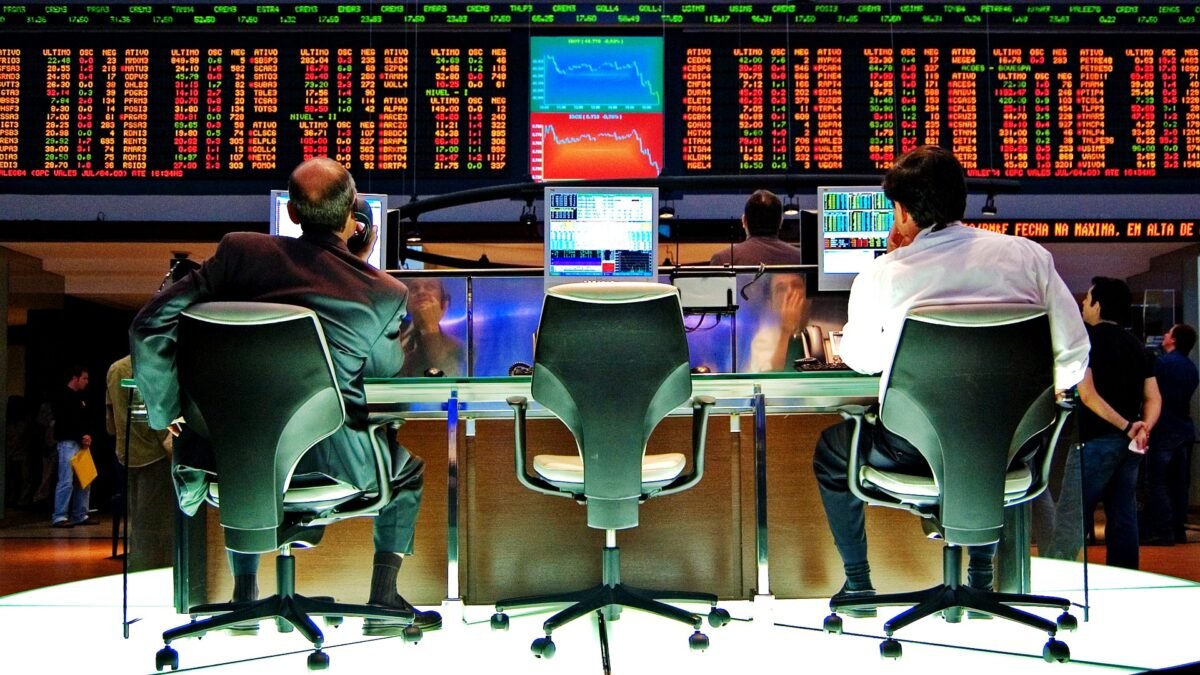
Brazil’s financial markets steadied on Tuesday after one of the sharpest sell-offs in the country’s modern market history, as the government sought to calm investors rattled by President Luiz Inácio Lula da Silva’s re-election and pledged to stay committed to fiscal responsibility.
According to Reuters, the real strengthened by nearly 2% against the United States dollar to around 5.31 per greenback on Tuesday, after tumbling by more than 11% at one point in the previous session. The benchmark Bovespa stock index rose 1%, after closing on Monday down 13.9%, while interest rate futures retreated. The recovery was modest beside the scale of Monday’s fall, but it was enough for Finance Minister Dario Durigan to argue that calmer trading showed markets were becoming more rational.
“Yesterday’s reaction was much more about the positions the market had adopted in recent days,” Durigan told reporters in Brasília, according to Reuters. “It was not a reaction to fundamentals.” He added that he had been in contact with financial market participants and sought to reassure investors that the government remained committed to fiscal responsibility.
The message was aimed squarely at the fear that has driven trading since Sunday’s runoff result: that a fourth Lula administration will spend more, borrow more, and leave Brazil’s already heavy public debt on a path investors no longer trust. Nothing Durigan said on Tuesday settled that argument. What it did was buy time — and in a market that had just endured a trading halt, a cancelled set of government bond auctions and a rush for insurance against sovereign default, time was the scarcest commodity of all.
A Monday of historic falls
Monday’s session began with the shock still fresh. Lula had won Sunday’s runoff with 51.8% of the vote against 48.2% for Senator Flávio Bolsonaro, according to Brazil’s Superior Electoral Court, reversing a first round on 4 October in which Bolsonaro had finished ahead. Markets had spent the three weeks between the two rounds pricing in a change of government. On Monday, they priced it out again, violently.
According to Reuters, the real tumbled by more than 11% against the dollar in early spot trading, one of its biggest intraday declines on record, and was trading at 5.415 per greenback in the snapshot reported during the session, down 8.1% on the day. The Bovespa closed down 13.9%, its largest daily percentage fall since March 2020. Trading on the São Paulo exchange was halted for 30 minutes after the index fell 10% from its previous close, triggering the market’s circuit breaker mechanism, exchange operator B3 said in a statement reported by Reuters. Earlier, B3 had expanded the daily trading limits for Bovespa stock index futures, dollar futures and interest rate futures in response to the heightened volatility.
The damage spread well beyond equities. Longer-dated sovereign bonds were hit hardest, according to Reuters, with the 2054 maturity down 2.2 cents to yield 7.45% as Brazil’s fiscal path came into focus. The cost of insuring against a Brazilian sovereign default jumped: five-year credit default swaps rose to 144 basis points from Friday’s close of 120 basis points, according to S&P Global Market Intelligence data cited by Reuters. As markets tumbled, the Brazilian Treasury cancelled its regular auctions of inflation-linked bonds scheduled for 27 October and fixed-rate bonds scheduled for 29 October.
Even commodity markets felt the exchange-rate shock. Prices of raw sugar, of which Brazil is a major exporter, slid 5.6% on the collapsing currency, according to Reuters. The sell-off also reached United States-listed Brazilian companies, with the iShares MSCI Brazil exchange-traded fund falling by roughly a fifth during Monday’s session, according to market reporting, and shares in banks, brokerages and the state-controlled oil producer Petrobras among the hardest hit.
“Lula’s victory triggered a sharp market selloff as investors reassessed the fiscal outlook under his fourth term,” Mauricio Monge, senior Latin America economist at Oxford Economics, wrote in a report cited by Reuters. His biggest challenge, Monge wrote, “will be to convince markets that he can deliver a credible, sustainable fiscal adjustment while prioritizing real wage growth and employment.”
The bet that unwound
To understand why the reaction was so large, it helps to see what had been built up before the vote. After Bolsonaro unexpectedly finished first in the opening round, investors had bet heavily that his victory would bring tighter government spending, lower fiscal risk and, in time, lower borrowing costs. According to Reuters, the Bovespa closed on Friday almost 7% above its level before the first-round vote, while the real had strengthened by nearly 5% against the dollar over the same period. Interest rate futures had also reflected expectations that tighter fiscal policy under a Bolsonaro government would make room for lower borrowing costs.
Monday unwound that trade in a single session. Durigan’s argument — that the rout reflected positioning rather than a sudden deterioration in Brazil’s economic fundamentals — has a factual basis in that pre-vote rally. Investors were, in the language of the market, long Brazil: they owned the currency, the shares and the bonds on the assumption of a particular political outcome, and when the outcome went the other way they rushed for the same exit at the same time. A circuit breaker halt, a 30-minute pause in trading, is the market’s mechanical answer to that kind of stampede. It does not change anyone’s mind; it simply forces a pause.
But positioning alone does not explain the whole move, and the government’s own critics in the market said so on Monday. The rally before the vote was itself a judgement about fiscal policy: that a Bolsonaro government would be more likely to restrain spending and push through structural reforms. Its reversal was therefore also a judgement, in the opposite direction, about the government voters actually chose. The question now is whether that judgement is a hasty first draft or a settled verdict. Tuesday’s steadier trading suggests the first; the downgrades that followed on Monday suggest many large investors are not yet willing to assume so.
Tuesday’s steadier tone — and the downgrades behind it
Tuesday brought the first signs of two-way trading. The real’s recovery to around 5.31 and the Bovespa’s 1% rise, with interest rate futures retreating, pointed to sellers finding fewer forced buyers and buyers beginning to test whether Monday had overshot. Analysts at JPMorgan said markets had yet to develop a clear narrative for Lula’s fourth administration beyond the sharp correction in asset prices, but argued that investors would likely reassess the outlook in the coming weeks as the new government’s economic team and policy plans took shape.
“And we dare to say that as much as the market is adverse now, it will construct a story that leads equity markets forward,” the JPMorgan analysts wrote in a note to clients, according to Reuters.
Alfredo Menezes, a partner at asset manager Armor Capital, took a similar view from the buying side. When stop-loss selling hits the market, he wrote on X, according to Reuters, dozens of opportunities emerge, adding that shares in some companies he considers high-quality assets had fallen by as much as 36%. “Emotion does not talk to reason,” he wrote.
Against that bargain-hunting mood stood the formal reassessments from two major research houses. Citigroup and BCA Research both downgraded Brazilian assets after Lula’s victory, according to Reuters, arguing that the risk-reward profile for equities, bonds and the currency had worsened as investors reassessed the prospects for fiscal discipline and structural reform.
Citi said on Monday that it had exited its bullish Brazilian positions, closing its “overweight” call on equities and its long position in the real. “While prices may well fall beyond fair levels, the market was long going into this, which makes an overshoot plausible. Given the outcome of the election, we close our Brazil risk,” Citi said, according to Reuters. BCA Research downgraded Brazil relative to emerging markets, saying Lula’s victory “ends the prospect of an orthodox government that delivers structural improvements to Brazil’s fiscal accounts and potential growth”. BCA cut Brazilian equities to “underweight” from “neutral”, citing rising default risks, weaker growth prospects and inflation pressures from a softer currency, and downgraded local-currency bonds and sovereign credit to “underweight” from “overweight”, warning of deteriorating debt dynamics.
The two messages can both be true. A market can be oversold in the short term and still face a harder medium-term question. Tuesday’s rebound recovered only a fraction of Monday’s losses: a 1% rise in the Bovespa after a 13.9% fall leaves the index still more than an eighth below Friday’s close, and a real at 5.31 remains far weaker than the level at which it ended last week. The downgrades matter because they describe what institutional investors will need before they rebuild the positions they closed: not a calmer day, but a credible plan.
The fiscal question at the centre
Every strand of this story leads back to the same arithmetic. Brazil’s public debt already exceeds 82% of gross domestic product, according to Reuters, while pensions and other legally required spending limit how much room any government has to save. Lula’s team has said it aims to produce a primary budget surplus — the balance between government revenue and spending before interest payments — of about 1.3% of GDP by 2030. That would leave money to cover part of the interest bill and reduce the need for fresh borrowing. Reaching it, however, requires a clear fiscal path through a Congress in which the opposition is strong, and through spending commitments that are difficult to unwind without political and social cost.
“Lula’s policies have talked about spending cuts,” Divya Singaravelu, head of research at Meridian 1305 Capital, said, according to Reuters, “but he has not gone into the details of how that is going to look.” She said she wanted to see what the 2027 budget and spending cap looked like, and that the choice of the next finance minister would be an early signal.
That view was echoed across the market. Graham Stock, at RBC BlueBay Asset Management, said the key signal for markets would be the next administration’s commitment to fiscal discipline, starting with the appointment of a new finance minister in the coming weeks, according to Reuters. Alejo Czerwonko, chief investment officer for emerging markets at UBS Global Wealth Management, said investors wanted “a clear and credible commitment to fiscal discipline”, expected the rally that followed the first round to be largely priced out, and expected sentiment to stay weak until a clear fiscal plan emerged. He added that investors wanted an end to campaign-related spending and a believable path to stabilise public debt, and that this would also require “a working relationship with an opposition-leaning Congress, because no fiscal plan passes without it”.
Thierry Larose, a portfolio manager at Vontobel Asset Management, put the scepticism bluntly, according to Reuters: the Lula administration would have no choice but to undertake some fiscal consolidation, but most investors doubted it would be enough to put debt sustainability back on track. Without confidence that Lula can deliver, lenders could demand higher interest rates, adding to Brazil’s debt burden and making credit more expensive for businesses and households.
The credit-rating dimension sharpens the point. William Foster, senior vice president for sovereign ratings at Moody’s and its lead Brazil analyst, warned that rising fiscal pressures without a clear, credible plan to bring deficits down over the longer term would raise the risk of a change in the rating outlook to negative, according to Reuters. Moody’s rates Brazil’s external sovereign debt Ba1, one level below investment grade, with a stable outlook. A move in that outlook would not itself be a downgrade, but in a market already charging more to insure against default, it would be read as confirmation that the fiscal argument is moving in the wrong direction.
There is also a political uncertainty layered on top of the fiscal one. Senator Bolsonaro’s refusal to concede and his pledge to seek an annulment of the result added to investor uncertainty on Monday, according to Reuters. Chris Turner, a strategist at ING in London, said it would be important for local financial markets how quickly Bolsonaro accepted the result, “or at least allows the constitution to run its course”. The market’s concern is not about taking sides in a legal dispute it cannot judge; it is about whether the transition to a new administration proceeds in an orderly way that lets economic decisions be made and implemented. A contested result, however it is ultimately resolved, lengthens the period in which investors must guess.
The wider economic backdrop
Brazil’s turmoil did not happen in a vacuum. The country’s central bank has been cutting interest rates from a high level, bringing the benchmark Selic rate to 13.75% after five consecutive quarter-point cuts, according to Reuters. Policymakers meet again on 3 and 4 November, having kept their options open while pointing to firmer signs of an economic slowdown. Inflation, measured by the IPCA-15 index, rose 0.32% in the month to mid-October and 4.62% over 12 months, below economists’ forecasts but still above the central bank’s 3% target, within its tolerance band of 1.5 percentage points either side. The central bank has argued that slower activity is needed for inflation to converge to target, and forecasts GDP growth of 1.8% this year, slowing to 1.4% in 2027. Economic activity rose 0.3% in August, according to the bank’s IBC-Br index, driven by industry.
That backdrop cuts both ways for the new government. Easing core inflation strengthens the case for further rate cuts, which would help households and businesses carrying expensive debt. But a weaker real pushes in the opposite direction, raising the cost of imports and feeding inflation expectations, and fiscal doubts can push the interest rates that matter most — the long-term rates at which the government and companies actually borrow — higher even while the central bank cuts its policy rate. Monday’s retreat in interest rate futures on Tuesday was a small step back towards the pre-vote expectation that tighter fiscal policy would make room for lower borrowing costs. Whether it lasts depends on the fiscal plan, not on the central bank alone.
The same week has underlined how unforgiving the global rates backdrop remains. In London on Tuesday, HSBC reported a 32% jump in third-quarter pre-tax profit to $9.6 billion, in line with estimates, and launched a share buyback of up to $1 billion, according to Reuters. Yet revenue of $18.6 billion undershot analyst forecasts of about $19 billion, held back by slower growth in the wealth business, and the bank’s shares fell 6% in Hong Kong trading and 7% in London, the steepest one-day London decline since April 2025, according to Reuters and City AM. Revenue in the wealth division was flat at $2.7 billion, compared with growth of 15% and 23% in the first two quarters of the year. The FTSE 100 fell 0.76% to 10,685.18, with the banking index down 3.7% to a four-month low, according to Reuters, ahead of the British government’s budget on Wednesday.
HSBC’s experience is a useful counterpoint to Brazil’s. A profitable bank with a buyback and a dividend can still be punished when investors had expected more, just as a government can be punished when investors had positioned for a different one. In both cases, the market’s verdict is less about the latest number in isolation than about the story investors had already told themselves — and how much of it must now be rewritten.
Elsewhere in Asia on Tuesday, stocks surged as the enthusiasm around artificial intelligence lifted risk appetite ahead of major technology earnings and central bank decisions, according to Reuters. South Korea’s KOSPI gained more than 4% in early trading, Japan’s Nikkei rose 1.9%, and the broad Asia-Pacific index outside Japan rose 1.2%, helped by Anthropic’s public filing for an initial public offering in the United States and by Meta’s large planned equity fundraising. The Federal Reserve, the European Central Bank and the Bank of Japan were all expected to hold interest rates steady at their meetings this week, according to Reuters, leaving the focus on what policymakers say about the outlook. Oil, meanwhile, hovered near its highest level in six weeks, according to Reuters, as hopes for talks over the Iran conflict competed with renewed attacks on Saudi targets.
Analysis: What Tuesday really settled — and what it did not
1. A positioning crash is real, but it is not the whole story
Finance Minister Durigan is right that Monday was, in large part, a position being unwound. The evidence is in the shape of the move: a rally built on a single political expectation, a circuit breaker triggered by a 10% fall, a currency dropping by double digits in a session, and a recovery beginning the moment forced selling eased. Those are the fingerprints of traders exiting the same trade together, not of an economy collapsing overnight. Brazil’s factories, farms and shops did not become 14% less valuable between Friday’s close and Monday’s because of anything that happened in them.
But the positioning explanation has a limit, and the market knows it. Positions are built on beliefs, and the belief that unwound on Monday was a belief about fiscal policy. Investors had paid up for Brazilian assets because they expected a government more inclined to restrain spending and reform. When voters chose a different government, the price of that belief fell to zero. Calling the fall a matter of positioning does not answer the question the position was expressing: what will this government actually do about a debt ratio above 82% of GDP, a primary surplus target four years away, and spending that is largely locked in by law? Until that question has an answer with numbers and a timetable, every calm day will be provisional.
2. The market is buying time, not giving trust
Tuesday’s figures deserve to be read in proportion. A 1% rise in the Bovespa and a near-2% recovery in the real are welcome, but they follow falls of 13.9% and more than 11% respectively. In arithmetic terms, a market that falls 14% needs to rise by more than 16% merely to get back to where it started. Nobody in São Paulo on Tuesday was claiming that had happened. The more honest reading is that the panic phase ended and the judgement phase began.
The downgrades from Citi and BCA are the judgement phase in its first, formal expression. Downgrades are not predictions that Brazil will default; they are statements that, at current prices and with current information, the reward for holding Brazilian assets no longer compensates for the risk as those houses see it. They matter less for their own sake than for what they signal about the conversation inside large investment firms: the question has shifted from “how much will we make if the new government is orthodox?” to “what would we need to see before we believe it?” The answer, repeated by almost every analyst quoted by Reuters, is the same list: a finance minister, a budget, a spending cap, and a Congress willing to pass them.
3. The finance minister appointment is the real policy announcement
In most governments, the appointment of a finance minister is an administrative act. In Brazil in the coming weeks, it will be read as a policy document. Markets have no manifesto for Lula’s fourth term that they trust yet, no detailed fiscal programme with costings, and no named economic team to defend it. The first name Lula puts forward will therefore carry a weight far beyond the person: it will be taken as the clearest available signal of whether the administration intends to negotiate with the market’s scepticism or to govern past it.
That is an uncomfortable position for any government, and it is worth saying plainly why it is also a legitimate one for investors to adopt. A finance minister is not merely a spokesperson; the holder of that office controls the budget process, the relationship with Congress on spending, and the daily credibility of the government’s numbers. In a country where debt service already consumes a large share of revenue, the difference between a minister who can say no to spending demands and one who cannot is measured directly in borrowing costs for every Brazilian household and business. Lula’s choice will be judged on that practical test, not on biography alone, and the judgement will be swift: the bond market does not grant long honeymoons.
4. Congress is the fiscal anchor now
One of the most important sentences in Reuters’ reporting this week came not from a minister or a banker but from an analyst: no fiscal plan passes without a working relationship with an opposition-leaning Congress. Brazil’s fiscal arithmetic makes that a structural fact rather than a political preference. With public debt above 82% of GDP and most spending mandated by law — above all pensions — there is no version of consolidation that can be delivered by executive will alone. It must be legislated, and legislation must be negotiated.
This is where the election result’s political meaning and its market meaning diverge. Lula won a democratic mandate to govern, and his programme of protecting social spending and real wage growth is the programme voters endorsed. The market’s demand is not that he abandon it, but that he show how it is paid for without letting debt rise indefinitely. Those two demands can be reconciled — a primary surplus of 1.3% of GDP by 2030 is, on its face, a reconciliation — but reconciliation requires detail: which revenues, which savings, which timetable, and which votes. Until the detail exists, the market will price the gap between ambition and arithmetic, and the price will be visible in the real, in bond yields and in the cost of credit for ordinary Brazilians.
5. Brazil is a test case for pricing political risk everywhere
There is a wider lesson in the circuit breaker. Modern markets are exceptionally good at pricing a known risk and exceptionally bad at pricing a binary political outcome that has been treated as settled. For three weeks, Brazilian assets traded as though the first round had decided the election. The second round proved it had not. The same pattern — a confident consensus, a crowded trade, a violent reversal — has appeared in markets around the world in recent years, and it will appear again wherever investors confuse a poll lead with a result.
Brazil’s institutions, it should be noted, did what they were designed to do on Monday. The exchange halted trading when the fall reached its threshold, expanded futures limits to keep markets functioning, and reopened. The Treasury chose not to force bond sales into a disorderly market. The central bank’s framework — an inflation target, a published meeting calendar, a record of rate decisions — remained intact. None of that prevented the fall, but all of it prevented a worse one. The contrast with the political uncertainty around concession matters here: markets can live with a government they disagree with, and they can live with a fiscal plan they find too loose, provided both are delivered through predictable institutions. What they cannot price is a vacuum. The sooner Brazil’s transition fills the vacuum with names, numbers and a legislative path, the sooner Monday becomes a historical footnote rather than the first chapter of a longer crisis of confidence.
What to Watch Next
- The finance minister and the economic team. The appointment in the coming weeks, and the first statements on the 2027 budget and spending cap, will be the clearest signal of the new administration’s fiscal direction — and the first test of whether Tuesday’s calm can hold.
- The political transition. How quickly Senator Bolsonaro’s challenge to the result is resolved, and whether the constitutional process runs its course without prolonged uncertainty, will shape how long investors must price political risk alongside fiscal risk.
- The central bank’s November meeting. The 3–4 November decision on the Selic rate, and any guidance on inflation after the real’s fall, will show whether monetary policy can keep easing while the currency is under pressure.
- Bond auctions, yields and the currency. Whether the Treasury reschedules the cancelled auctions, how the 2054 bond and credit default swaps trade, and whether the real holds around 5.31 or slips again will give a daily read on confidence.
- Ratings and research follow-through. Any move in Moody’s outlook, further calls from major banks and asset managers, and results from Petrobras, the large banks and retailers will show whether the reassessment is broadening beyond the first round of downgrades.
Sources
- Reuters: Brazil’s markets recover some ground after selloff; minister vows fiscal discipline (27 October 2026)
- Reuters, via LA Post: Brazil stocks, real tumble as Lula win shifts investor focus (26 October 2026)
- Reuters: Citi, BCA downgrade Brazilian assets after Lula comeback (27 October 2026)
- Business Live / City AM: HSBC $1bn share buyback unveiled as Q3 revenue misses forecasts and shares fall 7% (27 October 2026)

About the Author — Abdul Mannan
Related Articles
The Day Wall Street Tried to Buy the Future: Anthropic’s IPO and the $158 Billion Answer
Anthropic's IPO filing landed on 26 October 2026 — and Wall Street answered the same day with $158…

Meta Launches $35 Billion Stock Sale in Drive to Raise Up to $95 Billion for AI Buildout
Meta Platforms launched about $35 billion of stock offerings on Monday and outlined a plan for up to…

Oil Eases From Six-Month High as Markets Brace for a Pivotal Week of Central Bank Decisions
Brent crude slipped from a six-month high on Monday after a surge driven by Middle East supply fears,…