
Netanyahu’s Bloc Falls Eight Seats Short of a Majority as Final Israel Results Hand Arab Parties Record Kingmaker Role

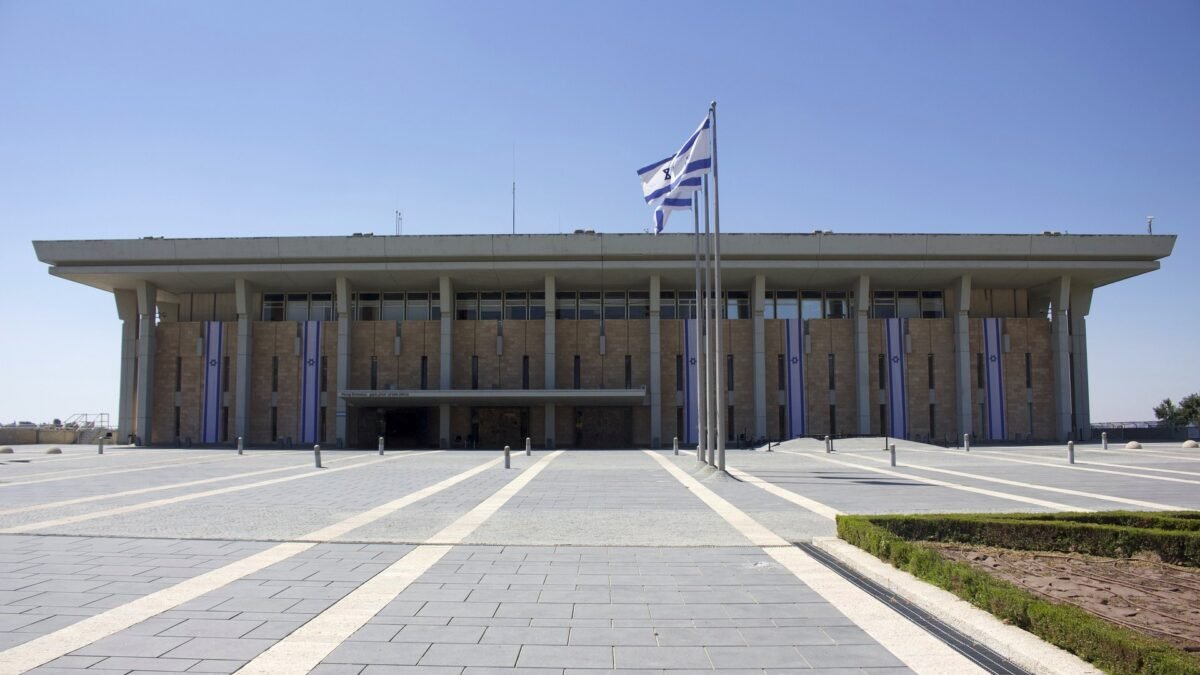
Prime Minister Benjamin Netanyahu’s bloc has finished first in Israel’s general election but fallen eight seats short of a parliamentary majority, according to final results published on Friday, leaving the country facing weeks of difficult coalition negotiations and the Arab parties holding a record 19 seats in the position of potential kingmakers.
Israel’s Central Elections Committee published the completed count early on Friday, confirming that Mr Netanyahu’s coalition of right-wing and far-right parties had won 53 seats in the 120-member Knesset, while the opposition bloc led by the centrist Gadi Eisenkot had won 48. The two predominantly Arab lists, the Joint List and Ra’am, won 11 and eight seats respectively, giving them a combined 19 — a record result that leaves neither of the two larger blocs able to reach the 61 seats needed to govern on its own.
Mr Netanyahu’s Likud emerged as the largest single party, with 27 seats, followed by Mr Eisenkot’s Yashar party with 21 and Together, the party of former prime minister Naftali Bennett, with 12, according to the Associated Press. The Democrats and Ra’am won eight seats each, while Yisrael Beytenu, United Torah Judaism and Otzma Yehudit won seven each, and Shas and Religious Zionism six each.
Turnout reached 77.9 per cent, the highest figure in decades, with 5,716,665 ballots cast, the committee said. Of those, 5,690,778 were valid and 25,887 were invalid. The electoral threshold of 3.25 per cent, equivalent to 184,947 votes, was crossed by 11 parties; all other parties failed to reach it.
The result, from a vote held on Tuesday, settles the question of how Israelis voted but not who will govern them. It is the country’s first national election since the Hamas attacks of 7 October 2023, and it was fought against the backdrop of a war with Iran that began in February 2026 and continues to dominate Israel’s security debate.
Mr Netanyahu, who has led Israel through that war, hailed Likud’s performance after the vote, telling supporters that the first thing that had become unequivocally clear was that Likud was the largest party in Israel. He called for the establishment of what he described as a “strong national right-wing government”.
Mr Eisenkot, a former chief of staff of the Israel Defense Forces who has emerged as Mr Netanyahu’s leading challenger, also vowed to do all he could to forge a ruling coalition, telling supporters: “I will do everything in my power to form a Zionist government.”
But the arithmetic published on Friday gives neither man a straightforward route to power. Mr Netanyahu needs eight more seats; Mr Eisenkot needs 13. Both would have to strike deals with parties they spent the campaign attacking, or rely on forms of support — outside backing, abstention, or a unity government — that Israeli politics has long treated as exceptional.
The results will be formally submitted to President Isaac Herzog on Wednesday, 4 November, the committee said, after remaining verification procedures are completed. Mr Herzog will then hold consultations with representatives of the elected parties before deciding which lawmaker to task with attempting to form the next government. The 26th Knesset is scheduled to be sworn in on 10 November.
That timetable leaves more than a week of public positioning before the formal process even begins, and the negotiations that follow could last for weeks. If the first candidate given the mandate fails, the president can assign the task to another candidate, potentially giving Mr Netanyahu a second chance to assemble a coalition. If successive efforts fail, Israel could face another election.
The final count was announced against a charged atmosphere. On Thursday, Mr Netanyahu alleged, without providing evidence, that the Arab parties’ record gains had been driven in part by voter fraud, a charge rejected by Arab leaders, who accused the prime minister of incitement, according to Reuters. Mr Netanyahu’s party had amplified unsubstantiated allegations that the Arab-led parties had “stolen” the election, potentially with foreign assistance, after exit polls indicated the prime minister had suffered a setback in Tuesday’s vote.
Israeli election officials said on Thursday that there was a probe into fraud allegations, though the election’s integrity was not “systematically compromised”, Reuters reported. The Shin Bet, Israel’s domestic security agency, said its inquiry was “focused and limited” and did not cast suspicion on any entire community that had exercised its legal right to vote, according to the New York Post.
Dean Livne, the acting director general of the Central Elections Committee, said the investigation “will not affect the final results submitted to the president”, stressing that it did not concern any particular sector of the population. The committee said the results remained subject to minor corrections during its routine verification process, including checks of polling stations, possible data-entry errors and complaints.
Mr Eisenkot said he had been briefed by the Shin Bet and the election committee, adding that it was “too early to understand what happened, and whether anything happened at all”, according to the Associated Press.
The Arab parties’ advance is the most striking feature of the result. The two lists nearly doubled their parliamentary representation, from 10 seats to 19, following a surge in turnout among Arab voters, who make up about 21 per cent of Israel’s population, Reuters reported. It is the strongest showing Arab-led parties have ever recorded in a Knesset election, and it places them at the centre of every plausible route to a majority.
Whether that leverage can be converted into influence over a government is a different question. Channel 12 reported on Thursday that Ra’am leader Mansour Abbas had expressed deep scepticism about the possibility of establishing an Eisenkot-led minority government supported by Arab lawmakers. But Mohammed Majadla, head of the news division at Radio Nas and a Channel 12 political commentator, offered a different assessment, telling Fox News Digital that both Ra’am and the Joint List were prepared to use their parliamentary influence to prevent Mr Netanyahu from returning to power.
“The two Arab lists agree on two things,” Mr Majadla said. “First, they are prepared to do everything within the political process to ensure Netanyahu does not return to power.” That could include joining a coalition, providing outside parliamentary support or abstaining from key votes, he said. Their second shared priority, he added, was avoiding another election, which Arab political leaders fear could reverse their gains. “The ball is now in Eisenkot’s court, not in the Arab parties’ court,” he said.
A second, potentially decisive, set of negotiations involves the ultra-Orthodox parties. In a development reported on Friday, the Israeli journalist Yishai Cohen of Kikar HaShabbat reported that Rabbi Dov Lando, a leading ultra-Orthodox religious authority, had instructed lawmakers from Degel HaTorah, part of United Torah Judaism, to open discussions with the opposition, according to Fox News. The reported objective was to reach an arrangement protecting the status of yeshiva students amid the longstanding dispute over mandatory military service.
Channel 12 reported separately that figures within the ultra-Orthodox party were considering allowing an Eisenkot-led minority government to survive through outside parliamentary support, potentially breaking with Mr Netanyahu. “Our votes are not in Netanyahu’s pocket,” party figures told Channel 12. However, the office of United Torah Judaism chairman Yaakov Asher denied that any instruction to begin negotiations had been issued.
Such an arrangement would represent a significant shift from the party’s longstanding alliance with Mr Netanyahu. Mr Eisenkot’s pledge to expand military conscription among ultra-Orthodox men remains a major obstacle, although Channel 12 reported that party figures were willing to consider a compromise on the issue.
A source familiar with opposition discussions told Fox News Digital that Mr Eisenkot’s camp had been preparing for the possibility of cooperation with ultra-Orthodox parties well before the election, suggesting that some of the options now being discussed had already been under consideration behind the scenes. Such an arrangement could require compromises over military service and potentially outside parliamentary support from Arab lawmakers, bringing together political factions whose positions appeared irreconcilable during the campaign.
The difficulties extend beyond the Arab parties and the ultra-Orthodox. Mr Eisenkot’s potential partners include politicians who strongly oppose cooperation with ultra-Orthodox factions, while several opposition leaders campaigned against relying on Arab lawmakers to govern.
A national unity government involving Likud and Yashar would offer a more straightforward mathematical route to a majority, but it would require Mr Eisenkot to reconsider his campaign pledge not to join a Netanyahu-led government. The Israeli political commentator Amit Segal argued that the available options had narrowed considerably, identifying a Netanyahu-Eisenkot unity government or another election as the two principal remaining possibilities.
Former prime minister Yair Lapid, one of the opposition’s senior figures, acknowledged on Friday that forming a government would be considerably more difficult than campaigning against Mr Netanyahu. “Now comes the truly hard part: trying to form a government,” he wrote on X, urging supporters to remain patient. “It takes place in small rooms, slowly, away from the cameras,” he wrote.
The negotiations will also unfold against the backdrop of the Trump administration’s Middle East agenda, and of a war with Iran that continues to shape Israel’s security posture. A source familiar with opposition discussions said understanding Washington’s regional priorities could become an important consideration in shaping a future government, although no specific American role in coalition negotiations has been confirmed.
Mr Netanyahu’s position is not without strengths. He leads the largest party, he has the first claim on the narrative of victory, and the length of the coalition formation process itself could provide additional opportunities: if Mr Eisenkot receives the mandate and fails, the task could pass to another candidate. But the final results also confirm what the partial counts earlier in the week had suggested: the coalition that governed Israel into this election no longer commands a majority, and the prime minister’s path back to power now runs through parties he has spent years keeping at arm’s length — or through rivals he has spent years trying to defeat.
Analysis: Why It Matters
A verdict on Netanyahu, not a mandate for anyone
The most important thing the final results establish is a negative: Israelis did not return a majority for the government that led them into this election. Mr Netanyahu’s bloc won the most seats, and Likud is comfortably the largest party, but 53 is not 61, and the eight-seat gap is not a rounding error. It is the distance between governing and asking permission. At the same time, voters did not crown a successor. Mr Eisenkot’s 48 seats leave him 13 short, a wider gap than Mr Netanyahu’s, and his bloc is a looser collection of parties with less in common than the right-wing bloc it hopes to replace. The election therefore reads less as a change of government than as a vote of no confidence in the old arithmetic. Both leaders can claim to have won something — Mr Netanyahu the largest party, Mr Eisenkot the moral argument that the incumbent lost his majority — and neither claim gets either of them to 61. That is the definition of a stalemate, and stalemates in Israeli politics have a habit of lasting longer than anyone predicts, because every day without a government is a day in which the caretaker arrangements suit somebody.
The Arab parties’ 19 seats change the maths — and the taboo
The record 19 seats won by the Arab lists are the single most consequential fact in this result, and not only because of the arithmetic. For decades, the idea of a government depending on Arab parties has been treated in much of Israeli politics as a line that should not be crossed, even as Arab citizens make up roughly a fifth of the population. The 2021 coalition that toppled Mr Netanyahu relied on Ra’am, and that precedent matters: it proved such an arrangement could function, however briefly. What has changed now is scale. Nineteen seats is not a marginal addition that can be quietly accommodated; it is a bloc without which no government can be formed except by a Likud-Yashar unity deal. That forces a choice that Israeli politics has avoided for a generation: either the taboo bends, or the country votes again. The turnout surge behind the result also matters. It suggests that Arab voters, long among the least likely to vote, responded to the sense that this election could change something. If the eventual government is formed without them, that engagement may not survive the disappointment. If it is formed with them, it will be the most significant shift in Israeli coalition politics since 2021 — and a far bigger one.
The fraud claims are the most dangerous subplot
Mr Netanyahu’s unsubstantiated allegations of fraud deserve to be treated as a separate story from the coalition arithmetic, because their target is different: not a rival party, but confidence in the count itself. The pattern is familiar from other democracies in recent years — a losing incumbent, or an incumbent who has lost his majority, raises doubts about the process before the results are final, and the doubts linger even after the institutions answer them. Here the institutions have answered clearly: the election committee says the probe will not affect the results submitted to the president, the Shin Bet describes its inquiry as focused and limited, and officials say the election’s integrity was not systematically compromised. But the political damage of such claims does not depend on their truth. They give every party an excuse to question the legitimacy of whatever government eventually emerges, and they put the Arab parties in the position of having their democratic achievement treated as suspect. The fact that Mr Eisenkot himself was briefed by the Shin Bet, and chose language as careful as “too early to understand what happened, and whether anything happened at all”, shows how seriously the political class is taking the risk. The count survived; whether trust in it survives the coming weeks is a separate question.
The ultra-Orthodox hinge
If the Arab parties are the most visible kingmakers, the ultra-Orthodox parties may prove the most decisive, because their price is concrete and negotiable: the status of yeshiva students and the conscription dispute. United Torah Judaism’s seven seats are not enough to put either bloc over the line on their own, but they are enough to make or break a minority government that survives on outside support. The reports that Rabbi Dov Lando has authorised talks with the opposition — denied by the party chairman’s office, but reported by more than one outlet — suggest that the party’s leadership understands its leverage and is prepared to use it with both sides. That is a rational calculation: a party whose voters care above all about religious study arrangements has more to gain from auctioning its support than from loyalty to a bloc that can no longer deliver a majority. The obstacle is real, however. Mr Eisenkot campaigned on expanding conscription among ultra-Orthodox men, and any compromise will be attacked by his own partners as a betrayal. The conscription question has brought down governments before. It may yet decide who forms the next one.
A long stalemate has regional costs
None of this is happening in a vacuum. Israel is at war with Iran, a conflict that began in February and has already reshaped the region’s diplomacy, its oil markets and its shipping lanes. A caretaker government can manage a war day to day, but it cannot easily make the strategic decisions — about the conduct of the war, about relations with Washington, about the post-war order — that a government with a fresh mandate could. The longer the stalemate lasts, the more those decisions are deferred, and the more they are taken by officials without a parliamentary majority behind them. There is also a risk in the opposite direction: that the urgency of the war is used as an argument for a unity government that papers over the election’s verdict rather than respecting it. A Likud-Yashar government would be stable and broadly representative, but it would also be a government formed by two men who spent the campaign promising not to sit together. Voters would be entitled to ask what the election was for. The alternative — another election — would be the fifth in a cycle that has already exhausted the electorate. That is why the next few weeks matter beyond Israel’s borders: the region, and Washington, need to know who speaks for Israel, and at the moment nobody does.
What to Watch Next
- The formal submission on 4 November: the Central Elections Committee will present the final results to President Isaac Herzog, who will then consult party chairs. Watch who Mr Herzog gives the first mandate to, and how long he takes to decide — the choice will signal which route to a government he considers most plausible.
- Whether United Torah Judaism opens formal talks with the opposition: the reports of Rabbi Dov Lando’s instruction, and the chairman’s office denial, need to be resolved by events. A confirmed meeting between Degel HaTorah lawmakers and Mr Eisenkot’s camp would be the clearest sign yet that Mr Netanyahu’s oldest allies are hedging.
- The Arab parties’ positioning: watch whether Ra’am and the Joint List move from general statements of intent to specific offers — joining a coalition, providing outside support, or abstaining on confidence votes — and whether Mr Abbas’s reported pessimism about a minority government softens as negotiations begin in earnest.
- The Shin Bet inquiry and the fraud claims: watch whether the investigation produces findings, and whether Mr Netanyahu’s allegations escalate or fade once the results are formally submitted. The language used by the election committee and the security agency in the coming days will show whether the institutions feel the pressure.
- The swearing-in on 10 November and the mandate arithmetic: the new Knesset will be sworn in whether or not a government exists. If the first mandate fails and a second candidate is tried, count the days: Israeli law sets limits on how long this process can run before the country is forced back to the polls.
Sources
- Reuters — Netanyahu, at risk of losing power, steps up attacks on Israel’s Arab parties
- Fox News — Netanyahu’s bloc falls short as longtime allies reportedly weigh move that could end his rule
- New York Post — Netanyahu’s right-wing bloc wins Israeli election but he’s eight seats short of majority
- The Times of Israel — Central Elections Committee publishes final election results; Knesset to be sworn in Nov. 10
- Bury Times (Press Association) — Deadlock confirmed with final results in Israel’s election

About the Author — advmannan1
Related Articles

Container Ship Contship Jet Sinks After Three Drone Strikes Off Bulgaria as Black Sea Attacks Reach NATO Waters
Three sea drones struck the Liberian-flagged container ship Contship Jet off Bulgaria's Black Sea coast on 28 October;…

Houthis Claim Six Missile and Drone Strikes on Saudi Oil Sites and Airports as Oil Tops $116
Yemen's Houthis say they struck Ras Tanura, Abqaiq, two airports and a military base; Saudi defences confirmed intercepting…
UN General Assembly Backs End to US Cuba Embargo Again, but Support Falls to Lowest Level in 20 Years
The UN General Assembly voted 130–17, with 25 abstentions, to call for an end to the US embargo…