
Houthis Claim Six Missile and Drone Strikes on Saudi Oil Sites and Airports as Oil Tops $116

Yemen’s Houthi movement said on Thursday that it had carried out six coordinated missile and drone attacks against Saudi Arabia, naming the kingdom’s largest oil refinery, its biggest oil-processing facility, two international airports and a military headquarters among the targets, according to Reuters and Al Jazeera. The claim, announced as oil prices climbed above $116 a barrel, marked one of the broadest single rounds of strikes the group has claimed against Saudi Arabia in the current escalation — and it arrived only three days after Saudi, Iranian, Turkish and Pakistani officials sat down together in Tehran to talk about easing the region’s tensions.
The Houthi military spokesman, Yahya Saree, said in a statement posted on X and broadcast by the Houthi-run al-Masirah television channel that the attacks had targeted what he called vital commercial and military infrastructure spanning Saudi Arabia from its eastern and western coasts to the capital, Riyadh, and the southern Najran region, Al Jazeera reported. According to Saree, the group fired a ballistic missile at the Ras Tanura oil refinery, another missile at an Aramco facility in Abqaiq, multiple ballistic missiles at King Khalid International Airport in Riyadh, a drone at King Fahd International Airport in Dammam, a ballistic missile at the Rabigh refinery on the Red Sea coast, and a strike against a Saudi military headquarters in the Najran region.
Those claims have not been independently verified. Neither Saudi Arabia nor the state oil company, Saudi Aramco, has confirmed any damage at the refineries or airports named by the Houthis, and no independent evidence of strikes on those sites had been published by Friday morning. What is confirmed is narrower, but still significant: Saudi air defences intercepted ballistic missiles aimed at Riyadh on Thursday, shrapnel from an interception wounded one person, and traders pushed oil prices sharply higher on fears of disruption to supplies from the world’s largest crude exporter.
What the Houthis claimed
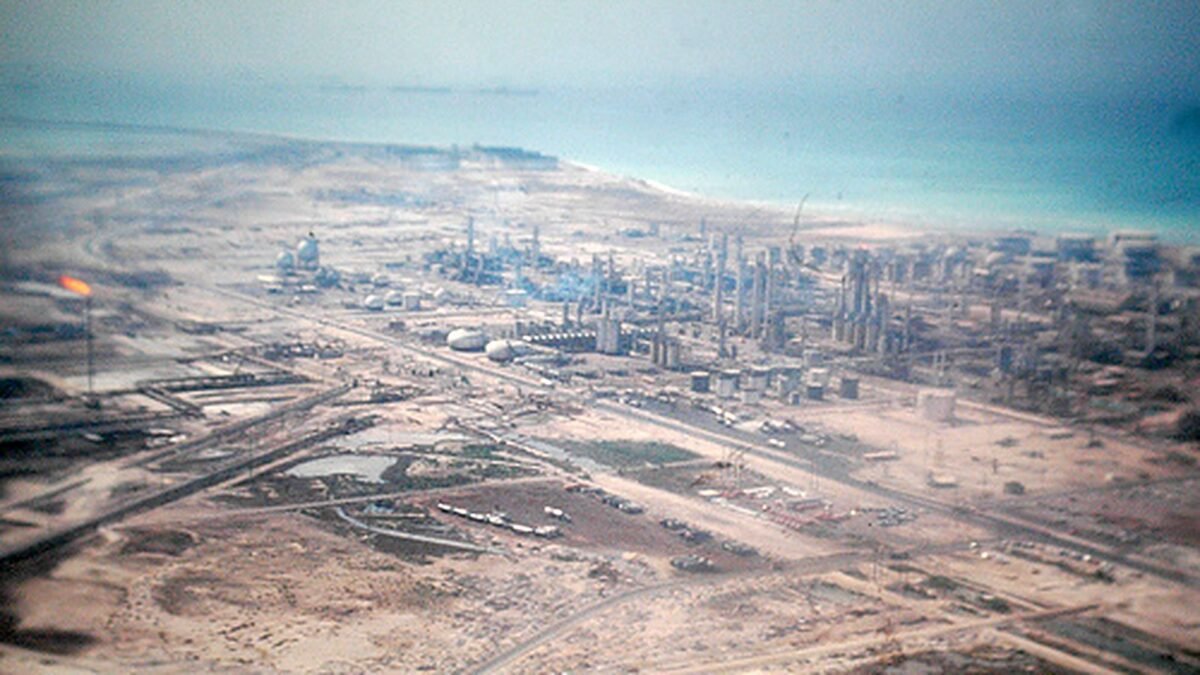
Saree’s announcement described six operations carried out on Thursday, 29 October. The targets he named were the Ras Tanura refinery, which processes about 550,000 barrels of crude a day and sits beside one of the world’s main crude export terminals on Saudi Arabia’s Gulf coast; the Abqaiq processing facility in the Eastern Province, the largest oil-processing plant in the world; King Khalid International Airport in Riyadh, the kingdom’s principal international gateway; King Fahd International Airport in Dammam; the Rabigh refinery on the Red Sea coast; and a Saudi military headquarters in the Najran region, near the Yemeni border.
According to the statement, ballistic missiles were used against Ras Tanura, Rabigh and Abqaiq, multiple missiles were aimed at Riyadh airport, and a drone was sent against Dammam airport. The Houthis said the strikes were launched in retaliation for recent Saudi airstrikes on Houthi-held territory in Yemen, according to reports of the announcement.
The breadth of the claimed target list is what sets this round apart. Earlier rounds in the current campaign tended to concentrate on one category at a time — shipping, then airports, then oil sites. Thursday’s claim spans all of them at once: the refineries that process and export the kingdom’s crude, the airports that carry its international passengers, and a military command centre on the southern border. Whether all six attacks actually took place as described remains unconfirmed, but the claim itself, delivered in a single televised statement, was plainly designed to signal that no part of Saudi Arabia’s critical infrastructure is beyond the group’s reach.
What Saudi Arabia confirmed
The Saudi-led coalition’s account overlaps with the Houthi claim only in part. Coalition spokesman Turki al-Maliki said air defences had intercepted and destroyed two ballistic missiles fired by the Houthis towards Riyadh on Thursday evening, according to Al Jazeera. In a separate statement, the coalition said it had intercepted three ballistic missiles — two aimed at Riyadh and one at the Eastern Province — as well as a cruise missile launched towards the kingdom’s western region, Reuters reported.
Saudi Arabia’s Civil Defence said falling shrapnel from an interception wounded one Saudi citizen in Riyadh and damaged a house and a vehicle, according to the state-run news agency. Warning alerts about potential incoming threats were activated across Riyadh, the neighbouring governorate of al-Kharj and Najran city before the interceptions were announced.
The gap between six claimed targets and two or three confirmed interceptions does not by itself settle what happened at the other sites. Interceptions can destroy incoming weapons before they reach their targets, and Saudi authorities have in past rounds declined to comment on individual sites. But the absence of any Saudi or Aramco statement about Ras Tanura, Abqaiq, Rabigh or the two airports means the most consequential part of the Houthi claim — that the kingdom’s oil heartland was struck — remains unverified, and it should be treated as a claim, not a fact, until evidence emerges.
Earlier on Thursday, Yemen’s internationally recognised government issued a formal statement urging the United Nations Security Council to enforce what it called deterrent and punitive measures to stop Houthi attacks against Aden International Airport, a reminder that the fighting inside Yemen continues alongside the cross-border strikes.
Oil markets react sharply
Oil traders did not wait for verification. Brent crude futures rose 86 cents, or 0.75 percent, to $115.74 a barrel in early trade on Friday, according to Reuters, and later advanced further, reaching about $116.59 a barrel. US West Texas Intermediate crude climbed to about $102.72 a barrel in early trading and later rose to roughly $103.45. For the month, Brent was on course to finish about 11 to 14 percent higher and WTI about 14 to 15 percent higher, giving oil a fourth consecutive monthly gain and its steepest rise since July. WTI was heading to close above $100 a barrel for the first time since April, according to Reuters.
The market reaction reflects more than a single day’s claims. “Continued kinetic action around the Strait of Hormuz amidst doubts of a viable diplomatic pathway are keeping oil prices elevated in expectation of an escalation of the conflict in coming weeks,” Saul Kavonic, head of energy research at MST Marquee, told Reuters. Ole Hansen, head of commodity strategy at Saxo Bank, said at a media briefing in Singapore on Thursday that he expected crude to trade in a higher range of $70 to $90 a barrel, compared with a pre-war level of $60 to $70, even after the conflict ends, because of the risk of renewed hostilities and the need to rebuild inventories.
The nervousness is visible beyond the trading screens. ExxonMobil and Chevron have cancelled plans for their executives to travel to the United Arab Emirates’ biggest oil show next week, two sources familiar with the developments told Reuters. In Europe, eleven countries will release 42.6 million barrels of oil from their strategic reserves to stabilise diesel prices before winter, according to Le Monde, a measure of how far the disruption is already reaching into consumer fuel markets.
A war that keeps widening
Thursday’s claimed strikes landed in the middle of a regional conflict that has been widening for months. The war between the United States and Israel on one side and Iran on the other has entered its eighth month, according to Reuters, and the fighting has spread across the shipping lanes and oil infrastructure of the Gulf.
On Friday, a tanker in the Strait of Hormuz — the narrow waterway through which about a fifth of the world’s oil moves each day — was hit by explosive devices attached by a small boat, the United Kingdom Maritime Trade Operations agency said, according to Reuters. It was not immediately clear who was behind that attack. Iran’s Revolutionary Guards said separately that three tankers had hit sea mines, exploded and caught fire while attempting to use an unauthorised route south of the strait. The incidents followed Tehran’s claim a day earlier that four tankers had caught fire after hitting mines in the strait, a story reported separately on this site.
The Houthi campaign against Saudi Arabia itself has been building since the summer. A four-year informal ceasefire between the Houthis and the Saudi-led coalition unravelled in July 2026, when the Houthis announced what they called a maritime embargo against Saudi Arabia and began a sustained campaign of missile and drone attacks on Saudi airports, oil facilities and military sites. The campaign shifted its focus from southern Saudi cities to the capital’s main civilian airport in early October, and the attacks have grown deadlier. On 10 October, a strike on King Khalid International Airport killed 12 people and wounded 309, according to Saudi Arabia’s General Authority of Civil Aviation, in the deadliest attack on the kingdom in more than a decade; the dead included four Saudis, two Bangladeshis and one citizen each from the United States, Jordan, Palestine, Syria, Sudan and Egypt. The BBC reported that an Indian national wounded in the same strike later died, raising the toll to 13.
Two weeks ago, the Houthis struck an administrative building belonging to Saudi Aramco in the eastern city of Dhahran, hours after a Saudi-led coalition strike on a fuel depot near the Houthi-held Yemeni capital, Sanaa. The Saudi Energy Ministry said authorities had responded to a fire caused by that attack. Houthi spokesman Yahya Saree had warned employees and civilians near Saudi oil facilities to evacuate, calling the installations a legitimate target, Al Jazeera reported at the time.
Against that backdrop, the diplomatic track has looked increasingly fragile. On Monday, 26 October, senior officials from Iran, Saudi Arabia, Turkiye and Pakistan concluded talks in Tehran hosted by Iranian security chief Mohsen Rezaei and attended by Saudi Defence Minister Khalid bin Salman, Pakistani army chief Asim Munir and Turkish intelligence chief Ibrahim Kalin, according to an official Iranian statement carried by the Fars news agency. The discussions focused on peace and security in the region, and the Saudi Foreign Ministry afterwards stressed the importance of opening channels of negotiation to prevent a return to military escalation. Three days later, the Houthis announced their six-target salvo.
There was also movement, of a sort, on the American side. US President Donald Trump said on Thursday that Vice President JD Vance had reached out to Iran to help the country obtain medical supplies, after US media reported that Vance had written to Tehran’s top security official in an attempt to revive peace talks. Iran has received the letter but has not responded to it yet, the country’s semi-official Tasnim news agency reported, adding that Tehran wants the United States to meet its conditions and that any position contradicting that framework is unacceptable.
Analysis: Why It Matters
1. The claim matters even if the strikes did not all land
The first thing to understand about Thursday’s announcement is that its significance does not depend entirely on whether all six attacks happened. The Houthis have claimed strikes before that were never confirmed, and their statements are as much a weapon as their missiles: they force Saudi Arabia to spend enormous sums on air defence, they frighten airlines and shipping companies, and they move oil prices within hours. A claim that names Ras Tanura and Abqaiq in the same breath as Riyadh’s airport is designed to be believed just enough to be priced in. The market’s reaction — Brent above $116, a fourth straight monthly gain — shows how cheap that weapon is to fire and how expensive it is to absorb.
That said, the distinction between claim and confirmation still matters enormously, and it is the single most important discipline in covering this war. The Houthis have every incentive to exaggerate; Saudi Arabia has every incentive to minimise. The verified facts so far are that missiles were fired towards Riyadh, that Saudi defences intercepted at least two of them, and that one person was hurt by falling debris. Everything else — the refineries, the second airport, the military headquarters — sits in the space between a televised claim and a silent government. Until satellite imagery, an Aramco statement or airport records fill that space, the honest description of Thursday is a confirmed attack on the capital and a claimed attack on the oil heartland.
2. Abqaiq is the name that moves markets — because of 2019
There is a reason the inclusion of Abqaiq in the target list rattled traders more than any other name on it. In September 2019, a drone and missile attack on the Abqaiq processing plant and the nearby Khurais oil field temporarily knocked out 5.7 million barrels a day of Saudi production — about half of the kingdom’s output and roughly five percent of global supply — and sent Brent crude surging about 20 percent in a single day, the largest intraday rise since Iraq’s invasion of Kuwait in 1990, according to the Congressional Research Service. The Houthis claimed that attack too, although the United States blamed Iran. Production was restored within weeks, but the episode permanently changed how the market prices the vulnerability of Saudi infrastructure: Abqaiq is the world’s largest oil-processing facility, with a capacity of about seven million barrels a day, and there is no quick substitute for it.
Ras Tanura carries a similar weight for different reasons. As the kingdom’s largest refinery, processing about 550,000 barrels a day, and the terminus of one of the world’s main crude export routes, damage there would not just cut Saudi output — it would choke the physical channel through which much of the Gulf’s crude reaches Asian buyers. Naming both facilities in one statement was a deliberate choice, and the market heard it exactly as intended.
3. Diplomacy and escalation are now running on parallel tracks
The timing of the salvo is the most politically revealing part of the story. On Monday, the defence and security chiefs of Iran, Saudi Arabia, Turkiye and Pakistan met in Tehran and publicly committed to dialogue. On Thursday, the Houthis — who are aligned with Iran but operate with considerable autonomy — announced the broadest claimed strike of the campaign. Either the Tehran talks failed to restrain them, or they were never meant to. Both readings point in the same direction: the diplomatic track and the military track are no longer sequential steps in a negotiation, but parallel activities that each side pursues simultaneously, using one to buy time for the other.
The Vance letter sharpens the same contradiction. Washington is publicly offering Iran help with medical supplies and privately, according to US media reports, trying to revive peace talks, while the war it is fighting alongside Israel enters its eighth month and its Gulf partners come under fire. Tehran’s reply, as reported by Tasnim, was to restate its conditions and reject anything outside them. The result is a diplomacy of gestures — letters, meetings, communiques — that runs alongside a war of missiles, mines and tanker fires, with neither track yet strong enough to stop the other.
4. The cost of defence is becoming a story of its own
Behind the casualty figures and the oil prices sits a quieter arithmetic that may shape the war’s course. Saudi Arabia has been firing interceptors at a rate that defence analysts say far exceeds the pace at which they can be resupplied, with roughly 2,000 interceptors expended since July, according to reporting on the campaign. Each interception costs far more than the missile or drone it destroys, and the Houthis can manufacture or acquire their weapons far more cheaply than the kingdom can buy Patriot and THAAD interceptors. That asymmetry is the strategic logic of the entire campaign: the Houthis do not need to hit their targets to impose costs; they need only to keep forcing Saudi Arabia to defend them.
The airport campaign illustrates the point. Since the start of October, repeated attacks on King Khalid International Airport have killed 17 people and injured 333, according to a coalition count delivered on 15 October, and forced the suspension of hundreds of flights, with airlines diverting or cancelling services and several Gulf carriers suspending routes. The damage to confidence — in the safety of Saudi airspace, in the reliability of its airports, in the kingdom’s ability to protect the showcase infrastructure of its Vision 2030 programme — is harder to measure than the damage to a terminal building, and it accumulates with every alert.
5. Civilians are paying the price on both sides of the border
It is easy, amid the oil prices and the diplomacy, to lose sight of who is actually being hurt. In Riyadh, the victims of the airport campaign have been ordinary travellers and airport workers — Saudis, Bangladeshis, Americans, Egyptians, Jordanians, Palestinians, Syrians, Sudanese and a Pakistani resident killed in a strike on Terminal 4 on 11 October, according to reports. In Yemen, Saudi-led coalition airstrikes continue to hit Houthi-held areas, including the fuel depot near Sanaa struck on 13 October, and the Houthis’ own warnings to civilians near Saudi oil facilities to evacuate are a reminder that the group expects its targets to be treated as military ones, with all the danger that implies for the workers inside them.
The war that reignited in July is now being fought across civilian infrastructure on both sides: airports, refineries, fuel depots, shipping lanes. That pattern is precisely what international humanitarian law is meant to prevent, and it is why the Saudi-led coalition has called the airport attacks war crimes and why Yemen’s internationally recognised government is pressing the UN Security Council for deterrent measures. The legal arguments will take years to settle. The human cost is being counted in real time.
What to Watch Next
- Any statement from Saudi Aramco about Ras Tanura, Abqaiq or Rabigh. Silence so far is not proof that nothing happened, but a company statement confirming or denying damage would settle the central question of Thursday’s claim.
- Flight records and airport statements from Riyadh and Dammam. Suspensions, diversions or damage reports at either airport would corroborate parts of the Houthi claim that the coalition has not addressed.
- Satellite imagery of the named sites. In 2019, commercial satellite images of Abqaiq provided the first independent evidence of the damage. Similar imagery, if it emerges in the coming days, will be the most reliable test of this week’s claims.
- Oil prices and the December contract expiry. Brent’s December contract expires on Friday; whether prices hold above $115 or fall back will show whether traders believe the supply threat is real or are pricing a temporary fear premium.
- The response from Riyadh and Washington. Saudi Arabia’s cabinet has previously warned the Houthis that they will bear the consequences of attacks across the kingdom, and President Trump has said he is considering bringing the United States into the war against the Houthis. Any retaliatory strike on Yemen, or any American move, would mark a further escalation.
- The diplomatic track. Whether the Tehran talks produce a follow-up meeting, and whether Iran responds formally to Vice President Vance’s letter, will indicate whether the parallel diplomacy has any life left in it — or whether the missile claims have already answered it.
Sources
- Reuters — Oil rises on supply concerns as Houthis attack Saudi Arabia (30 October 2026)
- Al Jazeera, via Daily Times of Bangladesh — Houthis claim six attacks on Saudi airports, oil facilities (30 October 2026)
- Reuters, via SRN News — Oil set for fourth monthly gain as Hormuz tanker attack highlights supply risks from war (30 October 2026)
- Congressional Research Service — Attacks Against Saudi Oil Rattle Markets (September 2019 Abqaiq attack background)

About the Author — Abdul Mannan
Related Articles
UN General Assembly Backs End to US Cuba Embargo Again, but Support Falls to Lowest Level in 20 Years
The UN General Assembly voted 130–17, with 25 abstentions, to call for an end to the US embargo…

Erin Patterson Loses Appeal and Will Spend Life in Prison Without Parole Over Mushroom Murders
Victoria's Court of Appeal dismissed Erin Patterson's challenge to her triple-murder convictions and removed her 33-year non-parole period,…
North Korea Fires About 10 Short-Range Ballistic Missiles as Landmine Row with South Korea Deepens
North Korea fired about 10 short-range ballistic missiles from near Wonsan on Thursday, South Korea's military said, as…