
Claire Curzan and Jack Alexy Smash World Records at US Short Course Swimming Trials

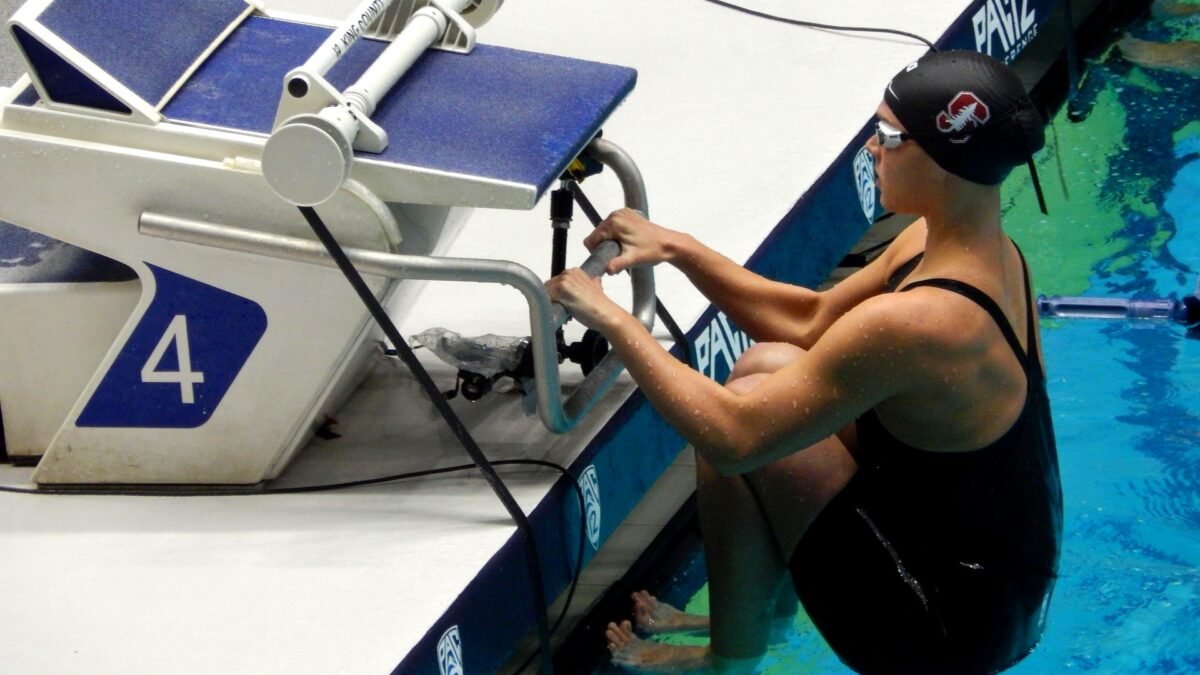
Claire Curzan and Jack Alexy each broke their first individual world records on Friday night, turning the third evening of the United States short course trials into one of the fastest nights in American swimming history.
Curzan won the women’s 100-metre backstroke in 53.92 seconds at the FMC Natatorium in Westmont, Illinois, becoming the first woman ever to swim under 54 seconds in the event, according to NBC Sports. Minutes later, Alexy destroyed the men’s 100-metre freestyle world record, touching in 44.64 seconds and cutting two tenths off a mark that had stood since 2021.
The two records took the meeting’s tally to five world records in two days, after three fell on Thursday, and they secured both swimmers’ places on the American team for the World Short Course Championships in Beijing, which run from 1 to 6 December at the Water Cube.
Curzan, a 22-year-old senior at the University of Virginia, broke the world record of her fellow American Regan Smith, who had swum 54.02 seconds twice, first at the short course world championships in 2024 and again at a World Cup meeting in Westmont in 2025, according to SwimSwam. Curzan took a tenth of a second off that mark, and she did it by coming home faster than Smith ever had.
She turned at the halfway mark in 26.36 seconds, marginally behind the pace of Smith’s record swims, and then covered the second 50 metres in 27.56 seconds, quicker than Smith managed on either of her record-setting swims. It was, by some distance, the fastest second half of a women’s short course 100-metre backstroke ever recorded.
Katharine Berkoff, who had broken the 50-metre backstroke world record on Thursday, finished second in 54.72 seconds, and Smith herself was third in 54.82, according to SwimSwam’s full results. Isabelle Stadden was fourth in 56.33. The top two finishers, Curzan and Berkoff, both qualified for Beijing.
The swim was Curzan’s first individual world record, and the scale of her improvement made it one of the most startling swims of the year. She entered the day with a lifetime best of 54.94 seconds, set only two weeks earlier at Virginia’s short course world championship preparation meeting, and she had entered the month with a best of 55.74 seconds, swum at the 2022 short course world championships, where she tied for bronze with Canada’s Ingrid Wilm, according to SwimSwam.
In other words, Curzan has taken almost two seconds off her lifetime best in the space of a single month, and more than a second of that improvement has come in the last fortnight. For a swimmer who already held junior world records in the long course 50-metre freestyle and 100-metre butterfly and the short course 50-metre and 100-metre butterfly, it was a breakthrough that had been coming, but nobody, least of all Curzan herself, could have predicted its size.
Alexy’s record was, if anything, even more emphatic. The 23-year-old from the University of California, Berkeley, swam 44.64 seconds in the men’s 100-metre freestyle final, lowering the previous world record of 44.84 seconds by two tenths, according to NBC Sports and SwimSwam.
That record had been shared by two men. Australia’s Kyle Chalmers set it at a World Cup meeting in Kazan in 2021, and Russia’s Egor Kornev equalled it at a World Cup meeting in Baku earlier this month, four weeks before the trials. Alexy took it to new territory in a single swim.
He was out fast, turning at the 50-metre mark in 21.25 seconds, already more than a tenth ahead of world-record pace, and he came home in 23.39 seconds to finish 0.20 seconds under the old mark, according to SwimSwam’s split comparison. Chris Guiliano was second in 45.22 seconds, and the veteran Caeleb Dressel, the most decorated American sprinter of his generation, was third in 45.65.
Alexy’s swim also broke two records of his own. It lowered the American record of 45.05 seconds that he had set in 2024 while leading off the United States team at the short course world championships, and it beat the United States Open record of 45.09 seconds that he had set in the morning heats on Friday, according to SwimSwam.
The heats had already signalled that something extraordinary was coming. Guiliano went first, clocking 45.17 seconds to break the old United States Open record of 45.22 seconds, set by Dressel during the 2019 International Swimming League season. Minutes later, in the final heat, Alexy went 45.09, undercutting Guiliano’s new mark and coming within four hundredths of his own lifetime best, according to SwimSwam.
Alexy now holds three world records. In addition to his new individual mark, he holds the long course mixed 4×100-metre freestyle relay record and the short course men’s 4×100-metre freestyle relay record, both set with the United States team, according to SwimSwam.
Friday’s records followed a remarkable Thursday, when three world records fell in a single evening session. Berkoff, a 25-year-old from Montana, broke her first individual world record in the women’s 50-metre backstroke, clocking 25.21 seconds to lower Smith’s short course record from 2024 by two hundredths, according to NBC Sports.
Kate Douglass tied training partner Gretchen Walsh’s world record in the women’s 50-metre freestyle, and Van Mathias swam the fastest short course 100-metre breaststroke in history, clocking 55.14 seconds to break the record of 55.28 seconds set by Ilya Shymanovich of Belarus in 2021, according to NBC Sports.
The rest of Friday’s finals were nearly as fast. Douglass won the women’s 200-metre individual medley, finishing three hundredths of a second outside her own world record, and Walsh won the 50-metre butterfly, eight hundredths outside her world record, according to NBC Sports. Liberty Clark set an American record in the women’s 200-metre freestyle, Luca Urlando set an American record in the men’s 200-metre butterfly, and Mathias added a United States Open record in the men’s 50-metre breaststroke, according to SwimSwam’s live recap.
Piper Enge won the women’s 100-metre breaststroke, Josh Bey won the men’s 400-metre individual medley, and Ryan Erisman won the men’s 1500-metre freestyle, according to NBC Sports. The trials, which began on Wednesday 28 October, finish on Saturday, with the final session broadcast live on Peacock and NBCSN at 7 p.m. Eastern time.
The meeting is USA Swimming’s first dedicated 25-metre world championship trials, staged specifically to select the team for December’s short course world championships in Beijing. Short course meetings are held in 25-metre pools rather than the 50-metre pools used at the Olympics and most major summer meetings, and the extra turns make them significantly faster. World records in short course and long course are kept separately, and the two lists are not comparable.
That distinction matters when judging what happened in Westmont. A short course world record does not mean a swimmer is the fastest ever over the distance in any pool, but it does mean they are the fastest ever in the format in which the December world championships will be contested, and the Beijing meeting is the biggest short course event on the calendar.
For Curzan, the record is the latest chapter in a career that has already contained an Olympic medal, a world championship clean sweep and a painful Olympic disappointment. She was raised in Cary, North Carolina, started swimming at the age of three, and qualified for her first major international meeting, the 2019 world junior championships, at 15, according to her biography.
At the Tokyo Olympics, held in 2021, she won a silver medal in the women’s 4×100-metre medley relay, swimming the butterfly leg in the heats, and she finished tenth in the individual 100-metre butterfly. She was 17 years old, and the medal made her one of the youngest American Olympic medallists in swimming.
Her finest meeting came at the 2024 World Aquatics Championships in Doha, in long course, where she swept all three backstroke events, winning gold in the 50, 100 and 200 metres, and added gold in the mixed 4×100-metre medley relay. She was named the best female swimmer of the championships, and she also took silver in the 100-metre butterfly and bronze in the mixed 4×100-metre freestyle relay, according to her University of Virginia profile.
But the Paris Olympics, later that year, brought disappointment. At the United States Olympic trials she finished third in the 200-metre backstroke and fourth in the 100-metre butterfly, missing the individual team, and she did not swim at the Games. It was a reminder of how deep American women’s swimming has become, and of how narrow the margins are at the top.
Since then she has rebuilt steadily. At the 2025 world championships in Singapore she won gold in the women’s 4×100-metre medley relay and bronze in the 200-metre backstroke, and at the Pan Pacific Championships in Irvine this summer she took silver in the 200-metre backstroke. She has won 13 NCAA titles, five of them individual, swimming for Virginia, after beginning her college career at Stanford.
Her world record also lands in the middle of one of the most competitive events in world swimming. In long course in 2026, the United States had four of the six fastest women in the world in the 100-metre backstroke: Smith at number one, Isabelle Stadden at number two, Berkoff at number four and Curzan at number six, according to NBC Sports. Only the top two at trials make the Olympic team, which means the American trials for the Los Angeles Games in 2028 will be, on current form, harder to win than the Olympic final itself.
Alexy’s story is different but no less compelling. He was born and raised in New Jersey, swims for the University of California, Berkeley, and broke through at the 2023 world championships in Fukuoka, where he won five medals in his senior international debut, according to his biography.
At the Paris Olympics he won the first gold medal of the Games for the United States, leading off the men’s 4×100-metre freestyle relay in 47.6 seconds, alongside Chris Guiliano and Caeleb Dressel, and he added a silver in the men’s 4×100-metre medley relay. But the individual 100-metre freestyle, the marquee event of the swimming programme, went wrong. He had been the top seed in the heats at 47.5 seconds and one of the gold medal favourites, but in the final he finished seventh in 47.96 seconds, the slowest of the five 100-metre freestyles he swam all week, according to World Aquatics.
He answered that disappointment emphatically at the short course world championships in Budapest in December 2024, winning five medals, including his first individual gold at a senior international competition, in the 100-metre freestyle in 45.38 seconds. Earlier in that meeting he had led off the American 4×100-metre freestyle relay in 45.05 seconds as the team set a world record of 3:01.66, and he also won bronze in the 50-metre freestyle, according to the University of California.
At the 2025 world championships in Singapore, in long course, he won silver in the 100-metre freestyle in 46.92 seconds, having broken Dressel’s American record with 46.81 in the semi-finals, and bronze in the 50-metre freestyle, as well as gold in the mixed 4×100-metre freestyle relay in a world record. This summer he won gold in the 100-metre freestyle at the Pan Pacific Championships in Irvine.
NBC Sports notes that Alexy is the fourth-fastest man in history in the long course 100-metre freestyle, behind only the 2024 Olympic champion Pan Zhanle of China, the 2025 world champion David Popovici of Romania, and Kornev, all three of whom could be on the start line at the Los Angeles Olympics in 2028. His short course record now puts him at the top of a different list, and it does so by a margin, two tenths of a second, that in sprint freestyle counts as a landslide.
Analysis: Why It Matters
A statement meet two years from a home Olympics
The United States will host the Olympic Games in Los Angeles in 2028, and every American swimmer of this generation knows that the home Games will define their career. Trials like this one, two years out, are where the pecking order for Los Angeles is established, and Westmont has delivered a blunt message: the American team is getting faster, and it is getting faster across the board.
Five world records in two days, with two more swimmers a fraction outside their own world records on Friday, is not a normal trials meeting. It suggests that the American system, from college programmes like Virginia and California to the national team structure, is producing depth at a rate no other country is currently matching. The rest of the world will have noticed, and the swimmers who must beat the Americans in Beijing in December, and in Los Angeles in 2028, will have spent the weekend recalculating.
The backstroke arms race is now an American monopoly
Curzan’s record matters most for what it says about the women’s 100-metre backstroke, which has become the deepest event in world swimming. Four of the six fastest women in the world in long course this year are American, and three of them, Smith, Berkoff and Curzan, have now held the short course world record in the last two years.
That depth is a strength and a problem at the same time. It means the United States will almost certainly win the event at every major championship for years to come, but it also means that at least one world-class swimmer will miss every American team, because only two can qualify. Curzan knows that better than anyone: she missed the Paris team entirely in 2024 despite being one of the best backstroke swimmers in the world. Her 53.92 does not guarantee her a place in Los Angeles, but it guarantees that nobody will overlook her again.
Alexy’s redemption is now complete
For Alexy, the record closes the book on Paris. Seventh place in the Olympic 100-metre freestyle final, after entering as the top seed, was the kind of result that can follow a swimmer for years, and the honest accounts of that week, including his own, have never hidden how badly it hurt.
What has followed is a model of how elite athletes respond to failure. A world title in Budapest, a silver in Singapore with an American record in the semi-finals, a Pan Pacific gold, and now a world record by two tenths of a second. The Paris final is no longer the defining swim of his career; it is the setback that preceded the best swimming of his life. He is 23, he is the reigning short course world champion in the event, and he is now the fastest man ever to swim 100 metres of freestyle in a 25-metre pool.
Short course is a laboratory, and the experiments are working
There is a temptation to treat short course swimming as the lesser format, a winter curiosity before the serious business of the long course summer. That view misses what short course actually tests. With twice as many turns, it rewards underwater speed, turning technique and the ability to hold form through repeated accelerations, all of which are increasingly decisive in long course racing too.
The records in Westmont, and the near-misses from Douglass and Walsh, suggest that American swimmers are getting measurably better at precisely those skills. The underwater phase, once a marginal gain, is now where races are won, and the swimmers who dominated in Westmont are the ones who have mastered it. Expect the lessons of this week to show up in long course times next summer.
Beijing will be the real test
Trials are not championships, and a world record at a domestic selection meeting, however impressive, still has to be repeated against the best in the world. In Beijing, Alexy will face Kornev, the man whose record he has just taken, and Chalmers, the man who set it, while Curzan will face the rest of the world’s backstroke elite, including Australia’s Kaylee McKeown, the long course standard-bearer.
That is the test that matters, and it is five weeks away. The Americans arrive in Beijing as favourites in both events, but favourites who have now put a target on their own backs. The rest of the world has spent the weekend watching Westmont, and it will arrive in Beijing with a plan.
What to Watch Next
- Saturday’s final session: The trials finish on Saturday, with the last finals session live on Peacock and NBCSN at 7 p.m. Eastern time. Watch for further records, and for the final places on the Beijing team to be decided.
- Beijing, 1 to 6 December: The World Short Course Championships at the Water Cube will be the first meeting between the new world record holders and the rest of the world. Alexy against Kornev and Chalmers in the 100-metre freestyle is the race of the championships.
- Curzan against Smith in long course: The short course record settles nothing in the 50-metre pool, where Smith remains the world’s number one. Their next meeting in long course, in the 2027 season, will show whether Curzan’s improvement transfers to the Olympic format.
- The Russian question: Kornev’s participation, and the terms on which Russian swimmers compete internationally, remain one of the unresolved issues in the sport. His response to losing his share of the world record will be closely watched.
- The road to Los Angeles 2028: The American trials for the home Olympics will be the hardest selection meeting in the sport’s history. Westmont has shown that the battle for the two places in the women’s 100-metre backstroke, and the men’s 100-metre freestyle, is only just beginning.
Sources
- NBC Sports: Claire Curzan, Jack Alexy break world records at short course swimming trials
- SwimSwam: Claire Curzan sets new world record with 53.92 100 backstroke, first woman sub-54 seconds
- SwimSwam: Jack Alexy breaks Chalmers’, Kornev’s world record in men’s 100 freestyle with 44.64
- Swimming World Magazine: Jack Alexy destroys world record in 100 freestyle
- NBC Sports: Kate Douglass, Katharine Berkoff, Van Mathias swim world records at short course trials

About the Author — Abdul Mannan
Related Articles

Rashid Khan Becomes First Bowler to 200 T20I Wickets as Afghanistan Seal Series Against Zimbabwe
Rashid Khan becomes the first bowler to 200 men's T20I wickets as Afghanistan seal the series against Zimbabwe…
Everton Beat Newcastle 3-1 Without Dropped Grealish to Reach Carabao Cup Quarter-Finals
Everton beat Newcastle United 3-1 at the Hill Dickinson Stadium without the dropped Jack Grealish to set up…

Bears Go All-In for Jeffery Simmons in Blockbuster Trade with Titans for Two First-Round Picks
The Chicago Bears have agreed to acquire All-Pro defensive tackle Jeffery Simmons from the Tennessee Titans for two…