
Rashid Khan Becomes First Bowler to 200 T20I Wickets as Afghanistan Seal Series Against Zimbabwe

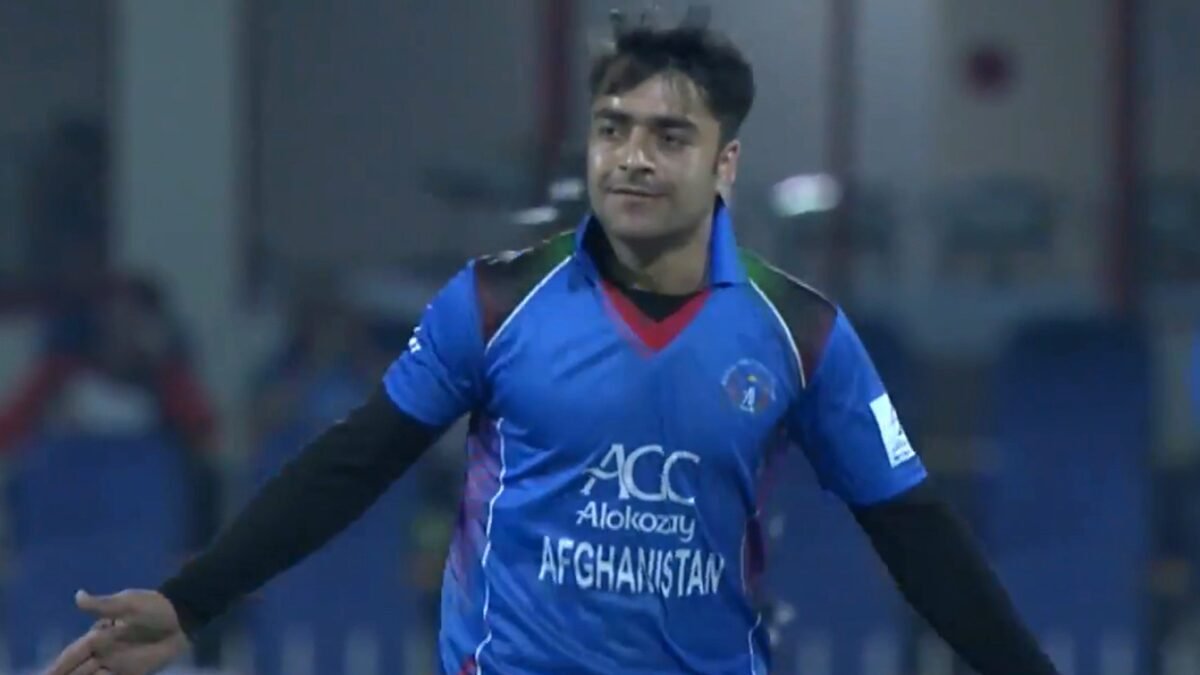
Rashid Khan has become the first bowler in history to take 200 wickets in men’s Twenty20 internationals, reaching the landmark during Afghanistan’s dramatic 19-run victory over Zimbabwe in the second T20I at Sharjah on Thursday, 29 October 2026. The win gave Afghanistan an unassailable 2–0 lead in the three-match series, with the final match scheduled for Sunday, 1 November, according to the International Cricket Council (ICC).
The 28-year-old leg-spinner brought up the milestone in his 120th T20 international when he trapped Zimbabwe wicketkeeper-batter Tadiwanashe Marumani leg before wicket for two in the ninth over of the chase, according to Reuters. Rashid finished the match with figures of one for 29 from his four overs, and his 200 wickets have come at an average of 13.96 and an economy rate of 6.13, according to Reuters. His record in the format also includes two five-wicket hauls, with best figures of five for three.
No other bowler has come close to the mark. England’s Adil Rashid is second on the all-time men’s T20I wicket-taking list with 171 wickets from 153 matches, according to the ICC, leaving the Afghan spinner 29 wickets clear of his nearest challenger. Rashid had already become the first Afghanistan bowler to reach 200 wickets in one-day internationals, during a match against Bangladesh in Abu Dhabi in October last year, according to Reuters.
The milestone arrived in the middle of a match that swung violently in both directions and produced records far beyond Rashid’s own. Put in to bat first, Afghanistan were in deep trouble almost immediately. According to ESPNcricinfo, they had lost their first four wickets for just five runs, and the ICC reported that they were five down inside the powerplay, with a fifth wicket falling in the ninth over.
What followed was one of the great recoveries in the format. Azmatullah Omarzai, batting at number six, scored a maiden T20I hundred — 116 from 50 balls, according to match reporting — and shared a stand of 142 with Ijaz Ahmad Ahmadzai, who made 52, according to the ICC. That partnership is the highest stand for the sixth wicket or lower in T20 internationals, beating the 139 posted by Andre Russell and Sherfane Rutherford for the West Indies against Australia in Perth in 2024, according to ESPNcricinfo.
Omarzai’s innings included 12 sixes and five fours, according to the ICC, and made him only the fourth batter to score a hundred for Afghanistan in the shortest format. According to ESPNcricinfo, his 116 is the third-highest score by a batter at number six or lower in T20Is, and no batter from a Full Member team had previously scored a hundred from outside the top five in the format. Afghanistan closed on 221 for seven — their third-highest total in the format, according to the ICC — and became the first team ever to post a 200-plus total in a T20I after losing their first four wickets for fewer than 20 runs, according to ESPNcricinfo. Their 176 runs in the last ten overs were the most scored in that phase of a T20I innings between Full Member teams, according to ESPNcricinfo.
Rashid himself supplied the late flourish with the bat, smashing an unbeaten 25 from just six balls, including four sixes, as Afghanistan set Zimbabwe 222 to win. Zimbabwe’s chase was kept alive by their captain, Sikandar Raza, whose second T20I century — struck with five fours and nine sixes, according to the ICC — made him, at 40 years and 188 days, the oldest man to score a T20I hundred, according to ESPNcricinfo. Raza shared an unbeaten 120-run stand for the sixth wicket with Tafadzwa Tsiga, and the match became the first ever T20 game to feature two century stands for the sixth wicket or lower, according to ESPNcricinfo. But Zimbabwe, who were 85 for five at the halfway stage according to the ICC, finished on 202 for five — 19 runs short. The two sides’ combined total of 423 runs was the highest match aggregate for a T20I played in the United Arab Emirates, and the game was the first T20I in the UAE to feature two centurions, according to ESPNcricinfo.
Afghanistan had won the first match of the series by 37 runs on 27 October, according to the ICC, so Thursday’s result sealed the series with a match to spare.
Analysis: Why It Matters
A record built on control, not just longevity
Two hundred wickets in any format is a mark of endurance. Two hundred wickets in T20 internationals is something else entirely, because this is the format designed, above all, to punish bowlers. Batters arrive with licence to attack from the first ball, boundaries are short, bats are heavy, and a single bad over can end a match. To survive in that environment for 120 matches is one achievement; to take wickets at an average under 14 while conceding barely more than six runs an over is quite another. According to Reuters, Rashid’s average of 13.96 and economy rate of 6.13 are the twin pillars of the record, and they explain why the gap to second place is so large. He has not merely played more T20 internationals than anyone else. He has bowled better, more consistently, than anyone else, in the phase of the game where most spinners go to survive rather than to strike.
The breakdown of the 200 wickets tells the story of how he did it. According to ESPNcricinfo, 142 of them came in the middle overs, between overs seven and 16, with 56 more at the death and only two in the powerplay, from just 102 balls bowled in that opening phase. That is a portrait of a bowler trusted with the hardest job in the modern game: bowling when batters are set, when the field is spread, and when the match is there to be won or lost. Captains do not hand those overs to a bowler they merely hope will keep things quiet. They hand them to the bowler they believe will take the wicket that changes the game. Rashid has been that bowler for Afghanistan for more than a decade, and the numbers suggest he has been that bowler for world cricket too.
The anatomy of a wicket-taker
Part of what makes Rashid unusual is how little his method depends on mystery. Leg-spinners are traditionally sold on variation — the googly, the flipper, the slider, the ball the batter cannot pick. Rashid has all of those, but his real weapon has always been pace and accuracy. He bowls quicker than most leg-spinners, flatter through the air, and relentlessly at the stumps, which denies batters the room to free their arms and turns defence into a risk of its own. The dismissal that brought up number 200 was typical: Marumani, trapped in front for two, beaten not by extravagance but by precision. It is a style that travels. According to ESPNcricinfo, 150 of Rashid’s 200 T20I wickets have come in Asia, and 79 in the UAE alone, but his record against a spread of opponents — 45 wickets against Ireland, the most any bowler has taken against one team in the format, and 38 against Zimbabwe — shows a bowler whose method works wherever he is asked to bowl.
There is also a quieter statistic that deserves attention. According to ESPNcricinfo, Rashid has taken four or more wickets in an innings on 11 occasions, two more than any other bowler in men’s T20Is. That matters because T20 cricket is so often decided by one spell: a bowler who can take three or four wickets in four overs does not merely slow a chase, he breaks it. Rashid’s career is a catalogue of such spells, and it is why his record feels less like an accumulation and more like a series of interventions. He also leads the wicket-taking charts across all T20 cricket, having passed 700 wickets in the format earlier this year, according to ESPNcricinfo — a reminder that this international record sits on top of a domestic and franchise career of extraordinary volume.
A match that mirrored his career
It was fitting, in a way, that the record arrived in a match Afghanistan had no right to win. Five wickets down for almost nothing, the game gone inside the powerplay, and then a rescue built on nerve and hitting — that arc has been the story of Afghan cricket itself. A team that began its international life with almost no infrastructure, no home grounds, and players who learned the game in refugee camps and on concrete has spent two decades turning near-impossible positions into victories. On Thursday, the rescue came from Omarzai, a 25-year-old all-rounder whose hundred from number six rewrote the record books, and from Ijaz Ahmadzai, whose 52 gave the partnership its spine. Their 142-run stand was not just the highest for the sixth wicket or lower in T20Is; it was a statement about depth. Teams that once depended on one or two stars now produce match-winners from down the order, and that is the surest sign of a cricket culture maturing rather than merely arriving.
For Rashid personally, the evening also showed the other half of his value. His unbeaten 25 from six balls at the end of the innings, all four of his sixes struck when Afghanistan needed quick runs, was the kind of cameo that rarely makes a headline but often makes a total. A bowler who can also finish an innings changes how a captain builds a side: it allows an extra bowling option, a longer tail, a bolder declaration of intent. Rashid has been that player for years, and on the night he reached 200 wickets, he reminded everyone why.
What 200 means for Afghanistan
Records are often treated as personal property, but this one belongs, in a real sense, to a team and a country. Rashid made his T20I debut against Zimbabwe in Bulawayo in 2015, according to Geo Super, and he has been the face of Afghan cricket ever since — its first global star, its most bankable player in franchise leagues around the world, and the bowler opposing teams plan for first. For young players in Kabul, Jalalabad and Kandahar, he is proof that a cricketer from Afghanistan can not only reach the top of the world game but stay there, year after year, while carrying the expectations of a nation that treats cricket as one of its few shared celebrations.
That burden is worth naming. Afghan cricketers play most of their home cricket abroad, in places like Sharjah, and they do so under a spotlight that few other teams experience. Every series is watched not just for results but for what it says about the country. A record like 200 T20I wickets, set in Sharjah against the same opponent Rashid debuted against, gives that story a chapter of pure sporting achievement — something to celebrate without qualification. It also sets a standard for the generation coming behind him. Omarzai’s hundred on the same night suggests that generation is already listening.
Can anyone catch him?
The honest answer is: not soon, and perhaps not at all. Adil Rashid, the next man on the list, is 29 wickets behind on 171 from 153 matches, according to the ICC — a superb record in its own right, but one that would require a long and prolific Indian summer to close. Behind him, the chasing pack is further back still, and the modern calendar, crowded with franchise cricket, makes long international careers harder to sustain, not easier. Rashid himself is only 28, according to Reuters, and still Afghanistan’s first-choice spinner in every format. If he stays fit, the record will not merely stand; it will grow, and the question will shift from who can reach 200 to whether anyone can reach 225 or 250. That is the mark of a record that redefines its category rather than merely topping it.
None of this should obscure the other story of the night: Sikandar Raza, at 40, scoring a hundred and nearly dragging Zimbabwe to an extraordinary chase. Zimbabwe lost, but Raza’s innings — the oldest T20I hundred by a man, according to ESPNcricinfo — was a reminder that this format, for all its youth, still rewards experience and nerve. The match as a whole, with 423 runs, two centurions and two record sixth-wicket stands, was a showcase for what T20 internationals can be when both teams refuse to fold. Rashid’s milestone was the headline. The match around it was the reason the headline mattered.
What to Watch Next
- The third and final T20I in Sharjah on 1 November, where Afghanistan will chase a series clean sweep and Rashid will have the chance to extend his record beyond 200.
- Whether Omarzai’s maiden hundred marks a lasting step up in his batting, and whether Afghanistan continue to trust him in a finishing role down the order.
- How Zimbabwe respond after two defeats, and whether Raza’s form with the bat can inspire a consolation win against a settled Afghan side.
- Whether any bowler in world cricket can mount a serious chase of the 200 mark, with Adil Rashid 29 wickets behind and the rest of the field further adrift.
- How Rashid’s workload is managed across formats and franchise commitments as he moves deeper into a career that already has no precedent in T20 internationals.
Sources
- Reuters — Afghanistan’s Rashid becomes first men’s player to claim 200 T20I wickets
- International Cricket Council — Rashid makes T20I history in Afghanistan’s epic comeback
- ESPNcricinfo — Rashid Khan first to 200 T20I wickets, Azmatullah Omarzai’s record rescue act
- Geo Super — Rashid Khan becomes first-ever bowler to claim 200 T20I wickets

About the Author — Abdul Mannan
Related Articles

Everton Beat Newcastle 3-1 Without Dropped Grealish to Reach Carabao Cup Quarter-Finals
Everton beat Newcastle United 3-1 at the Hill Dickinson Stadium without the dropped Jack Grealish to set up…

Bears Go All-In for Jeffery Simmons in Blockbuster Trade with Titans for Two First-Round Picks
The Chicago Bears have agreed to acquire All-Pro defensive tackle Jeffery Simmons from the Tennessee Titans for two…

Liverpool Beat Chelsea 6-5 on Penalties After 1-1 Draw to Reach Carabao Cup Quarter-Finals
Liverpool beat Chelsea 6-5 on penalties after a 1-1 draw at Anfield to reach the Carabao Cup quarter-finals,…