
Volkswagen Posts €5.82 Billion Quarterly Loss — Its Worst Since Dieselgate — as Electric Golf Work Is Suspended

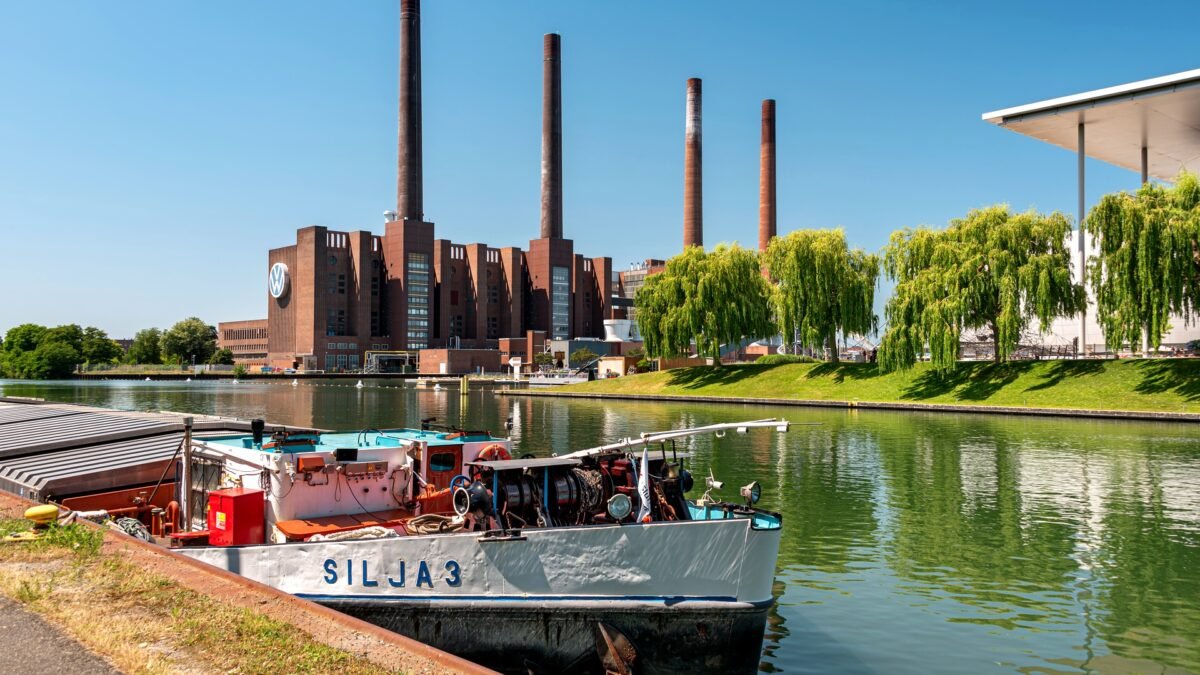
Volkswagen sank deeper into the red in the third quarter of 2026, posting its worst result in more than a decade as the world’s second-largest carmaker battles mounting challenges in its key markets and pushes ahead with the biggest restructuring in its history, according to Reuters.
Europe’s biggest carmaker reported an operating loss of €5.9 billion ($6.6 billion) for the three months to the end of September, hit by about €8 billion in one-off items, largely linked to a writedown of its stake in Porsche. Its net loss after tax reached €5.82 billion, compared with a loss of just over €1.07 billion in the same period a year earlier. The loss was Volkswagen’s largest quarterly deficit since the fourth quarter of 2015, when the German group booked major one-off charges related to its “Dieselgate” emissions-cheating scandal, a company spokesperson told Reuters.
Quarterly revenue fell 6.3 per cent to €75.3 billion, while vehicle deliveries to customers declined 14.3 per cent to about 1.89 million units. Analysts polled by Visible Alpha had expected an operating loss of about €2.6 billion, according to Reuters — less than half the figure Volkswagen actually reported.
The scale of the damage was underlined by the nine-month figures. Over the first nine months of 2026, the group’s operating result collapsed by almost 99 per cent, from €5.4 billion a year earlier to just €71 million, while revenue slipped 2.2 per cent to €233.4 billion. The group posted a net loss of €2.72 billion for the nine-month period, against a profit of €3.41 billion in the same period of 2025.
“The nine-month results make one thing clear: We cannot afford to lose any time. We must act quickly and decisively,” finance chief Arno Antlitz said in a video statement accompanying the results.
The pressure was already showing in the group’s share price. Shares in Volkswagen, already near 10-year lows, initially fell 2 per cent after the results were published on Thursday, before recovering to trade down less than 1 per cent by mid-morning, according to Reuters.
The Porsche writedown at the heart of the loss
The largest single factor behind the quarterly loss was a €6.4 billion non-cash goodwill impairment on Volkswagen’s stake in Porsche, reflecting lowered expectations for the sports-car subsidiary’s future performance, according to German news agency DPA. The charge sat within roughly €7.8 billion of special items booked in the quarter — most of the €8.7 billion recorded over the first nine months of the year.
Beyond Porsche, the special items included roughly €1 billion in impairments on assets of fully consolidated companies in China and extra costs tied to the planned sale of Volkswagen’s Osnabrück plant, according to reporting on the results.
Yet the writedown alone does not explain the scale of the setback. Even before the one-off items, Volkswagen’s operating return on sales margin was only 3.8 per cent in the first nine months of the year. “That is not enough in the long term,” Antlitz said.
Porsche itself remained profitable in the first nine months, with an operating result of €1.5 billion, according to Volkswagen — a reminder that the impairment is a judgement about the subsidiary’s future earning power rather than a reflection of its current trading. The writedown nevertheless signals that Volkswagen’s own management now expects materially less from one of its most prestigious and profitable brands than it did when the goodwill was first recognised.
“The loss reported by VW today is a warning sign for the entire sector and industry, and should also serve as one for policymakers,” said Moritz Kronenberger of Volkswagen investor Union Investment.
China: the market that made Volkswagen is now its biggest problem
Volkswagen’s performance in China deteriorated sharply in the quarter. Deliveries there fell 38.5 per cent year on year to about 405,800 vehicles, and over the first nine months they were down 30.2 per cent to about 1.38 million. China was once Volkswagen’s most profitable market and the engine of its global growth; it has now become a brutal environment for foreign brands as domestic manufacturers launch price wars against each other and win customers with advanced technology at lower prices.
Worldwide, vehicle sales fell 10.6 per cent to 5.88 million units in the first nine months of the year, while deliveries to customers fell 9 per cent to about 6.0 million. The figures include sales by Chinese joint ventures, where falling volumes contributed heavily to the overall decline. Excluding those joint ventures, vehicle sales were down just 1 per cent — a measure of how concentrated the damage has become in China.
Volkswagen also pointed to weak market conditions in China, global pricing and competitive pressure, US tariffs and a rising share of lower-margin electric vehicles, which it currently earns less on than combustion-engine cars.
There were glimmers of progress in the electric transition itself. Battery-electric vehicle orders increased by 39 per cent during the first nine months of the year, while total European orders rose 4 per cent to around three million vehicles. But orders are not yet profits, and the electric models Volkswagen sells in Europe today carry thinner margins than the petrol and diesel cars that built its fortune.
The Chinese challenge is no longer confined to China. Chinese carmakers, who had a negligible share of the European market when Volkswagen’s shares were at their peak in 2021, had progressed to more than 10 per cent of that market by the middle of this year, according to Reuters. In the same period, Volkswagen’s stock market value has collapsed by around three-quarters, pressured further by tariff woes.
Electric Golf suspended as cuts reach Wolfsburg
A day after the results, the cost-cutting drive reached one of Volkswagen’s most symbolic future models. On Friday, the company suspended development work on the all-electric Golf at its Wolfsburg headquarters, as sweeping cuts reach the heart of the group, Reuters reported.
“I know what the Golf means for Volkswagen and for Wolfsburg. That’s why this decision was really not an easy one for us,” said Thomas Schaefer, chief executive of the German group’s volume brands, in a memo seen by Reuters on Friday. “We simply can’t afford this work right now,” he added.
Wolfsburg, a towering plant in the group’s industrial heartland of Lower Saxony and a symbol of Germany’s automaking heritage, faces a €300 million ($336 million) shortfall against its cost-cutting target, according to the memo. The plant is not among those threatened with closure, but Volkswagen’s German operations are under growing pressure to reduce costs.
Volkswagen’s works council said suspending development work on the ID. Golf would not delay the model’s launch and pledged to make up the lost time. “However, the freeze on spending for preliminary work on the ID. Golf is yet another sign of how strained the group’s financial situation is,” the works council said in an emailed statement shared with Reuters.
The ID. Golf is one of the first vehicles planned for Volkswagen’s next-generation SSP software architecture, a group-wide platform designed to reduce complexity and lower production costs. Already delayed from an original 2026 launch target, the platform is central to Volkswagen’s efforts to build more competitive electric vehicles as Chinese rivals expand in Europe.
Tensions have escalated with the union IG Metall, which is considering strikes from January 1. Workers’ anger has also been fuelled by a decision at the group’s Audi brand to invest $4 billion in a new US plant, announced at a campaign event for US President Donald Trump before receiving board approval.
A restructuring on a scale Volkswagen has never attempted
Chief executive Oliver Blume plans to cut 100,000 jobs across the group, which includes the Audi and Porsche brands, and up to four plants in Germany face closure under the plan, which has drawn fierce opposition from unions and could trigger strikes from early next year.
Management has outlined a comprehensive cost programme of around €31 billion, including a streamlined model range, lower overheads and factory efficiency measures. Volkswagen also plans to freeze salaries worldwide until 2030 as part of the restructuring drive, according to internal documents reported by the German newspaper Süddeutsche Zeitung.
Volkswagen is targeting an operating profit margin of 8 to 10 per cent by 2030 under its restructuring programme — a distant prospect from the 3.8 per cent underlying margin it managed in the first nine months of this year, and from the maximum 1 per cent margin it now expects for 2026 as a whole.
Last month, the company flagged €10 billion in one-off costs and slashed its 2026 profit margin forecast to no more than 1 per cent, down from a previous range of 4 to 5.5 per cent. Despite the quarterly loss, Volkswagen held its full-year guidance steady, still calling for revenue of around €315 billion for 2026, with an operating margin of up to 1 per cent and automotive net cash flow of €3 billion to €6 billion.
The decision to hold the guidance is a statement of intent as much as a forecast: management is telling investors that the worst of the charges is now recognised and that the underlying business, stripped of writedowns, can still generate cash. Whether investors believe that will depend on the next two quarters, and on whether the restructuring can be delivered without the strikes that IG Metall is threatening.
An industry under strain, not just one company
Volkswagen’s troubles are the sharpest expression of a crisis across Europe’s traditional car industry. Shares in Europe’s traditional automakers got a boost from earnings this week, but a full recovery remains elusive as shifting markets and waning competitiveness cloud the sector’s long-term prospects, Reuters reported on Friday.
Volkswagen, Stellantis and Renault each managed to halt a punishing selloff as they dig deep to restore investor confidence, whether through electric model offensives or radical restructuring measures. Confidence that Stellantis could exceed its cost-cutting targets helped lift its shares 15 per cent in a single session on Wednesday after third-quarter results, while Volkswagen and Renault inched up from multi-year lows.
But the European automotive index is hovering at lows not seen since late 2020, when the COVID-19 pandemic disrupted global supply chains and hit demand. Under strain from low-cost Chinese imports, Volkswagen, Stellantis and Renault have appealed to Brussels for help, amid negotiations over proposed incentives for local manufacturing.
Mercedes-Benz Group published its own third-quarter figures on October 28 and recorded a drop of 4.5 per cent in group revenue to €30.7 billion. Reported group earnings before interest and tax rose to €1.77 billion from €0.75 billion, largely because of smaller adjustments than in the prior-year quarter, but adjusted group earnings before interest and tax fell 15 per cent to €1.78 billion, and industrial free cash flow in the quarter was €172 million, down from €1.37 billion a year earlier.
The broader European economy offers little cushion. Eurostat reported on Friday that the eurozone economy grew 1.3 per cent year on year in the third quarter, accelerating from 1.2 per cent in the second quarter and beating consensus forecasts — but quarterly growth slowed to 0.4 per cent from 0.6 per cent, and unemployment remained at 6.5 per cent in September. A sluggish home market is the last thing a carmaker in the middle of a restructuring needs.
Analysis: Why It Matters
1. This is not just an accounting loss — it is a verdict on the old business model
The €6.4 billion Porsche writedown is a non-cash charge, and it is tempting to dismiss it as an accounting entry that changes nothing on the factory floor. That would be a mistake. A goodwill impairment is management’s formal admission that an asset is worth less than the value carried on the books — in this case, that Porsche’s future earnings will be materially lower than previously assumed. Porsche is the jewel in Volkswagen’s crown, the brand that was supposed to fund the electric transition with fat margins. When the group writes down Porsche by €6.4 billion, it is conceding that the economics of the premium car business itself have deteriorated. The underlying 3.8 per cent margin, before any of the one-off items, tells the same story in a different language: the day-to-day business of making and selling cars is barely profitable at Volkswagen today.
2. China has turned from profit engine into the central strategic threat
For two decades, China was the answer to every question Volkswagen faced: when European demand was weak, China grew; when margins were thin at home, China was fat. That relationship has inverted with startling speed. A 38.5 per cent collapse in quarterly deliveries in the group’s largest single market is not a cyclical dip; it reflects a structural shift in which Chinese consumers increasingly choose domestic brands that offer more advanced technology at lower prices. The deeper problem is that the Chinese threat has followed Volkswagen home. With more than 10 per cent of the European market already in Chinese hands, the group now faces price war conditions on both of its most important fronts at once, and the electric models it needs to compete carry lower margins than the combustion cars they replace. There is no market left where Volkswagen can retreat and regroup.
3. Suspending the electric Golf is a symbolic wound that will be felt in Wolfsburg
The Golf is not just another model. It is the car that defines Volkswagen to Germans, and the electric Golf was meant to be the proof that the company could carry its heritage into the electric age. Suspending its development work — even temporarily, even with the works council’s assurance that the launch date will not slip — sends a message to employees, suppliers and customers that the financial strain has reached the core of the product plan. Schaefer’s own words, that the decision was “really not an easy one” and that “we simply can’t afford this work right now,” are unusually candid for a German car executive, and they will be read in Wolfsburg as an admission that the restructuring is no longer about trimming the edges. The €300 million shortfall at the Wolfsburg plant against its cost-cutting target shows that even the flagship factory is struggling to deliver the savings the plan demands.
4. The labour conflict ahead may decide whether the turnaround happens at all
Volkswagen’s restructuring plan is, on paper, sweeping: 100,000 jobs, up to four German plant closures, a €31 billion cost programme, a salary freeze to 2030 and a margin target of 8 to 10 per cent by the end of the decade. But none of it can be delivered without the cooperation — or at least the acquiescence — of IG Metall and the works councils, and the union is now openly considering strikes from January 1. The Audi decision to commit $4 billion to a new American plant, announced at a Trump campaign event before board approval, has given the union a powerful grievance: investment abroad while jobs are cut at home. If strikes materialise in the new year, they would hit production at precisely the moment Volkswagen needs volume and cash flow to fund the restructuring. The history of German industrial relations suggests a negotiated settlement is the likeliest outcome, but the tone of the dispute — and the scale of what is being asked of the workforce — makes this the most consequential labour negotiation in the company’s history.
5. Europe’s car industry is asking for political help — and the answer is not yet clear
That Volkswagen, Stellantis and Renault have all appealed to Brussels for help, amid negotiations over incentives for local manufacturing, marks a shift in the industry’s posture. For decades, Europe’s carmakers presented themselves as global champions who needed only open markets; now they are asking for state support to defend themselves against Chinese competition that benefits from scale, subsidies and a home market that has become the world’s most competitive. The European automotive index sits at lows not seen since the pandemic, and Volkswagen’s market value has fallen by about three-quarters since its 2021 peak. Policymakers face a difficult choice: protect domestic manufacturing with incentives and trade measures, and risk higher prices for consumers and retaliation from Beijing, or let market forces run their course and watch the continent’s largest industrial employer shrink. The Kronenberger warning — that the Volkswagen loss should serve as a warning for policymakers too — captures the sense that this is no longer a company story, but a question about what kind of industrial economy Europe wants to have.
What to Watch Next
- IG Metall’s decision on strikes: The union is considering industrial action from January 1. Any strike ballot or announcement in the coming weeks will be the clearest signal of whether Volkswagen’s restructuring can proceed on management’s timetable.
- The ID. Golf timetable: The works council insists the suspension will not delay the launch, but the SSP platform behind it has already slipped from a 2026 target. Watch for any further delay to the platform or the model, which would suggest the cash squeeze is biting deeper into the product plan.
- Fourth-quarter results and the 2026 guidance: Volkswagen held its full-year guidance of around €315 billion in revenue and a margin of up to 1 per cent. The fourth-quarter figures will show whether the underlying business can generate the cash the restructuring requires — or whether further charges are coming.
- Chinese brands’ European market share: Having passed 10 per cent of the European market, Chinese manufacturers are the key variable in Volkswagen’s pricing power. Any further share gains, or new EU measures on incentives for local manufacturing, will shape the competitive landscape for 2027.
- Brussels’ response: Negotiations over incentives for local car manufacturing are under way. The outcome will indicate how far the European Union is willing to go to defend its car industry — and whether Volkswagen’s appeal for help produces anything concrete.
Sources
- Reuters — “Volkswagen slumps deeper into the red on Porsche writedown”
- Reuters — “VW suspends work on electric Golf as retrenchment hits HQ”
- Brussels Signal — “Volkswagen posts nearly €6 billion net loss in third quarter”
- Reuters — “Earnings give European auto stocks respite as China reshapes the industry”
- Car Dealer Magazine — “Volkswagen Group profits plunge 99% amid Porsche writedown and China woes”

About the Author — Abdul Mannan
Related Articles
Exxon and Chevron Post Surging Third-Quarter Profits as War-Driven Refining Margins Overtake Oil Production
ExxonMobil and Chevron beat forecasts with surging third-quarter profits as war-driven refining margins pushed fuel-making earnings past oil…

Global Tech Sell-Off Deepens as Amazon and Intel Earnings Spook Investors and Asia Stocks Slide
Amazon and Intel's after-hours falls spread to Asia on Friday, pulling chip stocks down and sending investors into…

US Economy Grew 3.4% in Third Quarter as September Inflation Heated Up, Leaving Fed December Decision in Focus
US GDP grew at a 3.4% annual rate in the third quarter, beating forecasts, while September PCE inflation…