
US Economy Grew 3.4% in Third Quarter as September Inflation Heated Up, Leaving Fed December Decision in Focus

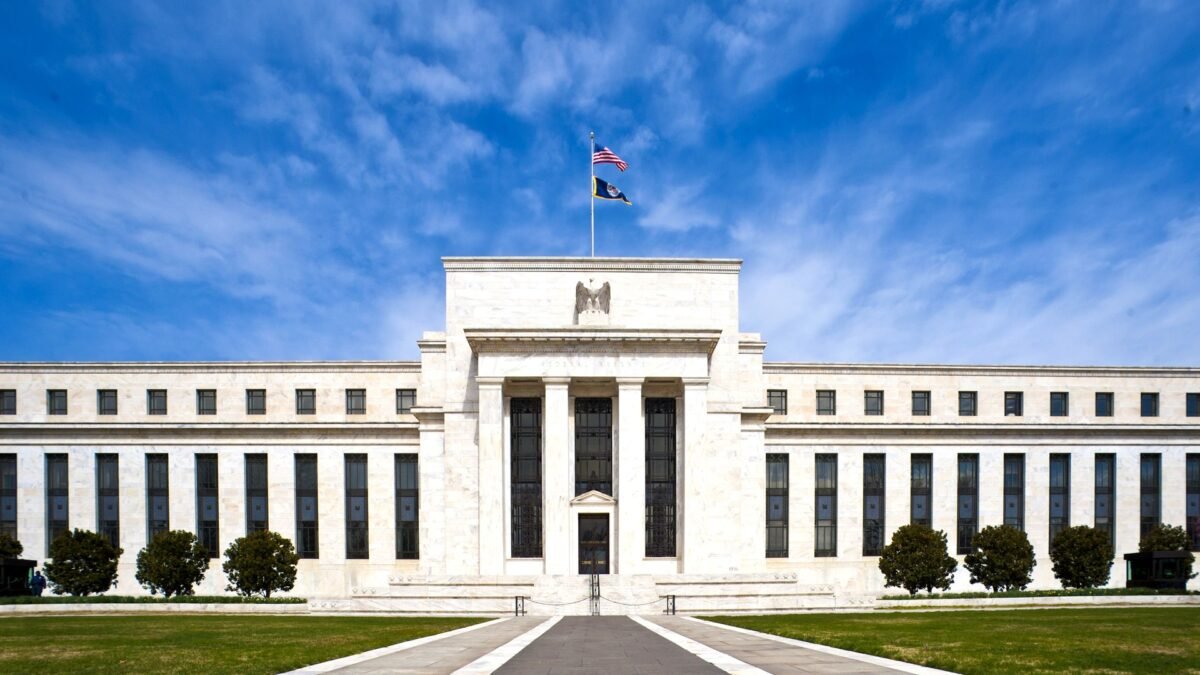
The United States economy grew faster than expected in the third quarter of 2026, while the Federal Reserve’s preferred measure of inflation moved further away from its target in September. The two sets of figures, published together by the Bureau of Economic Analysis (BEA) on 29 October, describe an economy that is expanding with real force and yet still generating price pressure that policymakers cannot ignore.
According to the BEA, real gross domestic product (GDP) increased at an annual rate of 3.4 per cent in the third quarter, covering July, August and September, in the agency’s advance estimate. That was a clear step up from growth of 2.2 per cent in the second quarter, and it came in ahead of the forecasts most economists had pencilled in for the period. The BEA said the increase reflected growth in investment, consumer spending and government spending, partly offset by a fall in exports, while imports — which are subtracted in the GDP calculation — rose.
The inflation side of the same release told a less comfortable story. The personal consumption expenditures (PCE) price index rose by 0.5 per cent in September alone, according to the BEA, taking the twelve-month rate to 3.6 per cent, up from 3.4 per cent in August. Core PCE inflation, which strips out volatile food and energy prices and is watched closely as a guide to underlying trends, rose by 0.3 per cent on the month and by 3.1 per cent over the year, up from 3.0 per cent in August. Both readings remain well above the Federal Reserve’s 2 per cent target.
As Reuters reported, the combination supported economists’ expectations of an interest-rate increase from the Federal Reserve in December. Financial markets were pricing in a roughly 84.6 per cent chance of a rise at that meeting, according to CME’s FedWatch Tool, as cited by Reuters. The data arrived one day after the Fed had left its benchmark rate unchanged, in a decision that was itself far from unanimous.
What drove the acceleration
The BEA said the acceleration from the second quarter primarily reflected faster growth in investment and an upturn in government spending, partly offset by a downturn in exports. Imports increased more in the third quarter than they had in the second, which held back the headline figure in the GDP arithmetic even as domestic activity strengthened.
Investment was the standout contributor. The increase primarily reflected higher private inventory investment and higher spending on equipment, according to the BEA’s technical notes. Within inventories, wholesale trade and manufacturing led the rise, in both cases driven mainly by non-durable goods industries. Within equipment, the increase was led by information-processing equipment, principally computers and peripheral equipment. That detail matters, because it connects the headline growth number to the large-scale spending on computing capacity that has dominated business investment discussions throughout 2026. The figures do not, by themselves, isolate how much of that spending is tied directly to artificial intelligence, but the BEA’s emphasis on computers and peripheral equipment is consistent with the broader pattern of heavy technology investment reported by companies during the year.
Consumer spending, which accounts for more than two-thirds of economic activity, also contributed to growth. The BEA said spending rose for both services and goods. Within services, the increase was led by health care, mainly hospitals and outpatient services, and by food services and accommodation, mainly purchased meals and beverages. Within goods, the increase was led by other non-durable goods, mainly prescription drugs. Over the quarter as a whole, consumer spending increased at a rate of 3.8 per cent, according to Reuters, a solid pace that suggests households were still willing and able to spend through the summer.
A narrower but telling measure pointed in the same direction. Real final sales to private domestic purchasers — the sum of consumer spending and gross private fixed investment, and a gauge that excludes inventories, trade and government spending — increased by 4.9 per cent in the third quarter, compared with 4.6 per cent in the second, according to the BEA. Because that measure strips out some of the most volatile components of GDP, its strength gives the headline figure more credibility than a growth rate driven mainly by stockbuilding alone would carry.
Government spending also rose, but the BEA’s explanation contains an important caution against over-reading that contribution. Within government spending, the increase was more than accounted for by federal government spending, led by non-defence consumption expenditure. The pattern, the BEA said, primarily reflected sales of crude oil from the Strategic Petroleum Reserve: such sales are deducted from government consumption expenditure, and sales in the third quarter were smaller than sales in the second quarter, which produced an increase in measured consumption. Because the oil sold by the government is reflected as an increase in other components of GDP, the BEA stressed, there was no direct effect on GDP overall. In other words, part of the apparent government contribution is an accounting consequence of the timing of reserve sales, not new public demand.
Trade was the main drag. Exports fell, primarily reflecting a decrease in goods, led by petroleum and related products, according to the BEA. Imports rose, with the largest contribution coming from capital goods other than cars. The combination — fewer exports and more imports — subtracted from growth, which makes the 3.4 per cent headline rate more, rather than less, notable: domestic demand had to work harder to overcome it.
September: spending up, but prices ate the gain
The monthly figures for September, published alongside the quarterly estimate, show why the strong quarter did not translate into a straightforwardly cheerful picture for households. Personal income increased by $54.5 billion, or 0.2 per cent, in September, according to the BEA, while disposable personal income — income after tax — increased by $52.7 billion, also 0.2 per cent. Personal consumption expenditure rose by $113.1 billion, or 0.5 per cent, in current-dollar terms, split between $35.1 billion more spending on goods and $78.1 billion more on services.
Once inflation is taken into account, however, the picture flattens sharply. Real personal consumption expenditure increased by only $2.6 billion in September, less than 0.1 per cent, according to the BEA, while real disposable personal income fell by 0.3 per cent on the month. As Reuters put it, higher prices inflated the consumer spending numbers: spending rose by 0.5 per cent in cash terms, but after adjusting for inflation it was unchanged last month, leaving households heading into the fourth quarter on a weaker growth trajectory.
The saving rate underlines the same squeeze. Personal saving was $911.1 billion in September, according to the BEA, and the personal saving rate — saving as a percentage of disposable income — was 3.8 per cent. That is a thin buffer by historical standards, and it means households have been financing a larger share of their spending from income that is not being set aside. When prices rise faster than incomes, as they did in September, that buffer is exactly what comes under pressure first.
Looked at over the quarter rather than the single month, the inflation story is more mixed, and the distinction between the two time horizons is central to understanding the Fed’s dilemma. The PCE price index rose at an annual rate of 2.1 per cent across the third quarter as a whole, according to the BEA, sharply slower than the 5.0 per cent rate recorded in the second quarter, and core PCE inflation slowed to 2.5 per cent from 3.3 per cent on the same basis. The gross domestic purchases price index, a broader measure, rose by 3.0 per cent, down from 5.6 per cent. On a quarterly average basis, in other words, price pressure eased considerably. But the September monthly data show that pressure building again at the end of the quarter, driven in large part by energy: consumers paid more for petrol and other goods, as Reuters reported, and the monthly jump in headline prices was the largest in six months. Averages can conceal turning points, and September looks like one.
Analysis: Why It Matters
1. Growth is real, but it is not evenly spread
The most reassuring feature of the third-quarter figures is not the 3.4 per cent headline itself but its composition. Growth driven only by inventories can reverse quickly when businesses stop restocking; growth driven by final sales to private buyers is harder to dismiss. The BEA’s 4.9 per cent rise in real final sales to private domestic purchasers, together with the strength in equipment investment and consumer services, suggests demand from households and businesses was genuinely firm through the summer. At the same time, the detail warns against treating the economy as uniformly strong. Residential investment was weak, exporters faced a difficult quarter, and the September data show household spending stalling in real terms. An economy can grow briskly on average while important parts of it — housing, trade-exposed manufacturing, and cash-strapped households — feel very different conditions. Policy made on the average alone risks missing the parts that are already under strain.
2. The Fed’s problem is timing, not direction
Few serious observers now dispute the direction of travel on inflation: at 3.6 per cent headline and 3.1 per cent core, it is too high, and it has moved the wrong way in the most recent month. The harder question is timing. Quarterly price measures improved markedly, which could argue that the inflation impulse of earlier in the year is fading. Monthly measures deteriorated in September, which could argue the opposite. The Fed’s decision on 28 October to hold its benchmark rate in the range of 3.75 to 4.00 per cent, by a vote of 10 to 2, reflected that ambiguity. Two members of the committee, Governor Lisa Cook and Cleveland Fed President Beth Hammack, voted against the hold and preferred a quarter-point increase at that meeting. The majority chose to wait for more evidence. The September data, published a day later, gave the dissenters a stronger argument in retrospect, but central banking is rarely judged on a single release, and the committee will have further data before its 9 December meeting. The risk for the Fed is symmetrical: moving too soon could choke off investment-led growth that is still broadening; waiting too long could allow September’s energy-driven price rise to spread into the core measures that are slower to move but harder to reverse.
3. Energy remains the swing factor
Federal Reserve Chair Kevin Warsh told reporters after the October meeting that energy and related prices had moved higher again in recent weeks, adding: “our job is to ensure that relative price changes in some sectors do not broaden out across the economy, and that inflation expectations remain as they are anchored,” as reported by Reuters. That sentence captures the central bank’s core fear. A rise in petrol prices, on its own, is a relative price change: it makes driving more expensive without necessarily making everything else more expensive. The danger comes if workers demand higher wages to compensate, businesses raise prices to protect margins, and households begin to expect further rises, turning a one-off shock into persistent inflation. Energy prices have been elevated amid the conflict in the Middle East, and the BEA’s quarterly figures show how large the earlier energy and price shock had been before it eased. Whether September’s rise proves temporary depends heavily on developments far from Washington — in oil markets, shipping lanes and regional diplomacy — which is precisely why the Fed cannot control it directly and must instead judge how much of it leaks into the rest of the economy.
4. Households are spending, but from a thinner cushion
The combination of flat real spending in September, falling real disposable income and a 3.8 per cent saving rate describes households that are still consuming but with less room to absorb shocks. That matters for the outlook in two ways. First, consumption is more than two-thirds of the American economy, so a household sector that merely holds its spending steady, rather than growing it, removes the main engine of expansion. Second, a low saving rate leaves less protection if job growth slows or prices rise further. The third quarter’s strong consumer spending was real, but it was concentrated in services such as health care and eating out, and in prescription drugs — categories that reflect need and demography as much as discretionary confidence. The question for the fourth quarter is whether households can sustain that spending when their real incomes are flat and their savings are thin. If they cannot, the growth rate that looked so strong in the summer may fade without any single dramatic cause.
5. Markets heard a hawkish message, and mostly shrugged
Financial markets took the data in their stride, but the reaction was instructive. According to Investor’s Business Daily, the S&P 500 added to modest losses after the reports, pulled lower by sharp falls in shares such as Alphabet and Caterpillar, while the yield on the 10-year Treasury note eased back to around 5 per cent from above that level the previous day. The muted response suggests investors had already priced in much of the story: a December rate rise was widely expected before the data arrived, and the growth beat was not large enough to change the broader debate about whether artificial-intelligence investment can sustain its current pace. The more important market signal may be the one from the Fed itself. Chair Warsh noted, according to Investor’s Business Daily, that financial conditions had tightened for AI financing and that monetary policy was working following the September rate rise. If borrowing costs and credit conditions are already doing some of the Fed’s work, the case for another immediate rise weakens even as the inflation data strengthen it. That tension — between a central bank that sees its past tightening biting and an inflation rate that refuses to fall in a straight line — is likely to define the December meeting.
What to Watch Next
- The second estimate on 25 November. The BEA will publish its second estimate of third-quarter GDP, together with corporate profits, on 25 November 2026. Revisions can be material, particularly for inventories and investment, and they will show whether the advance estimate’s strong domestic demand survives fuller data.
- October inflation and the December Fed meeting. The next monthly PCE and consumer-price readings will show whether September’s 0.5 per cent monthly jump was an energy-driven blip or the start of a renewed climb. The Federal Open Market Committee meets on 9 December, with markets pricing in a high probability of a quarter-point rise.
- Energy prices and the Middle East. With energy the main driver of September’s headline rise, oil and petrol prices in the coming weeks will matter as much as any domestic release. Any easing would take pressure off headline inflation; any further rise would test whether the Fed’s patience holds.
- Real incomes and the saving rate. If real disposable income stays flat or falls again and the saving rate remains near 3.8 per cent, household spending — the largest part of the economy — is likely to soften into the end of the year, regardless of how strong the third quarter looked.
- Business investment beyond the headline. Equipment spending led by computers and peripheral equipment was central to the third quarter. Company earnings and capital-spending announcements in the coming weeks will show whether that investment is broadening or narrowing to a small number of large technology spenders.
Sources
- U.S. Bureau of Economic Analysis, “GDP (Advance Estimate), 3rd Quarter 2026”, 29 October 2026
- U.S. Bureau of Economic Analysis, “Personal Income and Outlays, September 2026”, 29 October 2026
- Reuters, “US inflation heats up in September; consumer spending rises”, 29 October 2026
- Investor’s Business Daily, “Q3 GDP Revs Up As PCE Inflation Gets Hotter; S&P 500 Falls”, 29 October 2026
- Morningstar / Dow Jones, “Dow Jones Top Markets Headlines: U.S. Economy Picked Up Speed, With GDP Growth at 3.4% in Third Quarter”, 29 October 2026

About the Author — Abdul Mannan
Related Articles
Christine Lagarde to Step Down as ECB President on 7 February 2027 as Bank Holds Rates at 2.5%
Christine Lagarde will step down as President of the European Central Bank on 7 February 2027, almost nine…
Fed Holds Rates at 3.75% to 4% in 10-2 Vote as Two Officials Push for Another Hike
The Federal Reserve held its benchmark rate at 3.75% to 4% in a 10-2 vote on 28 October…

Brazil’s Markets Steady After Election Sell-Off as Finance Minister Vows Fiscal Discipline
Brazil's real and Bovespa steadied on Tuesday after Monday's historic sell-off, as Finance Minister Dario Durigan blamed investor…