
Exxon and Chevron Post Surging Third-Quarter Profits as War-Driven Refining Margins Overtake Oil Production

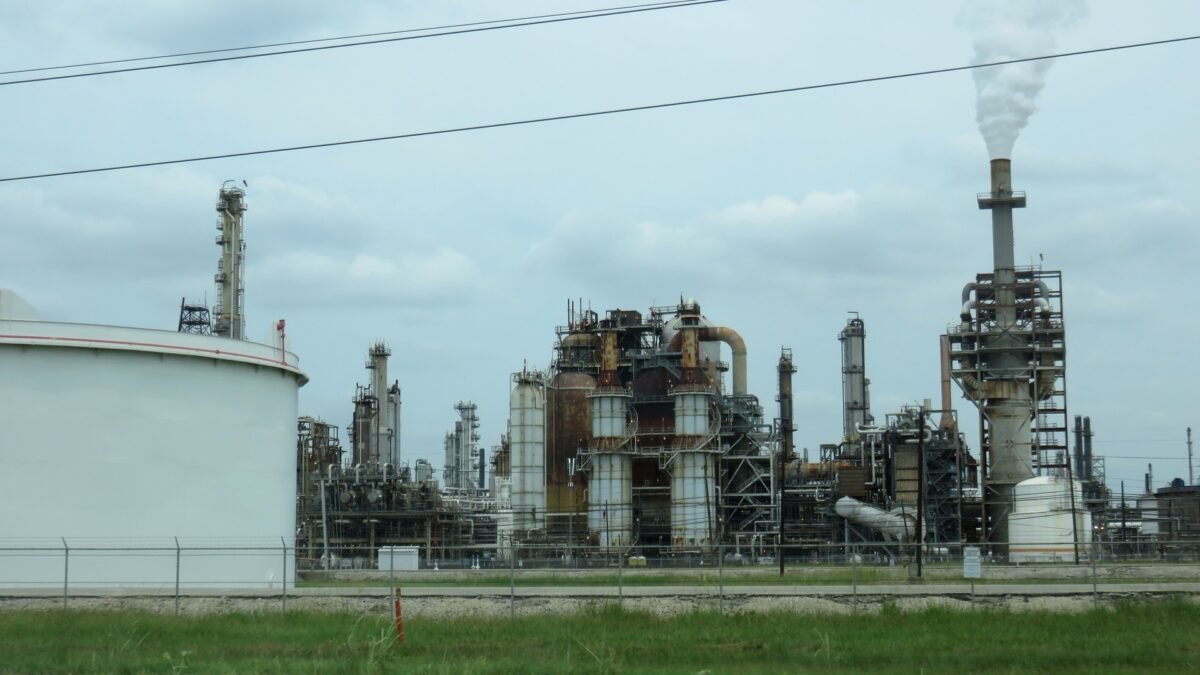
ExxonMobil and Chevron both beat Wall Street forecasts with sharply higher third-quarter profits on Friday, as war-driven refining margins turned their fuel-making businesses into their biggest earners, according to Reuters.
For ExxonMobil, the shift was historic. The company earned more from refining oil than from producing it for the first time in at least six years, Reuters reported, after its refineries ran at full tilt while crude prices stayed comparatively subdued. Chevron’s downstream business, which refines and sells fuel, recorded its highest earnings in at least the same period.
ExxonMobil reported net income of $15.4 billion, or $3.72 per diluted share, for the three months to the end of September, more than double the $7.5 billion, or $1.76 a share, it earned in the same quarter of 2025, according to Reuters. Excluding identified items and timing effects, the company earned $17.5 billion, or $4.23 a share, ahead of the $4.08 expected by analysts polled by LSEG, Reuters reported. Revenue reached $113.2 billion, against expectations of $103.1 billion.
Chevron reported net income of $9.9 billion, or $5.06 per diluted share, against $3.5 billion, or $1.82 a share, a year earlier, according to Reuters. On an adjusted basis it earned $10.4 billion, or $5.28 a share, beating the $4.89 expected by analysts, Reuters reported. Revenue rose 36 per cent year on year to $67.8 billion, against forecasts of $61.6 billion, according to the Associated Press.
The results capped a second straight banner quarter for the world’s biggest oil companies, Reuters reported, with sharply higher petrol and diesel prices during the war between the United States and Israel and Iran, and the war between Russia and Ukraine, disrupting global energy markets for months.
Shares in both American majors rose nearly 2 per cent in Friday trading, Reuters reported, even as Wall Street’s major indexes fell in a broader technology-led sell-off.
The refinery overtakes the oilfield
The central story of the quarter is a reversal of what normally drives profits at the large integrated oil producers. Historically, results at companies such as ExxonMobil and Chevron track the price of crude oil, because their upstream businesses, which pump oil and gas, dominate earnings. In the third quarter, the opposite happened: the price of crude was volatile but comparatively soft, while the margin earned by turning crude into petrol, diesel and jet fuel soared.
At ExxonMobil, the Energy Products segment, which houses its refineries, earned $7.17 billion in the quarter, edging out the $7.09 billion earned by its upstream production business on a reported basis, according to Reuters. On an adjusted basis the gap was wider, at $9.05 billion against $7.31 billion. The company said higher refining margins added an estimated $4.5 billion to third-quarter earnings, while lower oil prices cut earnings by about $1.3 billion.
Exxon’s refineries on the United States Gulf Coast ran at 100 per cent utilisation of their crude distillation units during the quarter, according to Reuters, and recorded their second-highest diesel production levels. Cash flow from operations reached $25.7 billion, while free cash flow was $19.1 billion, according to Reuters. Production was 4.5 million barrels of oil equivalent a day, a level close to second-quarter output.
At Chevron, downstream earnings reached $4.93 billion, up from $1.14 billion in the same quarter a year earlier, mainly on higher margins on refined product sales, according to Reuters. Its upstream business earned $5.7 billion, up from $3.3 billion a year earlier, but down by about 30 per cent from the previous quarter, partly because of lower oil prices, according to the Associated Press. Chevron’s refineries in the United States processed a record 1.09 million barrels of crude a day, running at nearly 98 per cent of capacity, Reuters reported. Production was 3.98 million barrels of oil equivalent a day, down 2 per cent from the second quarter, while production from its United States upstream business exceeded 2 million barrels of oil equivalent a day for a fifth consecutive quarter.
Chevron’s adjusted free cash flow was $14.2 billion, double its level in the same period a year earlier, according to Reuters.
The same pattern played out across the Atlantic. Shell and TotalEnergies also reported better-than-expected earnings on Thursday from record-setting refining margins, Reuters reported. BP posted a record quarterly underlying profit on Friday, underlining that the refining windfall is an industry-wide phenomenon rather than a story about two American companies.
BP posts a record quarter
BP reported third-quarter underlying replacement cost profit, its version of net income, of $8.46 billion, the highest of any quarter under the company’s current measure, Reuters reported. That beat analysts’ expectations of $7.33 billion and compared with $2.2 billion a year earlier, according to Reuters.
The company’s own results statement put underlying replacement cost profit at $8,458 million for the quarter, against $2,210 million in the same period of 2025, and said the result mainly reflected significantly higher realised refining margins and higher realisations. Reported profit attributable to BP shareholders was $4.7 billion, a 304 per cent increase year on year, according to the company’s results.
BP’s refining indicator margin, a measure of the profitability of turning crude into fuels, rose to $46.70 a barrel in the third quarter, from $15.80 a barrel in the third quarter of 2025, according to the company’s results. Its customers and products division reported underlying profit before interest and tax of $6.9 billion, a 305 per cent increase from $1.7 billion a year earlier, with refining and trading accounting for $5.7 billion of the result, against $549 million a year earlier.
Operating cash flow reached $14.8 billion in the quarter, and net debt fell to $13.9 billion at the end of September, down from $26.1 billion a year earlier, according to BP. The company said the improvement allowed it to reach its net debt target a year ahead of schedule. BP said it would use part of the surplus cash to settle its remaining liabilities from the 2010 Deepwater Horizon disaster, when a blow-out on the drilling rig over the BP-operated Macondo well in the Gulf of Mexico became one of the worst oil spills on record, killing 11 people. The company put aside $69 billion relating to the spill, Reuters reported.
BP’s chief executive, Meg O’Neill, said the group continued to operate in an energy market shaped by volatility and disrupted trade flows. She also said the company was already seeing refining margins start to soften a bit as the third-quarter driving season ends.
Why margins soared
Refining margins are, in simple terms, the difference between the price of crude oil and the price of the fuels made from it. When that gap widens, refiners earn more on every barrel they process. In the third quarter of 2026, the gap widened dramatically, and the reason was disruption rather than demand.
The effective closure of the Strait of Hormuz and recent attacks on refineries in Saudi Arabia and Russia have knocked out fuel-making capacity, sending refining margins sky-high, Reuters reported. The benchmark Brent crude price swung from as low as $68 a barrel to a high of $132 during the quarter, Chevron’s chief financial officer, Eimear Bonner, told Reuters, underscoring the volatility of the market.
The Gulf Coast 3-2-1 crack spread, a gauge of United States refiner profitability that measures the margin from turning three barrels of crude into two barrels of petrol and one of diesel, climbed 28 per cent versus the second quarter and peaked at an all-time high of $72.64 on 22 September, according to market data reported in coverage of the results.
The disruption has several overlapping causes. The war between the United States and Israel and Iran is in its eighth month, and the Strait of Hormuz, the narrow waterway through which a large share of the world’s seaborne oil passes, has been effectively closed to normal traffic. Iran said this week that four oil tankers hit mines in the strait, while British maritime monitors reported a vessel on fire north-east of Khasab in Oman. The Houthis in Yemen claimed missile and drone strikes on Saudi oil sites, including the Ras Tanura refinery, and Ukrainian strikes on Russian refineries have taken fuel-making capacity offline in Russia.
With fuel-making capacity knocked out in several places at once, the refineries that kept running, above all on the United States Gulf Coast, could charge far more for petrol and diesel. Brent crude traded above $116 a barrel on Friday, on course for a gain of about 11 per cent in October, its fourth consecutive monthly increase, according to Reuters. West Texas Intermediate crude traded above $102 a barrel.
Governments have begun to respond to the squeeze on fuel supplies. Eleven European countries are to release 42.6 million barrels from their strategic reserves by the end of January 2027, in an effort to ease the pressure on fuel markets.
Debt first, dividends second
One of the most striking features of the results is what the two American majors are doing with the cash windfall. Rather than significantly raising dividends or buying back far more shares, ExxonMobil and Chevron are using the money to pay down debt and strengthen their balance sheets, Reuters reported.
ExxonMobil reduced debt by $8 billion during the third quarter, its chief financial officer, Neil Hansen, said in an interview with Reuters, adding that the company planned to stick to its approach of maintaining a sustainable and growing dividend over the long term. The company raised its fourth-quarter dividend by 4 cents from the previous quarter. It paid $4.3 billion in cash dividends and repurchased $5.1 billion of shares in the third quarter, and said it would repurchase $20 billion worth of shares in 2027, the same level as in the previous two years.
Chevron has cut net debt by nearly $14 billion since the end of 2025, according to Reuters. Its chief financial officer, Eimear Bonner, told Reuters: “We think in decades, not quarters. We need that (strong) balance sheet through high prices and low prices.”
The European majors are taking a different approach. Shell said its strong results would allow it to raise buybacks over the next three months to $5 billion, up from $3 billion in the preceding quarter, Reuters reported. TotalEnergies will consider issuing an extra dividend next year if annual cash flow reaches $43 billion, its chief executive, Patrick Pouyanne, said on Thursday, according to Reuters.
The divergence is revealing. The American majors, scarred by past cycles in which debt piled up during downturns, are treating the windfall as a chance to buy insurance against the next slump. The Europeans, under greater pressure from shareholders to return cash, are handing more of it back. Both strategies rest on the same bet: that the good times will not last forever, and that the balance sheet is the place to prepare for their end.
Investing in more refining capacity
Both American companies also said they would invest in making more fuel, rather than simply enjoying the margins while they last.
ExxonMobil is investing more in its refineries, including at its Baytown complex in Texas, to increase fuel production, and has leaned on its trading team to direct supplies to where they are needed globally, Mr Hansen told Reuters. Distillate production in the United States will grow by another 100,000 barrels a day through the refinery investments, the company said, without giving a timeline. ExxonMobil’s chief executive, Darren Woods, said on an analyst earnings call that the company is looking for more ways to expand its existing refining facilities, along with upgrading them to produce more fuels or chemical feedstocks, according to Reuters.
Chevron has opportunities to increase efficiency at its United States Gulf refineries and could grow capacity by 7 per cent at its Pascagoula refinery in Mississippi by the end of the decade, Ms Bonner told Reuters.
Mr Hansen acknowledged the other side of the equation. “It’s important to acknowledge that these higher fuel prices put real pressure on families and businesses,” he told Reuters. “The most meaningful response … that we can offer as a company is to pull every lever that’s available to us to increase supply.”
The high cost of diesel and petrol is among voters’ biggest frustrations ahead of Tuesday’s midterm elections in the United States, Reuters reported, which makes the timing of these record results politically charged.
Analysis: Why It Matters
1. A reversal of the usual oil-profit logic
For decades, the shorthand for understanding Big Oil has been simple: when crude prices rise, the oil majors make money; when they fall, profits shrink. The third quarter of 2026 breaks that shorthand. Crude prices were volatile and, for much of the quarter, lower than in the preceding three months, yet ExxonMobil, Chevron and BP all posted some of the strongest results in their histories. The money came not from the ground but from the refinery gate.
That matters because it changes who benefits from war and disruption, and who pays. In a normal oil shock, the producer countries and the companies that pump crude capture the windfall. In this shock, the windfall has gone to the companies that turn crude into fuel, because the disruption has hit fuel-making capacity harder than it has hit crude supply. The refinery, long the unglamorous middle of the oil business, has become its most profitable part. Investors who spent years treating refining as a low-margin afterthought will have to rethink that assumption, and companies that neglected their downstream businesses will be asking whether they underinvested.
2. War, not demand, is setting the price of fuel
The second point to grasp is that these margins are not a reward for efficiency or for meeting rising demand. They are a scarcity premium created by conflict. The Strait of Hormuz is effectively closed, refineries in Saudi Arabia and Russia have been attacked, and tankers have been hit by mines and explosive devices. Every one of those events removes fuel-making capacity from a market that cannot quickly replace it, because building a refinery takes years and repairing a damaged one takes months.
That has two consequences. First, the profits are, in a real sense, a tax on everyone who buys fuel, paid to the companies lucky enough to own undamaged refineries in the right places. Second, the profits are hostage to events nobody controls. A ceasefire, a reopened strait, or a repaired refinery could compress margins as quickly as war expanded them. BP’s chief executive has already said margins are starting to soften. The market’s task is to judge how much of this windfall is durable and how much is a one-off transfer from consumers to refiners, and the honest answer is that nobody knows yet.
3. The windfall is going to balance sheets, not shareholders
The third notable feature is restraint. In past booms, oil majors have often responded to surging profits with surging buybacks and special dividends, only to find themselves overextended when prices fell. This time, the two American majors are paying down debt first. ExxonMobil cut debt by $8 billion in a single quarter; Chevron has cut net debt by nearly $14 billion since the end of last year; BP has reached its debt target a year early and is using surplus cash to settle the last of its Deepwater Horizon liabilities.
That caution is a signal in itself. If the companies that know the market best believed these margins would last for years, they would be investing far more aggressively in new capacity and returning far more cash to shareholders. Instead they are fortifying their balance sheets, expanding existing refineries at the margin, and keeping buybacks flat. The message is that they expect the windfall to fade, and they intend to be ready when it does. Investors should read the debt reduction as a forecast, not just a financial decision.
4. The political problem: record profits meet pump-price pain before the midterms
The fourth dimension is political, and it is acute. Record profits at the world’s biggest oil companies have arrived in the same week that American voters are telling pollsters that the cost of diesel and petrol is among their biggest frustrations, days before midterm elections on Tuesday. That combination has historically been combustible. Politicians of both parties have, in past cycles, accused oil companies of profiteering when pump prices rise, and the accusation lands more easily when the companies are simultaneously reporting record earnings.
The companies’ defence, offered by ExxonMobil’s chief financial officer, is that the answer to high fuel prices is more supply, and that they are investing to provide it. That is a fair point as far as it goes: a refinery that runs at 100 per cent utilisation is doing everything it can to meet demand. But it does not answer the distributional question, which is why the profits of the refiners should rise by billions while households pay more at the pump. Expect the results to feature in the final days of the midterm campaign, and expect the debate about windfall taxes, price gouging and energy policy to return with them, whether or not any of those ideas becomes law.
5. How long can it last, and what ends it
The final question is the one the market is really asking: how long do these margins last? The executives’ own answers are cautious. Chevron’s vice chairman, Mark Nelson, said during a conference call with analysts: “Margins will stay a bit elevated, maybe into next year.” BP’s chief executive said margins were already starting to soften. Fuel-making margins should return to more normal levels when conflicts end and damaged refineries are repaired, executives from both companies said, according to Reuters, but that will take time.
Three things could end the windfall. The first is diplomacy: a ceasefire or a deal that reopens the Strait of Hormuz would restore fuel supplies and compress margins quickly. The second is repair: refineries in Saudi Arabia and Russia will eventually come back online, and every barrel of restored capacity narrows the gap. The third is demand: if high fuel prices and a slowing global economy cut consumption, margins will fall from the demand side as well. The eurozone economy slowed in the third quarter, France’s economy contracted, and the United States Federal Reserve held interest rates steady this week against a backdrop of rising inflation. None of that points to booming fuel demand.
The most likely outcome is a gradual normalisation rather than a sudden collapse, with margins easing through 2027 as repairs are completed and strategic reserve releases add supply. But the history of oil markets is a history of sudden reversals, and the same wars that created these margins could, if they escalate, push them higher still. For now, the refiners are enjoying the best conditions in years. The prudent ones are using the moment to pay down debt, because they know better than anyone that the moment will pass.
What to Watch Next
- Whether refining margins hold or soften: BP’s chief executive said margins were already starting to soften as the driving season ends, while Chevron’s vice chairman said they could stay elevated into next year. The next few weeks of crack-spread data will show which of them is right.
- The United States midterm elections on Tuesday: Fuel prices are among voters’ biggest frustrations, and record oil-company profits are likely to feature in the final days of campaigning. Watch for any candidate or party to propose windfall taxes or other measures in response.
- The Strait of Hormuz and the war with Iran: Any ceasefire, diplomatic opening or reopening of the strait would restore fuel supplies and compress refining margins quickly. Conversely, further attacks on tankers or refineries would push them higher.
- Fourth-quarter guidance and 2027 spending plans: ExxonMobil has said it will repurchase $20 billion of shares in 2027, the same as in the previous two years. Watch whether the majors raise capital spending on refining, and whether the European majors keep increasing buybacks.
- Strategic reserve releases and the demand picture: Eleven European countries are to release 42.6 million barrels from strategic reserves by the end of January 2027. Combined with slowing growth in the eurozone and the Federal Reserve’s cautious stance on rates, the demand outlook will shape margins as much as supply.
Sources
- Reuters, “Exxon, Chevron earnings propelled by war-driven refining surge”, via SRN News, 30 October 2026
- BP p.l.c., “Group results: Third quarter and nine months 2026” (RNS regulatory announcement), 30 October 2026
- Reuters, “BP beats forecasts with record profit, targets early settling of Deepwater Horizon bill”, via London South East, 30 October 2026
- SourceFirstNews, “Exxon, Chevron Q3 2026 earnings beat estimates on refining” (reporting Reuters figures), 30 October 2026
- Reuters, “Exxon, Chevron earnings propelled by war-driven refining surge”, via 98.5 The River, 30 October 2026

About the Author — Abdul Mannan
Related Articles

Global Tech Sell-Off Deepens as Amazon and Intel Earnings Spook Investors and Asia Stocks Slide
Amazon and Intel's after-hours falls spread to Asia on Friday, pulling chip stocks down and sending investors into…
US Economy Grew 3.4% in Third Quarter as September Inflation Heated Up, Leaving Fed December Decision in Focus
US GDP grew at a 3.4% annual rate in the third quarter, beating forecasts, while September PCE inflation…
Christine Lagarde to Step Down as ECB President on 7 February 2027 as Bank Holds Rates at 2.5%
Christine Lagarde will step down as President of the European Central Bank on 7 February 2027, almost nine…