
OPEC+ Agrees in Principle to Hold December Oil Output Steady as Brent Nears Six-Month Highs

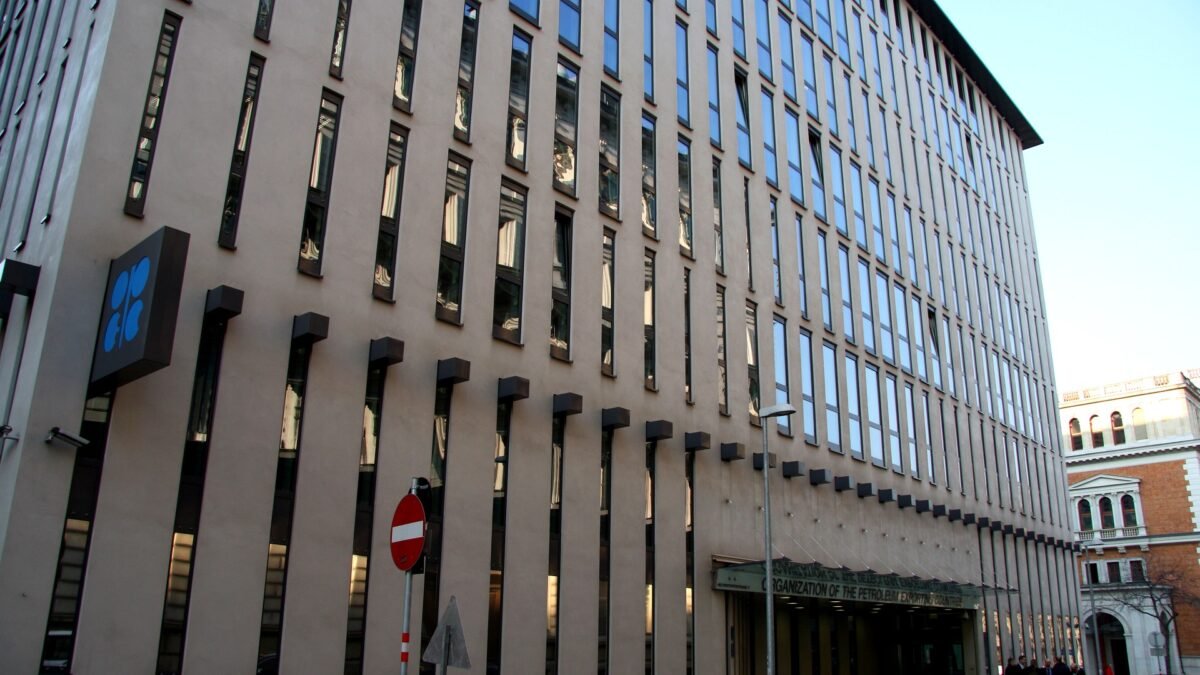
OPEC+ has agreed in principle to keep its oil production targets unchanged for December, three people with knowledge of the matter told Reuters on Saturday, settling the one question hanging over a market that has spent October pricing in war rather than supply policy.
The agreement covers the seven core producers who meet online on Sunday — Saudi Arabia, Russia, Iraq, Kuwait, Algeria, Kazakhstan and Oman — and it means December’s output ceilings will stay where they are, according to Reuters. The group has not formally announced the decision, and the meeting itself still has to take place, but the sources said the outcome was settled in advance, in line with expectations that no further policy adjustments would come until next year.
It is, on the face of it, the least dramatic decision a producer group can take. But the context makes it anything but routine. Brent crude, the global benchmark, ended October at its highest level since late April, after a month in which tankers were mined in the Strait of Hormuz, missiles were fired at Saudi Arabia, and the world’s largest oil companies reported record refining profits on the back of the disruption. The producers are holding their targets steady at precisely the moment when the gap between what they are allowed to pump and what they can actually deliver has become the most important number in the oil market.
Brent’s January contract, now the front month, settled at $113.43 a barrel on Friday, up $2.63 on the day, according to Reuters via CNBC. The expiring December contract settled at $117.64, up 2.4 per cent, after touching $118 during the session. US benchmark West Texas Intermediate settled at $104.12, up $2.12. For the month, Brent rose 13.6 per cent and WTI 15.2 per cent — a fourth straight monthly gain for both, and their highest levels since late April.
The meeting on Sunday is the group’s regular monthly review. At its previous meeting, on 4 October, the same seven countries agreed to carry September’s required production levels into November without change, and scheduled this weekend’s session to set December. The pattern is now well established: the group meets, it holds, and the real decisions are deferred to a bigger argument about the future.
The decision in context
OPEC+ has spent most of 2026 unwinding one set of cuts while keeping another in place. In September, the group completed the phased rollback of a 1.65 million-barrel-per-day supply cut first agreed in 2023, according to Reuters. A separate layer of cuts of about 2 million barrels a day, covering most member countries, remains in force through the end of 2026, and how to handle that layer is now the central question facing the alliance.
Reuters reported in July that the group was likely to make no changes to its targets during the fourth quarter as it turned its focus to negotiations over 2027 quotas. That expectation has held through every meeting since. The seven producers need to finish a review of each member’s maximum sustainable production capacity during the fourth quarter before they can set the 2027 baselines that will determine future quotas and shape any plan to unwind the remaining cuts, sources have told Reuters.
The capacity review matters because it decides who gets to produce how much next year, and the numbers are contested. A country’s quota is only as valuable as the oil it can actually lift, and several members have spent the year producing far below their ceilings — not by choice, but because war has damaged their infrastructure and disrupted their exports. The review is, in effect, a reckoning with what each member can really do, and it is the kind of negotiation that producers prefer to conduct slowly, behind closed doors, rather than in a monthly video call.
That is why Sunday’s meeting was never expected to produce drama. Three sources told Reuters on 27 October that the group was likely to keep December targets unchanged, and Saturday’s report — that the producers have now agreed in principle — merely confirms what the market had already priced in. A hold would be read as neutral, according to analysts cited by Reuters, and any surprise in either direction would set the tone for Monday’s open.
The full OPEC+ group, including the wider membership beyond the seven core producers, is scheduled to meet on 29 November, when the Joint Ministerial Monitoring Committee will review market conditions and compliance. The December decision, by contrast, is a matter for the seven.
A market priced for war, not for quotas
October’s oil rally was driven by the sea lanes, not by demand. The month began with Brent near $100 to $102 a barrel, according to Investing.com historical data cited by FinanceFeeds, and ended above $113 on the new front-month contract, as incidents around the Strait of Hormuz and strikes on Saudi Arabia piled up through the month.
The most serious incident came on Friday, when a tanker in the Strait of Hormuz was struck by explosive devices attached by a small boat, according to the United Kingdom Maritime Trade Operations centre, known as UKMTO. Maritime sources told Reuters it was the first known successful limpet-mine strike in the waterway since the war between the United States, Israel and Iran began in February. The vessel, the Panama-flagged tanker Louise 1, was temporarily disabled by a fire in its engine room before resuming its voyage, and its crew was reported safe.
It was not an isolated event. According to the Washington Institute, 28 attacks on shipping in and around the strait were recorded in October, and 113 since the war began on 28 February. The Houthi movement in Yemen said on Thursday that it had attacked the Ras Tanura and Rabigh refineries and an Aramco production facility at Abqaiq in Saudi Arabia, while a Saudi-led coalition said it had intercepted a cruise missile aimed at the kingdom’s west. The Associated Press said it was unable to verify the claim about Ras Tanura, and Saudi Arabia issued no comment on it. The United States had already ordered non-emergency government staff to leave Saudi Arabia from 23 October, according to Reuters via CNBC.
Diplomacy, meanwhile, has flickered without catching. Qatari mediators returned to Tehran on Friday to work towards a deal between the United States and Iran, according to Reuters via CNBC, and Iran has received a letter from US Vice President JD Vance but has not replied, according to the Tasnim news agency. Iran’s Revolutionary Guards claimed on Thursday that three tankers had struck sea mines on a southern route around the strait; US Central Command rejected the claims and said the main transit routes had been cleared, according to FinanceFeeds.
The result is a market in which the price of oil is set less by OPEC+ decisions than by the next incident report. “Traders will remain focused on oil flows out of the Middle East and the likely escalation by US and allied forces,” Dennis Kissler, senior vice president of trading at BOK Financial, told Reuters via CNBC. Analysts at ING said prices remained elevated as the market waited for greater clarity on President Donald Trump’s next move towards Iran, and that getting through Tuesday’s midterm elections without new strikes on Iran “may be enough to start eroding the risk premium in the market,” according to Reuters.
That premium is large. JPMorgan has estimated Brent’s fundamental value at about $94 a barrel, according to Coinpaper, which would put roughly $20 of geopolitical risk into every barrel sold on Friday. Saxo Bank expects crude to trade at $70 to $90 a barrel even after the conflict ends, against $60 to $70 before the war, according to Reuters via CNBC. And a Reuters survey of 32 economists and analysts conducted through October pushed the average Brent forecast for 2026 above $90 a barrel for the first time since May — $92.88, against $89.05 a month earlier — with US crude seen averaging $86.60. The survey also forecast an oil market deficit of around 2.7 million barrels a day in the fourth quarter of 2026.
Quotas on paper, barrels in practice
The most striking feature of the current oil market is the distance between what OPEC+ members are permitted to produce and what they actually manage to pump. The seven core producers pumped approximately 25 million barrels a day in August, according to Reuters, up 630,000 barrels from July but still roughly five million barrels below their February production levels. Gulf members have been raising exports disrupted by the war, but most still pump well below their targets, according to Reuters.
The gap is the reason Sunday’s decision matters so little to prices, and so much to the producers. Keeping a target unchanged does not, by itself, put a single extra barrel on a tanker. When the group’s own members cannot meet the ceilings they already have, the ceiling is not the constraint — the war is. A market analyst cited by Reuters put it plainly: the expected hold is “irrelevant to supply because Saudi output sits 2.1 million barrels a day below quota.”
The physical evidence supports that reading. The US Energy Information Administration estimated disrupted oil production in the region at about 4.8 million barrels a day during September, down from 5.8 million in August, according to its Short-Term Energy Outlook. US commercial crude inventories fell by 1.9 million barrels in the week ended 23 October, the agency reported, against expectations for a slight increase. And eleven European Union states have begun releasing 42.6 million barrels from strategic reserves, to be completed by the end of January 2027, according to Reuters — a measure governments take when they expect supply to stay tight, not when they expect it to loosen.
The disruption has been extraordinarily profitable for those who turn crude into fuel. ExxonMobil, Chevron and BP all reported third-quarter results on Friday that beat expectations on the strength of refining margins, according to Reuters, with Exxon reporting net income of $15.4 billion and Chevron $9.9 billion. For the first time in at least six years, Exxon’s refining business earned more than its oil production business. The war has, in effect, transferred money from drivers and airlines to refiners — and the longer the disruption lasts, the larger that transfer becomes.
That is the backdrop against which the producers meet on Sunday. They are not being asked to decide whether oil is scarce; the market has already decided that. They are being asked whether to pretend, by changing a number on paper, that they can do something about it. The answer, agreed in principle on Saturday, is no.
Analysis: Why It Matters
The hold is an admission, not a policy
When a producer group holds its targets unchanged, it usually means it is happy with the balance of supply and demand. This hold means something different: it means the group cannot change the balance even if it wanted to. The members who could pump more are the ones whose exports are disrupted by war, and the members who are not disrupted are already near their practical limits. A decision to hold, in these circumstances, is not a choice between tightening and loosening. It is an acknowledgement that the lever the group has spent sixty years pulling — the quota — is no longer connected to anything. The oil market has understood this for weeks; Sunday’s meeting merely makes it official. The interesting question is not what OPEC+ decided, but how long it takes the rest of the world to stop treating its meetings as market-moving events.
Brent above $110 is a tax on everyone else’s recovery
Oil at $113 a barrel does not stay in the oil market. It shows up in diesel prices, in airfares, in the cost of moving food, and eventually in inflation data — which is why the week ahead matters beyond the energy pages. The US October jobs report is due on Friday, and higher fuel costs feed directly into the inflation figures that have kept Federal Reserve rate-cut bets in check. In India, which imports most of its oil, a sustained rise increases the import bill, widens the current account deficit and pressures the rupee, according to Outlook Money. In Europe, governments are already drawing down strategic reserves, which is a polite way of saying they expect the problem to persist into next year. The producers’ hold keeps all of this in place. Every month that Brent stays above $110 is a month in which the global economy pays a war premium it did not vote for, and the people who pay it are overwhelmingly not the people who started the war.
The real negotiation is 2027, and it will be ugly
The capacity review now under way is the most consequential piece of OPEC+ business since the group was formed, and it has barely been reported. Setting 2027 baselines means deciding, country by country, how much oil each member is entitled to produce — and therefore how much revenue each member is entitled to earn — at a moment when several members’ real capacity has been degraded by war and others have spent heavily to expand theirs. Saudi Arabia, which has carried the burden of cuts for years, will want its sacrifice recognised. Russia, whose exports are constrained by sanctions as well as war, will want its quota protected. Iraq and Kazakhstan, which have repeatedly exceeded their ceilings, will want baselines that reflect what they can actually pump rather than what they promised to pump. These are the arguments that break alliances, and they are being conducted while the members’ capitals are, in some cases, on opposite sides of an active war. The December hold buys the group a few more weeks. It does not resolve any of this.
The Hormuz premium will not fade on its own
There is a comforting theory in oil markets that risk premiums erode with time — that traders get used to danger, that shipping adapts, that the price drifts back towards fundamentals. October tested that theory and it failed. Each week brought a new incident, each incident pushed the price higher, and the limpet-mine strike on Friday was the most serious yet precisely because it was the first of its kind to succeed. The Strait of Hormuz carries roughly a fifth of the world’s seaborne oil, and the strike demonstrated that the threat to it is not theoretical. ING’s analysts were right that surviving the midterms without new strikes might begin to erode the premium — but that is a hope, not a forecast, and it depends on decisions in Washington and Tehran that neither side has yet made. Until one of them does, the premium is not a market anomaly. It is the price of a war that has no end in sight.
America votes on Tuesday, and oil is on the ballot
The timing of Sunday’s meeting, two days before the US midterm elections, is not a coincidence of the calendar — it is the central fact of the week. President Trump has said the United States will not attack Iran before the midterms, but has neither ruled out nor confirmed strikes afterwards, and that ambiguity is itself a market force. Diesel and petrol costs are among voters’ biggest frustrations, and a Brent price above $110 in the final days of a campaign is the kind of number that shows up in attack advertisements. The producers know this, which is one reason they have settled their December decision in advance: nobody in Vienna, Riyadh or Moscow wants to be blamed for a price spike on election eve. But the same logic cuts the other way. If the election result emboldens the White House to strike, or if Tehran reads the result as weakness, the oil market’s next move will be made in Washington, not in Vienna — and no quota decision, however generous, will be able to contain it.
What to Watch Next
- Sunday’s formal statement: The seven producers meet online on 1 November. A hold on December targets is the expected outcome, confirmed in principle on Saturday; any change, or any language about 2027, would set Monday’s open.
- The Strait of Hormuz: Whether Friday’s limpet-mine strike on the Louise 1 is followed by further attacks on tankers, and whether shipping through the strait continues under US military protection, will determine how much of the current risk premium survives the week.
- Tehran’s reply to the Vance letter: Iran has received a letter from US Vice President JD Vance but has not replied, according to Tasnim. An answer — or the outcome of the Qatari mediators’ visit — is the clearest available signal of whether diplomacy has any life left in it.
- Tuesday’s US midterm elections: The vote on 3 November will shape what happens next in the Gulf, since President Trump has tied any decision on renewed strikes to the period after the election. Oil traders will be watching the results as closely as any political analyst.
- The 2027 capacity review: The producers must finish verifying members’ production capacity before setting next year’s baselines. Any leak or dispute about those numbers — particularly for Saudi Arabia, Russia and Iraq — will move the market more than any monthly quota decision.
Sources
- Reuters — “OPEC+ set to keep production targets unchanged in December, source says” (31 October 2026)
- SRN News — “OPEC+ agrees in principle to keep oil output targets steady in December, sources say” (Reuters, 31 October 2026)
- FinanceFeeds — “Brent Crude Oil Price at $113.43: OPEC+ Meets Sunday” (31 October 2026)
- Reuters — “Brent 2026 view tops $90 for first time since May as MidEast stability remains elusive” (30 October 2026)
- Oil & Gas 360 — “OPEC+ expected to hold December oil targets steady as supply disruptions persist” (27 October 2026)

About the Author — Abdul Mannan
Related Articles

Gold Crashes to One-Year Low Below $3,900 as Silver Breaks $50 in a Brutal October for Precious Metals
Gold fell to its lowest in a year on Friday as rising oil prices hardened bets on another…

Volkswagen Posts €5.82 Billion Quarterly Loss — Its Worst Since Dieselgate — as Electric Golf Work Is Suspended
Volkswagen reported a €5.82 billion third-quarter loss, its worst since the Dieselgate scandal, and suspended work on the…
Exxon and Chevron Post Surging Third-Quarter Profits as War-Driven Refining Margins Overtake Oil Production
ExxonMobil and Chevron beat forecasts with surging third-quarter profits as war-driven refining margins pushed fuel-making earnings past oil…