
Gold Crashes to One-Year Low Below $3,900 as Silver Breaks $50 in a Brutal October for Precious Metals

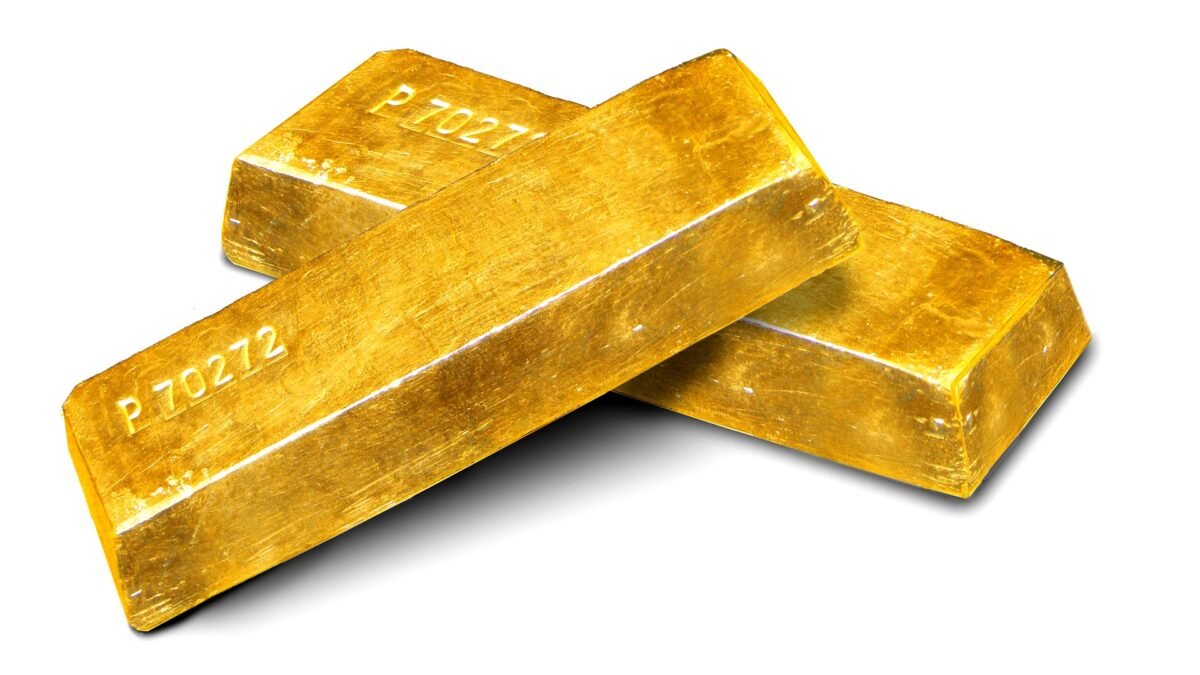
Gold crashed to its lowest level in a year on Friday, falling below $3,900 an ounce as rising oil prices hardened expectations that the United States Federal Reserve will raise interest rates again, while silver tumbled below $50 for the first time in 11 months in a brutal end to October for precious metals.
Spot gold fell as much as 3.2 per cent to $3,891.67 an ounce during the session, its weakest since late October last year, according to Reuters, and closed the week at about $3,880, down roughly 3.5 per cent on the day. Silver fell about 6 per cent to $49.13 an ounce, its first close below $50 in 11 months, and is now on course to lose more than 18 per cent in October alone.
The sell-off capped a miserable month for bullion. Gold is on track for a drop of about 6 per cent in October, its worst showing for the month since 2008, when the global financial crisis was upending markets, and its second consecutive monthly decline, according to Reuters. The metal now trades roughly 30 per cent below the record it set in January, when an intraday peak of $5,589.38 an ounce was reached on 28 January, according to CBS News, with the record close at $5,419.83.
The decline was striking because it came on a day when fear was rising almost everywhere else. Technology shares suffered another sharp sell-off, Bitcoin slid towards $77,000 after the record $6.3 billion hack at the Binance exchange, and Brent crude rose to its highest settlement since late April. Gold, the asset investors have bought for centuries when the world turns dangerous, fell anyway. That contradiction is the story of this market: the war in the Middle East is pushing oil prices up, higher oil prices are keeping inflation alive, and persistent inflation is keeping central banks hawkish. For a metal that pays no interest, that chain of events is punishing.
Gold mining shares were dragged down with the metal, falling as much as 8 per cent on Friday, according to Reuters. The selling, the news agency reported, came from two directions at once: the prospect of renewed American military action against Iran, including an attack on a tanker in the Strait of Hormuz, pushed Brent crude higher, while the deepening rout in technology stocks forced investors to sell the metals to cover losses elsewhere.
The rate-hike bets behind the fall
The immediate trigger was the Federal Reserve. The American central bank held its benchmark interest rate at 3.75 to 4.00 per cent on Wednesday, but two of its policymakers dissented in favour of a rise, and the language around the decision left the door open to a further increase. Data published on Thursday then showed the American economy grew at a 3.4 per cent annualised rate in the third quarter, faster than economists had expected, while inflation accelerated in September, with the personal consumption expenditures price index, the measure the Fed watches most closely, rising 0.5 per cent in the month and 3.6 per cent from a year earlier.
Traders now price a more than 70 per cent chance of a Fed rate rise in December, according to Reuters, while the Associated Press reported that most economists still expected a quarter-point increase at the Fed’s meeting on 8 and 9 December, with Wall Street investors putting the likelihood at about 85 per cent. St. Louis Federal Reserve President Alberto Musalem said tighter monetary policy would be necessary soon and that inflation remained above the Fed’s 2 per cent target.
“The indication was that the higher-for-longer theme prevails,” Peter Grant, senior metals strategist at Zaner Metals, told Reuters, adding that inflation worries had multiple central banks continuing to tilt hawkish. “Gold prices are affected by a combination of two factors, the US GDP data, which came in stronger than expected, and the increase in oil prices putting pressure on the Fed to hike further interest rates,” Giovanni Staunovo, an analyst at UBS, told Reuters.
The European Central Bank delivered the same message from Frankfurt a day earlier, holding its deposit rate at 2.50 per cent on Thursday but signalling that another rise in December was all but certain, with policymakers expecting to pause thereafter as rising bond yields weigh on growth. The two most powerful central banks in the West are therefore moving in the same direction at the same time, and both are pointing at the same culprit: energy prices driven higher by war.
Oil, war and the inflation chain
Brent crude for December delivery rose 2.4 per cent on Friday to settle at $117.64 a barrel, its highest settlement since late April, according to Kitco, and is heading for a fourth consecutive monthly gain. West Texas Intermediate crude rose 2.2 per cent to $104.29 a barrel. The latest leg higher followed the limpet-mine attack on a tanker in the Strait of Hormuz, the first successful strike of its kind in the waterway since the American-Israeli war on Iran began in February, and came as the United States warned regional states to prepare for possible renewed strikes after the midterm elections on 3 November.
Expensive oil means higher inflation, and higher inflation keeps central banks hawkish. Gold pays no interest, so it becomes less attractive when rates on cash and bonds rise, because investors can earn a return elsewhere without taking the risk of holding a metal that generates no income. That simple arithmetic has overwhelmed gold’s traditional role as a refuge in times of crisis, and it explains why bullion fell on a day when the news from the Middle East was getting worse rather than better.
The technology sell-off added a second source of pressure. The Nasdaq Composite fell 2.9 per cent on Friday and 5.3 per cent in October, its worst month since March 2025, while the S&P 500 fell 1.8 per cent on the day. When shares fall that fast, some investors sell whatever they can sell quickly to raise cash or meet margin calls, and gold, because it is easy to sell, is often among the first assets to go. Analysts cited by Reuters identified forced liquidation as a possible contributor to the precious-metals decline, and the same pattern was visible in silver, which fell further and faster than gold.
Silver’s sharper fall
Silver’s decline was the more violent of the two. The metal fell about 6 per cent on Friday to $49.13 an ounce, its third lower close in a row and its first close below $50 in 11 months, and is on track to lose about 18 per cent in October, according to FXStreet. Silver had traded above $50 for much of the year, and the break below that level is likely to be watched closely by traders who treat round numbers as psychological markers.
Silver is more volatile than gold because its market is smaller and because roughly half of demand comes from industry, including solar panels and electronics, rather than from investors and jewellers. When manufacturing demand looks fragile and investors are selling, silver tends to fall further than gold, and that is what happened this week. The gold-to-silver ratio, which measures how many ounces of silver buy one ounce of gold, has widened sharply as a result, a sign that the selling in silver has been driven as much by industrial worries as by the interest-rate story.
Physical buyers stay away
One of the more telling details in Friday’s trading was what did not happen: physical buyers did not step in to buy the dip. Demand in India remained subdued this week as buyers held off in anticipation of lower prices, Reuters reported, and demand in China, the world’s largest consumer, stayed muted, even as Asian investors have been picking up gold-backed funds that North American investors are dumping.
That absence matters, because physical demand from Asia has been one of the great supports for the gold price over the past decade. When Indian and Chinese buyers step back at the same time as Western investors are selling, there is nobody left to catch the falling price, and the decline can feed on itself. Dealers in India, where gold is bought for weddings and festivals as well as investment, are now waiting to see whether the price stabilises before restocking, and that caution is itself a drag on the market.
Yet the picture is not uniformly bleak for bullion. Investors added a record amount to gold-backed funds in the third quarter, according to Reuters, and central banks remain buyers: Goldman Sachs recently estimated that central banks purchased 79 tonnes of gold in August, substantially above historical monthly averages. The bank has, however, reduced its year-end forecast for gold to $4,650 an ounce, a sign that even the metal’s supporters expect the pressure to persist into the end of the year.
Staunovo, the UBS analyst, told Reuters that gold could climb to $5,000 or higher next year, “as the Fed will eventually have to cut rates again and inflation will no longer pose a problem”. That is the bull case in a single sentence: the forces crushing gold today are cyclical, not permanent, and they will reverse when the rate cycle turns. The question for holders of the metal is how much further it falls before that turn comes.
Analysis: Why It Matters
1. The safe haven that stopped being safe
Gold’s defining promise is that it holds its value when everything else is falling. October broke that promise in public. The metal fell 6 per cent in a month when American technology shares lost nearly $1 trillion in a week, when the world’s largest cryptocurrency exchange reported the largest hack in history, and when a tanker was attacked with limpet mines in the world’s most important oil chokepoint. Any one of those events, on its own, would in normal times have sent investors running towards gold. Together they sent it down to a one-year low.
The reason is that the war itself has become the mechanism working against gold. The conflict pushes oil prices up, oil pushes inflation up, inflation keeps interest rates up, and high interest rates punish an asset that pays nothing to hold. It is a chain with no weak link, and it has held for months. Until one of those links breaks — until oil falls, or inflation cools, or a central bank blinks — gold’s traditional role as a refuge will remain suspended. That is a genuinely strange position for the world’s oldest financial asset, and it is worth pausing over: the metal is not failing because the world is calm, but because the world is dangerous in a way that happens to be inflationary.
2. The higher-for-longer regime is back, and it is global
The most important sentence in this whole episode may be the one from Peter Grant of Zaner Metals: “the higher-for-longer theme prevails”. A year ago, markets were pricing a world of steady rate cuts. Today, the Federal Reserve is holding rates with two dissenters arguing for a rise, the European Central Bank is openly preparing a December increase, and traders give a December Fed hike a better-than-even chance. The pivot from easing to tightening, forced by an energy shock from a war, has been one of the fastest reversals in modern central banking.
What makes it more powerful is that it is synchronised. When the Fed and the ECB tighten together, there is no large economy offering easy money as an alternative, and capital has nowhere to hide from rising real rates. That synchronisation is also why the dollar has not soared even as rate-hike bets have risen: both sides of the Atlantic are moving together. For borrowers, savers, homebuyers and governments, the message is the same in Frankfurt as in Washington — the cheap-money era is not returning soon, and budgets built on the assumption that it would are now wrong.
3. Forced selling turns a correction into a rout
Friday’s fall was not only about interest rates. It was also about plumbing. When the Nasdaq drops 3 per cent in a day and a single stock, Intel, loses 29 per cent, leveraged investors get margin calls, and margin calls must be met with cash. Gold is one of the easiest assets in the world to sell quickly, and that liquidity, normally a virtue, becomes a curse in a rout: the thing you can sell is the thing you do sell.
This is how orderly declines become disorderly ones. The 3.5 per cent daily fall in gold was not justified by any single piece of news on Friday; it was the accumulation of weeks of pressure released at once, amplified by sellers who were not selling gold because they had changed their minds about gold, but because they needed the money somewhere else. The same mechanism hit silver harder, because its market is thinner, and it hit mining shares hardest of all, with falls of up to 8 per cent. Investors should understand this distinction, because it determines what happens next: forced selling ends when the forced sellers are done, and it can reverse fast, but it can also overshoot badly on the way down.
4. Asia’s silence is the market’s real warning
Central bank buying and record inflows into gold-backed funds in the third quarter are often cited as proof that gold’s foundations are solid. Friday’s trading offered a counterpoint: the physical buyers who actually take delivery of the metal, in India and China, stayed away. Paper demand through funds can reverse in a day; physical demand is stickier, and its absence removes the floor under the price.
Indian buyers holding off in anticipation of lower prices is rational behaviour, but it is also self-fulfilling: if everyone waits for lower prices, prices keep falling until someone decides they are low enough. Chinese demand staying muted is more concerning still, because China has been the single largest source of incremental gold demand for years. The split between Asian fund buyers and North American fund sellers adds another layer of uncertainty. Gold’s future now depends on which of these groups blinks first, and on whether the physical market re-engages before the paper market finishes selling.
5. What this means for ordinary savers and investors
For most people, gold is not a trading position but a store of value, often held for years and sometimes for generations, and the message of October is not that gold is finished but that it is no longer a one-way bet. A metal that fell 30 per cent from its January record, and 6 per cent in a single month, can fall further, and anyone buying it today as protection against the very war that is pushing oil prices higher should understand the paradox: the same war that makes gold feel necessary is, through the oil market, making it cheaper.
That does not mean the metal is a bad holding. The forces arrayed against it — high real rates, a strong dollar, forced selling — are the same forces that have ended every previous gold sell-off when they reversed. UBS’s call for $5,000 or higher next year rests on the reasonable expectation that the Fed will eventually have to cut rates again. But the timing of that turn is now hostage to events in the Gulf and to an American election on Tuesday, and savers should not expect the turn to arrive on schedule. The prudent conclusion is the unglamorous one: gold remains a hedge against disorder, but in this particular disorder, it is hedging badly, and patience will be required.
What to Watch Next
- The Federal Reserve’s December meeting (8–9 December): whether the committee raises rates, and whether the dissenters who wanted a rise in October gain support, will set the direction for gold into 2027.
- The ECB’s 17 December decision: the Frankfurt hike is described as all but certain, but any sign of a pause afterwards, or of division among policymakers, will move European bond yields and the euro, and with them the gold price.
- Oil and the Strait of Hormuz: Brent at $117.64 is already at its highest since April; any further attack on shipping, or any sign of renewed American strikes after the midterms, would push crude higher and deepen the inflation pressure on gold.
- The American midterm elections on 3 November: the result will shape both the war debate in Washington and the path of energy policy, and markets will read the outcome within hours of the polls closing.
- Physical demand in India and China: whether buyers return as prices fall will determine whether gold finds a floor near $3,800, the level traders are now watching, or whether the slide continues towards the levels last seen in the autumn of 2025.
Sources
- Reuters via Kitco — Gold hits 3-1/2-month low on Fed hike fears, set for monthly loss
- Reuters via EuropeSays — Gold price slumps to one-year low, silver price breaks $50 as mining stocks tank
- EL7 — Gold Falls 3.5% to $3,880.97, Silver Breaks Below $50 on Hawkish Fed Signals
- CNBC — Gold slips as markets assess Fed signals, await US inflation data
- Coinpaper — Gold Crashes Below $3,900 to One-Year Low Even as Global Stock Markets Plunge

About the Author — Abdul Mannan
Related Articles

Volkswagen Posts €5.82 Billion Quarterly Loss — Its Worst Since Dieselgate — as Electric Golf Work Is Suspended
Volkswagen reported a €5.82 billion third-quarter loss, its worst since the Dieselgate scandal, and suspended work on the…
Exxon and Chevron Post Surging Third-Quarter Profits as War-Driven Refining Margins Overtake Oil Production
ExxonMobil and Chevron beat forecasts with surging third-quarter profits as war-driven refining margins pushed fuel-making earnings past oil…
Global Tech Sell-Off Deepens as Amazon and Intel Earnings Spook Investors and Asia Stocks Slide
Amazon and Intel's after-hours falls spread to Asia on Friday, pulling chip stocks down and sending investors into…