
Trump White House Maps Path to Govern Without Congress if Democrats Win Midterms, Reuters Reports

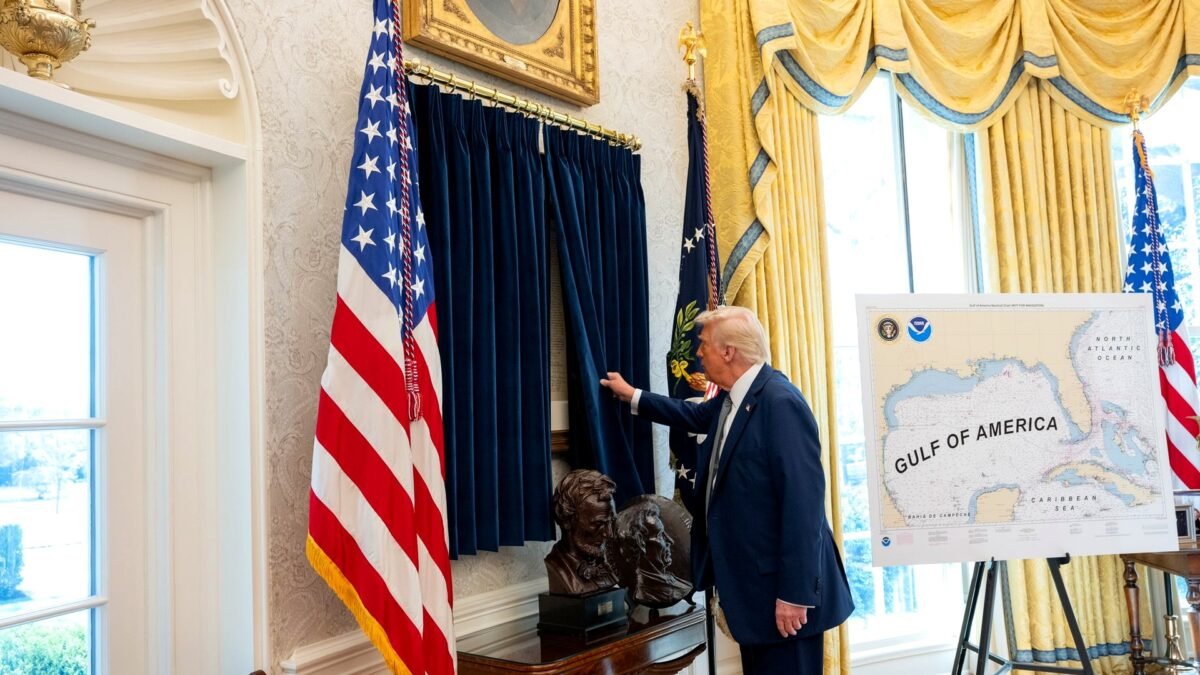
President Donald Trump’s White House has spent months quietly preparing for an outcome it is publicly campaigning against: a Democratic takeover of Congress in Tuesday’s midterm elections. According to Reuters, senior officials have drawn up plans to keep advancing major parts of the president’s agenda through executive power alone, even as they brace for a wave of investigations from a hostile Congress.
The planning, described to Reuters by a White House official and two people familiar with the discussions, began in April. Deputy chief of staff Stephen Miller and budget director Russell Vought have worked with the White House Counsel’s Office to identify executive actions on immigration, tariffs, housing costs and federal spending that Mr Trump could pursue without congressional approval. White House counsel Will Scharf and his team have examined, in the words of one official, “what Trump can legally do on his own, where he could push the limits of his authority and how to defend those decisions in court.”
Mr Trump himself has been briefed on the preparations and has taken part in the discussions, the official said. Asked how comfortable the president would be governing through executive authority under a Democratic Congress, one person familiar with the plans answered: “very comfortable.”
The report, published on Sunday, lands two days before Americans vote in elections that will decide control of both chambers of Congress. All 435 seats in the House of Representatives and 35 of the 100 Senate seats are on the ballot on Tuesday, 3 November. Republicans hold a narrow 218–214 majority in the House and a 53–47 majority in the Senate, according to Reuters. Democrats need a net gain of four seats in each chamber to take control. Opinion polls favour the Democrats to win the House, while the Senate remains too close to call.
More than 52 million Americans have already voted in person or by mail, according to the University of Florida’s Election Lab, a record for a midterm election and up from nearly 46 million who voted before election day in 2022. The campaign is projected to be the most expensive ever, at $11.6 billion, according to AdImpact, which tracks broadcast advertising.
What the White House is planning
Among the executive actions under consideration are new tariffs on imports of critical minerals and wind turbines, tighter rules on visas for international students and temporary foreign workers, and measures aimed at lowering housing and construction costs, the White House official told Reuters.
Federal agencies have submitted proposals and legal reviews of actions the administration could take unilaterally, one of the people with knowledge of the plans said. Mr Vought, whose Office of Management and Budget oversees federal spending, is examining which priorities can move forward using money already appropriated by Congress, two of the people said. He also wants to change federal grant rules to give political appointees more say in which government programmes receive taxpayer money, potentially giving the White House more influence over federal spending without seeking congressional approval.
The White House pushed back on the prospect of Republican losses and accused the media of promoting a false narrative. “This administration and commonsense Republicans will continue to secure our borders, restore law and order, putting more money back into the pockets of hard-working Americans, and deliver wins for the American people,” White House spokeswoman Lauren Bis said.
The planning underscores a paradox of Tuesday’s vote, as Reuters put it. Capturing control of Congress would give Democrats the power to investigate Mr Trump, block legislation and constrain his spending priorities. But Mr Trump would retain broad executive authority over trade, foreign policy and the federal bureaucracy that he has already used aggressively during his second term.
A presidency already built on executive power
The contingency planning does not mark a break with how Mr Trump has governed since returning to office in January 2025. According to Reuters, he has used executive authority to impose sweeping tariffs, intensify immigration enforcement, shrink the federal workforce and pursue foreign-policy goals, including the war against Iran, without Congress approving new laws.
“President Trump in the last two years has basically ignored Congress and tried to do as much as possible through executive orders and executive power,” Nathan Gonzales, editor at Inside Elections, which provides nonpartisan political analysis, told Reuters. “I think he will only continue if there are Democratic majorities.”
A major exception was Mr Trump’s massive package of tax and spending cuts, which was passed by the Republican-controlled Congress and signed into law by the president in July 2025. That achievement required a cooperative legislature, and it is precisely the kind of sweeping legislation that would become far harder under divided government.
Mr Trump has repeatedly invoked national emergencies to expand his ability to act without new legislation. Congress can vote to end those emergencies, but Mr Trump could veto such a move, requiring two-thirds majorities in both chambers to override him. The Senate voted 51–47 on 29 October to terminate the national emergency behind the president’s global tariffs, with four Republicans joining Democrats, according to Reuters, but that vote did not by itself dismantle the tariff edifice. A Supreme Court decision on the lawfulness of the emergency tariffs could come as soon as this month, and a ruling against Mr Trump could strike down his steepest tariffs regardless of where the anti-tariff bills stand.
Even so, a separate Reuters report published on 1 November found that a Democratic victory would change the argument over tariffs in Congress without, on its own, removing them. If Democrats win at least one chamber, they could force votes to repeal tariffs and launch oversight hearings, yet the president’s veto power would still stand in the way of any rollback. The White House, the report said, is preparing to rely more heavily on executive action and is considering further tariff investigations, including into excess industrial capacity in 16 trading partners.
The limits of going it alone
A Democratic Congress could still create significant obstacles. Control of the Senate would allow Democrats to block Mr Trump’s judicial and executive-branch nominees, including any Supreme Court pick. “I would anticipate they will be very reluctant to approve any of the president’s appointments,” Andrew Busch, a public policy professor at the University of Tennessee, Knoxville, and author of a history of midterm elections, told Reuters.
Democrats could also refuse to pass Trump-backed legislation. But Mr Trump could veto Democratic legislation he does not like, and Democrats are unlikely to have enough votes in the House to override him. Courts could block executive actions that exceed Mr Trump’s legal authority. The White House plans to seek legal opinions from the Justice Department to determine what Mr Trump can do without Congress and how to defend those actions if they are challenged in court, one of the people said.
One challenge, however, cannot be sidestepped through executive action: congressional investigations. Reuters has previously reported that senior House Democrats and committee aides have discussed using hearings, subpoenas and document requests to examine whether Mr Trump has used his presidential power to benefit himself, allies or donors. Mr Trump’s aides have been preparing for that prospect for months, all three people said. White House lawyers have been briefing political appointees and agency leaders on how to handle congressional inquiries, document requests and subpoenas, one person said. They have advised officials to be careful about what they put in writing. They also sought a Justice Department opinion that could allow Mr Trump to invoke executive privilege to shield communications with private advisers from congressional scrutiny, the person said.
A president under pressure in the final days
Mr Trump has spent the final days of the campaign rallying voters in person. On Sunday he returns to the campaign trail with rallies in Iowa and Kansas, Republican-leaning Farm Belt states where his party is fighting to hold US Senate seats, according to Reuters. Mr Trump, who spent Saturday at his Mar-a-Lago club in Florida after weeks of campaigning across multiple states, won Iowa by double digits in 2024. But polls show Democrats tied with or leading Republicans in many of the state’s races, and Mr Trump’s approval among rural Americans fell to a new low of 45 per cent in October, according to Reuters/Ipsos polling. Kansas, which last elected a Democratic senator in 1932, is also facing an unexpectedly close race. A Washington Post poll released on Friday found Democratic nominee Adam Hamilton ahead of Republican Senator Roger Marshall by 52 per cent to 43 per cent, while a CNN poll found a narrower four-point lead for Mr Hamilton.
The president’s standing nationally is weaker still. Mr Trump has a 36 per cent approval rating, according to the latest New York Times poll tracker, which compiles the daily average of polls conducted by various organisations, while 61 per cent disapprove. According to the Times’ chief political analyst, Nate Cohn, Mr Trump has the lowest pre-midterm favourability rating since Harry Truman, whose Democrats were heavily defeated in the 1946 elections. The Times’ final national poll, conducted with Siena University, found Mr Trump’s falling favourability linked to several top issues, including the cost of living and the lingering war in Iran.
The same instinct for unilateral action has been visible beyond domestic policy. On Saturday, Mr Trump told reporters at Mar-a-Lago that defeated Brazilian presidential candidate Flávio Bolsonaro, who fled to the United States after losing his country’s election to Luiz Inácio Lula da Silva, can stay in the United States “as long as he wants,” according to Reuters. Mr Bolsonaro was admitted under humanitarian parole, a discretionary executive immigration tool, and Mr Trump said he has no plans to meet him. The episode is a small but telling illustration of the point at the heart of the White House’s contingency planning: much of what a president can do fastest, he can do alone.
Analysis: Why It Matters
1. The White House is admitting, in private, what it denies in public
The most revealing detail in the Reuters report is not that contingency plans exist. Every modern White House draws up plans for losing Congress. What is revealing is the scale and the timing: a planning effort running since April, led by two of the most powerful figures in the administration, mapping the outer limits of presidential authority across four policy areas at once. That is not routine prudence. It is an administration that has read the polls — a House drifting towards the Democrats, a president at 36 per cent approval — and concluded that governing without Congress is not a remote contingency but a likely reality of 2027. The public message remains defiant: Republicans will hold Congress, the media is inventing a false narrative. The private message, delivered through three anonymous sources, is the opposite: prepare to rule by executive order. Voters are entitled to weigh both messages when they cast their ballots on Tuesday.
2. Executive power is real, but it is a narrower tool than legislation
There is a temptation, on both sides of this argument, to overstate what executive action can achieve. Mr Trump can indeed impose tariffs, tighten visa rules, redirect appropriated money at the margins and reshape how grants are awarded. He has done versions of all of these already. What he cannot do by executive order is pass a budget, cut taxes, create a major new programme or appropriate fresh money. The tax and spending package of July 2025 — the one genuinely sweeping legislative achievement of this term — needed Congress, and a Democratic Congress will not hand him another. Executive power is also fragile power: what one president orders, the next can reverse, and what courts strike down stays struck down. The White House knows this, which is why its lawyers are already mapping court defences and seeking Justice Department opinions. The plan is best understood not as a replacement for Congress, but as a holding operation — a way to keep the agenda moving, and the base energised, through two years of stalemate.
3. The tariff question shows the limits of a Democratic victory
For voters who oppose Mr Trump’s tariffs, Tuesday’s election offers a sobering lesson in the separation of powers. Democrats may win the House, and they may even win the Senate. They can force symbolic votes, hold hearings and demand documents. But the tariffs themselves rest on emergency powers that only the president, the courts or a veto-proof Congress can undo — and none of those routes is quick. The Senate’s 51–47 vote on 29 October to end the tariff emergency was symbolically powerful and practically toothless. The more consequential tariff decision will come from the Supreme Court, not from the ballot box. That is a reminder that midterm elections, for all their drama, change the constraints on a president more than they change his powers.
4. Investigations are the one weapon executive orders cannot deflect
If there is one part of the Reuters report that should worry the White House more than any other, it is the section on investigations. A president can veto bills, ignore congressional requests for legislation and govern around a hostile House on policy. He cannot veto a subpoena. He cannot executive-order away a committee hearing. The preparations described — briefings for appointees on handling inquiries, warnings about what to put in writing, a search for an executive-privilege opinion to shield conversations with private advisers — suggest an administration that expects sustained, aggressive oversight and is already lawyering up for it. The Democrats’ reported interest in examining whether presidential power has been used to benefit Mr Trump, his allies or his donors points to the kind of inquiry that can dominate news cycles for months, whatever its eventual findings. In a divided government, the investigation often becomes the story.
5. This is a test of the American system, not just of one president
Step back from the personalities, and the story is about something older and larger than Donald Trump. The American system was designed to make unilateral rule difficult: the president executes the laws, Congress writes them, and the courts referee the boundary. Every modern president has pushed at that boundary — Barack Obama promised to act with his “pen and phone” when Congress would not move; Mr Trump’s predecessors of both parties stretched emergency powers and executive orders. What makes this moment different is the openness of the planning and the breadth of the ambition: a systematic, months-long effort to catalogue everything the presidency can do without the legislature, conducted while the president campaigns as if the legislature does not matter. If Democrats win on Tuesday, the next two years will test whether the system’s checks — the courts, the power of the purse, the subpoena, the veto override — still function as designed. The answer will matter long after this midterm is forgotten.
What to Watch Next
- Tuesday’s results: whether Democrats win the House, the Senate or both — and by what margins. A narrow Democratic House majority would still deliver subpoena power but not veto-proof lawmaking.
- The Supreme Court’s tariff ruling: a decision striking down the emergency tariffs would remove one of the president’s most powerful unilateral tools, whatever Congress does.
- The first executive actions of 2027: whether the White House moves quickly on the options Reuters identified — critical-mineral and wind-turbine tariffs, student and worker visa rules, housing-cost measures — and how fast the courts respond.
- The investigations: whether a Democratic House opens formal inquiries into the use of presidential power, and whether the White House’s executive-privilege strategy holds up.
- The Iowa and Kansas Senate races: two Republican-held seats in states Mr Trump won comfortably in 2024. Their outcome will be an early signal of how deep the Republican problem runs.
Sources
- Reuters — Trump White House maps path to govern without Congress if Democrats win
- USA Today — Election live updates: latest midterm polls, Trump to rally key voters
- Reuters — Trump says Flavio Bolsonaro can stay in US ‘as long as he wants’
- US News Pulse — Democratic wins would shift Trump tariff debate but not repeal tariffs (summarising Reuters, 1 November 2026)
- Wikimedia Commons — President Donald Trump with the Declaration of Independence in the Oval Office, 18 March 2025 (The White House, public domain)

About the Author — advmannan1
Related Articles
More Than 51 Million Americans Have Already Voted in the 2026 Midterms, Smashing the Early-Voting Record
More than 51 million Americans had already cast ballots by Saturday afternoon, passing the entire early-voting total of…

Justice Department Asks Alaska Judge to Set Aside Ballots for Second Dan Sullivan as Criminal Probe Into ‘Sham Candidate’ Claims Widens
The Justice Department has asked a federal judge in Alaska to preserve and set aside every ballot ranking…

Trump Administration Plans to Deport More Than 150 Afghans to Taliban-Ruled Afghanistan, With First Flight Expected Monday
The Trump administration is preparing to deport more than 150 Afghan immigrants to Taliban-ruled Afghanistan via Pakistan, with…