
Trump Administration Plans to Deport More Than 150 Afghans to Taliban-Ruled Afghanistan, With First Flight Expected Monday

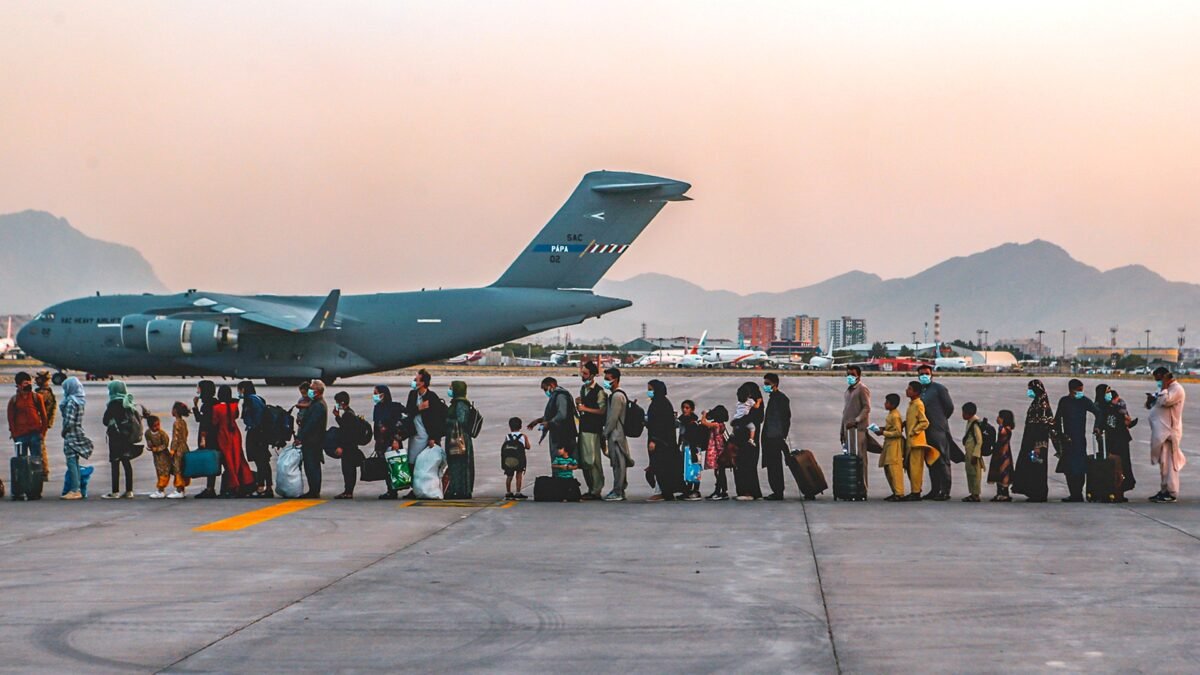
President Donald Trump’s administration is preparing to deport more than 150 Afghan immigrants to Taliban-ruled Afghanistan, routing the removals through Pakistan, in what would be one of the largest single expulsions of Afghans from the United States since the chaotic American withdrawal from Kabul five years ago, according to Reuters.
The first chartered flight could leave as early as Monday, 2 November, carrying detainees held at immigration facilities in Louisiana, the New York Times reported. The administration has not publicly announced the operation, and the Department of Homeland Security declined to confirm future removal operations, citing operational security.
Many of those facing removal fled Afghanistan after the Taliban seized power and American forces withdrew in August 2021, according to Shawn VanDiver, the head of the veterans-led coalition #AfghanEvac, who spoke to Reuters. Some, he said, are “brothers and sons of men who served alongside US forces, families the Taliban already has every reason to target.”
The plan, first reported by the New York Times and confirmed by a United States official and a coalition of veterans and advocacy groups speaking to Reuters on Friday, marks a sharp escalation in the administration’s immigration crackdown — and a striking reversal for a population the United States once airlifted to safety at enormous effort and cost.
Washington cannot deport people directly to Afghanistan because it has no diplomatic relations with the Taliban government, which retook power in 2021 and remains unrecognised by the United States. A US official told Reuters the removals would therefore be routed through Pakistan, with detainees transferred across the border into Afghanistan. Three US officials told the New York Times that the deportations were effectively intended to return the detainees to Afghanistan, and that some of the immigrants had already been told by Immigration and Customs Enforcement, known as ICE, that they were being sent there.
At least one Afghan immigrant has been named on the passenger list for a specially chartered flight scheduled to leave Alexandria, Louisiana, during the first week of November, according to court documents cited by the New York Times. The group detained in Louisiana includes relatives of Afghans who worked with the American military, the newspaper reported, as well as at least one gay man who fears severe punishment if he is returned to Taliban rule.
One of the men facing removal, identified only as Mohammad, is 47 years old and has spent most of his life in the United States, according to the New York Times. He entered the country illegally in 2024 and has remained in ICE custody since his arrest; his asylum application was rejected by a US judge after felony convictions, according to court documents shared with the newspaper by his lawyer. Another Afghan man facing removal told an American court that the Taliban had arrested and tortured him in 2023 because of his wife’s association with Afghanistan’s previous government.
The precise composition of the group — how many are relatives of wartime allies, how many entered the country illegally in recent years, and how many have criminal convictions — has not been disclosed by the administration. What is clear from the reporting is that the group is not uniform: it mixes people whose claims rest on service to the United States with people whose asylum cases have already failed in court. That mixture is likely to shape both the legal challenges and the political argument that follow.
Human rights advocates and veterans’ organisations have warned that returnees could face imprisonment, torture or execution at the hands of the Taliban. VanDiver urged Congress to pass legislation granting Afghans in the United States temporary protected status, a designation the Trump administration terminated last year.
President Trump has said his immigration crackdown and deportation drive are intended to improve domestic security. Rights advocates say the crackdown violates due process and free speech protections and has created an unsafe environment for minorities, who have raised concerns about racial profiling, according to Reuters.
The route through Pakistan
The decision to route the deportations through Pakistan solves a logistical problem for the administration — and creates a new set of risks for the people being removed.
The United States closed its embassy in Kabul when the Taliban took power and has had no formal diplomatic channel with the Taliban government since. Without an agreement with Kabul, Washington cannot land a deportation flight in Afghanistan, process returnees through Afghan immigration controls, or obtain travel documents from a government it does not recognise. Pakistan, which shares a long and porous border with Afghanistan, offers the only practical transit route.
But Pakistan is itself in the middle of one of the largest forced-return campaigns in the world. Islamabad has expelled more than two million Afghan nationals to Afghanistan since 2023 under its Illegal Foreigners’ Repatriation Plan, according to Reuters, and the campaign has continued through 2026. Afghans handed to Pakistani authorities at the border therefore face not a neutral transit but a second deportation machinery — one that has already returned millions of people to Taliban rule, often with little notice and under conditions that aid agencies have repeatedly criticised.
The arrangement also raises a legal question that American courts have not settled: whether the United States can remove someone to a country it does not recognise, by way of a third country, when the known end point is a place where the person may face persecution. Some Afghans in the United States have already secured legal protections from American courts on the grounds that they could face persecution if returned, according to the New York Times, and lawyers for detainees are expected to argue that a removal routed through Pakistan is a removal to Afghanistan in all but name.
The administration has not said whether it has received assurances from Islamabad about how the detainees will be treated on arrival, or whether Pakistani authorities would be asked to hold them, release them, or hand them to the Taliban. The Department of Homeland Security would not confirm the operation at all.
Who is on the planes
The public record so far describes a group of more than 150 people detained across the United States and concentrated in Louisiana, the state where ICE operates some of its largest detention facilities. Dozens were detained in Louisiana itself, according to the New York Times, and at least one court filing names a passenger on a chartered flight out of Alexandria, a city in central Louisiana that has become a hub for ICE air operations.
The reporting identifies at least three distinct categories among those facing removal. The first is relatives of Afghans who assisted American forces during the twenty-year war — interpreters, drivers, guards and support staff whose families were promised protection when the United States withdrew. The second is people who entered the United States illegally in recent years and whose asylum claims have been rejected, including at least one man with felony convictions. The third is people whose vulnerability is specific to Taliban rule — among them, according to the New York Times, a gay man who could face severe punishment under the Taliban’s interpretation of Islamic law.
That mixture matters because the legal and moral arguments differ sharply between the categories. A person whose asylum claim was rejected after a full hearing and who has criminal convictions is, under American immigration law, removable — and the administration will present such cases as straightforward enforcement. A relative of a wartime ally, or a person with a court finding that return would expose them to persecution, is a different matter, and it is those cases that veterans’ groups and refugee advocates are highlighting.
No One Left Behind, an organisation that works with Afghan allies, published a survey in October 2026 of Afghan allies deported to Afghanistan from third countries. It found that allies who had been returned reported threats, physical harm and targeted retaliation for their service to the United States — and that four in five respondents who held Chief of Mission approval, the American government’s own confirmation that they had performed qualifying service, or another approved pathway to safety had been deported or subjected to removal in the last year. Most of those deportations, the survey found, had been carried out from Pakistan.
Separate federal data, analysed by the Deportation Data Project and reviewed by the Afghan news outlet KabulNow, showed that 1,156 Afghans were deported from the United States between October 2022 and March 2026, most of them to third countries rather than directly to Afghanistan. At least 104 were sent directly back to Afghanistan in that period. The planned operation of more than 150 people, if it goes ahead as reported, would exceed in a single week the total number sent directly to Afghanistan over more than three years.
From airlift to expulsion
The scale of the reversal is hard to overstate. In August 2021, as the Taliban swept into Kabul, the United States mounted one of the largest airlifts in its history, evacuating tens of thousands of Afghans in a matter of days. Through Operation Allies Welcome and its successor, Operation Enduring Welcome, the United States went on to resettle close to 200,000 Afghans, most of them on humanitarian parole, a temporary status that allowed swift evacuation but offered no permanent right to remain, according to the Baker Institute at Rice University.
The promises made during that evacuation were explicit. Afghans who had worked alongside American forces were told that the United States would not abandon them, and a Special Immigrant Visa programme, established in 2006, offered a pathway to permanent resettlement for those who had served. For many, that pathway has since narrowed to a dead end.
Within days of taking office in January 2025, President Trump issued an executive order suspending refugee processing under the United States Refugee Admissions Program. The suspension affected roughly 40,000 Afghans who were pursuing American resettlement, including more than 1,600 who had already been approved for travel, according to the Baker Institute. Two presidential proclamations that followed imposed sweeping travel bans and suspended the Special Immigrant Visa programme itself. A federal court later ordered the government to resume processing and adjudicating Special Immigrant Visa cases, but physical entry to the United States remains closed.
Temporary Protected Status, the designation that shielded Afghans already in the United States from deportation, was terminated by Homeland Security Secretary Kristi Noem, effective 14 July 2025. The notice said the secretary had found, after reviewing country conditions and consulting other agencies, that Afghanistan no longer met the statutory conditions for the designation, citing what it called “notable improvements in the security and economic situation,” and that requiring Afghans to return “does not pose a threat to their personal safety due to armed conflict or extraordinary and temporary conditions.” The department estimated that about 11,700 Afghans held the status at the time. More than 8,000 Afghans nationally remain at risk of deportation, according to the San Jose Mercury News.
Congress has been asked to reverse that decision. The Afghanistan TPS Act of 2026, introduced in the House on 23 July, would restore temporary protected status for Afghans. Its sponsor, Representative Sam Liccardo, a Democrat from California, has said he will try to force a floor vote by filing a discharge petition when the House returns from recess on 9 November — a procedural route that would require 218 members to sign. A companion bill in the Senate, introduced on 6 August by Senators Chris Coons, Lisa Murkowski, Amy Klobuchar and Bill Cassidy, has not advanced either.
The broader picture is one of a protection system being dismantled piece by piece. According to a Congressional Research Service fact sheet, the Trump administration has terminated temporary protected status for 13 of the 17 countries that held designations when the president took office in January 2025, affecting about 1.1 million people. Only El Salvador, Sudan, Ukraine and Lebanon still hold designations.
The view from Kabul and Islamabad
For the Taliban government, the return of more than 150 Afghans from the United States would be a propaganda gift: evidence, in its telling, that even Washington now treats Afghanistan as a country to which people can safely be sent. The Taliban has consistently argued that Afghanistan is secure and that Afghans abroad should return. It has also detained, imprisoned and in some cases executed people it regards as collaborators with the former government or with foreign forces — the very history that underlies the fear of return.
For Pakistan, the operation adds a new complication to an already fraught relationship with Kabul. Islamabad’s own deportation campaign has strained ties with the Taliban government, which has protested the forced return of millions of Afghans, many of whom were born in Pakistan and had never lived in Afghanistan. Accepting American deportees for onward transfer would deepen Pakistan’s role as the conduit through which the world sends Afghans back — and would test whether Islamabad is willing to be seen, at home and abroad, as an active partner in the American removal programme.
Neither government has commented publicly on the reported plan. The Taliban has not said whether it would accept the returnees, detain them, or allow them to move freely. Pakistan has not said what it would do with detainees handed to it at the border. That silence is itself significant: the operation, as reported, appears to rest on an arrangement whose terms have not been disclosed to the public, to Congress, or, apparently, to the people whose lives it will decide.
Analysis: Why It Matters
A promise made in public, broken in private
The United States spent two decades telling Afghans who worked alongside its forces that loyalty would be repaid with safety. Interpreters rode in American convoys, guards stood watch outside American bases, and drivers delivered supplies through territory the Taliban controlled. When Kabul fell, the evacuation was presented as the fulfilment of that promise — chaotic, incomplete, but real. The decision to begin sending Afghans back, by chartered flight and through a third country, converts that promise into its opposite. It is not simply a change of immigration policy. It is a statement, to every future population the United States asks to trust it, that the commitment has an expiry date. Veterans’ groups understand this better than anyone, which is why their opposition has been the loudest. They know that the next time American forces need local allies, those allies will remember what happened to the last ones.
The Pakistan workaround is the story
The most revealing detail in the reporting is not the number of people or the date of the flight. It is the route. The United States cannot deport people to a country it does not recognise, so it is using Pakistan as a corridor — a legal and diplomatic fiction that allows the administration to say it is not sending anyone to Afghanistan while doing exactly that. The fiction matters because it obscures accountability. If a returnee is detained or harmed after being handed to Pakistani authorities, who is responsible? Washington, which put them on the plane? Islamabad, which received them? Or Kabul, which ultimately controls the territory? The arrangement is designed to make that question unanswerable, and that is precisely why it should be asked. A removal that depends on a transit country to launder its destination is a removal whose legality has not been tested — and the courts are likely to test it now.
The mixed caseload is a political shield and a moral problem
By grouping together people with failed asylum claims and criminal convictions alongside relatives of wartime allies and people with court findings of persecution risk, the administration gains a political advantage: any critic of the operation can be accused of defending criminals. But the grouping is also the operation’s central vulnerability. A deportation system that cannot distinguish between a man whose asylum claim failed after due process and a man whose family served American forces is a system that has stopped making the distinctions the law requires it to make. The courts will be asked to make those distinctions case by case, and the administration’s willingness to put all of them on the same plane suggests it would rather win the argument about the group than defend the removal of any individual within it.
The legal shield is thinning, but it has not vanished
Every layer of protection that once stood between Afghans in the United States and deportation has been stripped away in the past two years: refugee processing suspended, the Special Immigrant Visa programme halted, temporary protected status terminated. What remains is litigation — individual court orders, habeas petitions, and the argument that removal through a third country to a place of persecution violates American and international law. That is a thinner shield than a statute, and it depends on lawyers finding their clients in time and judges acting quickly. The discharge petition planned for 9 November is the legislative alternative, but it requires 218 signatures in a House that has shown little appetite for the issue, and the first flight is expected on Monday. The gap between the speed of enforcement and the speed of legislation is, for the people on the plane, the whole story.
The timing is not an accident of the calendar
The first flight is expected on Monday, 2 November. The midterm elections are on Tuesday, 3 November. More than 43 million ballots have already been cast, according to the Election Lab, and the final weekend of the campaign has been dominated by arguments about immigration, the economy and the administration’s use of federal power. A deportation flight on the eve of the election is, at minimum, a demonstration of resolve to voters who support the crackdown — and, at most, a deliberate provocation to voters who oppose it. Either way, the timing ensures that the operation will be read politically before it is judged legally. That is a risk for the administration as well as an opportunity: if the flight is blocked by a court on Monday, the story on election day will be about a government overruled, not a government in control.
What to Watch Next
- Whether the Monday flight departs. The first test is the simplest: does a chartered flight leave Alexandria, Louisiana, on 2 November, and if so, who is on it? Lawyers for detainees are expected to seek emergency court orders over the weekend, and any injunction would halt the operation before it begins.
- The court challenges. Some detainees already hold court protections against return on persecution grounds. Watch for habeas petitions arguing that removal through Pakistan is, in law, removal to Afghanistan — and for any ruling on whether the administration can use a third country to circumvent those protections.
- Pakistan’s response. Islamabad has not said whether it will accept the detainees, hold them, or pass them on. Its own deportation campaign has already returned more than two million Afghans since 2023, and its handling of this group will reveal whether the transit arrangement is a genuine agreement or an assumption by Washington.
- The discharge petition on 9 November. Representative Liccardo’s plan to force a vote on restoring temporary protected status for Afghans will test whether there is a bipartisan majority in the House for protecting this population — and whether the midterm results change the arithmetic.
- The midterm verdict. Voters go to the polls on Tuesday, a day after the first flight is expected. The operation will be one of the last things the administration does before the election, and one of the first things the next Congress will be asked to judge.
Sources
- Reuters — “Trump administration plans to deport some Afghan immigrants to Afghanistan” (31 October 2026)
- News18 — “US Plans To Deport Over 150 Afghans Via Pakistan Despite Fears Of Taliban Persecution: Report” (31 October 2026, reporting the New York Times investigation)
- Baker Institute, Rice University — “Global Protections for Afghans Five Years After the Taliban’s Return”
- Congressional Research Service — “Temporary Protected Status Terminations, 2025-2026: Fact Sheet”
- No One Left Behind — “Returning to Retaliation: Afghan Ally Deportation Survey” (October 2026)

About the Author — Abdul Mannan
Related Articles

Federal Judge Blocks Trump Administration From Threatening Election Officials Days Before Midterms
A federal judge in San Francisco has barred the Justice Department and Homeland Security from threatening election officials…

Trump Restores Kansas and Iowa Rallies Days Before Midterms as Tight Senate Races Threaten Republican Majority
Less than 24 hours after cancelling them, President Donald Trump has put his Kansas and Iowa rallies back…
Trump Administration Escalates Election Legal Fights Days Before Midterms as Alaska and California Battles Intensify
With four days to go until the midterms, the Justice Department has amended its Alaska lawsuit, accelerated a…