
Rachel Reeves Says Britain’s Future Lies in the EU as Brexit Made UK ‘Poorer, Weaker and Less Secure’

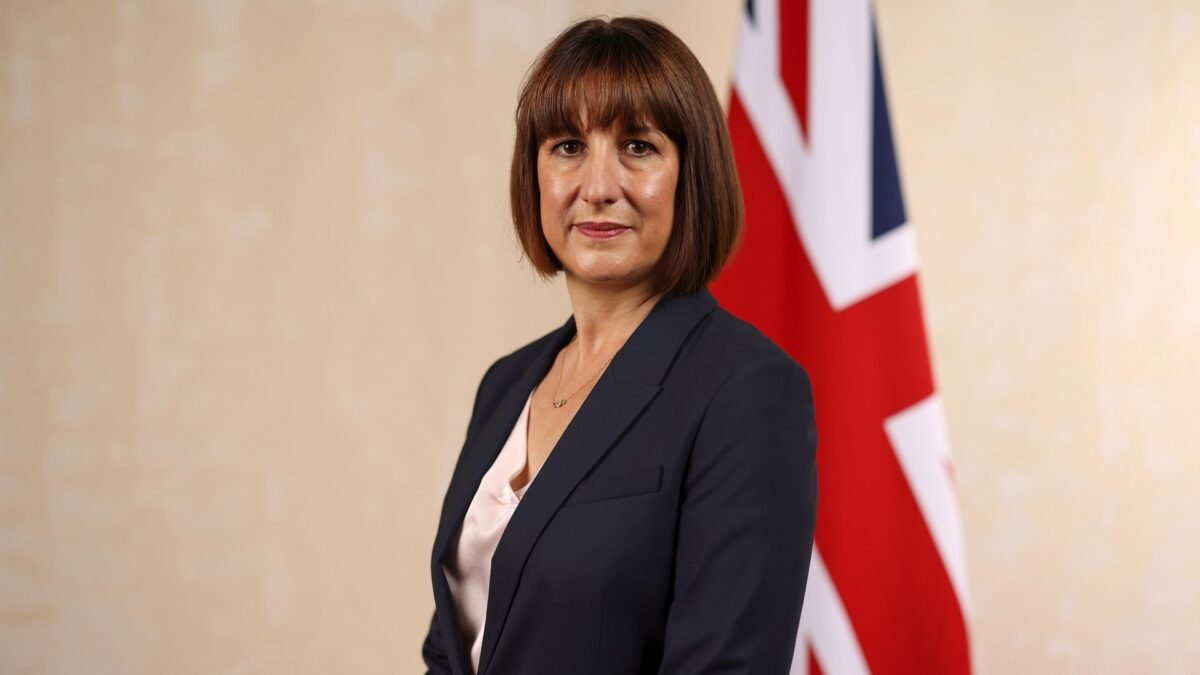
Former chancellor Rachel Reeves has said Britain should rejoin the European Union, declaring that Brexit has made the country “poorer, weaker and less secure” in her first major political intervention since leaving the Treasury in July, according to The Sunday Times.
Writing in the newspaper on Sunday, Reeves threw her support behind Prime Minister Andy Burnham’s decision to open a national debate about the United Kingdom’s future relationship with Brussels, and said she believed the country’s future ultimately lies inside the bloc. “I do believe Britain’s future lies in the European Union,” she wrote, according to extracts published by the newspaper.
The intervention makes Reeves one of the most prominent Labour figures to argue openly for rejoining the EU since the 2016 referendum, and it lands less than three weeks before a UK-EU summit in Brussels on 20 November, where Burnham hopes to sign new agreements on food and drink, emissions trading and a youth mobility scheme. It also exposes, more starkly than at any point since Labour returned to power, the distance between the party’s 2024 election manifesto — which explicitly ruled out a return to the single market, the customs union or freedom of movement — and the direction in which its senior figures are now openly pointing.
“I am proud of the progress we have already made in strengthening our relationship with the European Union,” Reeves wrote, according to The Sunday Times. “Brexit has made us poorer, weaker and less secure. There is a debate to be had about our future relationship with Europe, and I welcome Andy Burnham’s leadership in facing up to this. No one in the Treasury ever doubted where my instincts were.”
She added that it was “incumbent on supporters of our re-entry to make the argument, demonstrate tangible benefits and to get the next steps right”, and said that ahead of the summit later this month the government should at a minimum seek confirmation of the youth mobility scheme negotiated earlier this year and progress towards entry into the EU’s SAFE defence partnership.
The article, trailed late on Saturday night, was reported widely on Sunday morning by the Press Association, The Independent and other outlets, all quoting the same extracts. Reeves did not, in the extracts published so far, set out a timetable for rejoining, nor did she say whether a referendum would be needed to overturn the 2016 vote to leave. The Independent characterised the piece as a call to rejoin the EU, while noting that her quoted words stop at saying Britain’s future lies within the bloc.
A former chancellor breaks her silence
Reeves was sacked as chancellor by Burnham when he took office in the summer, after replacing Sir Keir Starmer as prime minister. Her Sunday Times article is her first major intervention since leaving the Treasury, and her second public intervention in a week: on Thursday she co-wrote an article with former German defence minister Annegret Kramp-Karrenbauer, former French minister Nathalie Loiseau and former Canadian deputy prime minister Chrystia Freeland, urging the EU to seize €210 billion (£175 billion) of frozen Russian assets to fund Ukraine.
On Monday she will deliver her first public speech since leaving the Treasury, addressing economists and political thinkers at the Harvard Kennedy School, according to The Sunday Times. The timing suggests the article was written to frame that appearance, and to put her firmly on the record before the summit debate gathers pace.
The significance of the intervention lies partly in who wrote it. Reeves helped to craft Labour’s 2024 election manifesto, which committed the party to staying outside the single market, the customs union and freedom of movement. In office, the government held firm against rejoining either the single market or a customs union. Reeves herself had long been careful in public: at the London School of Economics in February she said the “biggest prize is clearly with the EU”, and in her Mais Lecture in March she argued that Brexit had damaged the economy — but she stopped short of advocating re-entry while she held the Treasury’s top job.
Her article also defends her economic record. According to GB News, she wrote that recent headlines about the resilience of the economy could not have been written without her having fixed the public finances, a reference to the tax rises and spending restraint of her two budgets. The defence matters because her successor, John Healey, delivered his first Budget last week, and the argument over who owns Labour’s economic record is now being fought in public.
Burnham’s “honest conversation”
Reeves’s intervention follows a deliberate opening by the prime minister. In last weekend’s Sunday Times, Burnham wrote that it was time for an “honest” conversation about the impact of Brexit, and he has since named four possible paths for the long-term relationship: full EU membership, rejoining the single market, rejoining the customs union, or retaining the status quo.
On ITV’s Good Morning Britain last week, Burnham said he wanted the UK back in the EU within his lifetime, but ruled out any change in this Parliament. In a letter to his Cabinet, he warned ministers that it would not be appropriate “to advocate for specific options or opine on the likely outcome of the process”, and said any “fundamental change” to post-Brexit arrangements would be “for the public to decide” and left to the next parliament.
The prime minister has framed the November summit as the immediate priority. “The status quo is not good enough” for Britain, he told MPs, calling it a “dereliction of duty” not to seek a deeper partnership with the EU, while insisting that the British public will be the “boss” at every stage of renegotiating the relationship. He has said the summit presents “an opportunity to make progress on two crucial issues: boosting UK growth and controlling illegal immigration”.
Burnham wants to lock in deals on food and drink, emissions trading and a youth mobility scheme at the summit, and has told ministers that the period beyond that would be to “explore options” for the long-term relationship. The government estimates that the three deals together could add the equivalent of more than £10 billion a year to the UK economy by 2040, with the potential to add significantly more, according to the prime minister’s Commons statement.
What is on the table on 20 November
The summit in Brussels on 20 November will be the second EU-UK summit since Brexit, and the first since the May 2025 meeting in London at which the two sides established a post-Brexit Strategic Partnership. That first summit produced a security and defence agreement and a “common understanding” to work together on fisheries, energy and climate, and youth mobility, with leaders committing to annual summits thereafter. This year’s meeting was originally planned for July but was postponed after Starmer’s resignation, and its date was only confirmed last month.
Three packages are at the centre of the November agenda, according to the government and to reporting on the negotiations. The first is a sanitary and phytosanitary agreement on food and drink, which would remove trade barriers in food and agricultural products as the UK commits to adopting the EU’s rulebook in the sector. The managing director of M&S Food, Alex Freudmann, has said a deal to cut red tape for food and drink would mean “fresher food and fuller shelves” for customers while “lifting the pressure of the weekly shop”.
The second is the linkage of the EU and UK emissions trading systems, alongside deeper co-operation on energy, including the UK’s participation in the EU’s electricity market. EU diplomats have described the emissions-trading deal as close to done, with the agreement to be confirmed at the summit. Linking the systems would mean carbon-intensive businesses exporting to the EU would be exempt from the bloc’s Carbon Border Adjustment Mechanism, the tax designed to prevent “carbon leakage” to countries with weaker environmental laws. In exchange for access to its electricity market, however, the EU is demanding what negotiators describe as a “quite sizable financial contribution” to the bloc’s cohesion fund.
The third, and most difficult, is the youth mobility or “youth experience” scheme, which would allow people aged 18 to 30 to live, work and travel across the Channel without sponsorship requirements for up to three years. The government has signalled it wants a deal modelled on its existing schemes with Australia and New Zealand, with an annual cap on visas and a stay limited to perhaps two years. Disagreement persists over the cap the UK wants to set, and some EU member states are reported to be at odds with the European Commission over whether the deal should be linked to a reduction in the university fees paid by EU students in the UK, which can reach £38,000 a year. Diplomats have discussed a six-month extension of the negotiating deadline to keep the package together, and a possible solution on tuition fees by May 2027.
The stakes are considerable. In 2025, almost half — 45 per cent — of the UK’s total trade was with the EU, valued at nearly £860 billion, according to a parliamentary answer published in October. The government says the summit deals would “drive growth in every postcode and create opportunities for young people”, and would deepen the security and defence partnership, with a focus on Ukraine, defence capabilities and industry, and hybrid and cyber threats.
Britain also remains braced for a row over protectionist “Made in Europe” trade rules, amid industry fears they could lock UK manufacturers out of EU supply chains. Burnham has pledged to raise concerns over the plans at the summit.
The politics inside Labour — and beyond it
Reeves’s article lands in a party that is visibly divided over how far and how fast to move. Chancellor John Healey, who represents a Leave-voting South Yorkshire seat, has publicly dismissed the push towards rejoining, saying he does not expect Britain to rejoin the bloc within his lifetime. His position was underlined on Sunday, when the BBC broadcast an interview in which he was asked whether younger workers would receive the same minimum wage as older workers by the next election — a separate manifesto commitment now also under strain — and he replied: “We’ll take one step at a time.”
The Institute for Fiscal Studies questioned this week whether the government would follow through on its pledge to remove age bands from the minimum wage, after last week’s Budget left 18 to 20-year-olds on £11.27 an hour in 2026 while over-20s receive £13.21. The episode illustrates the bind the government is in: manifesto promises made in opposition are colliding with the fiscal and political arithmetic of office, and ministers are now openly spacing out their delivery.
The Conservatives have seized on Burnham’s opening. Party leader Kemi Badenoch accused the prime minister in the Commons of “unpicking” the Brexit deal, telling MPs: “What has the Prime Minister chosen to focus on today? Brexit. Here he is unpicking the deal this country signed with the EU a decade after the referendum.” She accused him of revealing his hand before negotiations begin.
By contrast, the Mayor of London, Lord Sadiq Khan, has welcomed the push for closer ties. A spokesperson for the mayor said Brexit was “the biggest act of economic self-harm in the history of our country”, and pointed to polling suggesting a clear majority now favours EU membership. A YouGov survey of Londoners last month found that 67 per cent of adults in the capital favour reversing Brexit, after the economic damage it has inflicted on London and the rest of the UK, according to the poll reported alongside the Reeves coverage.
The divide is not only between parties. Within Labour, the argument now runs between those who see the summit as the limit of ambition for this parliament — the food, energy and youth deals, plus deeper defence co-operation — and those, like Reeves, who want the longer question of membership itself to be argued in the open, years before any decision is taken. Burnham’s Cabinet letter was an attempt to hold both camps together: a debate is permitted, advocacy of a specific outcome is not, and the public will decide. Reeves’s article tests the second of those rules, gently but unmistakably.
Analysis: Why It Matters
A taboo has been broken by the person who helped write it
The most important thing about Reeves’s article is not what it says — the argument that Brexit damaged the economy is familiar — but who is saying it, and when. Reeves was the chancellor who, with Starmer, built Labour’s 2024 platform on an explicit promise not to reopen the Brexit settlement. Her manifesto was a deliberate act of reassurance to Leave voters: no single market, no customs union, no freedom of movement. For the co-author of that promise to declare, two years later, that Britain’s future lies in the EU is a public repudiation of the party’s own electoral contract, delivered by the person best placed to know what that contract cost.
That is why the article matters more than the many pro-rejoin speeches given by backbenchers and former ministers over the past decade. Reeves was not a bystander to the 2024 settlement; she was one of its architects. Her line — “No one in the Treasury ever doubted where my instincts were” — is a quiet admission that the manifesto position was a matter of electoral tactics rather than conviction, and an invitation to the rest of the party to stop pretending otherwise. Once a former chancellor says that in the Sunday Times, the taboo on discussing rejoining inside the Labour leadership is effectively over, whatever the Cabinet letter says about discipline.
Burnham’s strategy is now visible — and so is its risk
Read alongside Burnham’s own intervention last weekend, a strategy is taking shape. The prime minister opens the debate, names the options, and defers any decision to the next parliament and to the public. His allies then make the case for the most ambitious option, while he keeps his own hands clean and his ministers formally bound by the Cabinet letter. It is a classic two-track approach: the leader preserves room to manoeuvre, while the argument for rejoining is normalised in public by figures of real authority.
The risk is that the two tracks collide. If the debate gathers pace, Burnham will be pressed — by his own party, by the opposition and by the press — to say where he stands, and “the public will decide” will start to sound like an evasion rather than a principle. The Conservative attack is already framed: that the prime minister is unpicking a deal the country signed, a decade after the referendum, without a mandate. And the practical politics are awkward. Burnham leads a government that won power on a promise not to reopen Brexit; if he is seen to be drifting towards rejoining by stages — youth mobility now, single market later, membership eventually — opponents will accuse him of doing by stealth what he would not dare to propose openly. Reeves’s article, by making the destination explicit, makes that accusation easier to land.
The summit is the real test — and it is genuinely hard
For all the excitement about rejoining, the immediate test is far more prosaic: whether the 20 November summit actually delivers the three deals on the table. The reporting from Brussels is mixed. The food and emissions packages are described as close to agreement, but the youth mobility scheme — the one Reeves singles out as the minimum the summit should confirm — remains the hardest, with the cap, the duration and the tuition-fee linkage all unresolved, and diplomats already discussing a six-month extension of the deadline.
That matters because the summit is supposed to demonstrate that a closer relationship with the EU delivers tangible benefits. If it ends with warm words and deferred decisions, the government’s argument that gradualism works will be harder to sustain, and the rejoin debate will be fought on the terrain of symbolism rather than results. Conversely, a signed youth mobility scheme and a food deal that visibly cuts prices and red tape would give Burnham exactly the evidence Reeves says supporters of re-entry must produce: “tangible benefits”. The summit, in other words, is not a warm-up for the rejoin debate. It is the first round of it.
The economics have shifted the argument — but not settled it
Reeves’s central claim — that Brexit made Britain “poorer, weaker and less secure” — rests on a decade of evidence that is now difficult to dispute in broad terms. Trade with the EU, worth nearly £860 billion in 2025, still faces friction that did not exist before Brexit. The government’s own estimate is that the summit deals could add more than £10 billion a year to the economy by 2040. Polling in London, where 67 per cent now favour rejoining, suggests public opinion has moved decisively in the capital at least.
But the economic argument, however strong, does not settle the political question. The 2016 referendum was never fought on economics alone, and the Leave vote was driven as much by sovereignty, immigration and democratic control as by trade. Reeves acknowledges this implicitly: her insistence that supporters of re-entry must “make the argument, demonstrate tangible benefits and get the next steps right” is an admission that the case for rejoining has to be won again, not merely asserted. The youth mobility debate illustrates the difficulty: a scheme that lets 18 to 30-year-olds live and work across the Channel is popular with the young and with employers, but it touches the most sensitive nerve in British politics — immigration — and the government is already nervous enough about the cap to have discussed deferring it. Rejoining the EU would mean restoring freedom of movement in full. No amount of trade data makes that an easy sell.
What happens next depends on the public, not the politicians
The most striking feature of the current moment is how much of the decision has been handed, explicitly, to the public. Burnham says any fundamental change will be “for the public to decide” and left to the next parliament. Reeves says supporters of re-entry must make the argument and demonstrate benefits. The mayor of London points to polling. Nobody in the Labour leadership is proposing a referendum, a timetable or an application to rejoin — and that is the point. The debate is being opened precisely so that it can be fought over years, not decided in weeks.
That is a defensible strategy, but it carries its own danger. A debate opened without a decision can drift, and drift invites miscalculation: a summit that disappoints, a minister who goes further than the leader intended, an opposition that forces a vote. Reeves’s article is the first serious test of whether the debate can be managed. If it is absorbed as a thoughtful contribution from a respected former chancellor, Burnham’s two-track approach survives. If it triggers a Cabinet row, a Conservative attack that sticks, or a demand from Labour’s own ranks for a position, the prime minister will have to choose a side sooner than he planned. Either way, the conversation that Labour spent two years avoiding has now begun, and it will not be closed by a Cabinet letter.
What to Watch Next
- Reeves’s Harvard speech on Monday: her first public address since leaving the Treasury, delivered to economists and political thinkers at the Kennedy School. Watch whether she goes further than the Sunday Times article — on a timetable, a referendum, or the single market — or holds the line she has drawn.
- The 20 November summit in Brussels: whether the youth mobility scheme, the food and drink agreement and the emissions-trading pact are actually signed, or whether the youth scheme is deferred. A signed package is Burnham’s evidence that gradualism works; a deferral hands his critics their argument.
- The Cabinet’s response: whether Burnham enforces his letter warning ministers not to advocate specific options, and whether Healey or other senior figures answer Reeves in public. Silence from the leadership would suggest the intervention was co-ordinated; a rebuke would suggest it was not.
- The Conservative attack: whether Badenoch’s charge that Burnham is “unpicking” the Brexit deal gains traction beyond Westminster, and whether the Conservatives commit to a firmer position of their own on the future relationship.
- Public opinion and the polls: whether national polling follows the London picture, where 67 per cent now favour rejoining, and whether support for rejoining holds once the debate turns to the practical consequences — freedom of movement, budget contributions and the single market rulebook.
Sources
- The Sunday Times — “Britain’s future is in the EU, says Rachel Reeves”
- The Gazette (Press Association) — “Former chancellor Rachel Reeves says Brexit made UK ‘poorer, weaker’”
- EuropeSays (The Independent) — “Britain’s future is in the EU, says Rachel Reeves: ‘Brexit has made us poorer and weaker’”
- UK Parliament — Written questions and answers on UK-EU trade and the 2026 summit
- The Lead — “The Lead Untangles: The EU-UK Summit”

About the Author — advmannan1
Related Articles

Lewis Hamilton Claims His First Ferrari Pole at the Mexico City Grand Prix, Becoming the Oldest Pole-Sitter Since 1982
Lewis Hamilton took his first Grand Prix pole position for Ferrari in Mexico City on Saturday, edging George…
Nearly 1,000 Migrants Cross the Channel in Two Days as Arrivals Resume After Three-Week Weather Pause
Some 671 people arrived in nine boats on Friday and 263 in three boats on Thursday, ending a…
Burnham ‘Open’ to Slavery Apology but Rules Out Reparations Ahead of Commonwealth Summit
Prime Minister Andy Burnham says Britain is open to a formal apology for the transatlantic slave trade, but…