
Burnham ‘Open’ to Slavery Apology but Rules Out Reparations Ahead of Commonwealth Summit

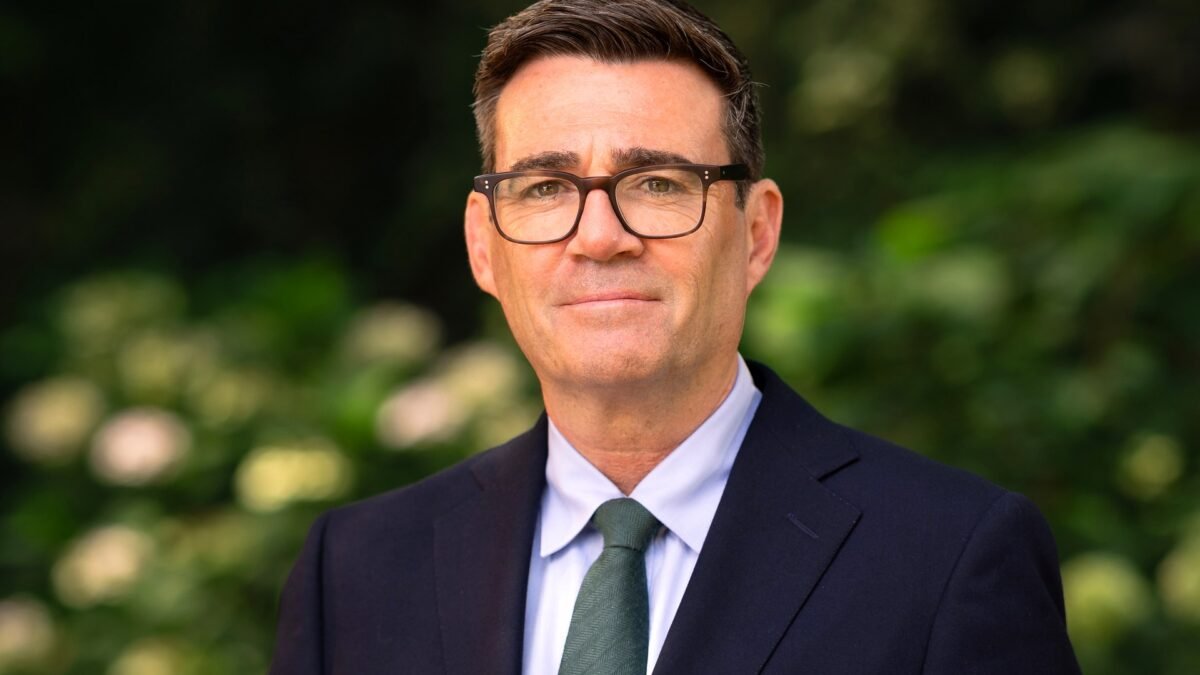
Prime Minister Andy Burnham has said he is open to the possibility of Britain issuing a formal apology for its role in the transatlantic slave trade, while ruling out financial reparations, in a significant shift in the United Kingdom’s position days before Commonwealth leaders gather in the Caribbean.
Writing in the Guardian, Mr Burnham said Britain was offering a “structured dialogue” with those affected by the slave trade, and that listening to calls for a formal apology on behalf of the British state would form an important part of that process. “I am open to them,” he wrote, according to the BBC.
But the prime minister drew a firm line against paying financial compensation. “I do not think that British people today can be held liable for historical wrongs, however heinous, that happened in a different age under different laws and in which they played no personal part,” he wrote.
Mr Burnham described the transatlantic slave trade, in which at least 12.5 million Africans were abducted and sold into slavery, according to Reuters, as a “brutal and barbaric violation”, and said Britain must “face up to the past”. He expressed his personal “sorrow and regret” for the pain and suffering of so many millions, and said he wanted to recognise the way it still shapes the world today.
The statement comes ahead of the Commonwealth Heads of Government Meeting, which opens in Antigua and Barbuda on Sunday, where Caribbean leaders are expected to press Britain again over slavery and reparations. The summit, in the capital St John’s, runs from Sunday to Wednesday, and will be opened by King Charles III, who is on a nine-day tour of the Caribbean.
No British government has ever formally apologised for slavery or offered to pay reparations, according to the BBC. Mr Burnham has maintained his predecessors’ position on financial compensation, but his willingness even to consider a formal state apology goes further than any prime minister before him.
What Burnham offered instead of reparations
Rather than financial reparations, Mr Burnham proposed an international effort to ease the debt burden on poorer nations, including by helping vulnerable countries repay over longer periods and at better rates, Reuters reported. Former prime minister Gordon Brown will assist with the initiative, according to the BBC’s reporting carried by Caribbean newspapers.
Mr Burnham noted that more than 40 per cent of the world’s poorest and most vulnerable countries spend more on debt interest than on healthcare, a figure he used to argue that practical help with debt is a more useful answer than cash compensation.
He framed the whole exercise as a matter of national interest as well as moral duty. “For years, those members of the Commonwealth affected by the slave trade have asked for an honest conversation about the legacies of slavery,” he wrote, according to the Associated Press. “By sticking our heads in the sand, we have damaged the ability of the Commonwealth to function.”
“Having these difficult conversations to safeguard the Commonwealth for the future is the right thing to do. It is also the patriotic thing to do,” he wrote, according to The Times. “Not just because it is in our interests, but because the Britain I believe in is confident, decent and brave. We led the world in abolishing slavery — and we can show leadership again today.”
He also acknowledged the contradiction at the heart of Britain’s history. “We are a country where brave people led the way in abolishing slavery, but we are also a country that participated in the trade in human lives,” he wrote, according to the Associated Press.
Downing Street believes strengthening the Commonwealth is in Britain’s interest at a time when China and Russia are seeking influence among its members, the BBC reported. President Vladimir Putin hosted a Russia-Africa summit in Moscow this week, a reminder, in the government’s view, that Britain cannot take the loyalty of Commonwealth nations for granted.
Caribbean leaders welcome the opening — but want more
The reaction from the Caribbean was warm but pointed: welcome for the openness, insistence that the demand for reparatory justice has not changed.
Mia Mottley, the prime minister of Barbados, who has been one of the most prominent voices seeking reparations, welcomed Mr Burnham’s statement, saying she would engage in good faith while still seeking reparatory justice, according to the BBC.
Gaston Browne, the prime minister of Antigua and Barbuda and host of next week’s summit, welcomed Mr Burnham’s comments and his proposals for practical assistance, Reuters reported. In a Facebook post, he added: “The Caribbean’s longstanding position on reparatory justice remains unchanged.” According to The Times, he described the statement as “a significant and welcome development”, adding: “An acknowledgement of historical responsibility, accompanied by a formal apology, would be an important step towards healing and strengthening relations between Britain and the countries and peoples affected by slavery.” He also said differences over financial compensation “should be addressed through dialogue, but they need not prevent progress in areas where agreement is possible”.
Andrew Holness, the prime minister of Jamaica, said “open-minded dialogue is always a good place to start addressing difficult issues”, according to The Times.
But campaigners said the prime minister had not gone far enough. Denis O’Brien, founder of The Repair Campaign, said Mr Burnham’s statement was disappointing, calling for a full and formal apology now as a significant and symbolic first step towards reparatory justice, the BBC reported.
Bell Ribeiro-Addy, the chair of the All-Party Parliamentary Group for Afrikan Reparations and the MP for Clapham and Brixton Hill, welcomed the government’s acceptance of the role Britain played, but said it had “still fallen short of a formal state apology and that actually costs nothing”. “Acknowledgment is not the same as understanding,” she told BBC Radio 4’s Today programme. “Until we apologise, we are never going to be on equal footing … it’s meant to be a family of nations — a Commonwealth — and it’s simply not the case.” She also said that, to her knowledge, no invoice for financial reparations had ever been given to the UK, and worried that the focus on financial reparations was problematic and had not listened to what people had said.
The view from Westminster
Chancellor John Healey backed the prime minister, saying Mr Burnham was open to discussion about an apology because it was the right thing to do, particularly before the Commonwealth summit, the BBC reported. Mr Healey said a formal apology would not mean accepting financial liability for events hundreds of years ago.
Conservative leader Kemi Badenoch took a different view, saying there was no reason British taxpayers today should be held financially responsible for things that happened generations before they were born, and criticising Labour spending, according to the BBC.
The divide captures the political calculation Mr Burnham is making. An apology costs the Treasury nothing and may buy goodwill in the Caribbean; reparations, by contrast, have become an electoral landmine in Britain, where the idea of taxpayers funding payments for centuries-old wrongs is easily weaponised by opponents. By separating the two, Mr Burnham is trying to offer something real to Commonwealth leaders while keeping the door firmly shut on the part of their demand that would be hardest to defend at home.
King Charles and the royal dimension
The prime minister’s intervention comes as King Charles III tours the Caribbean. Speaking in Nassau, the capital of the Bahamas, on Tuesday, the King said it was “only right that we should acknowledge the great suffering and injustices of the past”, Reuters reported, but he stopped short of an apology. Later in Guyana, he visited the site of a rebellion by enslaved people against British authorities, according to the BBC.
Buckingham Palace has said the King will not issue a formal apology for slavery during his trip, despite calls from countries in the region, according to the BBC’s reporting carried by Caribbean newspapers. Decisions about formal apologies and reparations rest with the elected government, not the monarch, and the palace has consistently said the King will not go beyond acknowledging the past.
That division of labour matters. If a formal apology is eventually offered, it will be the prime minister’s to give, on behalf of the British state. Mr Burnham’s Guardian article is the first step towards that, and it deliberately leaves the King’s position untouched.
A demand decades in the making
Caribbean leaders have been pressing Britain on this question for years, and their demands are organised, specific and longstanding. The Caribbean Community, known as CARICOM, launched a Reparations Commission in 2013 and endorsed a ten-point plan for reparatory justice in 2014. The plan calls for a full formal apology, repatriation for descendants who wish to return to Africa, a development programme for indigenous peoples, cultural institutions and the restitution of heritage, action on a public-health crisis, the eradication of illiteracy, an African knowledge programme, psychological rehabilitation, technology transfer, and debt cancellation with monetary compensation.
A Caribbean manifesto issued in June this year underlined the central grievance: when Britain abolished slavery, it paid compensation to the slave owners for the loss of the people they had enslaved, but it paid nothing to the enslaved themselves. The manifesto also sets out the scale of the crime, including an estimate that six million African women were transported across the Atlantic as slaves.
From the 15th to the 19th century, millions of Africans were sold into slavery by European traders, with Britain transporting an estimated 3.2 million people across the Atlantic, according to the Transatlantic Slave Trade Database cited by Reuters. From the 16th century, English authorities and the monarchy were prominent participants in the centuries-long trade, according to the BBC.
Parliament passed a law to abolish slavery in 1833, and as part of that law British plantation owners were paid for the loss of the people they had enslaved. The UK only finished paying off the debt incurred to cover those payments in 2015, the BBC reported — a fact campaigners return to again and again, because it means British taxpayers were still, in effect, paying for slavery’s abolition until a decade ago, while the enslaved received nothing.
In 2007, then prime minister Tony Blair said the UK’s role in slavery was a matter of “deep sorrow and regret”. That formulation — sorrow, not apology — has been the template for every British leader since. Mr Burnham’s statement breaks with it, not by apologising, but by saying he is open to one.
The Commonwealth itself, an association of 56 independent nations that grew out of the British Empire, is the forum where this argument now plays out. Most of its Caribbean members are former British colonies, and they have long pressed Britain to acknowledge slavery’s legacy and offer redress. The summit in Antigua is the latest, and potentially the most consequential, round of that argument.
Analysis: Why It Matters
A first for a British prime minister
No British government has ever formally apologised for slavery. Tony Blair offered “deep sorrow and regret” in 2007; David Cameron, visiting Jamaica in 2015, said it was time to “move on”. Every leader since has treated a formal apology as a line not to be crossed, fearing it would open the door to compensation claims. Mr Burnham has not crossed that line either — but he has, for the first time, said he is willing to walk towards it. The difference between “open to” and “will” is doing a lot of work here, and the prime minister knows it. What matters is that the word “apology” is now, officially, on the table in a way it has never been before. Caribbean leaders have spent a decade asking for an honest conversation; Mr Burnham has now agreed to have one, in public, in writing, days before he meets them face to face. That is a genuine change in the terms of the debate, whatever its outcome.
The apology-reparations split is the whole strategy
Mr Burnham’s position is carefully engineered: an apology is a word, reparations are a bill. By separating the two, he can offer Caribbean leaders something they have never had — a prime minister willing to contemplate a formal state apology — while refusing the thing that would be hardest to defend in Britain. The logic, as he set it out, is that today’s taxpayers cannot be held liable for wrongs committed under different laws centuries ago. That argument has carried the day with every British government until now, and it is worth noting that the campaigners themselves, as Bell Ribeiro-Addy pointed out, have never presented Britain with an invoice. The argument in the Caribbean has always been broader than cash: apology, recognition, debt relief, education, health, culture. Mr Burnham’s answer, a structured dialogue plus a debt initiative, is an attempt to meet the demand on ground where he can afford to move. Whether Caribbean leaders accept that trade depends on whether they regard an apology as a first step or a substitute.
The Commonwealth is the real audience
Read the prime minister’s article again and the most revealing passage is not about slavery at all. It is about the Commonwealth itself: “By sticking our heads in the sand, we have damaged the ability of the Commonwealth to function.” Downing Street’s calculation, reported by the BBC, is that strengthening the Commonwealth is in Britain’s interest in a world where China and Russia are actively courting its members. President Putin hosted a Russia-Africa summit in Moscow this week. China’s lending and infrastructure reach deep into the Caribbean and Africa. Britain’s historic claim on these countries’ loyalty rests on shared institutions, language and history — and that history is precisely what is in dispute. A prime minister who refuses even to discuss an apology hands his rivals an easy argument: that Britain values the Commonwealth only when it costs nothing. Mr Burnham’s openness is, in that sense, not only moral but strategic. He is trying to buy the Commonwealth’s future with a word, before someone else buys it with money.
The domestic politics are treacherous
At home, the politics cut the other way, which is why the reparations line is so firm. Kemi Badenoch’s response — that taxpayers today should not pay for things that happened generations before they were born — is a line that polls well, and the Conservatives will use it. The word “reparations” has become, in the words of one historian quoted in coverage of the summit, an electoral landmine, because it is so easily framed as British taxpayers putting their hands in their pockets for the past. Mr Burnham’s allies will argue that an apology costs nothing and that a structured dialogue is not a blank cheque. His critics, on the left as much as the right, will argue the opposite: that a dialogue without a commitment to anything is a delaying tactic, and that ruling out reparations before the conversation has even begun prejudges its outcome. The prime minister has put himself in the middle of that argument, and the summit will be the first test of whether the middle holds.
What a “structured dialogue” actually means
The phrase is doing heavy lifting, and it is worth asking what it will look like in practice. A structured dialogue is not an apology, and it is not a negotiation over money. It is a process: meetings, terms of reference, perhaps a commission, almost certainly a long timetable. That is both its strength and its weakness. For Mr Burnham, a process is a way of showing movement without committing to an outcome, and of letting the question of an apology be decided by the dialogue rather than announced in advance. For Caribbean leaders, a process is only worth entering if it can actually end in an apology — and, for some, in reparatory justice in the broader sense of debt relief, development finance, education and healthcare. The test will come quickly: who sits at the table, what its mandate says, and whether the prime minister returns from Antigua with a date, a format and a promise, or only with warm words. The Gordon Brown debt initiative is the first concrete product of the approach, and its fate will be watched as a signal of whether the dialogue is a vehicle or a cul-de-sac.
What to Watch Next
- The summit itself, 1–4 November: whether the Commonwealth Heads of Government Meeting in Antigua produces a joint statement on slavery and reparations, and whether Mr Burnham commits to a timetable for the structured dialogue or for an apology.
- The King’s role: whether King Charles goes any further than acknowledging “the great suffering and injustices of the past” during his Caribbean tour, and whether the palace’s position — no formal apology from the monarch — holds through the summit.
- The Gordon Brown debt initiative: the detail of the plan to help the poorest countries repay over longer periods at better rates, which countries are covered, and whether Caribbean leaders treat it as a meaningful answer to their demands.
- The reaction at Westminster: whether Conservative attacks on the apology discussion gain traction, and whether Labour MPs and campaigners, including the All-Party Parliamentary Group for Afrikan Reparations, press Mr Burnham to go further than openness.
- What “structured dialogue” becomes: who is invited, what its mandate covers, and whether it produces a formal state apology — the first by any British government — or becomes a long process that defers the question.
Sources
- BBC News — Burnham ‘open’ to calls for slavery apology but not reparations
- Reuters — UK PM Burnham says he is ‘open’ to formal apology for slavery, but rules out reparations
- Associated Press — UK leader Burnham hints at apology for country’s role in slave trade but rejects reparations
- The Times — Andy Burnham considering apology for UK’s role in slave trade
- Barbados Gazette — Burnham opens door to formal apology for Britain’s slave trade

About the Author — Abdul Mannan
Related Articles
Mahmood Set to Soften Settlement Plan as Care Workers Win Exemption
Home Secretary Shabana Mahmood is expected to announce a softened settlement package next week, with social care workers…
Miliband Tells Lavrov ‘We All Know You Are the Aggressor’ as G20 Family Photo Is Scrapped
Britain's Foreign Secretary confronted Russia's Sergei Lavrov face to face at the G20 in Atlanta, telling him 'we…

Burnham Vows to Cut Welfare Bill ‘As Soon As We Possibly Can’ as Healey Defends Budget After OBR Warning
The prime minister says the government is "working flat out" to bring down the welfare bill after the…