
Caribbean Leader Says UK Tried to Block Reparations Debate at Commonwealth Summit as Foreign Office Denies Claim

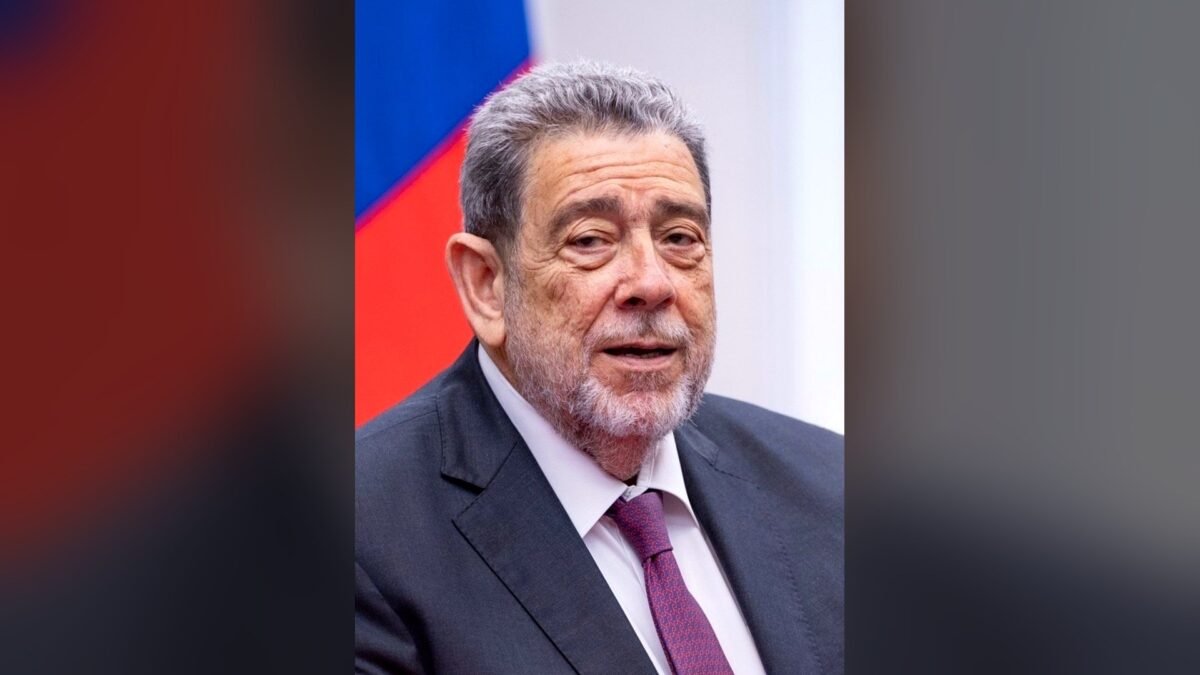
British officials tried to keep slavery reparations off the agenda of the Commonwealth summit in Antigua and Barbuda, and even warned that Prime Minister Andy Burnham would stay away if the subject were formally listed, according to one of the Caribbean’s most senior reparations campaigners. The claim, made as leaders gathered in St John’s for the 28th Commonwealth Heads of Government Meeting, has been flatly denied by the Foreign Office, which calls it “completely untrue”.
Ralph Gonsalves, the former prime minister of St Vincent and the Grenadines and a leading figure in the Repair Campaign, told the Guardian that Britain had been “vehement” in its opposition to reparations appearing on the summit’s formal agenda. “My understanding from informed circles is that Britain was vehement not to have the matter on the agenda,” he said. “The British officials – and in that regard they were joined by the Canadian officials – were even raising the prospect that if it is on the agenda the prime minister of Britain wouldn’t go.”
The allegation lands at the most delicate moment of a summit that was already shaping up to be dominated by the legacy of slavery. On Friday, Burnham went further than any British prime minister before him, announcing in a Guardian article that he was “open” to a formal apology for Britain’s role in the transatlantic slave trade and offering a “structured dialogue” with the countries affected. He called the trade “a brutal and barbaric violation” and expressed “sorrow and regret for the pain and suffering of so many millions”, while ruling out financial reparations. Gonsalves welcomed that opening, but said Britain had come to the table only reluctantly. “The British government, they’re coming, kicking and screaming to the table of structured dialogue,” he said. “But at least they’re coming.”
The Foreign Office disputes Gonsalves’s account of the pre-summit manoeuvring. According to BriefTea’s report of the Guardian story, the Foreign Office labelled the claim “completely untrue” and said the United Kingdom had never instructed any member state on what to exclude from the agenda. The Guardian’s own report, published on Sunday evening, recorded that there had been no immediate comment from the British government at the time of publication, suggesting the denial followed later.
Gonsalves also accused British officials of circulating what he called an “untruth” about India’s position. “They also started to circulate this untruth that India didn’t want it on the agenda, but that was not so at all,” he said. “India was very supportive at the UN general assembly resolution on March 25th, 2026.” The claim about India matters because it goes to how the agenda was shaped behind closed doors: if Caribbean governments believed India was opposed, the pressure to keep reparations off the formal agenda would have looked like a broad consensus rather than a British objection.
As it stands, slavery reparations does not appear on the official agenda of the summit, which runs from 1 to 4 November in St John’s, the capital of Antigua and Barbuda. The stated priorities for the 56-nation bloc are trade, climate resilience and finance, sustainable debt, democracy and investment in opportunities for young people. But the formal agenda has never been the whole story at Commonwealth summits, and Gonsalves argued that the omission would change nothing about what leaders actually discuss. “The danger of not putting it formally on the agenda is what we see happening now, that everybody who could have foreseen, whether or not it’s formally on the agenda, even the nature of how the discussions take place at the Commonwealth, and certainly in the retreats, it would have been raised,” he said.
The private retreat of leaders – the closed session where Commonwealth heads speak without officials present – is where Gonsalves expects the real work to happen. He said the structured dialogue itself was unlikely to take place at the summit, but that leaders would use the retreat to discuss its format and details. That distinction, between a formal agenda item and a retreat discussion, is likely to define how the summit’s outcome is judged: Caribbean governments want a process with a timetable, not merely a conversation.
Guyana’s president, Irfaan Ali, who met King Charles in Georgetown earlier in the tour, welcomed Burnham’s statement and proposed a concrete next step: a Commonwealth subcommittee to work out the details of the dialogue over the next six to twelve months. “I’m happy that finally the discourse has moved to a position where it should have been, where the British government is involved, because that’s the state we are dealing with,” Ali said. He argued that the talks should move beyond attempting to put a price on the indignity of slavery and towards addressing its developmental consequences. “How do we identify a system of support where the UK government, with its financial institutions, can sit with countries … and work on a development pathway, identify development gaps, whether in health, education, social services, infrastructure?”
Barbados’s prime minister, Mia Mottley, thanked Burnham for “breaking new ground” while making clear that the two sides remained divided. “On reparations in particular, our views differ, and we will say so plainly and respectfully,” she said. Mottley identified an apology, investment in health and education, tackling systemic poverty and inequality, and fairer debt terms among the areas where agreement could be reached. The prime minister of the Bahamas, Philip Davis, said the talks were not simply about “historical remembrance” but “the enduring consequences of slavery and the importance of justice, acknowledgment and meaningful redress”.
Professor Sir Hilary Beckles, chair of the Caribbean Community Reparations Commission, had described the meeting as “the Chogm of reparations”, adding that reparatory justice was “the number one item” for the Caribbean as Commonwealth leaders gathered in the region. The commission, established in 2013, produced the CARICOM Ten-Point Plan for Reparatory Justice in 2014, which calls for a full formal apology, an Indigenous Peoples Development Programme, repatriation, debt cancellation and other measures – a framework its architects stress is a development and justice programme, not simply a cash payout.
King Charles, 77, will formally open the summit on Tuesday 3 November, and his speech is expected to address slavery with what the Palace has described as “unflinching honesty and sincere sorrow”. The Palace has made clear, however, that no apology is expected from the King, and that it would not be appropriate for him to address government policy. The King and Queen arrived in Antigua on 1 November and attended a Sunday service at St John’s Pentecostal House of Restoration on Antigua’s 45th Independence Day, part of a nine-day Caribbean tour that began in the Bahamas on 27 October and travelled via Guyana. As the King and the prime minister travel through St John’s to attend summit events, they will be greeted by protests: on billboards, placards and T-shirts, and at a candlelight vigil for the thousands of Africans trafficked to Antigua and Barbuda during the transatlantic slave trade, the message from the Caribbean will be clear – calls for an apology and reparations.
The domestic politics in Britain are running in parallel. On Sunday, Conservative leader Kemi Badenoch told broadcasters that an apology for Britain’s role in the transatlantic slave trade would be a “navel-gazing distraction”, describing slavery as an evil “in which people from every continent and region participated”. Gonsalves answered her directly. “I would really like to sit down with my dear sister Kemi and explain to her so that she could get an understanding of what we are talking about,” he said, adding that he would like to discuss how reparatory justice could help heal some of the fractures arising from Britain’s multicultural and ethnic tensions.
Gonsalves has been making this case for two decades. Addressing the United Nations General Assembly in September 2006, when he was prime minister of St Vincent and the Grenadines, he called the slave trade “a monstrous crime against humanity and an exercise in genocide unmatched in the history of the Western world”, and said European and North American nations had “failed and/or refused to acknowledge” the crime sufficiently or at all. In an interview with the Anadolu news agency last week, he said the starting point must be “a full, unequivocal apology”, and pointed to the Netherlands, where then prime minister Mark Rutte apologised for the Dutch state’s role in slavery in December 2022, followed by King Willem-Alexander in July 2023. He also noted that Britain paid slave owners £20 million in compensation following abolition in the 1830s – a debt, in the form of the government bonds issued to fund it, that was only fully repaid in 2015.
The history behind the argument is stark. At least 12.5 million Africans were abducted and sold into the transatlantic trade, and Britain transported an estimated 3.2 million of them, according to the Trans-Atlantic Slave Trade Database. Britain has never formally apologised for its role, nor paid reparations. Tony Blair expressed “deep sorrow and regret” in 2007; David Cameron rejected reparations during a visit to Jamaica in 2015 and urged Caribbean nations to “move on”; Rishi Sunak dismissed calls for compensation in 2023; and Sir Keir Starmer ruled out reparations in 2024, even as leaders at the Samoa summit that year called for talks on the issue. Burnham’s offer of structured dialogue is the first time a British prime minister has gone as far as being open to a formal apology – and the first time the government has agreed to discuss the substance at all.
For St Vincent and the Grenadines, the claim is also personal and specific. After the British defeated the Garifuna in the Second Carib War and killed the paramount chief Joseph Chatoyer in 1795, thousands of survivors were interned on Balliceaux, a barren 320-acre island in the Grenadines with no rivers, no streams and no shelter, between July 1796 and early 1797. In March 2025 the then government of St Vincent and the Grenadines acquired Balliceaux, returning the site of the genocide to Vincentian hands after more than two centuries in private foreign ownership. Gonsalves, who now sits on Ghana’s Global Advisory Council on Reparatory Justice, has said he raised reparations directly with Charles during a 2019 visit to St Vincent, when the monarch was still Prince of Wales, and again after his accession to the throne.
What happens next will be decided largely out of public view. The leaders’ retreat, the wording of the final communiqué, and the fate of Ali’s proposed subcommittee will determine whether the summit produces a process or merely a conversation. The precedent from Samoa in 2024 is instructive: then prime minister Sir Keir Starmer insisted reparations were not on the agenda, yet the final communiqué acknowledged calls for discussion and agreed that “the time has come for a meaningful, truthful and respectful conversation towards forging a common future based on equity”. Caribbean leaders will be watching whether Antigua produces language as strong – or stronger.
Analysis: Why It Matters
The agenda is the argument
In summit diplomacy, the agenda is never a neutral list. It is the first negotiation, and it decides which subjects get officials, papers, drafting time and a paragraph in the communiqué. That is why Gonsalves’s claim matters more than it might first appear. If British officials really did warn that Burnham would not attend should reparations be formally listed, they were using the prime minister’s presence as leverage over the agenda itself – and, by extension, over whether the issue would be treated as a matter for decision or merely for discussion. The Foreign Office’s denial is categorical, and it must be weighed seriously: no official has gone on the record to confirm Gonsalves’s account, and he himself attributes it to “informed circles” rather than to a named source. But the denial does not settle the underlying question, because the observable facts point the same way as the claim. Reparations is not on the formal agenda. The structured dialogue Burnham offered is explicitly not a negotiation about money. And the format of whatever follows is still to be decided, in private, by leaders in retreat. Whether or not anyone threatened a boycott, the effect is the same: the issue that Caribbean governments call their number one priority enters the summit through the side door. The lesson of Samoa is that side doors can still lead somewhere – the 2024 communiqué carried reparatory-justice language despite Starmer’s resistance – but they lead somewhere slower, and with less institutional weight behind them. The agenda fight, in other words, is not a prelude to the argument. It is the argument, conducted in advance.
A claim, a denial, and a credibility test
The dispute between Gonsalves and the Foreign Office is a small story in itself, but it reveals how this summit will be fought. Gonsalves is not a marginal figure: he led St Vincent and the Grenadines for 24 years, he is a central figure in the Repair Campaign, and he now sits on Ghana’s global reparatory-justice council. When he says he understands from “informed circles” that Britain was “vehement”, he is drawing on a network of Caribbean officials and diplomats who were in the room when the agenda was negotiated. The Foreign Office, for its part, has issued a flat denial – “completely untrue” – and says Britain never instructed any member on what to exclude. Both accounts cannot be fully true, but they are not quite as incompatible as they look. Agenda-setting in the Commonwealth is a consensual, secretariat-mediated process; a government can make its objections known forcefully without ever issuing a formal instruction. The distinction between “we would prefer this not be listed” and “we instructed you to exclude it” is precisely the kind of gap in which diplomatic rows live. What matters for the public is not which side wins the wording, but what the row tells us about the negotiation: Britain arrived in Antigua having already spent political capital trying to limit the discussion, and Caribbean leaders arrived knowing it. That knowledge shapes everything that follows, because it tells the Caribbean side that the structured dialogue was not freely offered – it was extracted. And a dialogue that one side believes was extracted will be policed much more strictly than one that was volunteered. Expect Caribbean leaders to demand dates, terms of reference and a reporting line, and to treat any vagueness as evidence of bad faith.
Apology without money: the line Britain will not cross
Burnham’s position is carefully constructed, and its architecture deserves attention. He has conceded the moral ground – the trade was “brutal and barbaric”, he is “open” to a formal apology, he offers structured dialogue – while holding the financial line absolutely. “I do not think that British people today can be held liable for historical wrongs,” he wrote, “however heinous, that happened in a different age under different laws and in which they played no personal part.” The logic is coherent, and it is also the same logic every British government has used for two decades. What is new is the pairing of the apology with a debt initiative: a new drive for the poorest Commonwealth countries, led by Gordon Brown, aimed at the fact that more than 40 per cent of the world’s poorest people live in countries that spend more on debt interest than on healthcare. Debt relief is the bridge Burnham is offering between apology and reparations – a form of redress that is economic rather than compensatory, forward-looking rather than backward-looking, and, crucially, not called reparations. Caribbean leaders have signalled they will walk across that bridge part of the way: Mottley listed fairer debt terms among the areas where agreement could be reached, and Ali framed the whole question in developmental terms. But the bridge has a limit, and the limit is the word itself. For the Caribbean, “reparations” is not only about money; it is about the formal acknowledgement that a crime was committed and that the consequences are still being lived. An apology plus debt relief may be a generous settlement, but it is not the same settlement as an apology plus reparations, and the difference is not semantic. It is the difference between charity and justice, and Caribbean leaders have spent a decade insisting on the second word. The negotiation ahead is therefore not about whether Britain will pay – it has said it will not – but about whether the dialogue can be structured so that the word “reparations” survives inside it. If it does, the Caribbean will call that a victory. If it does not, they will call the dialogue a containment exercise.
The King, the retreat and the speech
King Charles occupies the most constrained position of anyone in St John’s. He is the head of the Commonwealth, the host in a formal sense of the summit’s opening, and the sovereign of the state whose history is under discussion – yet he cannot apologise on behalf of the government, and the Palace has said he will not. His speech on Tuesday is expected to address slavery with “unflinching honesty and sincere sorrow”, language that echoes the tone of his 2022 address to Commonwealth leaders in Rwanda, where he said he could not describe “the depths of my personal sorrow at the suffering of so many”. The question is whether sorrow, however sincerely expressed, is enough when the governments in the room are asking for something more concrete. The Palace’s position is constitutionally correct: an apology by the monarch for state policy would be a political act requiring ministerial advice, and Burnham has not advised it. But constitutional correctness is not the same as political sufficiency, and the King knows it. His nine-day tour – from the Bahamas, through Guyana, to Antigua – has been designed to show a monarch listening: he acknowledged “the great suffering and injustices of the past” in Nassau, and he met Caribbean leaders on their own ground before the summit began. Gonsalves, who raised reparations with Charles in 2019 and again after the accession, has argued that the King could seek the prime minister’s approval for an apology, including for his own family’s role in the enslavement of Africans. That argument will not be resolved in St John’s, but the speech will be read as a signal of how far the Palace is willing to go in the direction of acknowledgement. If the language is stronger than Rwanda, Caribbean leaders will take it as encouragement. If it is the same, they will take it as a ceiling. Either way, the retreat – where leaders speak without officials – is where the King’s words will be tested against Burnham’s offer, and where the gap between sorrow and apology will be measured in real time.
Why this summit cannot duck the question
There are three reasons the reparations question will not go away after Antigua, whatever the communiqué says. The first is arithmetic. At least 12.5 million Africans were abducted into the transatlantic trade, Britain transported some 3.2 million of them, and the Caribbean states making the claim are the direct inheritors of that history – small island nations whose economies, health systems and education systems still carry the consequences. The second is precedent. The Netherlands has apologised, at both prime ministerial and royal level. The United Nations General Assembly passed a resolution on reparatory justice in March 2026, with India’s support. And the Commonwealth itself, at Samoa, agreed that the time had come for a “meaningful, truthful and respectful conversation”. Each of these steps makes the next one easier to demand and harder to refuse. The third reason is domestic, and it cuts both ways. In Britain, Badenoch’s dismissal of an apology as a “navel-gazing distraction” and Nigel Farage’s opposition show that any apology will be attacked from the right as weakness, while Labour backbenchers and the party’s own history point the other way. Burnham has tried to navigate between those pressures by offering the apology and withholding the money – but the two halves of his position will be tested separately. If the apology happens, its opponents will ask why it was necessary; if it does not, its supporters will ask what the structured dialogue was for. The summit, in that sense, is not the end of the argument. It is the moment when the argument moves from the newspapers into the institutions – into a subcommittee, a terms of reference, a timetable – where it will be much harder to ignore and much harder to resolve. That is why Gonsalves called the British government’s arrival “kicking and screaming”, and why he added, with deliberate emphasis, “but at least they’re coming”. The coming is the news. What they do once they arrive is the story that will run for years.
What to Watch Next
- The King’s opening speech on Tuesday: the exact wording on slavery will be parsed line by line – whether Charles goes beyond the “sorrow” of Rwanda, and whether Buckingham Palace’s insistence that no apology is coming holds through the day.
- The leaders’ retreat: the closed session is where the format and details of the structured dialogue are expected to be discussed, and where Guyana’s proposal for a Commonwealth subcommittee to report back within six to twelve months will be tested.
- The final communiqué: whether reparatory justice appears in the summit’s agreed text, and how the language compares with Samoa in 2024, when leaders agreed the time had come for a “meaningful, truthful and respectful conversation”.
- The Gonsalves–Foreign Office dispute: whether any official or diplomat goes on the record to support either account of the agenda negotiations, and whether the row hardens positions in the retreat.
- The debt initiative and the domestic reaction: details of the Gordon Brown-led drive for the poorest Commonwealth countries, and the political fallout in Britain, where Conservative opposition to an apology is already vocal and Labour backbenchers are pressing for more.
Sources
- The Guardian – “UK was ‘vehement’ slavery reparations should not be on Commonwealth summit agenda” (full text via EuropeSays syndication)
- BriefTea – “Caribbean leader says UK tried to block reparations discussion”
- BritBrief – “Burnham open to UK slavery apology ahead of Commonwealth summit”
- RocketNews – “UK was ‘vehement’ slavery reparations should not be on Commonwealth summit agenda”
- UN News – “Europe must offer moral, financial recompense for slave trade, Caribbean leader tells UN” (2006)

About the Author — advmannan1
Related Articles

Africa Welcomes the Olympics at Last: Dakar 2026 Youth Games Open in Historic First for the Continent
Senegal has opened the Dakar 2026 Youth Olympic Games, the first Olympic event ever held on African soil,…
Erdoğan and Zelenskyy Agree to Rebuild Black Sea Grain Corridor as Türkiye Warns Ukraine War Is ‘No Longer Sustainable’
Erdoğan and Zelenskyy agreed in Istanbul to work on a new Black Sea grain corridor after a month…
Poland’s Constitutional Tribunal in Crisis as Rival Judges Claim Control and Riot Police Guard the Court
Poland's highest court is claimed by two rival leaderships after a judge suspended its president, riot police ringed…