
King Charles’s Former Horse Point Of Law Wins Melbourne Cup as Maher Trains Historic Trifecta

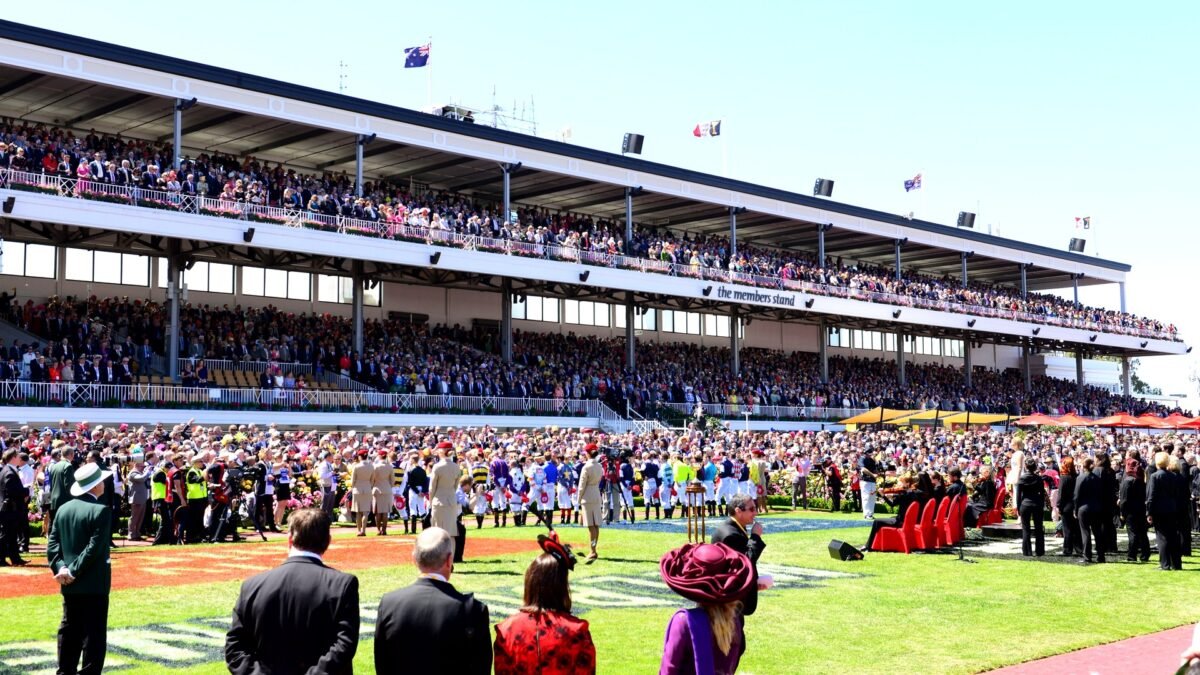
Point Of Law, a three-year-old colt bred by King Charles III and sold to Australian owners only a few months ago, stormed home to win the 166th Melbourne Cup at Flemington on Tuesday, leading home a historic one-two-three for trainer Ciaron Maher that no trainer had ever achieved in the history of the race.
The $7 favourite, ridden by Ethan Brown, swept past his stablemate Royal Supremacy in the final 150 metres of the 3,200-metre contest and drew away to win by three and three-quarter lengths in 3 minutes 21.88 seconds, according to Reuters. Zahrann finished second and Juja Kibo third, giving Maher the first three horses home in the Melbourne Cup’s 166-year history. Sons And Lovers, trained in Ireland by Joseph O’Brien, finished fourth.
The victory, in front of a bumper crowd at Flemington on a day that began under grey clouds and ended in sunshine, was the second Melbourne Cup triumph for Maher, who won the race in 2022 with Gold Trip. It was also the biggest win of Brown’s career, and one of the great comeback stories in Australian sport, coming three years after a fall at the same track left the jockey fighting for his life.
Point Of Law was having only the sixth start of his life, making him the most lightly raced winner of the modern Melbourne Cup, according to Sports News Australia. He was also the first favourite to win the race since Fiorente in 2013. The colt, a son of the unbeaten champion Frankel, was bred by King Charles and raced in the royal colours on his debut at Yarmouth in Britain, 206 days before his Flemington triumph. He won the Group 3 Bahrain Trophy at Newmarket in July before being sold to race in Australia, where he won the Group 3 Geelong Cup on his southern hemisphere debut on 21 October, earning a ballot-free start in the Cup.
How the race was won
The 2026 Melbourne Cup was run at a furious early tempo, and for much of the race it looked as though it might be stolen from the front. Royal Supremacy, another of Maher’s seven runners, broke from barrier 21 and went out hard, opening a lead of eight lengths by the 1,500-metre mark and stretching it to as much as 20 lengths with 1,000 metres still to run, according to Flashscore and the Thoroughbred Daily News.
The runaway leader was still in front by daylight as the field swung into the Flemington straight, but the demanding two-mile journey eventually took its toll. Royal Supremacy began to flag inside the final furlong, and Point Of Law, who had settled well back in the 23-horse field under Brown, produced what the Thoroughbred Daily News called a devastating sprint to sweep past him up the rail.
Brown had not planned to be so far back. “It wasn’t the plan to have Point Of Law in the second half of the field,” he said afterwards, according to The Straight. But the colt’s turn of foot settled the matter. He hit the front at the 100-metre mark and, in the words of The Straight, “careered away” to win going away. Zahrann, ridden by Ben Melham, snatched second on the line, three and three-quarter lengths behind the winner, with Juja Kibo, ridden by Sam Clipperton, a short half-head further back in third.
The official result confirmed a clean sweep for one stable. Sons And Lovers, the topweight and the best of the European challengers, finished fourth for Joseph O’Brien, who saddled five runners in the race. Royal Supremacy held on for fifth and Shockletz was sixth, giving Maher six horses in the top ten, according to AAP. Middle Earth finished tenth and Mr Monaco seventeenth. The trifecta returned a dividend of $2,644.50 for a $1 outlay, according to Sports News Australia.
Point Of Law, drawn in barrier nine and carrying 53 kilograms, started as the $7 favourite on a track rated a soft 5. The race was run over 3,200 metres, or two miles, for a total prize pool of A$10 million, with A$4.5 million going to the winner, according to the Sporting News. Every runner was guaranteed a minimum return of A$100,000.
Twenty-three horses contested the Cup after the Chris Waller-trained Asterix was scratched by stewards at 10:33am on Tuesday morning. Waller was fined A$50,000 after the medication Penetrene was mistakenly applied to both of Asterix’s forelegs on race morning, according to reports.
The King’s horse
The royal connection is what will make this Melbourne Cup memorable far beyond Australia. Point Of Law was bred by King Charles III and originally trained for the King and Queen in England by John and Thady Gosden. He made his debut in the royal colours at Yarmouth, finishing second in a 2,011-metre novice race for three-year-olds, and won the Bahrain Trophy at Newmarket in July before the decision was taken to sell him.
The colt was bought in a mid-year deal by Australian connections after lengthy negotiations involving Maher and bloodstock expert Will Bourne, according to Royal Central. The ownership syndicate includes former Australian rules football star Chris Judd and his wife Bec Judd, alongside investment banker and Australian Sports Commission chair John Wylie, who holds a ten per cent share. The sale price was reported to have been well in excess of £3 million, although the exact sum was never publicly confirmed.
Maher himself wondered aloud whether the King might now be regretting the decision. “I wonder if King Charles III would be ruing his decision to part with Point Of Law,” the trainer said, according to AAP, after the favourite justified his tag in winning the $10 million race.
For the King, who has been a committed owner and breeder throughout his life, the result will have carried a particular sting. Point Of Law arrived in Australia earlier this year and has now won A$5,910,000 in his two Australian starts alone, according to Fox Sports, before any account is taken of the breeding value he has acquired overnight as a Melbourne Cup winner by Frankel.
The colt’s pedigree is part of the story. Frankel, his sire, retired unbeaten after 14 races and has become one of the most sought-after stallions in the world. Point Of Law is the latest of his sons to win at the highest level, and the manner of his victory — a sustained burst of speed over the final furlong of a two-mile race — was exactly the blend of speed and stamina that made his sire a champion.
Maher’s historic day
For Ciaron Maher, Tuesday was the biggest day of a remarkable career. The trainer saddled a record seven runners in the Melbourne Cup, surpassing the previous benchmark of six set by Robert Hickmott for Lloyd Williams in 2013. His septet made up almost a third of the field, and his dominance was underlined by the fact that six of his seven finished in the top ten.
“I knew I had my best hand going into it, but we had to execute,” Maher told Nine after the race, according to the Sydney Morning Herald. “He’s just thrived,” he said of Point Of Law, who had arrived in Australia with only five career starts to his name.
The result made Maher the first trainer in the race’s 166-year history to saddle the first three horses home. It was his second Melbourne Cup, four years after Gold Trip won in 2022 when Maher was training in partnership with David Eustace. That first triumph had been a shared one; this one, with a record seven runners and a clean sweep of the placings, was entirely his own.
Maher’s season has been extraordinary by any measure. He won The Everest, Australia’s richest sprint, last month with Tempted, and Tuesday’s success pushed him past the A$30 million mark in prizemoney for the season already, according to Sports News Australia. He has won three of the past four Australian trainers’ premierships and sits at the top of the premiership table again this season.
The scale of the operation is a decade in the making. Maher saddled his first Cup runner, Mr O’Ceirin, in 2014, and has had at least three runners in the race every year since 2020. He began this year’s spring campaign with 14 Cup nominations, and four of the seven who made the final field earned their places through golden-ticket victories in lead-up races.
Together with Joseph O’Brien’s five runners and Chris Waller’s two, Maher’s seven meant that three trainers accounted for 14 of the 24 original starters. It is a concentration of power that says much about where elite racing now sits: the biggest stables, with the deepest ownership groups behind them, can buy, prepare and place horses at a scale that smaller operations cannot match.
Brown’s remarkable comeback
If Maher’s day was historic, Ethan Brown’s was deeply personal. The 27-year-old jockey from Alice Springs, who left home at 15 to chase a riding career in Melbourne, became a Melbourne Cup-winning jockey three years after a fall at Flemington that nearly killed him.
Brown suffered life-threatening injuries in a fall in the 2023 Australian Guineas at the same track. According to Racing.com, he sustained a grade-five lacerated liver and a severed artery, damage to his right kidney, significant internal bleeding and fractures to three vertebrae, losing more than five litres of blood. At one stage during his recovery, he wondered whether he would ever ride again.
“There were a lot of speed bumps from that fall to get it to my comeback. It was very hard at times,” Brown said afterwards, according to Racing.com. “At one stage, I didn’t think I was going to come back, I didn’t think it would be worth it. But I had a slow burn and woke up one morning and thought I needed to get back riding.”
Brown had once contemplated giving up riding altogether and becoming a trainer, only for Maher to talk him out of it and encourage him to continue in the saddle. “He’s done nothing but support me and back me in,” Brown said of Maher, according to AAP. “I’ve buggered up plenty of times on his horses and he’s had nothing but faith.”
On Tuesday, that faith was repaid in the most spectacular fashion. “Please don’t wake me up. It’s every jockey’s dream to do this,” Brown said after the race, according to the Thoroughbred Daily News. “He’s going to be a superstar horse, he’s something special,” he said of Point Of Law. “He had the best turn of foot in the race.”
Brown’s victory carried another layer of meaning because it came on the track where he nearly lost his life. The Melbourne Cup was, in his own words, the furthest thing from his mind when he first came to Melbourne as an apprentice. “I thought I would come to Melbourne and try and ride a few winners,” he said, according to Sports News Australia. “What doesn’t kill you makes you stronger.”
The records that fell
Point Of Law’s win rewrote several lines of Melbourne Cup history at once. At only his sixth start, he is the most lightly raced winner of the modern Cup, according to Sports News Australia. His debut came just 206 days before the Cup, in the royal colours at Yarmouth, and he had never raced over 3,200 metres before Tuesday.
He is also the first favourite to win the Melbourne Cup since Fiorente in 2013, ending a 13-year run in which the market leader had been beaten every time. And by winning the Geelong Cup on 21 October and then the Melbourne Cup a fortnight later, he joined Media Puzzle (2002), Americain (2010) and Dunaden (2011) as the only horses this century to complete the Geelong Cup-Melbourne Cup double.
The trifecta was the headline record. In 166 runnings of the Cup, no trainer had ever saddled the first three horses home. Maher did it with a colt by Frankel, a gelding by Night Of Thunder in Zahrann, and a Group 2 winner in Juja Kibo, a son of Belardo who had won the Moonee Valley Gold Cup. The three were separated by less than four lengths at the line.
There was drama elsewhere in the field too. Harry Coffey rode Shockletz into sixth place despite having surgery to insert a plate in his fractured collarbone just 48 hours before the race, following a fall on Victoria Derby day. It was, by any measure, an extraordinary act of toughness, and it underlined the physical demands the Cup carnival places on riders as well as horses.
The pre-race entertainment had set the tone for the day. Robbie Williams performed before the horses entered the mounting yard, in front of a packed crowd, and the morning’s grey clouds gave way to sunshine just in time for the great race, according to reports from Flemington.
A race like no other
The Melbourne Cup has been run since 1861, when Archer won the first of his two victories, and its place in Australia’s sporting calendar remains unmatched. It is contested over 3,200 metres, or two miles, on the first Tuesday in November, and it is a public holiday in its host state of Victoria. It is known, with reason, as “the race that stops a nation”.
The Cup’s history is a roll call of the sport’s great names and its great stories. It was for much of its life a race for Australian and New Zealand horses, until the Irish-trained Vintage Crop won in 1993 and opened the door to the international raiders who now shape the race every year. Joseph O’Brien, whose five runners in 2026 included the fourth-placed Sons And Lovers, is a dual Melbourne Cup-winning trainer, and his father Aidan has chased the race for decades.
The recent roll of honour shows how international the Cup has become. Half Yours won in 2025, ridden by Jamie Melham, who became only the second woman jockey to win the race. Knight’s Choice won in 2024, Without A Fight in 2023, and Gold Trip, Maher’s first winner, in 2022. Point Of Law’s victory continues the modern pattern: a northern hemisphere three-year-old, bought from a British royal stable, winning Australia’s greatest race at his sixth start.
That pattern is also what makes the Cup such a compelling spectacle. The handicap, in which horses carry weights assigned according to past form, is designed to give every runner a chance, and for thirteen years it had denied the favourite. On Tuesday, for the first time since 2013, the best horse in the race on paper was also the best horse in the race on the track.
The Cup is also, increasingly, a test of how racing manages its own risks. The scratching of Asterix on race morning, after a medication error in the Waller stable, and the mandatory scanning protocols that saw another of Maher’s horses, Saint George, withdrawn last week, are part of a sport that is under constant scrutiny over horse welfare. The Cup’s organisers have tightened veterinary checks in recent years, and the 2026 race passed without serious incident on the track.
Analysis: Why It Matters
A one-trainer Cup changes the conversation
The most striking fact about the 2026 Melbourne Cup is not who won it, but how completely one stable owned it. Ciaron Maher saddled seven of the 23 runners, trained the first three home, and had six horses in the top ten. No trainer had ever done anything like it in 166 runnings of the race, and the result will force Australian racing to ask some uncomfortable questions about concentration at the top of the sport.
Maher’s dominance is not an accident. It is the product of a decade of investment, a huge ownership base, and a training operation that can prepare seven Cup horses at once while smaller stables struggle to get one into the field. The handicap is supposed to be the great leveller, assigning weights so that every horse has a theoretical chance. On Tuesday it levelled nothing: the biggest stable simply had more chances, and better ones, than anyone else.
That is not a criticism of Maher, who executed a near-perfect plan. But it is a structural question for the sport. If the Melbourne Cup becomes a race that only two or three mega-stables can realistically win, it loses some of the romance that made it the race that stops a nation — the romance of the outsider, the small trainer, the once-in-a-lifetime horse. The Cup’s organisers will be watching the reaction carefully, because the race’s cultural power depends on the belief that anyone can win it.
The royal thread that ties two racing worlds together
Point Of Law’s story is, at its heart, a story about the global racing economy. A colt bred by the King of England, trained at Newmarket, sold for a reported £3 million-plus, and winning Australia’s greatest race six starts into his career — that journey would have been unthinkable a generation ago, when the Melbourne Cup was a largely domestic affair.
For the King, the sale will sting. The colt has already earned his new owners A$5,910,000 in two Australian starts, and his value as a stallion prospect has multiplied overnight. Royal Central, reporting the result, noted that it “could leave His Majesty wondering what might have been”. That is the eternal gamble of the bloodstock market: sell too early and you watch someone else collect the glory.
But the trade also works the other way. The Cup’s prestige now depends on horses like Point Of Law arriving from Britain, Ireland and France, and the flow of thoroughbreds between the northern and southern hemispheres is what keeps the race at the top of world racing. The King lost a Cup winner; the Cup gained a story that was reported from London to Sydney, and that is worth more to the race than any single owner.
A comeback bigger than the race itself
Ethan Brown’s victory is the kind of story that transcends the form guide. Three years ago he was in a hospital bed at Flemington with a lacerated liver, a severed artery, a damaged kidney, three broken vertebrae and five litres of his blood lost. He considered quitting. He considered becoming a trainer instead. On Tuesday he won the Melbourne Cup on the same track, for the trainer who refused to let him walk away.
Racing is a dangerous sport, and jockeys accept risks that most athletes never face. Brown’s story matters because it is a reminder of what sits behind the glamour of Cup day: the falls, the operations, the months of rehabilitation, and the quiet decision to get back on a horse. His ride on Point Of Law was tactically superb — patient when the plan went wrong, ruthless when the gap appeared — but it was also the ride of a man who had already survived the worst the sport can do.
For Australian racing, Brown is now more than a jockey. He is the face of the sport’s resilience, and his story will be told for years. The Cup has always loved a comeback; it has rarely had one as complete as this.
The favourite finally wins — and what that says about the field
For thirteen years, the Melbourne Cup favourite had lost. Fiorente’s win in 2013 was the last time the market leader had obliged, and the Cup had built a reputation as a graveyard for favourites, a race where the handicap, the tempo and the sheer size of the field conspired against the best horse. Point Of Law’s win breaks that run, and it says something important about the quality of this year’s field.
The colt was not a fluky favourite. He was a Group 3 winner in England, a Geelong Cup winner on his Australian debut, and a son of Frankel with the pedigree to stay two miles. The market had him right. What is more interesting is that the horses behind him were also Maher’s, and the best European challenger could manage only fourth. This was not a weak Cup that a good favourite picked off; it was a Cup in which one stable was simply stronger than the rest of the world.
That raises a question for next year. If the northern hemisphere three-year-olds keep arriving with this much quality, and if Maher’s operation keeps buying them, the Cup could become a race dominated by a very small group of owners and trainers. The handicap will keep trying to stop them. On Tuesday’s evidence, it may not be enough.
Australia’s race, the world’s stage
The Melbourne Cup’s global reach was on full display on Tuesday. The winner was British-bred and formerly owned by the King. The trainer’s seven runners included horses by French and Irish sires. Joseph O’Brien sent five runners from Ireland. The race was reported, within minutes, from London to New York, and the royal angle guaranteed it front-page treatment in Britain that no ordinary sporting result would receive.
That reach is the Cup’s greatest asset, and also its greatest vulnerability. The race is under constant scrutiny over horse welfare, and every scratching, every veterinary check and every fall is now reported around the world. The Asterix incident on Tuesday morning — a medication error, a A$50,000 fine, a horse withdrawn hours before the race — was handled transparently, and the race itself passed without serious incident. That matters, because the Cup’s licence to operate as a global spectacle depends on public trust.
The Cup will keep growing as an international event, and the flow of horses between hemispheres will only increase. The challenge for its organisers is to keep the race fair, keep it safe, and keep it open enough that the next Point Of Law can come from anywhere — including, one day, from a stable that nobody has heard of.
What to Watch Next
- Point Of Law’s next target: Maher has already said the colt has thrived in Australia and believes the Cup win could be the first of many big victories. Whether he is aimed at the Cox Plate, a defence of the Cup in 2027, or a stud career will shape the rest of his story — and his breeding value has already soared.
- Maher’s season and the premiership race: With The Everest already won and more than A$30 million in prizemoney banked this season, Maher is setting a pace that no other Australian trainer can match. The question is whether anyone can catch him, or whether the sport is entering a one-stable era.
- Ethan Brown’s career after the Cup: From a hospital bed to a Melbourne Cup in three years, Brown is now one of the most in-demand jockeys in Australia. The rides he is offered over the next twelve months will show how far a single victory can carry a career.
- The Geelong Cup pipeline: Point Of Law is the fourth horse this century to complete the Geelong Cup-Melbourne Cup double. Trainers and owners will be watching next year’s Geelong Cup more closely than ever, looking for the next lightly raced stayer with a golden ticket.
- The international challenge and the welfare debate: Joseph O’Brien’s five runners and the strong European presence will return next year, but so will the scrutiny. The Asterix scratching, the mandatory scanning protocols and the wider debate over horse welfare will remain central to how the Cup is run and reported.
Sources
- Reuters — Point Of Law wins Melbourne Cup
- The Straight — Point Of Law wins the Melbourne Cup as Maher trains trifecta in historic result
- Fox Sports Australia — Melbourne Cup results 2026: Point Of Law wins as Ciaron Maher trains trifecta
- Thoroughbred Daily News — Frankel’s Point Of Law Wins the Melbourne Cup
- Royal Central — Incredible scenes as horse bred by King Charles wins Melbourne Cup

About the Author — Abdul Mannan
Related Articles

Glenn Maxwell Calls Time on International Cricket as ‘The Big Show’ Bows Out Without a Melbourne Farewell
Glenn Maxwell has retired from international cricket at 38, ending a 14-year career of three World Cup titles…

Mbappé Answers Ballon d’Or Defeat as Real Madrid Cruise 3-0 at Racing Santander to Keep Title Race Alive
Kylian Mbappé scored on his first outing since losing the Ballon d'Or to Harry Kane as Real Madrid…

Harry Kane Won the Ballon d’Or by Just 28 Points — Then Missed a Penalty in His First Match as the World’s Best Player
Harry Kane beat Kylian Mbappé by just 28 points in the closest Ballon d'Or vote under the current…