
Courts Rebuff Trump’s Bid to Set Aside California Ballots as Americans Vote in the Midterms

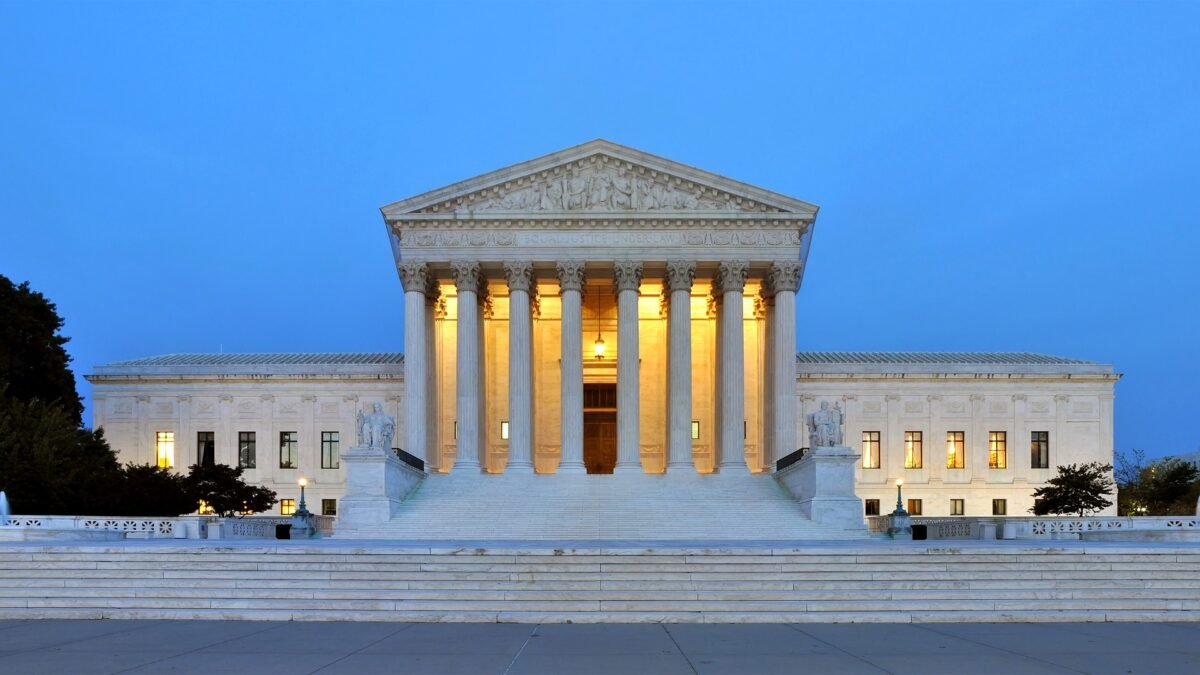
The United States Supreme Court on Monday rejected the Trump administration’s last-minute attempt to force California to set aside mail ballots cast by more than 20,000 registered voters the federal government alleges may not be American citizens, delivering the most significant legal defeat yet for a months-long federal campaign to press state election officials over alleged noncitizen voting.
The justices turned down the Justice Department’s emergency application just hours after it was filed, without explanation and without any noted dissent, according to Reuters. The decision came on the eve of the midterm elections, as Americans prepared to vote on Tuesday for all 435 seats in the House of Representatives, 35 Senate seats and 36 governorships.
It was not an isolated ruling. In the hours before polls opened, federal judges issued a series of decisions that together shut down almost every element of the administration’s effort to intervene in how states handle ballots from voters on federal lists. One judge in Washington barred the Justice Department and the Department of Homeland Security from sending such lists to states at all. Another ordered the administration to stop demanding that California segregate ballots. The 9th US Circuit Court of Appeals had already refused to intervene the previous week. The Supreme Court’s refusal to step in was the final blow.
The rulings do not settle the underlying legal questions. They decide, for this election at least, who gets to run it: the states, under rules written long before voting began, rather than federal officials acting on lists compiled in the final weeks of a campaign.
The case the Supreme Court declined to take up
The dispute began in mid-October, when the Justice Department sued California and invoked a federal law, 18 USC section 611, that makes it a crime for noncitizens to vote in federal elections. According to Reuters, the department asked the courts to order California to separate the mail ballots of more than 20,000 registered voters it described as likely noncitizens and to verify their citizenship before those ballots were counted.
The list at the centre of the case was assembled by US Citizenship and Immigration Services and Homeland Security Investigations after federal officials obtained California voter-roll data during the summer, according to the Desert Sun. Federal officials handed the list to California in October and asked the state to sequester ballots connected to the people named on it while their citizenship status was investigated.
The administration’s argument was practical as well as legal. Once a mail ballot is separated from its identifying envelope and counted, officials cannot later retrieve it if the voter’s eligibility is questioned. The Justice Department argued that setting the ballots aside would buy time to confirm whether the voters named were eligible, and that the federal ban on noncitizen voting gave it the authority to demand it.
California’s answer was that the list was unreliable, that the state already had procedures for verifying voter eligibility and challenging individual ballots, and that imposing new requirements days before an election risked disenfranchising eligible American citizens. California Attorney General Rob Bonta, whose office defended the state, welcomed the Supreme Court’s decision after it was announced.
The emergency application went first to Justice Elena Kagan, who handles emergency matters from California. She referred it to the full court, which denied it on Monday, according to the New York Post. The court did not request a response from California before denying relief, leaving intact the lower court decisions that had already rejected the administration’s request.
A losing streak that ran through four courts
The Supreme Court’s decision was the last in a chain of defeats for the administration that began in the lower courts. Earlier in the week, US District Judge David Carter in Los Angeles rejected the Justice Department’s request to order California to temporarily set aside the mailed ballots, according to the Washington Examiner. On 30 October, a divided panel of the 9th US Circuit Court of Appeals refused to grant the relief the administration sought, in a 2-1 decision.
The appeals court’s reasoning went to the practical heart of the case. As the district court had found, the panel said, “there is no feasible way to identify and segregate the ballots of specific individuals without potentially catastrophic effects on the entire system,” according to the Desert Sun. The court also pointed to the National Voter Registration Act’s prohibition on systematic voter-roll removals within 90 days of a federal election, and to the long-standing principle that federal courts should not change how ballots are counted when an election is this close.
Judge Patrick Bumatay, an appointee of President Donald Trump, dissented, warning that “once those ballots are processed, it would be impossible to identify them,” according to the New York Post. His warning captured the administration’s central fear. The majority’s answer was that the risk ran the other way: changing procedures at the last minute could prevent valid ballots from being counted and jeopardise the election in Los Angeles County, the largest election jurisdiction in the country.
On Monday, the rulings kept coming. In Washington, Chief US District Judge James Boasberg ordered the administration to stop demanding that California segregate ballots based on its lists of suspected noncitizens, finding that the demands likely violated the Constitution’s Elections Clause, according to the Washington Examiner. The clause gives states, and Congress, the responsibility for regulating federal elections — not the executive branch.
In a separate ruling the same day, US District Judge Tanya Chutkan temporarily barred the Justice Department and the Department of Homeland Security from sending states lists of registered voters the administration says may not be citizens, and from asking state election officials to separate out those voters’ ballots or not count them until citizenship is proven, according to Reuters. The ruling came in a case brought by voting rights and privacy advocates, who argued that the administration was violating the Privacy Act of 1974, which restricts the federal government’s ability to disclose sensitive private information.
Judge Chutkan, an appointee of former President Barack Obama, said the administration’s data may not be reliable, meaning there was a risk that lawfully registered voters would be disenfranchised, according to Reuters. Over the past month, the administration had sent letters to officials in California and Washington state demanding they not count any ballots from people on lists of voters it said may not be citizens. The Justice Department said in a court filing on Saturday that its letters were part of an effort to enforce the federal law banning noncitizen voting and did not amount to a distinct policy subject to review by a federal court. The judge disagreed, at least for now.
“The Supreme Court joined federal courts across the country in reaffirming state sovereignty,” David Becker, executive director of the Center for Election Innovation and Research, a nonpartisan group that advises election officials, told Reuters. “Every time the administration’s claims regarding noncitizen voters have been subjected to any sort of scrutiny, they have immediately fallen apart.”
The administration’s response: disappointed, but not finished
The Justice Department did not hide its frustration. Kiersten Pels, a Justice Department spokesperson, said the department was disappointed by the Supreme Court and 9th Circuit decisions, according to Reuters.
“But this is not the end of our efforts,” Pels said. “We are deploying election monitors in California and across the country to observe compliance with federal law, charging election fraudsters daily, and will pursue other legal avenues to ensure that only eligible American citizens vote.”
That last point matters. The administration has not abandoned its campaign; it has lost the argument that it can rewrite state procedures in the final days before an election. Its remaining tools are different ones: monitors at polling places, criminal prosecutions, and litigation that plays out after the votes are cast.
Federal prosecutors have charged 28 people with violating federal election laws, according to the New York Post, with additional charges expected this week. The Justice Department is deploying about 1,000 election monitors and observers to all 50 states on Tuesday, its largest deployment ever, according to USA Today.
Not every court decision on Monday went against the administration. Late on Monday, a federal judge in Washington denied a request by the NAACP that he prevent the Justice Department from deploying federal law enforcement personnel as poll monitors. The judge cited the department’s assurances that any monitors who worked for federal law enforcement agencies would be unarmed and would dress in business-casual clothing, according to Reuters. Pels said any suggestion that federal law enforcement would be at the polls was “fearmongering.”
One major case is still pending. The Justice Department has asked an appeals court to revive its lawsuit seeking to prevent certification of the Senate race in Alaska if the Republican incumbent, Dan Sullivan, loses by a slim margin. The department argues voters could be confused because another candidate on the ballot shares the senator’s name, according to Reuters. That case, unlike the California dispute, is about the counting after the election rather than the voting before it — and it may be the template for what comes next.
What the lists got wrong
The court rulings turned, in large part, on a question the administration could not answer to the judges’ satisfaction: how reliable were the lists? The evidence presented in court suggested the answer was: not reliable enough to justify freezing thousands of ballots.
Los Angeles County, which holds most of the names on the federal list, ran its own preliminary review of a sample. According to the county’s review, nearly two in five of the sampled records with usable birthplace data — 38.9 per cent — indicated that the person was born in the United States, a fact plainly inconsistent with noncitizen status. The same review found that 71.2 per cent of the sampled names had no voting history at all, along with duplicate entries and registrations that were already cancelled or inactive. Of the roughly 20,000 names nationwide, only 7,035 even carried a Los Angeles County address.
The pattern is familiar to election researchers. Apparent matches between voter rolls and citizenship databases almost always shrink dramatically — often to near zero — once they are individually verified, because identical names, outdated immigration records and post-registration naturalisation routinely generate false positives. The Brennan Center for Justice has documented this across multiple jurisdictions. According to the Brennan Center, the federal government’s expanded citizenship-checking tool sent incorrect information to at least five states, and claimed large numbers of noncitizen voters that later proved wrong. Utah’s own review found zero instances of noncitizen voting, while Louisiana found only 79 potential cases out of 74 million ballots cast over four decades.
Texas offers a cautionary example of what happens when a list is acted on before it is checked. The state checked its registered voters against the federal database and sent counties information on 2,724 potential noncitizens; counties cancelled the registration of voters who did not answer a notice within 30 days. Election officials later found that hundreds of the flagged voters had registered through the Department of Public Safety, where some had shown proof of citizenship, and on 29 July 2026 the state told counties to immediately reinstate voters who had been incorrectly flagged, according to the Brennan Center’s reporting.
None of this means noncitizen voting is lawful. It is a federal crime, and nobody in the litigation disputed that. What the courts found, repeatedly, was that the administration’s evidence of the problem did not match the scale of the remedy it was demanding — and that the remedy itself, applied days before an election, would do more harm to lawful voters than the problem it was meant to solve.
The wider campaign behind the lawsuits
The California case did not arise in isolation. It was the sharp end of a campaign that has run through the whole of 2026, in which the Justice Department has demanded voter rolls and election records from states across the country, sent letters threatening criminal prosecution to state election officials, and used a revamped federal citizenship database to generate lists of suspected noncitizens.
An executive order issued earlier this year directed the Justice Department to target officials who allow noncitizen voting, and the department’s Civil Rights Division has filed dozens of voter-roll lawsuits against states. Courts have dismissed many of them. According to the Brennan Center, the Justice Department has been giving voter records to the Department of Homeland Security, which has used them to attempt immigration enforcement, according to internal correspondence from the summer of 2026.
The campaign’s premise is one President Trump has repeated for years: that state election officials are not doing enough to prevent voter fraud, and that his loss in the 2020 election was the result of fraud — an assertion he has made repeatedly and which has been found false in court after court. His allies filed more than 60 lawsuits seeking to challenge his 2020 loss, all of which were unsuccessful, according to Reuters.
All available evidence shows that noncitizen voting is exceedingly rare, according to Reuters. That is not a partisan claim. It is the finding of academic studies, government audits and the states’ own reviews, repeated over two decades. The gap between that evidence and the scale of the federal campaign is what the courts kept returning to — and what makes the rulings of the past week a story about evidence as much as about law.
The campaign has also had a second front: the deployment of monitors. The Justice Department’s decision to send about 1,000 monitors to polling places in every state, under a division now led by a former Trump campaign lawyer, has alarmed voting rights groups and state officials, who say the presence of federal law enforcement at polling places can intimidate voters. The administration says the monitors are there to observe compliance with federal law. The federal judge who declined to block their deployment on Monday accepted the department’s assurances that they would be unarmed and dressed in business-casual clothing. Whether that assurance holds in practice is something voters, journalists and state officials will be watching on Tuesday.
Analysis: Why It Matters
1. A federalism ruling, not just an election ruling
The most important thing the courts did this week was to draw a line between two kinds of power. The Constitution’s Elections Clause gives states the job of running federal elections and gives Congress the power to alter state rules. It gives the executive branch no such role. Judge Boasberg’s finding that the administration’s demands likely violated the Elections Clause is therefore more than a technicality: it is a statement about who governs elections in the United States, and the answer, as the courts keep repeating, is the states and Congress.
That matters because the administration’s campaign has been built on the opposite assumption — that the federal executive can supervise, correct and if necessary override state election administration. Four courts in a week said it cannot, at least not in this way, at this time, on this evidence. The Supreme Court’s silent denial is the most consequential of the four rulings precisely because it says nothing: it leaves the lower courts’ reasoning in place without giving the administration a doctrine to argue with. For state election officials, that is a shield they can carry into the next confrontation. For the administration, it is a wall it will have to find another way around.
2. The calendar did as much work as the Constitution
Running alongside the federalism argument was a simpler one: timing. The 9th Circuit’s invocation of the National Voter Registration Act’s 90-day quiet period and of the principle that courts should not change the rules of an election at the last minute reflects a doctrine the Supreme Court itself has enforced for two decades, known as the Purcell principle. The idea is straightforward. Changing how ballots are counted days before voting creates confusion, errors and litigation, and the harm of the change usually outweighs the harm it is meant to prevent.
The administration’s problem was that its own timetable made the principle unavoidable. The list was handed to California in October. The lawsuit was filed on 15 October. The emergency application reached the Supreme Court the day before the election. Every court that looked at the case noted, in one form or another, that the government had created its own emergency. Had the same claims been brought in the spring, with time for individual verification of the names on the list, the outcome might have been different. Brought in the final fortnight, they were always going to run into the calendar — and the calendar is a doctrine no administration can repeal.
3. The list was the weak link
Strip away the constitutional arguments and the case turns on a single, practical question: was the list any good? The courts’ answer, on the evidence before them, was no — or at least, not good enough to justify what was being asked.
The Los Angeles County review is the most damning piece of evidence in the record. Nearly two in five sampled names with usable birthplace data appeared to belong to people born in the United States. Most of the sampled names had never voted at all. The list contained duplicates and registrations that had already been cancelled. This is not a story of a database with a small error rate. It is a story of a database whose errors were large enough, and visible enough, that a county registrar could find them in a preliminary sample.
The Texas experience shows what happens when such a list is treated as reliable. Hundreds of voters who had shown proof of citizenship when they registered were flagged, and their registrations were cancelled before the error was caught. The federal government’s own tool, according to the Brennan Center, sent wrong information to at least five states. The lesson the courts drew is one that applies far beyond this election: a probabilistic match between two databases is not proof that a person is not a citizen, and treating it as proof will disenfranchise citizens. The administration’s failure was not that it looked for noncitizen voting. It was that it demanded the remedy before doing the verification.
4. The fight now moves to the polling place
The rulings settle what the administration cannot do before an election. They do not settle what it can do during one. That is where the monitors come in, and the monitor question is the most consequential unresolved issue of this election day.
About 1,000 federal monitors in all 50 states is a deployment without precedent in scale, and it is being run by a division whose leadership and priorities have changed sharply this year. The judge who declined to block the deployment accepted assurances that the monitors would be unarmed and dressed in business-casual clothing, and the department’s spokesperson described suggestions of federal law enforcement at the polls as fearmongering. But assurances given in a courtroom on Monday are tested in polling places on Tuesday, and the test is not only whether monitors behave properly. It is whether voters believe they will.
Election officials in several states have said publicly that they are prepared for disruption and intimidation, and secretaries of state in Michigan and California have rejected the Justice Department’s allegations as factually baseless. The presence of federal monitors does not by itself prove intimidation, and the department is entitled to observe compliance with federal law. But the combination — a campaign that has repeatedly produced unreliable lists, a deployment of unprecedented size, and a president who has spent six years telling supporters that elections are stolen — creates a climate in which the monitors’ conduct will be scrutinised as closely as the count itself. The courts will be watching too: the NAACP case was denied, not decided, and the conduct of the monitors on Tuesday will shape whatever litigation follows.
5. What this means for the results — and for 2028
In the short term, the rulings remove a source of chaos from the count. California’s ballots will be processed under California’s rules, the 20,000 voters on the federal list will have their ballots counted like anyone else’s unless an individual challenge succeeds, and the results in the country’s largest state will not be held up by a last-minute federal intervention. That is a meaningful stabilising effect on an election night that is already expected to be long, with control of the House possibly unclear for days and several Senate races too close to call.
In the longer term, the rulings are a precedent with a double edge. They establish, in the most emphatic terms available short of a Supreme Court opinion, that the executive branch cannot use lists of alleged noncitizens to rewrite state election procedures on the eve of an election. That precedent will be cited in every similar case for years. But they also map out the administration’s next moves: the Alaska certification lawsuit, which attacks the count after the election rather than the voting before it, and the monitor deployment, which operates inside the polling place rather than from a courtroom. The courts have closed one door. The administration has already walked through two others, and the litigation over the 2026 results — and the preparations for 2028 — will be fought on that new ground.
What to Watch Next
- The Alaska certification case. The Justice Department’s attempt to revive its lawsuit to block certification of the Senate race if Dan Sullivan loses narrowly is the most important live case in the country. Watch whether the appeals court acts before certification, and whether the argument about a same-name candidate survives scrutiny.
- The monitors on the ground. Reports from polling places across all 50 states on Tuesday — how many monitors appeared, where they were stationed, whether any voter complained of intimidation, and whether the department’s assurances about unarmed, business-casual monitors held in practice.
- The post-election litigation. The Justice Department has said it will “pursue other legal avenues” and is “charging election fraudsters daily”. Watch for new lawsuits challenging results or certifications in close races, and for whether the courts apply the same scepticism to post-election claims that they applied to pre-election ones.
- California’s count. Whether the ballots of the roughly 20,000 voters on the federal list are counted without incident, and whether any individual challenges are brought against specific voters rather than against the whole list — the distinction the courts insisted on.
- The voter-roll campaign in 2027. The administration’s demands for state voter rolls have not stopped. Watch whether the rulings slow the campaign, whether more states resist or comply, and whether Congress acts to clarify the Elections Clause questions the courts have now raised twice in a week.
Sources
- Reuters — “With US midterms underway, courts rebuff Trump’s pressure on state election officials” (3 November 2026)
- Reuters — “Judge blocks Trump administration from pressuring states over noncitizen voting” (2–3 November 2026)
- The Desert Sun — “Supreme Court rejects Trump bid to set aside California ballots” (2 November 2026)
- Washington Examiner — “Supreme Court rejects DOJ bid to set aside 20,000 California ballots from suspected noncitizens” (2 November 2026)
- USA Today — “Control of Congress up for grabs on Election Day 2026: Live updates” (3 November 2026)

About the Author — Abdul Mannan
Related Articles
Supreme Court Rejects Trump’s Last-Minute Bid to Set Aside 20,000 California Ballots on Eve of Midterms
The Supreme Court has rejected the Trump administration's last-minute attempt to force California to set aside about 20,000…
America Votes in the 2026 Midterms as Control of Congress — and Trump’s Final Two Years — Hang in the Balance
Americans vote on Tuesday in midterm elections that will decide control of Congress for the final two years…
Democrats Lead in Five of Seven Key Senate Races as Trump Hits Record-Low Approval on Midterm Eve
Final New York Times/Siena polls put Democrats ahead in five of seven battleground Senate races on the eve…