
Supreme Court Rejects Trump’s Last-Minute Bid to Set Aside 20,000 California Ballots on Eve of Midterms

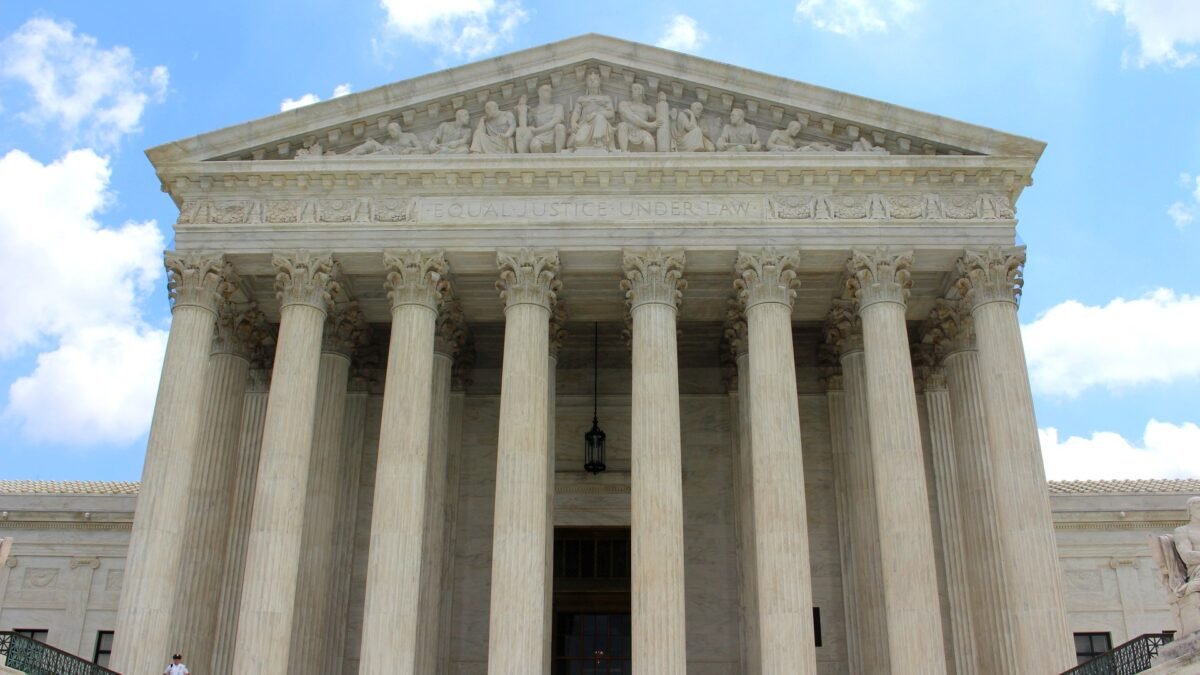
The United States Supreme Court on Monday rejected the Trump administration’s last-minute attempt to force California to set aside the mail ballots of about 20,000 registered voters the Justice Department alleges may not be American citizens, ending the federal government’s eleventh-hour legal challenge on the eve of the midterm elections.
According to CNN, the justices turned away the administration’s emergency request only hours after it was filed, handing down a one-sentence order with no explanation and no publicly noted dissents. The speed of the decision, and the fact that the court did not even ask California to file a response brief before ruling, underscored how little appetite the justices had for intervening in the state’s election procedures on the day before voters went to the polls.
The ruling leaves California’s existing ballot procedures in place as Americans vote on Tuesday, 3 November, in midterm elections that will decide which party controls Congress for the final two years of President Donald Trump’s second term. It also closes, for now at least, the most dramatic of the Justice Department’s election-eve courtroom fights — a campaign of litigation that has now been rejected by every court to consider it.
“After repeatedly losing in the lower courts, the highest court in the land firmly slapped down the Trump DOJ’s baseless attack on California’s electoral process — not even entertaining it,” California Governor Gavin Newsom said in a statement after the ruling, according to CNN.
The decision hands California a significant victory in an extraordinary dispute that reached the nation’s highest court just hours before Election Day, and it arrives against a backdrop of record early voting: more than 57 million Americans had already cast ballots by Monday evening, according to the University of Florida Election Lab, already far beyond the 45.9 million early votes cast across the whole of the 2022 midterms.
A request filed on the eve of the election
The Justice Department filed its emergency application with the Supreme Court on Monday, 2 November, the day before the midterm elections. According to USA Today, the administration asked the justices to direct California to segregate mailed ballots cast by anyone on a federal list of about 20,000 registered voters the government alleges may not be citizens, and to prevent those ballots from being counted while the administration challenged the voters’ eligibility.
US Solicitor General D. John Sauer, the administration’s top appellate lawyer, told the court that the government had identified “more than 20,000 individuals who appear to be registered to vote in California based on publicly available information at the time that information was received, but who, in the United States’ view, are likely not U.S. citizens,” according to CNN.
Sauer urged the court to grant what he called the “modest remedy” of setting the ballots aside until the allegations could be resolved. The Justice Department argued that the federal government had a constitutional interest in ensuring that only citizens vote, and that California’s failure to investigate the registered voters the administration had flagged was frustrating enforcement of the federal criminal law that bans noncitizens from voting in federal contests, CNN reported.
California and voting rights groups countered that the federal government’s past claims about noncitizen voters have not withstood scrutiny, that the current claims rest on uncertain evidence that risks disenfranchising citizens, and that the Trump administration has no authority to tell state officials how to handle the issue. Those arguments, according to CNN, found purchase in every lower federal court that ruled against the administration.
“Every court to hear this case has now rejected the DOJ’s attempt to cast a cloud of suspicion over eligible voters’ ballots on the eve of an election,” said Uzoma Nkwonta, a lawyer with the Elias Law Group, which represented groups opposed to the administration’s suit, according to CNN.
The Supreme Court’s one-sentence order gave no reasoning. None of the justices publicly dissented. And in another sign that the court did not take the appeal especially seriously, the justices did not ask to see a response brief from California or other parties before ruling — a step they usually take in high-profile cases, CNN reported.
Three defeats before the Supreme Court
The Supreme Court’s decision was the third defeat in a row for the Justice Department in this case, and it followed a consistent pattern in the lower courts: judges at every level found the government’s evidence thin, its proposed remedy unworkable, and its timing — days before an election — unacceptable.
On 28 October, US District Judge David Carter rejected the Justice Department’s request for a temporary restraining order that would have prevented California from counting ballots connected to voters on the federal list. According to USA Today, Judge Carter wrote: “Never before in American history has the federal government, on the eve of an election, sought to coerce a state and local government to abandon their own Constitutional election procedures and bend to the will of the Executive Branch.”
Judge Carter also said the administration had failed to provide sufficient evidence that it had used a “credible” process for creating its list. The Justice Department responded that the government had not had a full opportunity to prove its list was valid, and that the ballots should be set aside in the meantime.
On Friday, 30 October, a divided panel of the 9th US Circuit Court of Appeals also sided with California and rejected the administration’s request. The appeals court said forcing California to use the federal list could prevent valid ballots from being counted and jeopardise the Los Angeles County election, according to USA Today.
“As the district court found — and we discern no clear error — there is no feasible way to identify and segregate the ballots of specific individuals without potentially catastrophic effects on the entire system,” the appeals court said in its 2-1 decision, according to USA Today.
The 9th Circuit’s majority — Circuit Judges Mark Bennett, a Trump nominee, and Gabriel Sanchez, who was named to the bench by former President Joe Biden — concluded that the federal government has no power to dictate to states how to run elections. “If the United States believes different procedures are necessary for vote-by-mail ballots, we believe it should take that suggestion to Congress, not the courts,” the appeals court wrote, according to CNN.
The appeals court also raised an issue that could prove decisive at the Supreme Court. Under a legal theory known as the “Purcell principle,” the justices have long warned against federal courts weighing in at the last minute to change the rules of an election — and the administration’s request arrived on the eve of one, CNN reported.
In dissent, Circuit Judge Patrick Bumatay, a Trump nominee, called the government’s request reasonable. “This solution would not cancel any vote but would allow time to verify the eligibility of suspected noncitizens,” he wrote, according to USA Today. Judge Bumatay added that once ballots are processed, all sides agree, it would be impossible to separate them. “Throughout history, federal courts have acted to protect the voting and civil rights of our citizens by enjoining state action that violates the law,” he wrote, according to CNN. “And common sense also tells us that the federal government shouldn’t have to sit on its hands while a state allows the violation of federal law, especially when the integrity of federal elections is at stake.”
Judge Carter has scheduled an evidentiary hearing for 13 November to examine the disputed voter information and the administration’s request for additional restrictions, according to Law Commentary. The underlying lawsuit therefore continues even after the Supreme Court’s rejection of the emergency request.
The list at the heart of the case
Much of the litigation has turned not on the principle that only citizens may vote — a point no party disputes — but on the quality of the list the Justice Department built to identify the voters it wanted California to flag.
The federal government sent California a list of 20,930 names on 12 October and asked the state to sequester the corresponding ballots during the Election Day count. California refused. The Justice Department then threatened election workers with prosecution if they did not treat the flagged names as possible illegal voters, according to reports summarised by Senate Wire.
On Saturday, 31 October, researchers from the UCLA Voting Rights Project, working for the Coalition for Humane Immigrant Rights (CHIRLA), filed the first outside analysis of the list in federal court. They found that 8,880 of the 20,930 names — about 42 per cent — do not match anyone in California’s current voter file, according to the Bay Area Brief, which cited the court filing and reporting by KQED.
The analysts identified at least 22 people on the list who are confirmed US citizens, with 66 more rated as near-certain matches to naturalisation records, and estimated that nearly 7,500 naturalised citizens were highly likely to have been flagged incorrectly under the government’s matching methods, according to the Bay Area Brief and Senate Wire.
The researchers also reported obstacles in the data itself: the version of the list the department turned over had been stripped down to eight fields and left out California voter identification numbers, which they called the “single most critical column” for accurate matching. It contained duplicates and incomplete or inconsistent data, according to the reports. The state told a federal court that about one in four people on the list were born in the United States.
The Justice Department has defended its list. Bill Essayli, who runs the US Attorney’s office in Los Angeles, called the UCLA analysis a “bogus report” on X, according to KQED as cited by the Bay Area Brief. The department has said federal analysts identified more than 20,000 people they believed were likely noncitizens who had received vote-by-mail ballots.
On Sunday, 1 November, the Justice Department asked Chief Judge James E. Boasberg of the US District Court for the District of Columbia to consider whether CHIRLA and its lawyers should face a criminal contempt investigation for publishing the analysis, according to the Associated Press as reported by Workers Rights News. The department called the report “political grandstanding.” Judge Boasberg had ordered the department on Friday to give CHIRLA’s lawyers the list in their lawsuit challenging the administration’s voter-enforcement campaign. He had not ruled on the contempt suggestion as of Monday morning.
It is important to be precise about what the UCLA analysis does and does not prove. It is a plaintiffs’ expert report, not a judicial finding, and it does not establish the citizenship or voting eligibility of every person the department flagged. It also does not explain why 8,880 names match no one on the current voter file — some may reflect old, cancelled or inactive registrations, or data errors on either side. But the scale of the mismatch — more than four in ten names — is the reason the lower courts treated the list as unreliable, and it is the reason California described the process used to create it as “highly suspect,” according to USA Today.
A wider campaign of election litigation
The California case is the most prominent of a series of Justice Department interventions in the 2026 midterms, and the Supreme Court’s rejection of it fits a wider pattern of courts pushing back against federal attempts to direct how states run their elections.
The Justice Department sued California in October, claiming the state is preventing enforcement of a law that makes it a criminal offence for noncitizens to vote in federal elections, according to USA Today. The administration has also warned election officials in all states that they could be prosecuted if they knowingly allow noncitizens to vote.
On Sunday, 1 November, US District Judge Sharon Gleason dismissed the Justice Department’s lawsuit seeking to block certification of Alaska’s Senate race if Republican incumbent Dan Sullivan loses, according to the Associated Press. The department had argued that a retired teacher named Daniel J. Sullivan Jr., who is also on the ballot, was a “frivolous candidate” whose presence could confuse voters. Judge Gleason ruled that the department lacked standing, that the relief it sought was infeasible because ballots had already been cast and commingled, and that there was “no workable plan” to segregate the ballots while preserving ballot secrecy. The department filed a notice of appeal shortly afterwards.
On Friday, 30 October, US District Judge Trina Thompson issued an emergency order restricting the Justice Department and the Department of Homeland Security from segregating or purging ballots, halting the processing of ballots, or threatening, intimidating or coercing election officials. The department appealed that order as well.
The Supreme Court itself has already weighed in twice on the administration’s election plans this autumn, with mixed results for the president. In September, the justices rejected his controversial plan to change how mail ballots are sent to voters across the country, rebuffing a proposal that election officials warned would have had catastrophic consequences if allowed to take effect for this year’s midterms, according to CNN. Days later, however, the court sided with the Department of Homeland Security, allowing it to continue providing controversial citizenship data to state election officials.
“The federal government continues to press the same arguments, despite repeatedly coming up short,” said Jon Miller, chief programme officer at Public Rights Project, which is part of the legal team fighting the Justice Department, according to CNN. “This case has bounced between the appellate and district courts — and every time, the courts have found the Justice Department wasn’t entitled to the relief it was seeking.”
Election Day: what is at stake
The courtroom fight unfolded as Americans voted on Tuesday in midterm elections that will shape the final two years of President Trump’s second term. All 435 seats in the US House of Representatives are being contested, along with 35 of the 100 Senate seats and 36 governorships, according to Reuters.
Republicans hold a 218-214 majority in the House, where there are two vacancies and one independent who caucuses with Republicans, and a 53-47 majority in the Senate. Democrats need a net gain of four seats in each chamber to take control, according to Reuters.
Polls broadly favour the Democrats in the House, while the Senate is rated too close to call. A New York Times poll published on Sunday showed Democrats leading in six of seven key Senate races that could determine the majority. Decision Desk HQ’s final forecast projected 241 Democratic House seats to 194 for Republicans, and a narrow 52-48 Democratic Senate majority, according to US News Pulse.
President Trump’s approval rating has sunk to a near-record low of 32 per cent, according to Reuters/Ipsos polling cited by Reuters, while the RealClearPolitics average put it at 39.1 per cent with disapproval at 58.8 per cent. A Reuters/Ipsos poll completed on Monday found 46 per cent of registered voters said they would vote for Democrats in congressional elections, compared with 38 per cent who picked Republicans, according to BusinessWorld.
More than 57 million Americans had already voted early before Election Day, a record for a midterm at this stage. The University of Florida Election Lab counted 57,530,789 early votes as of 6:40 p.m. ET on Monday, while NBC News counted 57,243,189 as of 7:00 p.m., according to Live News World. That total alone exceeds the 45.9 million early votes cast across the whole of the 2022 midterms.
Polls opened first in parts of Vermont at 5 a.m. Eastern Time, with voting under way in New York, New Jersey, Virginia and other eastern states from 6 a.m. The first polls close at 6 p.m. Eastern Time — 4 a.m. Pakistan time on Wednesday — with results expected through the night. Results in the closest races, including Alaska’s ranked-choice count and California’s traditionally slow count, could take days: California accepts mail ballots for up to seven days after Election Day.
The election is on track to be the most expensive in US history. The nonpartisan watchdog OpenSecrets estimates a total of 11.9 billion dollars will be spent by candidates and outside political groups, according to Reuters.
Analysis: Why It Matters
Speed was the message
The Supreme Court often takes days, sometimes weeks, to rule on emergency applications — and when it does act quickly, it usually asks the other side to respond first. In this case it did neither. The justices received the Justice Department’s application on Monday morning and rejected it the same evening, without asking California to file a response and without a single noted dissent. That is not how a court behaves when it finds a case close. The speed of the ruling was itself a signal: the administration’s request was, in the court’s judgement, not a serious candidate for relief. For a Justice Department that has leaned heavily on emergency applications to the Supreme Court across the second Trump term, the message is unmistakable — the court will not be used as a last-minute lever to rewrite a state’s election procedures on the eve of voting.
The list, not the principle, lost the case
It would be a mistake to read this ruling as the Supreme Court taking a position on noncitizen voting. Nobody in the case disputes that only citizens may vote in federal elections, and federal law already makes noncitizen voting a crime. What lost the case was the evidence. The Justice Department asked the courts to set aside the ballots of more than 20,000 named people on the strength of a list that, on the first independent examination, could not be matched to the voter rolls for 42 per cent of its entries — and that included at least 22 confirmed American citizens. Judge Carter found the process used to build the list was not credible. The 9th Circuit found there was no feasible way to segregate the ballots without risking mass disenfranchisement. The Supreme Court, by refusing even to entertain the application, effectively endorsed that chain of reasoning. The lesson for future election litigation is blunt: a list is a hypothesis, and a hypothesis built on shaky data will not survive contact with a court, however urgent the politics around it.
Federalism drew a bright line
The Constitution gives states and Congress — but not the executive branch — responsibility for regulating federal elections, as USA Today noted. That allocation of power is the quiet constitutional spine of this whole dispute. The Trump administration has spent the year trying to expand the federal government’s role in elections: suing states for their voter rolls, demanding that states segregate ballots, warning local election officials of prosecution, and asking courts to let federal agencies dictate state procedures. The 9th Circuit’s answer — that if the United States believes different procedures are necessary for vote-by-mail ballots, it should take that suggestion to Congress, not the courts — is a direct rebuke to that project. The Supreme Court’s silent agreement, delivered in a single sentence, is the strongest version of that rebuke, because it came from a court with a conservative majority that has often been sympathetic to this administration. When even this court declines to move, the federalism argument against executive control of elections is, for now, settled in practice.
The Purcell principle held
There is a doctrine in American election law, named after a 2006 Supreme Court decision, that warns courts against changing the rules of an election at the last minute: voters, candidates and election officials all need stability, and late judicial intervention creates confusion that can itself damage confidence in the result. The Justice Department’s request was the textbook case the doctrine exists to prevent — a demand, filed the day before the election, to impose a new ballot-segregation system on the country’s most populous state, affecting ballots that in many cases had already been counted. The 9th Circuit invoked the principle explicitly. The Supreme Court did not need to: its one-sentence order, issued within hours, was the principle in action. The timing of the filing was not incidental to its failure; it was central to it.
What the ruling does not decide
For all its force, the ruling is narrow. The Supreme Court decided an emergency application, not the merits of the underlying lawsuit. Judge Carter’s evidentiary hearing on 13 November will still examine the disputed voter information, and the Justice Department’s broader campaign — its suits against states over voter rolls, its demands for citizenship data, its threats of prosecution — continues. The court’s September decision on mail ballots and its decision days later to let the Department of Homeland Security keep sharing citizenship data with states show that the justices are willing to let parts of the administration’s election agenda proceed. What Monday’s ruling establishes is a limit, not a reversal: the federal government cannot, on the strength of an untested list and on the eve of an election, force a state to set aside the ballots of thousands of its voters. That limit matters most precisely because the underlying fight is not over. The next test will come after the votes are counted, when the losing side in close races — and the administration — will decide whether to litigate the results. Monday’s order suggests they will find the courts a much colder forum than they might have hoped.
What to Watch Next
- The count in California: With mail ballots accepted for up to seven days after Election Day, California’s count will run well past Tuesday night. Watch whether the Justice Department renews its demand to segregate ballots once results are known, and whether Judge Carter’s 13 November hearing produces any new order.
- Close races and recounts: The Senate contests in Maine, Ohio, Texas, Alaska, Georgia and Michigan are the likeliest venues for post-election litigation. Any race decided by a narrow margin could draw the same kind of emergency application the Supreme Court has now twice rejected in this cycle.
- The Alaska appeal: The Justice Department has already appealed Judge Gleason’s dismissal of its suit over the Alaska Senate race. Watch whether the 9th Circuit — or the Supreme Court — treats that case differently, since it turns on a candidate’s ballot status rather than a voter list.
- The contempt question: Chief Judge Boasberg has yet to rule on the Justice Department’s request to investigate CHIRLA and its lawyers for publishing the UCLA analysis. A decision to pursue contempt would escalate the confrontation between the department and the voting-rights groups challenging it.
- The new Congress: If Democrats take the House, expect immediate oversight hearings into the Justice Department’s election litigation and demands for the full voter list and the methodology behind it. If Republicans hold both chambers, the administration is likely to press ahead with its voter-roll suits against states — and to test the limits the courts have just drawn.
Sources
- CNN — “Supreme Court rejects Trump’s attempt to segregate ballots in California”, 2 November 2026
- USA Today — “Supreme Court rejects Trump attempt to set aside some CA ballots”, 2 November 2026
- Reuters — “What you need to know about the 2026 US midterm elections”, 2 November 2026
- Law Commentary — “Supreme Court Rejects Trump’s Bid to Block 20,000 California Ballots”, 2 November 2026
- The Bay Area Brief — “DOJ Noncitizen Voter List: 42% Not on California Rolls”, 2 November 2026

About the Author — Abdul Mannan
Related Articles
America Votes in the 2026 Midterms as Control of Congress — and Trump’s Final Two Years — Hang in the Balance
Americans vote on Tuesday in midterm elections that will decide control of Congress for the final two years…
Democrats Lead in Five of Seven Key Senate Races as Trump Hits Record-Low Approval on Midterm Eve
Final New York Times/Siena polls put Democrats ahead in five of seven battleground Senate races on the eve…
Democrat Haley Stevens Endorses Republican Mike Rogers in Michigan Senate Race as Trump Urges Her to Switch Parties
Democratic congresswoman Haley Stevens stunned her party by endorsing Republican Mike Rogers in Michigan's Senate race two days…